

Quantifying GDI Engine's Idle Fuel Efficiency with Trials
AUG 28, 20259 MIN READ
Generate Your Research Report Instantly with AI Agent
PatSnap Eureka helps you evaluate technical feasibility & market potential.
GDI Engine Idle Efficiency Background and Objectives
Gasoline Direct Injection (GDI) technology has revolutionized internal combustion engine design since its commercial introduction in the late 1990s. This advanced fuel delivery system has evolved significantly from its early implementations, moving from niche applications to becoming a mainstream technology across various vehicle segments. The evolution of GDI systems represents a critical response to increasingly stringent global emissions regulations and consumer demands for improved fuel economy without sacrificing performance.
The idle operation of GDI engines presents unique challenges and opportunities for efficiency optimization. During idle conditions, which account for approximately 30-35% of urban driving cycles, traditional port fuel injection engines have historically demonstrated certain advantages in terms of stability and hydrocarbon emissions. However, GDI systems offer theoretical benefits through precise fuel metering and stratified charge capabilities that remain underexploited specifically during idle operation.
Current industry benchmarks indicate that idle fuel consumption represents 5-8% of total vehicle fuel usage in typical driving scenarios, with this percentage rising significantly in congested urban environments. Despite this considerable contribution to overall efficiency, systematic quantification methodologies for idle fuel consumption in GDI engines remain inconsistently applied across the industry, creating a notable gap in optimization efforts.
The primary objective of this technical research is to establish a comprehensive, reproducible methodology for quantifying GDI engine idle fuel efficiency through controlled trials. This methodology aims to isolate the specific variables that most significantly impact idle efficiency, including but not limited to injection timing, injection pressure, valve timing strategies, and thermal management approaches unique to direct injection systems.
Secondary objectives include mapping the correlation between laboratory-measured idle efficiency metrics and real-world fuel consumption patterns, identifying the most promising technological pathways for idle optimization, and establishing a standardized testing protocol that can be adopted across different engine platforms and vehicle applications.
The expected outcomes of this research will provide actionable insights for engineering teams to implement targeted improvements in engine calibration strategies, potentially yielding 3-5% improvements in overall vehicle fuel economy through idle optimization alone. Additionally, the research aims to establish clear metrics for comparing idle efficiency across different GDI implementations, enabling more informed technology selection decisions in future powertrain development programs.
This investigation is particularly timely as the industry navigates the transition period between conventional internal combustion engines and electrified powertrains, where maximizing the efficiency of existing technologies remains critically important for meeting near-term emissions targets and consumer expectations.
The idle operation of GDI engines presents unique challenges and opportunities for efficiency optimization. During idle conditions, which account for approximately 30-35% of urban driving cycles, traditional port fuel injection engines have historically demonstrated certain advantages in terms of stability and hydrocarbon emissions. However, GDI systems offer theoretical benefits through precise fuel metering and stratified charge capabilities that remain underexploited specifically during idle operation.
Current industry benchmarks indicate that idle fuel consumption represents 5-8% of total vehicle fuel usage in typical driving scenarios, with this percentage rising significantly in congested urban environments. Despite this considerable contribution to overall efficiency, systematic quantification methodologies for idle fuel consumption in GDI engines remain inconsistently applied across the industry, creating a notable gap in optimization efforts.
The primary objective of this technical research is to establish a comprehensive, reproducible methodology for quantifying GDI engine idle fuel efficiency through controlled trials. This methodology aims to isolate the specific variables that most significantly impact idle efficiency, including but not limited to injection timing, injection pressure, valve timing strategies, and thermal management approaches unique to direct injection systems.
Secondary objectives include mapping the correlation between laboratory-measured idle efficiency metrics and real-world fuel consumption patterns, identifying the most promising technological pathways for idle optimization, and establishing a standardized testing protocol that can be adopted across different engine platforms and vehicle applications.
The expected outcomes of this research will provide actionable insights for engineering teams to implement targeted improvements in engine calibration strategies, potentially yielding 3-5% improvements in overall vehicle fuel economy through idle optimization alone. Additionally, the research aims to establish clear metrics for comparing idle efficiency across different GDI implementations, enabling more informed technology selection decisions in future powertrain development programs.
This investigation is particularly timely as the industry navigates the transition period between conventional internal combustion engines and electrified powertrains, where maximizing the efficiency of existing technologies remains critically important for meeting near-term emissions targets and consumer expectations.
Market Demand Analysis for Fuel-Efficient GDI Engines
The global automotive industry is witnessing a significant shift toward fuel-efficient technologies, with Gasoline Direct Injection (GDI) engines emerging as a cornerstone solution. Market research indicates that the GDI engine market was valued at approximately $7.47 billion in 2021 and is projected to reach $15.23 billion by 2030, growing at a CAGR of 8.2% during the forecast period.
Consumer demand for fuel-efficient vehicles has intensified due to rising fuel costs and increasing environmental consciousness. A 2022 survey revealed that 78% of new car buyers consider fuel efficiency among their top three purchasing criteria, representing a 12% increase from 2018 figures. This trend is particularly pronounced in urban markets where stop-and-go traffic conditions make idle fuel efficiency a critical performance metric.
Regulatory pressures are significantly driving market demand for improved GDI technology. The European Union's stringent CO2 emission targets of 95g/km for passenger cars and the United States' Corporate Average Fuel Economy (CAFE) standards requiring 54.5 mpg by 2025 have accelerated manufacturer investment in advanced GDI systems with optimized idle performance.
The commercial vehicle segment presents substantial growth opportunities for fuel-efficient GDI engines. Fleet operators report that fuel costs represent 30-40% of their total operating expenses, creating strong economic incentives for technologies that reduce idle fuel consumption. Market analysis shows that a 5% improvement in idle fuel efficiency can translate to annual savings of $3,000-$5,000 per heavy-duty vehicle.
Regional market dynamics reveal varying adoption rates of GDI technology. North America and Europe lead in market share, accounting for 65% of global GDI engine installations, while Asia-Pacific represents the fastest-growing market with 11.3% annual growth, driven primarily by China and India's expanding automotive sectors and tightening emission regulations.
Consumer willingness to pay premiums for fuel-efficient technologies has created favorable market conditions for advanced GDI systems. Studies indicate that consumers are willing to pay an average premium of $1,800 for vehicles offering 20% better fuel efficiency, with higher acceptance rates among urban consumers and fleet operators who experience more frequent idling conditions.
Market forecasts suggest that by 2028, GDI engines will be standard in over 85% of new gasoline-powered vehicles globally, with particular emphasis on technologies that optimize performance across all operating conditions, including idle states. This represents a substantial market opportunity for manufacturers who can quantifiably demonstrate superior idle fuel efficiency through rigorous trial methodologies.
Consumer demand for fuel-efficient vehicles has intensified due to rising fuel costs and increasing environmental consciousness. A 2022 survey revealed that 78% of new car buyers consider fuel efficiency among their top three purchasing criteria, representing a 12% increase from 2018 figures. This trend is particularly pronounced in urban markets where stop-and-go traffic conditions make idle fuel efficiency a critical performance metric.
Regulatory pressures are significantly driving market demand for improved GDI technology. The European Union's stringent CO2 emission targets of 95g/km for passenger cars and the United States' Corporate Average Fuel Economy (CAFE) standards requiring 54.5 mpg by 2025 have accelerated manufacturer investment in advanced GDI systems with optimized idle performance.
The commercial vehicle segment presents substantial growth opportunities for fuel-efficient GDI engines. Fleet operators report that fuel costs represent 30-40% of their total operating expenses, creating strong economic incentives for technologies that reduce idle fuel consumption. Market analysis shows that a 5% improvement in idle fuel efficiency can translate to annual savings of $3,000-$5,000 per heavy-duty vehicle.
Regional market dynamics reveal varying adoption rates of GDI technology. North America and Europe lead in market share, accounting for 65% of global GDI engine installations, while Asia-Pacific represents the fastest-growing market with 11.3% annual growth, driven primarily by China and India's expanding automotive sectors and tightening emission regulations.
Consumer willingness to pay premiums for fuel-efficient technologies has created favorable market conditions for advanced GDI systems. Studies indicate that consumers are willing to pay an average premium of $1,800 for vehicles offering 20% better fuel efficiency, with higher acceptance rates among urban consumers and fleet operators who experience more frequent idling conditions.
Market forecasts suggest that by 2028, GDI engines will be standard in over 85% of new gasoline-powered vehicles globally, with particular emphasis on technologies that optimize performance across all operating conditions, including idle states. This represents a substantial market opportunity for manufacturers who can quantifiably demonstrate superior idle fuel efficiency through rigorous trial methodologies.
Current State and Challenges in GDI Idle Efficiency
Gasoline Direct Injection (GDI) technology has emerged as a dominant solution in modern internal combustion engines, offering improved fuel efficiency and reduced emissions. However, quantifying and optimizing idle fuel efficiency remains a significant challenge across the industry. Current GDI engines typically demonstrate 10-15% higher fuel efficiency compared to port fuel injection systems, yet idle conditions present unique challenges where these advantages are not fully realized.
The idle state represents approximately 30-35% of urban driving cycles, making it a critical area for efficiency improvements. Recent industry data indicates that GDI engines still consume between 0.4-0.8 liters per hour during idle, with significant variations depending on ambient conditions, engine temperature, and auxiliary loads. This variability presents substantial challenges for consistent measurement and optimization.
A primary technical challenge in GDI idle efficiency lies in the fuel atomization and mixture formation process. At idle, lower cylinder pressures and temperatures create suboptimal conditions for fuel vaporization, leading to potential wall wetting and incomplete combustion. Advanced research from leading automotive research institutions has documented that up to 20% of injected fuel may not participate effectively in combustion during idle conditions.
Another significant obstacle is the calibration complexity for idle conditions. Modern GDI systems must balance multiple competing factors including emissions control, NVH (Noise, Vibration, Harshness) requirements, cold-start capability, and fuel economy. This multi-objective optimization problem has led to compromised idle efficiency in many production vehicles, as manufacturers prioritize emissions compliance and drivability over maximum efficiency.
The geographical distribution of GDI idle efficiency research shows concentration in automotive development centers in Germany, Japan, the United States, and increasingly China. European regulations have driven particularly stringent idle efficiency requirements, while North American research focuses more on cold-start idle conditions due to market preferences and climate considerations.
Current measurement methodologies also present limitations. Standard dynamometer testing protocols often fail to accurately represent real-world idle conditions, particularly regarding thermal management and transient behaviors. The industry lacks standardized protocols specifically designed for idle efficiency quantification, making cross-platform comparisons difficult and hindering technological progress.
Emerging technologies such as advanced thermal management systems, cylinder deactivation at idle, and intelligent stop-start systems offer promising pathways for improvement but face integration challenges with existing GDI architectures. Additionally, the increasing electrification of vehicle systems creates both opportunities and complications for idle efficiency optimization as auxiliary loads shift from mechanical to electrical power sources.
The idle state represents approximately 30-35% of urban driving cycles, making it a critical area for efficiency improvements. Recent industry data indicates that GDI engines still consume between 0.4-0.8 liters per hour during idle, with significant variations depending on ambient conditions, engine temperature, and auxiliary loads. This variability presents substantial challenges for consistent measurement and optimization.
A primary technical challenge in GDI idle efficiency lies in the fuel atomization and mixture formation process. At idle, lower cylinder pressures and temperatures create suboptimal conditions for fuel vaporization, leading to potential wall wetting and incomplete combustion. Advanced research from leading automotive research institutions has documented that up to 20% of injected fuel may not participate effectively in combustion during idle conditions.
Another significant obstacle is the calibration complexity for idle conditions. Modern GDI systems must balance multiple competing factors including emissions control, NVH (Noise, Vibration, Harshness) requirements, cold-start capability, and fuel economy. This multi-objective optimization problem has led to compromised idle efficiency in many production vehicles, as manufacturers prioritize emissions compliance and drivability over maximum efficiency.
The geographical distribution of GDI idle efficiency research shows concentration in automotive development centers in Germany, Japan, the United States, and increasingly China. European regulations have driven particularly stringent idle efficiency requirements, while North American research focuses more on cold-start idle conditions due to market preferences and climate considerations.
Current measurement methodologies also present limitations. Standard dynamometer testing protocols often fail to accurately represent real-world idle conditions, particularly regarding thermal management and transient behaviors. The industry lacks standardized protocols specifically designed for idle efficiency quantification, making cross-platform comparisons difficult and hindering technological progress.
Emerging technologies such as advanced thermal management systems, cylinder deactivation at idle, and intelligent stop-start systems offer promising pathways for improvement but face integration challenges with existing GDI architectures. Additionally, the increasing electrification of vehicle systems creates both opportunities and complications for idle efficiency optimization as auxiliary loads shift from mechanical to electrical power sources.
Current Methodologies for Quantifying Idle Fuel Efficiency
01 Fuel injection control strategies for idle efficiency
Various fuel injection control strategies can be implemented in GDI engines to improve idle fuel efficiency. These include optimizing injection timing, adjusting fuel pressure, and implementing precise fuel metering techniques. Advanced control algorithms can monitor engine parameters in real-time and adjust injection patterns accordingly to maintain stable idle while minimizing fuel consumption. These strategies often involve electronic control units that can adapt to different operating conditions and environmental factors.- Fuel injection control strategies for idle efficiency: Various fuel injection control strategies can be implemented in GDI engines to improve idle fuel efficiency. These include optimizing injection timing, adjusting fuel pressure, and implementing precise fuel metering techniques. Advanced control algorithms can monitor engine parameters in real-time and adjust injection patterns accordingly to maintain stable idle while minimizing fuel consumption. These strategies often involve electronic control units that can adapt to different operating conditions and environmental factors.
- Idle air control and combustion optimization: Optimizing air-fuel mixture and combustion processes during idle operation can significantly improve fuel efficiency in GDI engines. This includes precise control of idle air flow, implementation of stratified charge combustion strategies, and optimization of ignition timing. By creating an optimal combustion environment specifically tailored for idle conditions, these technologies ensure complete fuel burning while maintaining stable engine operation at minimum fuel consumption levels.
- Engine thermal management for idle efficiency: Thermal management systems play a crucial role in improving GDI engine idle fuel efficiency. These systems maintain optimal engine temperature during idle operation, reducing friction losses and improving combustion efficiency. Technologies include advanced cooling systems, thermal barrier coatings, and heat recovery mechanisms. By ensuring the engine operates at its ideal temperature range during idle, these systems minimize the energy required to overcome internal friction and maximize the conversion of fuel energy into useful work.
- Start-stop and idle reduction technologies: Start-stop systems and idle reduction technologies automatically shut down and restart the engine to reduce the amount of time the engine spends idling. These systems include rapid restart capabilities, enhanced battery management, and sophisticated control algorithms that determine optimal shutdown and restart timing. By eliminating unnecessary idle time while ensuring seamless operation and driver comfort, these technologies can significantly reduce overall fuel consumption in urban driving conditions where frequent stops are common.
- Variable valve timing and cylinder deactivation: Advanced valve control systems and cylinder deactivation technologies can improve GDI engine idle fuel efficiency. Variable valve timing adjusts the timing, duration, and lift of intake and exhaust valves to optimize engine breathing at idle speeds. Cylinder deactivation selectively shuts down cylinders during idle operation, allowing the active cylinders to operate more efficiently. These technologies reduce pumping losses and improve thermal efficiency during idle, resulting in significant fuel savings while maintaining smooth engine operation.
02 Idle air control and throttle management
Effective management of air intake during idle conditions significantly impacts GDI engine fuel efficiency. This includes precise control of idle air bypass valves, throttle body design optimization, and implementation of variable intake systems. By maintaining optimal air-fuel ratios during idle through careful air management, combustion efficiency can be improved while reducing unnecessary fuel consumption. Some systems incorporate adaptive learning capabilities to adjust air control parameters based on engine wear and environmental conditions.Expand Specific Solutions03 Combustion chamber design and optimization
The design of the combustion chamber plays a crucial role in GDI engine idle efficiency. Optimized piston crown geometry, strategic fuel spray targeting, and improved cylinder head designs can enhance fuel atomization and combustion at idle speeds. These design elements focus on creating ideal air-fuel mixture distribution and promoting complete combustion even at low engine loads. Some designs incorporate specific features to induce controlled turbulence that helps maintain stable combustion during idle conditions.Expand Specific Solutions04 Thermal management systems for idle efficiency
Thermal management systems can significantly improve GDI engine idle fuel efficiency by maintaining optimal operating temperatures. These systems include advanced cooling strategies, exhaust heat recovery mechanisms, and thermal barrier coatings. By reducing heat losses and ensuring proper engine temperature during idle, these systems help maintain ideal combustion conditions and reduce the enrichment typically needed during cold idle. Some systems incorporate electronic thermostats and variable flow cooling to precisely control engine temperatures.Expand Specific Solutions05 Idle stop-start systems and hybrid integration
Integration of idle stop-start technology with GDI engines provides substantial improvements in overall idle fuel efficiency by eliminating fuel consumption during complete stops. These systems incorporate rapid restart capabilities, enhanced starter motors, and specialized control algorithms to seamlessly transition between operating states. Advanced versions include mild hybrid systems with energy recovery during deceleration that can be used to power auxiliary systems during idle or assist during restart. These technologies are particularly effective in urban driving conditions with frequent stops.Expand Specific Solutions
Key Industry Players in GDI Engine Development
The GDI engine idle fuel efficiency market is in a growth phase, with increasing focus on emissions reduction and fuel economy. Major automotive manufacturers including Hyundai, Ford, GM, and Kia are leading technological advancements in this space, with significant R&D investments. European and Asian players like Bosch, Hitachi, and Great Wall Motor are also making substantial contributions. The technology maturity varies across companies, with established players like Ford Global Technologies and GM Global Technology Operations demonstrating advanced capabilities through extensive patent portfolios and production implementations. Oil companies including ExxonMobil and Shell are contributing complementary technologies for fuel optimization, while research institutions like Southwest Research Institute provide independent validation methodologies for quantifying idle efficiency improvements.
Hyundai Motor Co., Ltd.
Technical Solution: Hyundai has implemented an innovative GDI idle fuel efficiency quantification system combining laboratory precision with road testing validation. Their methodology employs high-frequency data acquisition systems capturing fuel injection parameters, combustion characteristics, and emissions at millisecond intervals during idle operation. Hyundai's approach includes specialized environmental chambers simulating diverse temperature and humidity conditions to evaluate their impact on idle efficiency. The company has developed proprietary algorithms that can isolate idle fuel consumption from transient operating modes, enabling accurate measurement even in stop-start traffic conditions. Their testing protocol incorporates extended idle duration tests to evaluate thermal stabilization effects and efficiency degradation patterns over time, providing insights into long-term idle performance that standard test cycles might miss.
Strengths: Excellent environmental condition simulation capabilities; high-resolution data acquisition systems; innovative idle detection algorithms for real-world driving. Weaknesses: Testing methodology requires extensive environmental chamber facilities; complex data processing requirements for field test data.
Ford Global Technologies LLC
Technical Solution: Ford has pioneered a comprehensive GDI idle fuel efficiency quantification methodology combining laboratory dynamometer testing with extensive field trials. Their approach utilizes proprietary Engine Control Unit (ECU) calibration tools that can isolate and measure precise fuel consumption during various idle conditions. Ford's system incorporates thermal management analysis to account for temperature effects on idle efficiency, with specialized testing protocols for cold-start, normal operating temperature, and hot soak conditions. The company employs statistical regression models to correlate laboratory measurements with real-world driving data collected from fleet vehicles equipped with advanced telemetry. This dual-approach validation ensures that laboratory findings translate effectively to customer vehicles under diverse operating environments and driving patterns.
Strengths: Robust correlation between laboratory and real-world measurements; extensive fleet testing capabilities; advanced thermal condition modeling. Weaknesses: System complexity requires significant testing infrastructure; methodology highly tailored to Ford's specific engine architectures.
Critical Technologies in GDI Idle Efficiency Measurement
Efficiency analysis method for fuel damper of gasoline direct injection engine
PatentWO2016072574A1
Innovation
- A fuel damper efficiency analysis method that involves manufacturing a sample fuel damper using metal diaphragms filled with compressed helium gas, testing its efficiency at various RPM and pressure settings, and calculating efficiency improvements compared to existing dampers, followed by a design optimization to reduce pressure pulsation and enhance fuel pump performance.


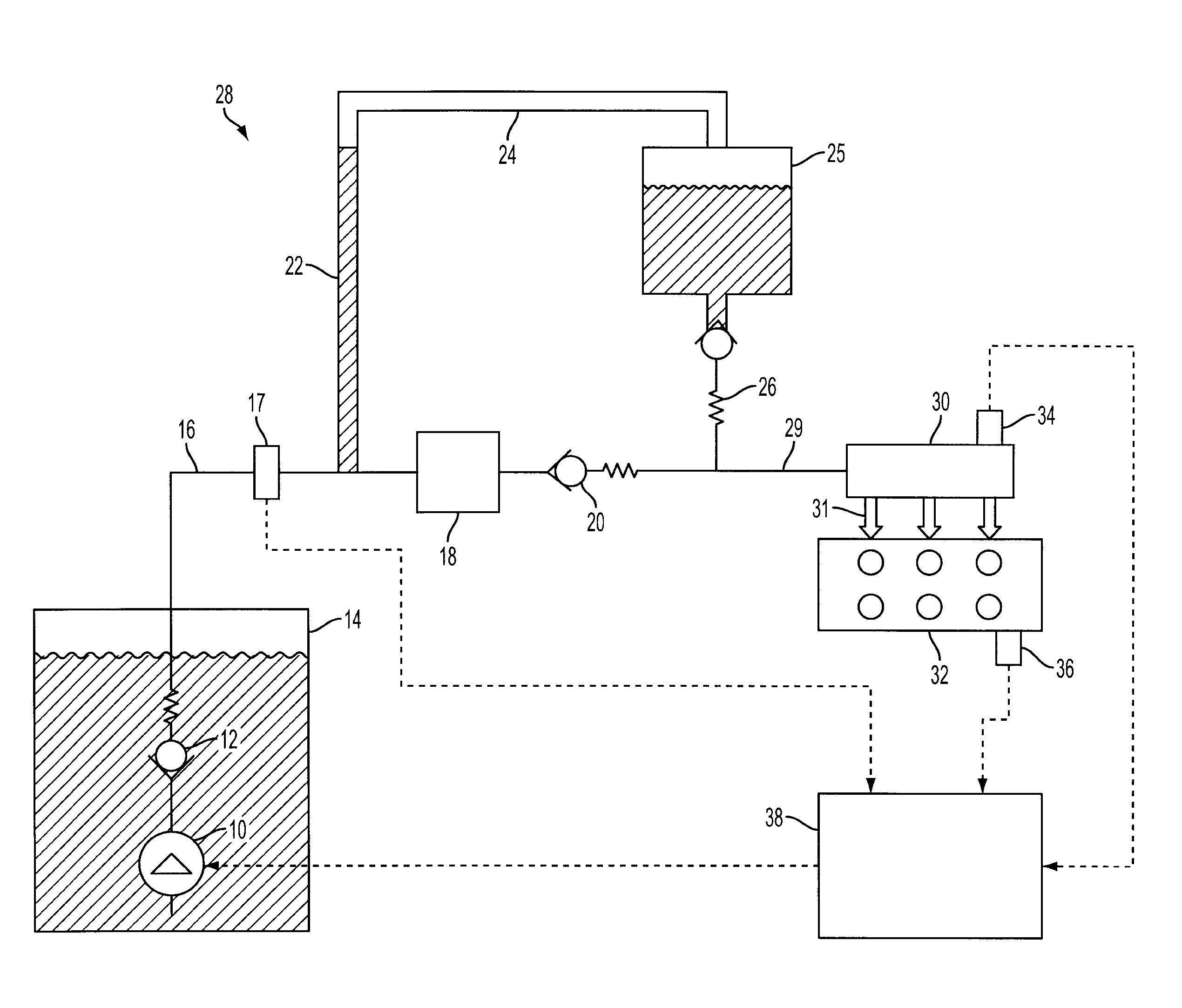
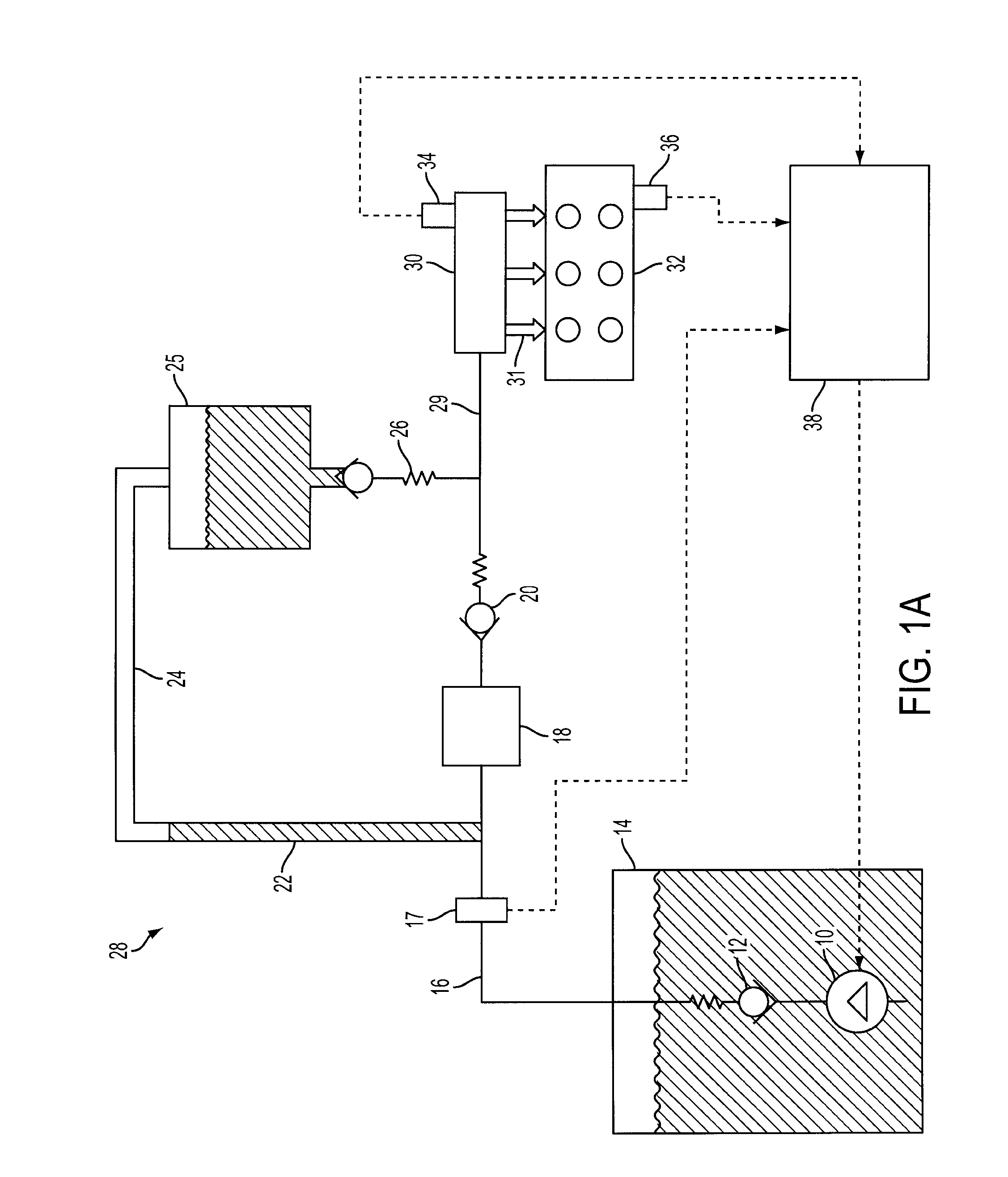
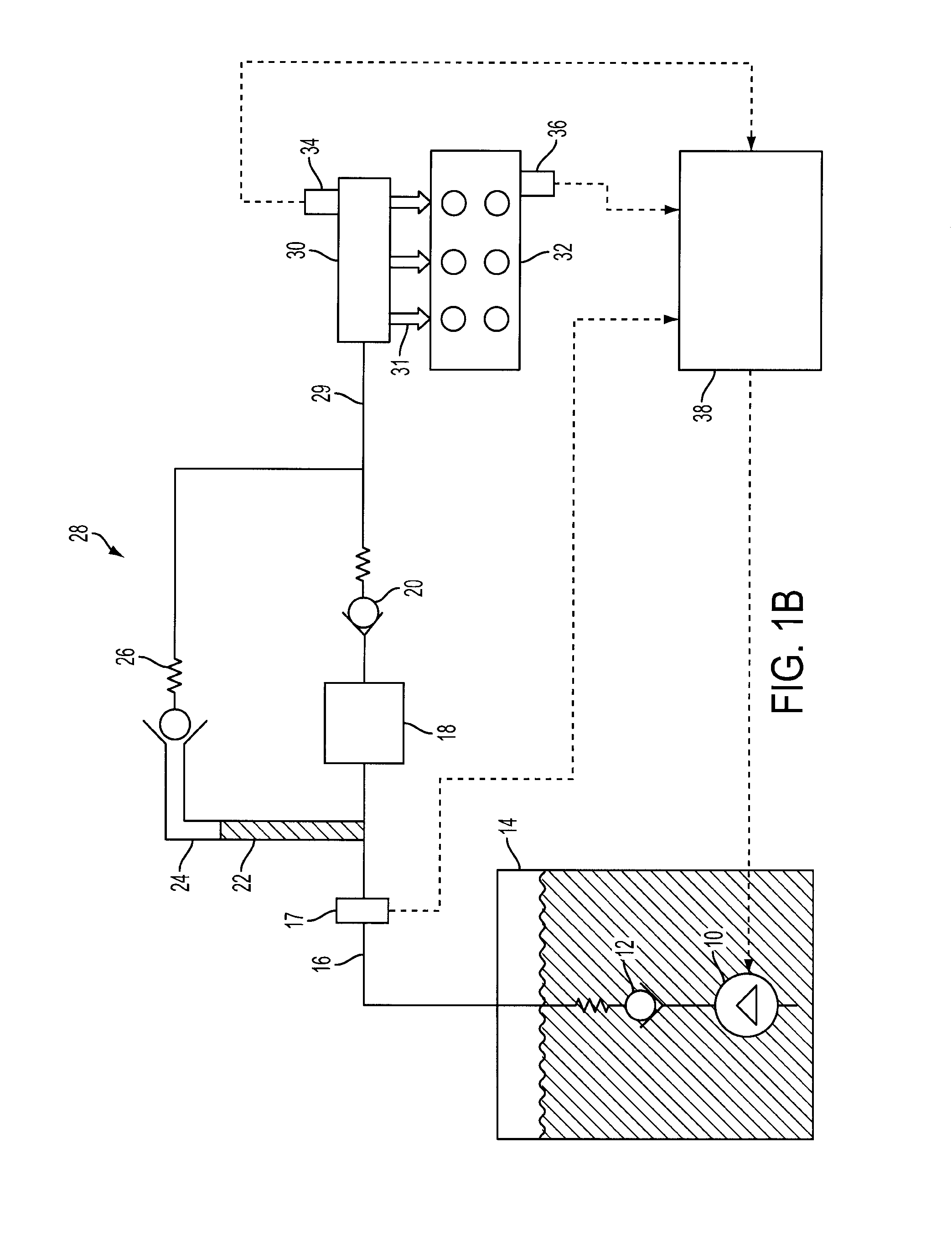
Direct Injection Fuel System with Reservoir
PatentInactiveUS20090107461A1
Innovation
- A fuel delivery system with a lift pump and a high-pressure pump, coupled with a bypass and check valve configuration, where the lift pump is activated during engine shutdown to maintain pressure and fill the fuel rail with liquid fuel, preventing air and vapor ingestion, and a reservoir positioned vertically above the check valve ensures only liquid fuel enters the rail, maintaining pressure and improving fuel pressure rise during engine starts.
Emissions Regulations Impact on GDI Idle Performance
Emissions regulations worldwide have undergone significant evolution over the past two decades, creating a complex regulatory landscape that directly impacts Gasoline Direct Injection (GDI) engine performance during idle conditions. The implementation of increasingly stringent standards such as Euro 6d in Europe, Tier 3 in the United States, and China 6 has fundamentally altered how manufacturers approach idle fuel management strategies in GDI systems.
These regulations have specifically targeted reductions in particulate matter (PM) and nitrogen oxides (NOx), both of which present unique challenges during engine idle operation. At idle, GDI engines typically operate with lower cylinder temperatures and reduced air flow, creating conditions where incomplete combustion becomes more prevalent. Regulatory bodies have recognized this vulnerability, implementing specific idle emission test protocols within certification procedures that manufacturers must satisfy.
The California Air Resources Board (CARB) and the Environmental Protection Agency (EPA) have introduced supplemental idle emission tests that specifically measure pollutant formation during extended idle periods. These tests have forced manufacturers to recalibrate fuel injection strategies, often sacrificing optimal fuel efficiency to maintain compliance with particulate number (PN) limits. Industry data suggests that meeting these idle-specific requirements has resulted in a 2-5% fuel economy penalty across various GDI platforms.
Real Driving Emissions (RDE) testing, now mandatory in several markets, has further complicated idle performance optimization by requiring emissions compliance across a wider range of operating conditions, including prolonged idle periods in urban environments. This has led to the development of adaptive idle control strategies that dynamically adjust fuel injection parameters based on catalyst temperature, ambient conditions, and engine thermal state.
The regulatory focus on cold-start emissions has particular relevance to idle performance, as manufacturers must now ensure rapid catalyst light-off while maintaining stable combustion during the critical warm-up phase. This has driven innovation in split-injection strategies during idle, where multiple injection events per cycle help reduce particulate formation while maintaining combustion stability.
Looking forward, upcoming regulations such as Euro 7 and next-generation CARB standards are expected to further tighten idle emission requirements, potentially mandating near-zero emission levels even during cold idle conditions. This regulatory trajectory suggests that quantifying and optimizing GDI idle fuel efficiency will remain a critical engineering challenge, requiring sophisticated trial methodologies that can accurately capture the complex trade-offs between emissions compliance and fuel economy during various idle conditions.
These regulations have specifically targeted reductions in particulate matter (PM) and nitrogen oxides (NOx), both of which present unique challenges during engine idle operation. At idle, GDI engines typically operate with lower cylinder temperatures and reduced air flow, creating conditions where incomplete combustion becomes more prevalent. Regulatory bodies have recognized this vulnerability, implementing specific idle emission test protocols within certification procedures that manufacturers must satisfy.
The California Air Resources Board (CARB) and the Environmental Protection Agency (EPA) have introduced supplemental idle emission tests that specifically measure pollutant formation during extended idle periods. These tests have forced manufacturers to recalibrate fuel injection strategies, often sacrificing optimal fuel efficiency to maintain compliance with particulate number (PN) limits. Industry data suggests that meeting these idle-specific requirements has resulted in a 2-5% fuel economy penalty across various GDI platforms.
Real Driving Emissions (RDE) testing, now mandatory in several markets, has further complicated idle performance optimization by requiring emissions compliance across a wider range of operating conditions, including prolonged idle periods in urban environments. This has led to the development of adaptive idle control strategies that dynamically adjust fuel injection parameters based on catalyst temperature, ambient conditions, and engine thermal state.
The regulatory focus on cold-start emissions has particular relevance to idle performance, as manufacturers must now ensure rapid catalyst light-off while maintaining stable combustion during the critical warm-up phase. This has driven innovation in split-injection strategies during idle, where multiple injection events per cycle help reduce particulate formation while maintaining combustion stability.
Looking forward, upcoming regulations such as Euro 7 and next-generation CARB standards are expected to further tighten idle emission requirements, potentially mandating near-zero emission levels even during cold idle conditions. This regulatory trajectory suggests that quantifying and optimizing GDI idle fuel efficiency will remain a critical engineering challenge, requiring sophisticated trial methodologies that can accurately capture the complex trade-offs between emissions compliance and fuel economy during various idle conditions.
Trial Design and Statistical Analysis Methods
To effectively quantify the idle fuel efficiency of Gasoline Direct Injection (GDI) engines, a robust trial design and comprehensive statistical analysis methodology must be established. The experimental framework should incorporate both controlled laboratory testing and real-world driving conditions to ensure validity and applicability of results.
Trial design begins with the identification of key variables affecting idle fuel consumption, including engine temperature, ambient conditions, accessory loads, and idle duration. A factorial design approach is recommended to systematically evaluate these variables' individual and interactive effects. The experimental matrix should include multiple GDI engine variants with different displacement volumes and cylinder configurations to ensure broad applicability of findings.
Data collection protocols must be standardized across all test conditions, with high-precision fuel flow meters calibrated to detect differences as small as 0.1 ml/min. Engine control unit (ECU) parameters should be logged at a minimum frequency of 10 Hz to capture transient behaviors during idle operation. Ambient temperature, humidity, and barometric pressure must be controlled in laboratory settings and recorded in field tests to account for environmental influences.
Statistical analysis should employ a multi-tiered approach beginning with descriptive statistics to establish baseline consumption patterns. Analysis of Variance (ANOVA) techniques will determine the statistical significance of observed differences between test conditions, with post-hoc Tukey tests to identify specific group differences. Regression models should be developed to quantify relationships between fuel consumption and identified variables, with particular attention to potential non-linear relationships.
Power analysis must be conducted prior to experimentation to determine appropriate sample sizes, ensuring statistical validity with a minimum confidence level of 95% and power of 0.8. This typically requires 30-50 test cycles per condition, depending on the observed variability in preliminary testing.
For real-world validation, Monte Carlo simulations can be employed to model the impact of uncontrolled variables on idle fuel consumption. Time series analysis should be applied to evaluate the stability of idle fuel consumption over extended periods, identifying potential drift or adaptation behaviors in the engine control systems.
Bayesian statistical methods offer additional insights by incorporating prior knowledge about GDI engine behavior, particularly useful when analyzing limited datasets from specialized test conditions. This approach allows for continuous refinement of predictive models as additional data becomes available through ongoing testing programs.
Trial design begins with the identification of key variables affecting idle fuel consumption, including engine temperature, ambient conditions, accessory loads, and idle duration. A factorial design approach is recommended to systematically evaluate these variables' individual and interactive effects. The experimental matrix should include multiple GDI engine variants with different displacement volumes and cylinder configurations to ensure broad applicability of findings.
Data collection protocols must be standardized across all test conditions, with high-precision fuel flow meters calibrated to detect differences as small as 0.1 ml/min. Engine control unit (ECU) parameters should be logged at a minimum frequency of 10 Hz to capture transient behaviors during idle operation. Ambient temperature, humidity, and barometric pressure must be controlled in laboratory settings and recorded in field tests to account for environmental influences.
Statistical analysis should employ a multi-tiered approach beginning with descriptive statistics to establish baseline consumption patterns. Analysis of Variance (ANOVA) techniques will determine the statistical significance of observed differences between test conditions, with post-hoc Tukey tests to identify specific group differences. Regression models should be developed to quantify relationships between fuel consumption and identified variables, with particular attention to potential non-linear relationships.
Power analysis must be conducted prior to experimentation to determine appropriate sample sizes, ensuring statistical validity with a minimum confidence level of 95% and power of 0.8. This typically requires 30-50 test cycles per condition, depending on the observed variability in preliminary testing.
For real-world validation, Monte Carlo simulations can be employed to model the impact of uncontrolled variables on idle fuel consumption. Time series analysis should be applied to evaluate the stability of idle fuel consumption over extended periods, identifying potential drift or adaptation behaviors in the engine control systems.
Bayesian statistical methods offer additional insights by incorporating prior knowledge about GDI engine behavior, particularly useful when analyzing limited datasets from specialized test conditions. This approach allows for continuous refinement of predictive models as additional data becomes available through ongoing testing programs.
Unlock deeper insights with PatSnap Eureka Quick Research — get a full tech report to explore trends and direct your research. Try now!
Generate Your Research Report Instantly with AI Agent
Supercharge your innovation with PatSnap Eureka AI Agent Platform!