

Anode-Free Solid-State Abuse Testing And Safety
SEP 1, 20259 MIN READ
Generate Your Research Report Instantly with AI Agent
PatSnap Eureka helps you evaluate technical feasibility & market potential.
Anode-Free Battery Technology Background and Objectives
Anode-free battery technology represents a significant evolution in energy storage systems, emerging from decades of lithium-ion battery development. This revolutionary approach eliminates the traditional graphite or silicon anode, allowing batteries to achieve higher energy densities by utilizing lithium metal that forms in situ during the initial charging process. The concept dates back to the 1970s, but has gained substantial momentum in the past decade due to increasing demands for higher energy density storage solutions in electric vehicles, portable electronics, and renewable energy systems.
The fundamental objective of anode-free battery technology is to maximize energy density while maintaining or improving safety profiles. By removing the conventional anode material, these batteries can theoretically achieve energy densities approaching 500 Wh/kg, representing a 50-70% improvement over current commercial lithium-ion batteries. This advancement directly addresses the range anxiety concerns in electric vehicles and extends operational time for portable devices.
The evolution of this technology has been marked by significant challenges, particularly regarding dendrite formation, electrolyte compatibility, and cycle life limitations. Early iterations suffered from rapid capacity fade and safety concerns due to uncontrolled lithium plating. Recent breakthroughs in solid-state electrolytes have revitalized interest in anode-free configurations, as these materials can potentially mitigate many of the safety risks associated with lithium metal interfaces.
Safety testing and abuse tolerance evaluation represent critical aspects of anode-free battery development. Traditional battery safety protocols must be reconsidered and adapted for these novel architectures, as their failure modes differ significantly from conventional lithium-ion systems. The absence of a pre-formed anode creates unique challenges for thermal stability, mechanical integrity, and electrochemical performance under abuse conditions.
Current research aims to establish standardized testing methodologies specifically designed for anode-free configurations, particularly those utilizing solid-state electrolytes. These protocols must address thermal runaway risks, mechanical deformation tolerance, and electrochemical stability under various abuse scenarios including overcharging, external short-circuiting, and physical damage.
The technology trajectory suggests that anode-free solid-state batteries could enter commercial markets within the next 5-7 years, contingent upon resolving remaining challenges in manufacturing scalability, interface stability, and long-term reliability. Major automotive and electronics manufacturers have already announced significant investments in this technology, recognizing its potential to revolutionize energy storage capabilities.
Achieving the full potential of anode-free battery technology requires interdisciplinary collaboration across materials science, electrochemistry, mechanical engineering, and safety engineering fields. The ultimate goal remains developing commercially viable systems that deliver superior energy density while maintaining or exceeding the safety standards established for current lithium-ion technologies.
The fundamental objective of anode-free battery technology is to maximize energy density while maintaining or improving safety profiles. By removing the conventional anode material, these batteries can theoretically achieve energy densities approaching 500 Wh/kg, representing a 50-70% improvement over current commercial lithium-ion batteries. This advancement directly addresses the range anxiety concerns in electric vehicles and extends operational time for portable devices.
The evolution of this technology has been marked by significant challenges, particularly regarding dendrite formation, electrolyte compatibility, and cycle life limitations. Early iterations suffered from rapid capacity fade and safety concerns due to uncontrolled lithium plating. Recent breakthroughs in solid-state electrolytes have revitalized interest in anode-free configurations, as these materials can potentially mitigate many of the safety risks associated with lithium metal interfaces.
Safety testing and abuse tolerance evaluation represent critical aspects of anode-free battery development. Traditional battery safety protocols must be reconsidered and adapted for these novel architectures, as their failure modes differ significantly from conventional lithium-ion systems. The absence of a pre-formed anode creates unique challenges for thermal stability, mechanical integrity, and electrochemical performance under abuse conditions.
Current research aims to establish standardized testing methodologies specifically designed for anode-free configurations, particularly those utilizing solid-state electrolytes. These protocols must address thermal runaway risks, mechanical deformation tolerance, and electrochemical stability under various abuse scenarios including overcharging, external short-circuiting, and physical damage.
The technology trajectory suggests that anode-free solid-state batteries could enter commercial markets within the next 5-7 years, contingent upon resolving remaining challenges in manufacturing scalability, interface stability, and long-term reliability. Major automotive and electronics manufacturers have already announced significant investments in this technology, recognizing its potential to revolutionize energy storage capabilities.
Achieving the full potential of anode-free battery technology requires interdisciplinary collaboration across materials science, electrochemistry, mechanical engineering, and safety engineering fields. The ultimate goal remains developing commercially viable systems that deliver superior energy density while maintaining or exceeding the safety standards established for current lithium-ion technologies.
Market Analysis for Safer Battery Technologies
The global market for safer battery technologies is experiencing unprecedented growth, driven primarily by the expanding electric vehicle (EV) sector and increasing concerns about battery safety. Current market valuations indicate that the safer battery technology segment reached approximately $8.3 billion in 2022 and is projected to grow at a CAGR of 18.7% through 2030, potentially reaching $36.2 billion by the end of the decade.
Anode-free solid-state battery technologies represent a particularly promising segment within this market. These batteries eliminate the traditional graphite anode, replacing it with a lithium metal anode that forms during the initial charge, offering significant advantages in energy density and safety. Market research indicates that solid-state battery technologies could capture up to 25% of the premium battery market by 2030.
Consumer demand for safer battery technologies is being driven by several factors. High-profile battery failure incidents in consumer electronics and EVs have heightened public awareness of safety concerns. Additionally, regulatory bodies worldwide are implementing stricter safety standards for battery technologies, particularly in transportation applications. The European Union's proposed Battery Regulation and similar initiatives in China and the United States are creating strong market incentives for safer battery technologies.
Industry surveys reveal that 78% of potential EV buyers cite battery safety as a "very important" or "extremely important" factor in their purchasing decisions. This consumer sentiment is pushing automotive manufacturers to prioritize battery safety in their product development roadmaps.
The market for abuse testing equipment and safety certification services is also experiencing rapid growth. This segment reached $1.2 billion in 2022 and is expected to grow at a CAGR of 15.3% through 2028. This growth reflects the increasing importance of rigorous safety testing in battery development and certification processes.
Regional analysis shows that Asia-Pacific currently dominates the safer battery technology market, accounting for approximately 45% of global market share, followed by North America (28%) and Europe (22%). However, North America is expected to show the fastest growth rate over the next five years due to substantial investments in domestic battery production and safety research.
Key market segments for anode-free solid-state batteries include electric vehicles (projected to account for 58% of market demand by 2028), consumer electronics (22%), and grid storage applications (15%). The remaining market share is distributed across various industrial applications and specialized use cases requiring enhanced safety profiles.
Anode-free solid-state battery technologies represent a particularly promising segment within this market. These batteries eliminate the traditional graphite anode, replacing it with a lithium metal anode that forms during the initial charge, offering significant advantages in energy density and safety. Market research indicates that solid-state battery technologies could capture up to 25% of the premium battery market by 2030.
Consumer demand for safer battery technologies is being driven by several factors. High-profile battery failure incidents in consumer electronics and EVs have heightened public awareness of safety concerns. Additionally, regulatory bodies worldwide are implementing stricter safety standards for battery technologies, particularly in transportation applications. The European Union's proposed Battery Regulation and similar initiatives in China and the United States are creating strong market incentives for safer battery technologies.
Industry surveys reveal that 78% of potential EV buyers cite battery safety as a "very important" or "extremely important" factor in their purchasing decisions. This consumer sentiment is pushing automotive manufacturers to prioritize battery safety in their product development roadmaps.
The market for abuse testing equipment and safety certification services is also experiencing rapid growth. This segment reached $1.2 billion in 2022 and is expected to grow at a CAGR of 15.3% through 2028. This growth reflects the increasing importance of rigorous safety testing in battery development and certification processes.
Regional analysis shows that Asia-Pacific currently dominates the safer battery technology market, accounting for approximately 45% of global market share, followed by North America (28%) and Europe (22%). However, North America is expected to show the fastest growth rate over the next five years due to substantial investments in domestic battery production and safety research.
Key market segments for anode-free solid-state batteries include electric vehicles (projected to account for 58% of market demand by 2028), consumer electronics (22%), and grid storage applications (15%). The remaining market share is distributed across various industrial applications and specialized use cases requiring enhanced safety profiles.
Current Challenges in Solid-State Battery Safety Testing
Despite significant advancements in solid-state battery technology, safety testing methodologies face substantial challenges that impede widespread commercialization. The absence of standardized testing protocols specifically designed for solid-state batteries represents a critical gap in the industry. Current testing frameworks, primarily developed for liquid electrolyte systems, fail to address the unique failure modes and safety characteristics of solid-state architectures, particularly in anode-free configurations.
Material interface stability presents a formidable challenge during abuse testing. The dynamic behavior of solid electrolyte interfaces under mechanical stress, thermal extremes, and electrical abuse conditions remains poorly understood. When subjected to physical deformation or puncture tests, solid electrolytes exhibit complex fracture mechanics that can create internal short circuits through pathways fundamentally different from those in conventional batteries.
Thermal runaway mechanisms in solid-state systems deviate significantly from liquid electrolyte counterparts. While solid electrolytes theoretically offer enhanced thermal stability, their behavior under extreme conditions reveals unexpected degradation pathways. The propagation of thermal events through solid interfaces follows distinct patterns that current testing equipment struggles to accurately monitor and characterize.
Dendrite formation and growth dynamics during abuse conditions represent another critical testing challenge. Anode-free designs, while promising for energy density improvements, introduce unique safety concerns during charging cycles and abuse scenarios. Current testing methodologies inadequately capture the real-time evolution of dendrite structures that can compromise solid electrolyte integrity.
Accelerated aging protocols for solid-state batteries lack validation, creating uncertainty about long-term safety profiles. The correlation between accelerated testing results and real-world performance remains tenuous, particularly for predicting failure modes after extended cycling or storage periods. This disconnect complicates safety certification processes and risk assessment frameworks.
Instrumentation limitations further compound testing challenges. Conventional sensors designed for liquid-based systems often provide insufficient data resolution when monitoring solid-state architectures. The need for advanced in-situ characterization tools capable of probing internal solid-state battery conditions during abuse testing represents a significant technological gap.
Regulatory frameworks have not kept pace with solid-state battery innovations, creating uncertainty around certification requirements. The absence of specific safety standards for anode-free solid-state designs forces manufacturers to navigate ambiguous compliance pathways, potentially delaying market introduction of promising technologies despite their inherent safety advantages over conventional lithium-ion systems.
Material interface stability presents a formidable challenge during abuse testing. The dynamic behavior of solid electrolyte interfaces under mechanical stress, thermal extremes, and electrical abuse conditions remains poorly understood. When subjected to physical deformation or puncture tests, solid electrolytes exhibit complex fracture mechanics that can create internal short circuits through pathways fundamentally different from those in conventional batteries.
Thermal runaway mechanisms in solid-state systems deviate significantly from liquid electrolyte counterparts. While solid electrolytes theoretically offer enhanced thermal stability, their behavior under extreme conditions reveals unexpected degradation pathways. The propagation of thermal events through solid interfaces follows distinct patterns that current testing equipment struggles to accurately monitor and characterize.
Dendrite formation and growth dynamics during abuse conditions represent another critical testing challenge. Anode-free designs, while promising for energy density improvements, introduce unique safety concerns during charging cycles and abuse scenarios. Current testing methodologies inadequately capture the real-time evolution of dendrite structures that can compromise solid electrolyte integrity.
Accelerated aging protocols for solid-state batteries lack validation, creating uncertainty about long-term safety profiles. The correlation between accelerated testing results and real-world performance remains tenuous, particularly for predicting failure modes after extended cycling or storage periods. This disconnect complicates safety certification processes and risk assessment frameworks.
Instrumentation limitations further compound testing challenges. Conventional sensors designed for liquid-based systems often provide insufficient data resolution when monitoring solid-state architectures. The need for advanced in-situ characterization tools capable of probing internal solid-state battery conditions during abuse testing represents a significant technological gap.
Regulatory frameworks have not kept pace with solid-state battery innovations, creating uncertainty around certification requirements. The absence of specific safety standards for anode-free solid-state designs forces manufacturers to navigate ambiguous compliance pathways, potentially delaying market introduction of promising technologies despite their inherent safety advantages over conventional lithium-ion systems.
Existing Abuse Testing Protocols for Anode-Free Batteries
01 Thermal abuse testing methods for anode-free solid-state batteries
Various thermal abuse testing methods are employed to evaluate the safety of anode-free solid-state batteries under extreme temperature conditions. These tests include thermal runaway tests, high-temperature storage tests, and thermal cycling tests to assess battery stability and safety performance. The testing protocols typically involve controlled heating of battery cells to identify failure modes, measure temperature thresholds for thermal events, and evaluate the effectiveness of safety mechanisms under thermal stress.- Safety testing protocols for anode-free solid-state batteries: Various testing protocols are employed to evaluate the safety of anode-free solid-state batteries under abuse conditions. These include thermal runaway tests, mechanical impact tests, and electrical abuse tests such as overcharging and short-circuit tests. These standardized protocols help assess battery behavior under extreme conditions and establish safety benchmarks for commercial applications.
- Thermal stability and fire resistance mechanisms: Anode-free solid-state batteries incorporate specific design elements to enhance thermal stability and fire resistance. These include specialized solid electrolyte compositions that remain stable at high temperatures, thermal management systems, and fire-retardant additives. These mechanisms help prevent thermal runaway and reduce fire hazards during abuse conditions, significantly improving battery safety compared to conventional lithium-ion batteries.
- Mechanical integrity and crush resistance: Enhancing the mechanical integrity of anode-free solid-state batteries is crucial for safety during physical abuse scenarios. This involves reinforced cell structures, protective casings, and solid electrolytes with high mechanical strength. These design features help prevent internal short circuits during crush events, punctures, or other mechanical impacts, maintaining battery safety even under severe physical stress.
- Failure mode analysis and safety mechanisms: Understanding failure modes in anode-free solid-state batteries enables the development of effective safety mechanisms. These include pressure release vents, current interrupt devices, and electronic battery management systems that can detect and respond to abuse conditions. Advanced monitoring techniques track battery health parameters to predict and prevent catastrophic failures before they occur.
- Electrolyte stability and interface engineering: The stability of solid electrolytes and their interfaces with electrodes is critical for the safety of anode-free solid-state batteries. Advanced interface engineering techniques minimize reactivity between components, prevent dendrite formation, and enhance electrochemical stability. These improvements reduce the risk of internal short circuits and chemical degradation during abuse conditions, significantly enhancing overall battery safety.
02 Mechanical abuse testing for solid-state battery integrity
Mechanical abuse testing evaluates the structural integrity and safety performance of anode-free solid-state batteries under physical stress conditions. These tests include crush tests, penetration tests, impact tests, and vibration tests to simulate real-world mechanical abuse scenarios. The testing protocols assess the battery's resistance to mechanical deformation, internal short circuits, and electrolyte leakage, providing critical data on the robustness of solid-state battery designs and their safety advantages compared to conventional lithium-ion batteries.Expand Specific Solutions03 Electrical abuse testing protocols for anode-free configurations
Electrical abuse testing protocols are specifically designed to evaluate the safety of anode-free solid-state batteries under electrical stress conditions. These tests include overcharge tests, over-discharge tests, external short circuit tests, and rapid charging/discharging tests. The testing methodologies assess the battery's response to electrical abuse, including monitoring for gas generation, temperature rise, voltage fluctuations, and potential thermal events, providing insights into the inherent safety advantages of the anode-free solid-state battery architecture.Expand Specific Solutions04 Safety mechanisms and protective features for anode-free solid-state batteries
Advanced safety mechanisms and protective features are integrated into anode-free solid-state battery designs to enhance their safety performance. These include thermal fuses, current interrupt devices, pressure relief mechanisms, and specialized solid electrolyte formulations with inherent safety properties. The protective features are designed to prevent or mitigate thermal runaway, manage internal pressure buildup, and isolate battery components during abuse conditions, significantly improving the overall safety profile of anode-free solid-state batteries compared to conventional lithium-ion technologies.Expand Specific Solutions05 Standardized safety testing frameworks and regulatory compliance
Standardized safety testing frameworks and regulatory compliance protocols are established for anode-free solid-state batteries to ensure consistent safety evaluation across the industry. These frameworks include internationally recognized standards such as UN 38.3, IEC 62133, and UL 1642, adapted specifically for solid-state battery technologies. The testing requirements cover transportation safety, consumer device safety, and grid storage applications, with specific modifications to address the unique characteristics and failure modes of anode-free solid-state battery configurations.Expand Specific Solutions
Leading Organizations in Solid-State Battery Safety Research
The anode-free solid-state battery safety landscape is currently in the early growth phase, with market size projected to expand significantly as electric vehicle adoption accelerates. The technology maturity varies across key players, with established companies like Siemens AG, Samsung SDI, and LG Energy Solution leading commercial development efforts. Automotive manufacturers including Hyundai, Kia, GM, and Mercedes-Benz are actively investing in this technology to address safety concerns in next-generation EVs. Research institutions such as Georgia Tech, Nanjing Tech University, and Beijing University of Chemical Technology are advancing fundamental understanding of abuse mechanisms. The competitive landscape shows collaboration between industry and academia, with companies like Huawei and Renesas Electronics bringing expertise from adjacent technology sectors to accelerate safety innovations in solid-state battery systems.
Samsung SDI Co., Ltd.
Technical Solution: Samsung SDI has developed a comprehensive anode-free solid-state battery safety testing protocol that incorporates multi-level abuse testing methodologies. Their approach integrates thermal runaway calorimetry with in-situ gas analysis to monitor battery behavior under extreme conditions. The company employs proprietary ceramic-polymer composite electrolytes with high thermal stability (maintaining integrity up to 300°C) combined with lithium metal protection layers to prevent dendrite formation during cycling. Their safety testing framework includes nail penetration tests, overcharge protocols up to 200% capacity, and thermal shock cycling between -40°C and 85°C. Samsung's methodology specifically addresses the unique challenges of anode-free designs, where lithium plating behavior during charging creates distinct safety profiles compared to conventional lithium-ion batteries.
Strengths: Industry-leading thermal stability in their solid electrolyte formulations; comprehensive testing infrastructure with advanced in-situ monitoring capabilities. Weaknesses: Their protection mechanisms add complexity and cost to cell design; testing protocols may not fully represent all real-world abuse scenarios that could occur in consumer applications.
Hyundai Motor Co., Ltd.
Technical Solution: Hyundai has established a specialized anode-free solid-state battery safety evaluation program that emphasizes extreme condition testing relevant to automotive applications. Their methodology incorporates a multi-tiered approach beginning with materials characterization of solid electrolytes under mechanical stress, followed by cell-level abuse testing, and culminating in pack-level thermal propagation assessment. Hyundai's proprietary "K-SSESS" (Korean Solid-State Electrolyte Safety System) testing protocol evaluates mechanical integrity of solid electrolytes under simulated crash conditions with forces up to 100kN. Their anode-free cell design incorporates specialized pressure-regulation mechanisms that accommodate volume changes during lithium plating without compromising the solid electrolyte interface. Hyundai has developed unique testing equipment that can simultaneously apply mechanical stress and electrical cycling to evaluate how physical deformation affects lithium plating behavior in anode-free configurations, a critical factor in assessing real-world safety performance.
Strengths: Exceptional mechanical abuse testing capabilities; innovative pressure regulation systems for managing volume changes. Weaknesses: Testing methodology heavily focused on mechanical aspects with less emphasis on electrochemical abuse conditions; limited published data on long-term cycling effects on safety performance.
Critical Safety Mechanisms in Solid-State Battery Design
Cell with improved abuse tolerance
PatentPendingUS20250030063A1
Innovation
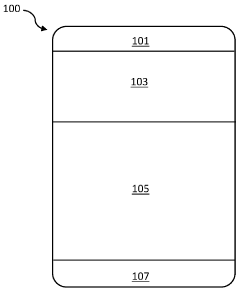
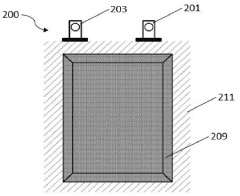
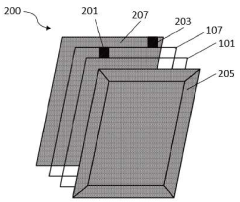
- The anode-free cell design includes a cathode with a cathode current collector between two active material layers, an anode current collector, and a separator. A short-circuit limitation configuration is achieved by using polymer current collectors and ensuring the dimensions of the cathode and anode current collector are either the same or the cathode is larger, which alleviates lithium plating concerns and allows for safer dimensions.


An anode-free solid-state battery and a method of making the same
PatentPendingIN202141047217A
Innovation
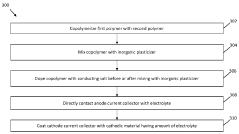
- An anode-free solid-state battery design utilizing a solid polymer electrolyte composed of a copolymer of polyvinylidene fluoride-co-hexafluoropropylene and methoxy poly(ethylene glycol) acrylate, doped with a conducting salt and an inorganic plasticizer, which is coated on both the anode and cathode current collectors to enhance ionic conductivity and stability.
Regulatory Framework for Advanced Battery Technologies
The regulatory landscape for advanced battery technologies, particularly for anode-free solid-state batteries, is evolving rapidly as these technologies progress toward commercialization. Current regulatory frameworks were primarily designed for conventional lithium-ion batteries and may not adequately address the unique characteristics and safety considerations of next-generation battery technologies.
In the United States, the Department of Transportation (DOT) and the Pipeline and Hazardous Materials Safety Administration (PHMSA) regulate the transportation of batteries under 49 CFR 173.185, while the Consumer Product Safety Commission (CPSC) oversees consumer product safety. However, these regulations lack specific provisions for solid-state batteries, creating regulatory gaps for anode-free designs.
The European Union has implemented more comprehensive battery regulations through the Battery Directive (2006/66/EC) and its recent update, the EU Battery Regulation, which introduces sustainability requirements and end-of-life management protocols. The EU has recognized the need for specific safety standards for advanced battery technologies and is working toward developing dedicated testing protocols for solid-state batteries.
International standards organizations play a crucial role in establishing testing methodologies and safety requirements. The International Electrotechnical Commission (IEC) has developed standards such as IEC 62660 for electric vehicle batteries and IEC 62619 for industrial applications, but these standards require updates to address the unique abuse testing requirements of anode-free solid-state batteries.
UN 38.3 testing requirements for lithium batteries in transportation focus on conventional designs and may not fully capture the failure modes specific to solid-state architectures. This creates challenges for manufacturers seeking certification for novel battery designs that don't align with existing test protocols.
Regulatory harmonization remains a significant challenge, with different regions implementing varying requirements. This fragmentation increases compliance costs and may slow the commercialization of innovative battery technologies. Industry stakeholders are advocating for international alignment of safety standards specific to solid-state battery technologies.
Emerging regulatory trends include the development of performance-based standards rather than prescriptive requirements, allowing for technological innovation while maintaining safety. Regulatory bodies are increasingly adopting risk-based approaches that consider the entire battery lifecycle, from raw material sourcing to end-of-life management, particularly relevant for solid-state technologies that may utilize different material compositions.
In the United States, the Department of Transportation (DOT) and the Pipeline and Hazardous Materials Safety Administration (PHMSA) regulate the transportation of batteries under 49 CFR 173.185, while the Consumer Product Safety Commission (CPSC) oversees consumer product safety. However, these regulations lack specific provisions for solid-state batteries, creating regulatory gaps for anode-free designs.
The European Union has implemented more comprehensive battery regulations through the Battery Directive (2006/66/EC) and its recent update, the EU Battery Regulation, which introduces sustainability requirements and end-of-life management protocols. The EU has recognized the need for specific safety standards for advanced battery technologies and is working toward developing dedicated testing protocols for solid-state batteries.
International standards organizations play a crucial role in establishing testing methodologies and safety requirements. The International Electrotechnical Commission (IEC) has developed standards such as IEC 62660 for electric vehicle batteries and IEC 62619 for industrial applications, but these standards require updates to address the unique abuse testing requirements of anode-free solid-state batteries.
UN 38.3 testing requirements for lithium batteries in transportation focus on conventional designs and may not fully capture the failure modes specific to solid-state architectures. This creates challenges for manufacturers seeking certification for novel battery designs that don't align with existing test protocols.
Regulatory harmonization remains a significant challenge, with different regions implementing varying requirements. This fragmentation increases compliance costs and may slow the commercialization of innovative battery technologies. Industry stakeholders are advocating for international alignment of safety standards specific to solid-state battery technologies.
Emerging regulatory trends include the development of performance-based standards rather than prescriptive requirements, allowing for technological innovation while maintaining safety. Regulatory bodies are increasingly adopting risk-based approaches that consider the entire battery lifecycle, from raw material sourcing to end-of-life management, particularly relevant for solid-state technologies that may utilize different material compositions.
Thermal Runaway Prevention Strategies
Thermal runaway prevention in anode-free solid-state batteries represents a critical safety frontier in advanced energy storage systems. The elimination of traditional graphite anodes creates unique safety challenges that require specialized prevention strategies. Current approaches focus on multi-layered protection mechanisms that operate at different stages of thermal event progression.
Material-level prevention strategies constitute the first line of defense, incorporating thermally stable solid electrolytes with high decomposition temperatures exceeding 300°C. These materials, including sulfide-based and oxide-based solid electrolytes, demonstrate superior thermal stability compared to conventional liquid electrolytes. Additionally, advanced separator designs featuring ceramic-polymer composites with thermal shutdown capabilities activate at predetermined temperature thresholds to interrupt ion transport before critical temperatures are reached.
Cell-level engineering approaches implement pressure-release mechanisms specifically calibrated for the unique expansion characteristics of anode-free architectures. These mechanisms effectively manage internal pressure buildup during abuse conditions without compromising the solid-state structure. Thermal gradient management systems, utilizing phase-change materials integrated within cell components, absorb excess heat during temperature spikes, thereby slowing thermal propagation rates by up to 60% compared to conventional designs.
Electronic protection systems provide active monitoring and intervention capabilities through embedded temperature sensors with microsecond response times. These sensors trigger protective circuits when detecting abnormal temperature gradients characteristic of early-stage thermal events. Advanced battery management systems (BMS) specifically designed for anode-free configurations continuously monitor voltage fluctuations and impedance changes that may indicate potential safety issues, implementing preemptive current limitation protocols before thermal runaway conditions develop.
External protection strategies complement internal mechanisms through specialized battery pack designs featuring thermal isolation barriers between cells. These barriers, composed of intumescent materials, expand upon heating to create physical separation that prevents cell-to-cell thermal propagation. Cooling systems optimized for the unique thermal profiles of anode-free cells maintain temperature uniformity across the battery pack, eliminating hotspots that could initiate thermal events.
Testing protocols for validating these prevention strategies have evolved to address the specific characteristics of anode-free solid-state systems. These include modified nail penetration tests that account for the absence of liquid electrolyte, thermal ramp tests calibrated to solid-state thermal conductivity profiles, and specialized overcharge protocols that consider the unique lithium plating dynamics of anode-free configurations.
Material-level prevention strategies constitute the first line of defense, incorporating thermally stable solid electrolytes with high decomposition temperatures exceeding 300°C. These materials, including sulfide-based and oxide-based solid electrolytes, demonstrate superior thermal stability compared to conventional liquid electrolytes. Additionally, advanced separator designs featuring ceramic-polymer composites with thermal shutdown capabilities activate at predetermined temperature thresholds to interrupt ion transport before critical temperatures are reached.
Cell-level engineering approaches implement pressure-release mechanisms specifically calibrated for the unique expansion characteristics of anode-free architectures. These mechanisms effectively manage internal pressure buildup during abuse conditions without compromising the solid-state structure. Thermal gradient management systems, utilizing phase-change materials integrated within cell components, absorb excess heat during temperature spikes, thereby slowing thermal propagation rates by up to 60% compared to conventional designs.
Electronic protection systems provide active monitoring and intervention capabilities through embedded temperature sensors with microsecond response times. These sensors trigger protective circuits when detecting abnormal temperature gradients characteristic of early-stage thermal events. Advanced battery management systems (BMS) specifically designed for anode-free configurations continuously monitor voltage fluctuations and impedance changes that may indicate potential safety issues, implementing preemptive current limitation protocols before thermal runaway conditions develop.
External protection strategies complement internal mechanisms through specialized battery pack designs featuring thermal isolation barriers between cells. These barriers, composed of intumescent materials, expand upon heating to create physical separation that prevents cell-to-cell thermal propagation. Cooling systems optimized for the unique thermal profiles of anode-free cells maintain temperature uniformity across the battery pack, eliminating hotspots that could initiate thermal events.
Testing protocols for validating these prevention strategies have evolved to address the specific characteristics of anode-free solid-state systems. These include modified nail penetration tests that account for the absence of liquid electrolyte, thermal ramp tests calibrated to solid-state thermal conductivity profiles, and specialized overcharge protocols that consider the unique lithium plating dynamics of anode-free configurations.
Unlock deeper insights with PatSnap Eureka Quick Research — get a full tech report to explore trends and direct your research. Try now!
Generate Your Research Report Instantly with AI Agent
Supercharge your innovation with PatSnap Eureka AI Agent Platform!