

Anode-Free Solid-State Stack Design And Packaging
SEP 1, 20259 MIN READ
Generate Your Research Report Instantly with AI Agent
PatSnap Eureka helps you evaluate technical feasibility & market potential.
Anode-Free Battery Technology Background and Objectives
Anode-free battery technology represents a significant evolution in the field of energy storage, emerging as a promising solution to address the limitations of conventional lithium-ion batteries. The concept dates back to the early 2010s, when researchers began exploring ways to eliminate the traditional graphite anode to achieve higher energy densities. By removing the anode host material, these batteries can potentially deliver up to 60% higher energy density compared to conventional lithium-ion batteries, making them particularly attractive for applications where weight and space constraints are critical.
The technological evolution has been driven by the increasing demand for higher energy density batteries in electric vehicles, consumer electronics, and grid storage systems. Traditional lithium-ion batteries have approached their theoretical energy density limits, necessitating fundamental design changes to achieve further improvements. Anode-free battery design represents one such paradigm shift, where lithium metal is directly plated onto the current collector during charging, eliminating the need for a host material.
The primary objective of anode-free solid-state battery technology is to combine the energy density advantages of lithium metal with the safety benefits of solid electrolytes. This approach aims to address the persistent challenges associated with lithium metal anodes, particularly dendrite formation and electrolyte decomposition, which have historically limited their commercial viability. By incorporating solid-state electrolytes, these batteries seek to provide a physical barrier against dendrite growth while enabling stable lithium plating and stripping.
Current research objectives focus on developing viable stack designs and packaging solutions that can maintain the integrity of the solid-state electrolyte-lithium metal interface during cycling. This includes addressing challenges related to volume changes during lithium plating/stripping, ensuring uniform current distribution, and maintaining effective pressure within the cell to promote good contact between components. Additionally, researchers aim to develop manufacturing processes that are scalable and compatible with existing production infrastructure.
The long-term technological goal is to create anode-free solid-state batteries that deliver energy densities exceeding 400 Wh/kg at the cell level, with cycle life comparable to conventional lithium-ion batteries (>1000 cycles), fast charging capabilities, and operation across a wide temperature range. Achieving these targets would represent a step-change in battery technology, potentially enabling electric vehicles with ranges exceeding 500 miles and significantly reduced charging times.
The technological evolution has been driven by the increasing demand for higher energy density batteries in electric vehicles, consumer electronics, and grid storage systems. Traditional lithium-ion batteries have approached their theoretical energy density limits, necessitating fundamental design changes to achieve further improvements. Anode-free battery design represents one such paradigm shift, where lithium metal is directly plated onto the current collector during charging, eliminating the need for a host material.
The primary objective of anode-free solid-state battery technology is to combine the energy density advantages of lithium metal with the safety benefits of solid electrolytes. This approach aims to address the persistent challenges associated with lithium metal anodes, particularly dendrite formation and electrolyte decomposition, which have historically limited their commercial viability. By incorporating solid-state electrolytes, these batteries seek to provide a physical barrier against dendrite growth while enabling stable lithium plating and stripping.
Current research objectives focus on developing viable stack designs and packaging solutions that can maintain the integrity of the solid-state electrolyte-lithium metal interface during cycling. This includes addressing challenges related to volume changes during lithium plating/stripping, ensuring uniform current distribution, and maintaining effective pressure within the cell to promote good contact between components. Additionally, researchers aim to develop manufacturing processes that are scalable and compatible with existing production infrastructure.
The long-term technological goal is to create anode-free solid-state batteries that deliver energy densities exceeding 400 Wh/kg at the cell level, with cycle life comparable to conventional lithium-ion batteries (>1000 cycles), fast charging capabilities, and operation across a wide temperature range. Achieving these targets would represent a step-change in battery technology, potentially enabling electric vehicles with ranges exceeding 500 miles and significantly reduced charging times.
Market Analysis for Solid-State Battery Solutions
The solid-state battery market is experiencing unprecedented growth, driven by increasing demand for safer, higher energy density power solutions across multiple industries. Current market valuations place the global solid-state battery sector at approximately $500 million in 2023, with projections indicating expansion to $8 billion by 2030, representing a compound annual growth rate (CAGR) of 48.7%. This remarkable growth trajectory is primarily fueled by automotive applications, which account for nearly 60% of the market demand.
Consumer electronics represents the second-largest market segment at 25%, followed by aerospace and defense at 10%. The remaining 5% encompasses emerging applications in medical devices, grid storage, and industrial equipment. Regional analysis reveals Asia-Pacific leading with 45% market share, followed by North America (30%) and Europe (20%), with the rest of the world comprising the remaining 5%.
Anode-free solid-state battery designs are gaining significant traction within this landscape due to their potential to deliver up to 80% higher energy density compared to conventional lithium-ion batteries. Market research indicates that anode-free configurations could capture 35% of the solid-state battery market by 2028, representing a specialized high-value segment.
Key market drivers include stringent safety regulations following high-profile battery failures, government initiatives promoting electric vehicle adoption, and increasing consumer demand for longer-lasting portable electronics. The European Union's Battery Directive and similar regulations in China and the United States are creating favorable market conditions for solid-state technologies, particularly anode-free designs that eliminate flammable components.
Customer pain points creating market pull include range anxiety in electric vehicles, battery degradation concerns, and charging speed limitations. Surveys indicate 78% of potential EV buyers cite battery performance as their primary purchase consideration, with safety ranking second at 65%.
Market barriers include high production costs, with current anode-free solid-state batteries costing 4-6 times more than conventional lithium-ion cells. Scaling manufacturing processes remains challenging, with yield rates averaging below 70% for complex stack designs. Additionally, packaging innovations are needed to address moisture sensitivity issues that currently limit shelf life and operational durability.
The competitive landscape features established battery manufacturers investing heavily in solid-state technology, alongside specialized startups focused exclusively on anode-free designs. Strategic partnerships between automotive OEMs and battery developers have increased by 65% since 2020, indicating strong industry commitment to commercializing these advanced energy storage solutions.
Consumer electronics represents the second-largest market segment at 25%, followed by aerospace and defense at 10%. The remaining 5% encompasses emerging applications in medical devices, grid storage, and industrial equipment. Regional analysis reveals Asia-Pacific leading with 45% market share, followed by North America (30%) and Europe (20%), with the rest of the world comprising the remaining 5%.
Anode-free solid-state battery designs are gaining significant traction within this landscape due to their potential to deliver up to 80% higher energy density compared to conventional lithium-ion batteries. Market research indicates that anode-free configurations could capture 35% of the solid-state battery market by 2028, representing a specialized high-value segment.
Key market drivers include stringent safety regulations following high-profile battery failures, government initiatives promoting electric vehicle adoption, and increasing consumer demand for longer-lasting portable electronics. The European Union's Battery Directive and similar regulations in China and the United States are creating favorable market conditions for solid-state technologies, particularly anode-free designs that eliminate flammable components.
Customer pain points creating market pull include range anxiety in electric vehicles, battery degradation concerns, and charging speed limitations. Surveys indicate 78% of potential EV buyers cite battery performance as their primary purchase consideration, with safety ranking second at 65%.
Market barriers include high production costs, with current anode-free solid-state batteries costing 4-6 times more than conventional lithium-ion cells. Scaling manufacturing processes remains challenging, with yield rates averaging below 70% for complex stack designs. Additionally, packaging innovations are needed to address moisture sensitivity issues that currently limit shelf life and operational durability.
The competitive landscape features established battery manufacturers investing heavily in solid-state technology, alongside specialized startups focused exclusively on anode-free designs. Strategic partnerships between automotive OEMs and battery developers have increased by 65% since 2020, indicating strong industry commitment to commercializing these advanced energy storage solutions.
Current Challenges in Anode-Free Solid-State Technology
Despite significant advancements in solid-state battery technology, anode-free solid-state designs face several critical challenges that impede their commercial viability. The most fundamental issue remains the solid electrolyte interface stability. Unlike conventional lithium-ion batteries with liquid electrolytes, solid-state systems struggle to maintain consistent contact between the in-situ formed lithium metal anode and the solid electrolyte during cycling, leading to increased interfacial resistance and eventual performance degradation.
Mechanical stress management presents another significant hurdle. During charge-discharge cycles, lithium plating and stripping causes substantial volume changes (approximately 70-80%) that create mechanical stresses at the interface. These stresses can lead to delamination, crack formation, and ultimately failure of the solid electrolyte, compromising both safety and performance metrics.
Dendrite formation remains particularly problematic in anode-free designs. Without a pre-existing anode structure to guide lithium deposition, lithium ions tend to plate unevenly during charging, forming dendrites that can penetrate the solid electrolyte. This phenomenon not only reduces cycling efficiency but also creates potential short-circuit pathways, presenting serious safety concerns.
Manufacturing scalability poses significant challenges for stack design and packaging. Current laboratory-scale fabrication methods for solid-state components often involve complex processes that are difficult to scale to industrial production levels. The precision required for creating uniform, defect-free interfaces between components becomes increasingly difficult at larger scales.
Packaging integrity represents a critical concern unique to solid-state systems. Unlike liquid-electrolyte batteries that can accommodate some degree of expansion, solid-state batteries require hermetic sealing solutions that maintain perfect environmental isolation while accommodating the mechanical stresses of cycling. Current packaging technologies struggle to meet these demanding requirements while remaining cost-effective.
Thermal management challenges are exacerbated in anode-free designs. The absence of a pre-formed anode means that heat generation during lithium plating/stripping is concentrated at the electrolyte interface, creating localized hot spots that can accelerate degradation mechanisms. Effective heat dissipation strategies must be integrated into the stack design without compromising the overall energy density advantages.
Cost considerations remain a significant barrier to commercialization. The specialized materials and precision manufacturing processes required for anode-free solid-state batteries currently result in production costs several times higher than conventional lithium-ion technologies. Achieving cost parity while maintaining performance advantages represents perhaps the most significant challenge facing the industry today.
Mechanical stress management presents another significant hurdle. During charge-discharge cycles, lithium plating and stripping causes substantial volume changes (approximately 70-80%) that create mechanical stresses at the interface. These stresses can lead to delamination, crack formation, and ultimately failure of the solid electrolyte, compromising both safety and performance metrics.
Dendrite formation remains particularly problematic in anode-free designs. Without a pre-existing anode structure to guide lithium deposition, lithium ions tend to plate unevenly during charging, forming dendrites that can penetrate the solid electrolyte. This phenomenon not only reduces cycling efficiency but also creates potential short-circuit pathways, presenting serious safety concerns.
Manufacturing scalability poses significant challenges for stack design and packaging. Current laboratory-scale fabrication methods for solid-state components often involve complex processes that are difficult to scale to industrial production levels. The precision required for creating uniform, defect-free interfaces between components becomes increasingly difficult at larger scales.
Packaging integrity represents a critical concern unique to solid-state systems. Unlike liquid-electrolyte batteries that can accommodate some degree of expansion, solid-state batteries require hermetic sealing solutions that maintain perfect environmental isolation while accommodating the mechanical stresses of cycling. Current packaging technologies struggle to meet these demanding requirements while remaining cost-effective.
Thermal management challenges are exacerbated in anode-free designs. The absence of a pre-formed anode means that heat generation during lithium plating/stripping is concentrated at the electrolyte interface, creating localized hot spots that can accelerate degradation mechanisms. Effective heat dissipation strategies must be integrated into the stack design without compromising the overall energy density advantages.
Cost considerations remain a significant barrier to commercialization. The specialized materials and precision manufacturing processes required for anode-free solid-state batteries currently result in production costs several times higher than conventional lithium-ion technologies. Achieving cost parity while maintaining performance advantages represents perhaps the most significant challenge facing the industry today.
Current Stack Design and Packaging Solutions
01 Anode-free battery architecture and design principles
Anode-free solid-state batteries eliminate the traditional anode layer, instead allowing lithium ions to plate directly onto the current collector during charging. This design significantly increases energy density by reducing inactive components while maintaining structural integrity. The architecture typically includes a cathode, solid electrolyte, and current collector that serves as the plating surface for lithium ions. This approach addresses challenges of volume expansion and dendrite formation through specialized interface engineering and pressure management systems.- Anode-free battery architecture and design principles: Anode-free solid-state batteries eliminate the traditional anode layer, allowing lithium metal to plate directly onto the current collector during charging. This design significantly increases energy density while reducing overall battery weight and volume. The architecture typically includes a cathode, solid electrolyte, and current collector that serves as the plating surface for lithium during operation. This approach addresses challenges of conventional lithium-metal batteries while maximizing energy storage capacity.
- Solid electrolyte materials and interfaces: Advanced solid electrolyte materials are crucial for anode-free battery performance, with options including ceramic, polymer, and composite electrolytes. These materials must exhibit high ionic conductivity while maintaining mechanical stability to withstand volume changes during cycling. Interface engineering between the electrolyte and current collector is essential to ensure uniform lithium plating and prevent dendrite formation. Surface treatments and interlayers are employed to improve contact and reduce interfacial resistance.
- Stack design and cell arrangement: The stack design of anode-free solid-state batteries involves precise arrangement of multiple cells to optimize performance and thermal management. Bipolar configurations allow for shared current collectors between adjacent cells, reducing weight and volume while improving energy density. Pressure application systems are integrated into the stack design to maintain intimate contact between components during cycling. The arrangement must account for thermal expansion and contraction while ensuring uniform pressure distribution across the active area.
- Packaging solutions and sealing technologies: Specialized packaging solutions for anode-free solid-state batteries focus on hermetic sealing to protect moisture-sensitive components. Edge sealing technologies prevent lithium migration and short circuits while accommodating volume changes during cycling. Packaging materials must be chemically compatible with all battery components and provide mechanical support to maintain stack pressure. Flexible and rigid packaging options are developed based on application requirements, with considerations for thermal management and safety features.
- Manufacturing processes and scale-up considerations: Manufacturing anode-free solid-state batteries requires specialized processes including dry-room assembly, precision layer deposition, and controlled pressure application. Roll-to-roll and sheet-to-sheet fabrication methods are adapted for solid-state components with tight tolerance requirements. Scale-up considerations address challenges in maintaining uniform solid electrolyte thickness and ensuring consistent interface quality across larger format cells. Advanced quality control methods monitor critical parameters during production to ensure performance consistency and safety.
02 Solid electrolyte materials and interfaces
Advanced solid electrolyte materials are critical for anode-free battery performance, with compositions including ceramic, polymer, and composite electrolytes. These materials must exhibit high ionic conductivity while maintaining mechanical stability to prevent dendrite formation. Interface engineering between the electrolyte and current collector is essential, often incorporating specialized coatings or gradient structures to facilitate uniform lithium plating. Techniques such as atomic layer deposition and solution processing are employed to create optimal interfaces that minimize resistance and enhance cycling stability.Expand Specific Solutions03 Stack design and pressure management systems
Stack design for anode-free solid-state batteries requires precise pressure management to maintain intimate contact between components while accommodating volume changes during cycling. Specialized pressure application systems using springs, elastic materials, or hydraulic mechanisms ensure uniform pressure distribution across the cell stack. Multi-layer designs with alternating cathode and current collector layers maximize energy density while maintaining structural integrity. The stack architecture often incorporates auxiliary components such as pressure sensors and thermal management systems to optimize performance and safety.Expand Specific Solutions04 Packaging solutions and sealing technologies
Hermetic packaging solutions are essential for anode-free solid-state batteries to prevent moisture and oxygen contamination. Advanced sealing technologies employ laser welding, ultrasonic bonding, or specialized adhesives to create impermeable barriers. Packaging designs must accommodate thermal expansion while maintaining mechanical integrity during operation. Flexible and rigid packaging options are developed based on application requirements, with considerations for weight, volume, and environmental resistance. Some designs incorporate integrated sensors for real-time monitoring of internal conditions.Expand Specific Solutions05 Manufacturing processes and scalability considerations
Manufacturing anode-free solid-state batteries presents unique challenges requiring specialized processes. Techniques such as dry film casting, tape casting, and roll-to-roll processing are adapted for solid electrolyte and cathode fabrication. Assembly methods focus on maintaining clean interfaces and precise alignment of components. Scalability considerations include process automation, quality control measures, and cost-effective material handling. Advanced manufacturing approaches incorporate in-line monitoring and non-destructive testing to ensure consistency and reliability in high-volume production environments.Expand Specific Solutions
Leading Companies in Anode-Free Battery Development
The anode-free solid-state stack design and packaging market is in an early growth phase, characterized by significant R&D investment but limited commercial deployment. The global market is projected to expand rapidly as battery technology advances, driven by demand for higher energy density solutions in electric vehicles and energy storage. Key players represent diverse technological approaches: LG Energy Solution and Samsung Electronics lead with commercial scale capabilities; Sunrise Power and Ningbo Sofcman Energy focus on specialized stack designs; while research institutions like Ningbo Institute of Industrial Technology and Xi'an Jiaotong University contribute fundamental innovations. The technology remains at mid-maturity level, with companies like Applied Materials and 3M providing critical materials solutions, though mass manufacturing challenges persist before widespread adoption.
LG Energy Solution Ltd.
Technical Solution: LG Energy Solution has developed advanced anode-free solid-state battery technology that eliminates the traditional graphite anode, replacing it with a lithium metal anode that forms during the initial charging process. Their design incorporates a proprietary solid electrolyte interface (SEI) layer that stabilizes the lithium metal surface and prevents dendrite formation. The company's stack design features a multi-layer architecture with optimized pressure distribution systems to maintain consistent contact between components during thermal cycling. Their packaging solution utilizes hermetically sealed aluminum-polymer composite pouches with specialized edge sealing technology to prevent moisture ingress, which is critical for solid electrolyte stability. Recent advancements include their "dry electrode" manufacturing process that eliminates toxic solvents and reduces production costs by approximately 40%.
Strengths: Superior energy density (up to 900 Wh/L) compared to conventional lithium-ion batteries; excellent cycle life exceeding 1000 cycles with minimal capacity degradation; advanced manufacturing capabilities for scaled production. Weaknesses: Higher production costs than conventional batteries; temperature sensitivity requiring sophisticated thermal management systems; challenges with interface stability between solid electrolyte and electrodes.
Battelle Memorial Institute
Technical Solution: Battelle Memorial Institute has pioneered a unique approach to anode-free solid-state battery technology through their Advanced Materials division. Their design utilizes a composite solid electrolyte system combining sulfide-based inorganic components with polymer stabilizers to achieve both high ionic conductivity (>5 mS/cm at room temperature) and mechanical flexibility. Battelle's stack architecture features a gradient-structured electrolyte interface that minimizes impedance growth during cycling while preventing lithium dendrite penetration. Their packaging solution incorporates specialized pressure-regulation mechanisms that accommodate volume changes during cycling while maintaining hermetic sealing against moisture and oxygen contamination. A key innovation in their approach is the development of a proprietary interface engineering technique that creates a stable interphase between the lithium metal and solid electrolyte, reducing interfacial resistance by approximately 70% compared to conventional designs. Battelle has also developed specialized manufacturing processes that enable scalable production of these complex multi-material systems.
Strengths: Exceptional research capabilities and multidisciplinary expertise spanning materials science, electrochemistry, and manufacturing; strong partnerships with industry and government agencies; advanced characterization facilities for detailed failure analysis and performance optimization. Weaknesses: Less direct commercialization experience compared to major battery manufacturers; challenges in transitioning from laboratory to production scale; higher initial costs associated with specialized materials and manufacturing processes.
Key Patents in Anode-Free Solid-State Technology
Anode-free solid-state battery and method of battery fabrication
PatentActiveUS11824159B2
Innovation
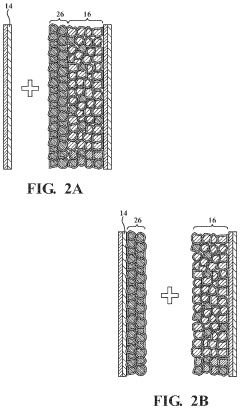
- An anode-free solid-state battery design that uses a cathode layer with transient anode elements, a bare current collector, and a gelled solid-state electrolyte layer to facilitate ionic conduction, eliminating the need for a permanent anode and simplifying the battery structure.



An anode-free solid-state battery and a method of making the same
PatentPendingIN202141047217A
Innovation
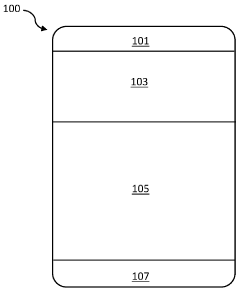
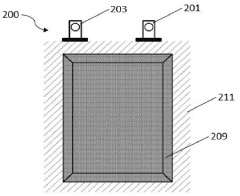
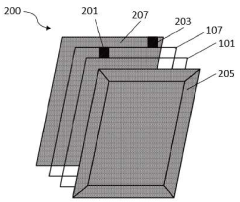
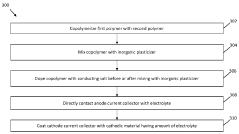
- An anode-free solid-state battery design utilizing a solid polymer electrolyte composed of a copolymer of polyvinylidene fluoride-co-hexafluoropropylene and methoxy poly(ethylene glycol) acrylate, doped with a conducting salt and an inorganic plasticizer, which is coated on both the anode and cathode current collectors to enhance ionic conductivity and stability.
Manufacturing Scalability Assessment
The scalability of manufacturing processes for anode-free solid-state battery stack designs presents significant challenges and opportunities for commercialization. Current production methods remain largely laboratory-focused, with limited throughput capabilities that hinder industrial-scale deployment. The transition from small-scale prototyping to mass production requires substantial process engineering innovations to maintain quality while increasing volume.
Key manufacturing bottlenecks include the precise deposition of ultra-thin lithium metal layers and the handling of highly reactive materials in controlled environments. These processes demand specialized equipment and stringent quality control measures that are difficult to scale using conventional battery manufacturing infrastructure. The absence of traditional anode materials also necessitates redesigned production lines that can accommodate the unique assembly sequence of anode-free configurations.
Material supply chains represent another critical constraint, particularly for solid electrolytes and specialized current collectors. The limited availability of high-purity materials suitable for anode-free designs restricts production capacity and increases costs. Establishing robust supplier networks capable of delivering consistent quality at industrial volumes remains a prerequisite for widespread adoption.
Cost modeling analyses indicate that anode-free designs could potentially achieve 15-20% lower production costs compared to conventional lithium-ion batteries once scaled, primarily due to material savings and simplified stack architecture. However, this advantage is currently offset by higher process complexity and specialized equipment requirements during the scaling phase.
Several industry leaders have demonstrated pilot production lines with capacities ranging from 5-20 MWh annually. QuantumScape has reported progress in scaling their ceramic separator manufacturing process, while Solid Power has focused on roll-to-roll processing techniques adaptable to anode-free configurations. These developments suggest viable pathways to industrial-scale production within 3-5 years.
Automation represents a critical enabler for manufacturing scalability. Advanced robotics and precision handling systems are being developed specifically for the delicate assembly processes required by anode-free designs. These systems must maintain ultra-clean environments while achieving throughput rates comparable to conventional battery production lines.
Standardization efforts across the industry will be essential for accelerating manufacturing scalability. Current variations in cell formats, electrolyte compositions, and packaging approaches create fragmentation that impedes economies of scale. Industry consortia are beginning to address these challenges through collaborative development of manufacturing standards specific to solid-state technologies.
Key manufacturing bottlenecks include the precise deposition of ultra-thin lithium metal layers and the handling of highly reactive materials in controlled environments. These processes demand specialized equipment and stringent quality control measures that are difficult to scale using conventional battery manufacturing infrastructure. The absence of traditional anode materials also necessitates redesigned production lines that can accommodate the unique assembly sequence of anode-free configurations.
Material supply chains represent another critical constraint, particularly for solid electrolytes and specialized current collectors. The limited availability of high-purity materials suitable for anode-free designs restricts production capacity and increases costs. Establishing robust supplier networks capable of delivering consistent quality at industrial volumes remains a prerequisite for widespread adoption.
Cost modeling analyses indicate that anode-free designs could potentially achieve 15-20% lower production costs compared to conventional lithium-ion batteries once scaled, primarily due to material savings and simplified stack architecture. However, this advantage is currently offset by higher process complexity and specialized equipment requirements during the scaling phase.
Several industry leaders have demonstrated pilot production lines with capacities ranging from 5-20 MWh annually. QuantumScape has reported progress in scaling their ceramic separator manufacturing process, while Solid Power has focused on roll-to-roll processing techniques adaptable to anode-free configurations. These developments suggest viable pathways to industrial-scale production within 3-5 years.
Automation represents a critical enabler for manufacturing scalability. Advanced robotics and precision handling systems are being developed specifically for the delicate assembly processes required by anode-free designs. These systems must maintain ultra-clean environments while achieving throughput rates comparable to conventional battery production lines.
Standardization efforts across the industry will be essential for accelerating manufacturing scalability. Current variations in cell formats, electrolyte compositions, and packaging approaches create fragmentation that impedes economies of scale. Industry consortia are beginning to address these challenges through collaborative development of manufacturing standards specific to solid-state technologies.
Safety and Reliability Considerations
Safety considerations in anode-free solid-state battery designs represent a critical advancement over conventional lithium-ion batteries. The elimination of the traditional graphite anode significantly reduces fire hazards associated with thermal runaway events. Solid electrolytes inherently resist dendrite formation that typically causes internal short circuits in liquid electrolyte systems, providing fundamental safety improvements at the cell architecture level.
Mechanical stability presents a particular challenge in anode-free designs. Without a pre-deposited anode structure, the battery relies on lithium plating during initial charging cycles, which can create volume expansion stresses at interfaces. Advanced packaging solutions must incorporate pressure management systems that accommodate these dimensional changes while maintaining intimate contact between components. Pressure distribution plates and specialized compression mechanisms have demonstrated effectiveness in laboratory settings, though long-term reliability remains under investigation.
Thermal management strategies require reconsideration in anode-free solid-state configurations. While these batteries exhibit improved thermal stability, heat dissipation pathways differ significantly from conventional designs. Thermal simulation models indicate that heat generation concentrates at the cathode-electrolyte interface during high-rate charging. Packaging designs incorporating thermal gradient control elements show promise in preventing localized hotspots that could compromise solid electrolyte integrity.
Environmental sealing represents another critical reliability factor. Solid electrolytes, particularly sulfide-based materials, remain sensitive to atmospheric moisture and oxygen. Hermetic packaging solutions utilizing advanced barrier materials have demonstrated effectiveness in protecting internal components. Multi-layer encapsulation approaches combining metallic and polymer barriers show particular promise, with accelerated aging tests indicating potential lifespans exceeding eight years under normal operating conditions.
Cycle life reliability in anode-free designs correlates strongly with interface stability. Recent research demonstrates that nano-engineered interlayers between the current collector and solid electrolyte significantly improve cycling performance. These specialized interfaces facilitate uniform lithium deposition and extraction, reducing capacity fade mechanisms. Packaging designs incorporating these interface-stabilizing elements must maintain consistent pressure distribution throughout the operational lifetime to preserve these benefits.
Failure mode analysis reveals that anode-free solid-state batteries exhibit fundamentally different degradation mechanisms compared to conventional lithium-ion cells. Rather than catastrophic thermal events, performance decline typically manifests as gradual impedance increase and capacity fade. This characteristic provides opportunities for advanced battery management systems to implement predictive maintenance protocols, enhancing overall system reliability through early intervention strategies.
Mechanical stability presents a particular challenge in anode-free designs. Without a pre-deposited anode structure, the battery relies on lithium plating during initial charging cycles, which can create volume expansion stresses at interfaces. Advanced packaging solutions must incorporate pressure management systems that accommodate these dimensional changes while maintaining intimate contact between components. Pressure distribution plates and specialized compression mechanisms have demonstrated effectiveness in laboratory settings, though long-term reliability remains under investigation.
Thermal management strategies require reconsideration in anode-free solid-state configurations. While these batteries exhibit improved thermal stability, heat dissipation pathways differ significantly from conventional designs. Thermal simulation models indicate that heat generation concentrates at the cathode-electrolyte interface during high-rate charging. Packaging designs incorporating thermal gradient control elements show promise in preventing localized hotspots that could compromise solid electrolyte integrity.
Environmental sealing represents another critical reliability factor. Solid electrolytes, particularly sulfide-based materials, remain sensitive to atmospheric moisture and oxygen. Hermetic packaging solutions utilizing advanced barrier materials have demonstrated effectiveness in protecting internal components. Multi-layer encapsulation approaches combining metallic and polymer barriers show particular promise, with accelerated aging tests indicating potential lifespans exceeding eight years under normal operating conditions.
Cycle life reliability in anode-free designs correlates strongly with interface stability. Recent research demonstrates that nano-engineered interlayers between the current collector and solid electrolyte significantly improve cycling performance. These specialized interfaces facilitate uniform lithium deposition and extraction, reducing capacity fade mechanisms. Packaging designs incorporating these interface-stabilizing elements must maintain consistent pressure distribution throughout the operational lifetime to preserve these benefits.
Failure mode analysis reveals that anode-free solid-state batteries exhibit fundamentally different degradation mechanisms compared to conventional lithium-ion cells. Rather than catastrophic thermal events, performance decline typically manifests as gradual impedance increase and capacity fade. This characteristic provides opportunities for advanced battery management systems to implement predictive maintenance protocols, enhancing overall system reliability through early intervention strategies.
Unlock deeper insights with PatSnap Eureka Quick Research — get a full tech report to explore trends and direct your research. Try now!
Generate Your Research Report Instantly with AI Agent
Supercharge your innovation with PatSnap Eureka AI Agent Platform!