

Benchmarking Electrochemical Cell Lifespan: Cycle Testing
AUG 28, 20259 MIN READ
Generate Your Research Report Instantly with AI Agent
PatSnap Eureka helps you evaluate technical feasibility & market potential.
Battery Cycling Technology Background and Objectives
Battery cycling technology has evolved significantly over the past decades, transforming from rudimentary testing methods to sophisticated systems capable of precise performance evaluation. The fundamental concept of battery cycling—repeatedly charging and discharging batteries under controlled conditions—emerged in the early 1970s with the development of rechargeable battery technologies. Initially, these tests were conducted manually with basic equipment, providing limited data on battery performance and longevity.
The 1990s marked a significant turning point with the introduction of computerized battery testing systems, enabling automated cycling and more accurate data collection. This advancement coincided with the commercialization of lithium-ion batteries, which necessitated more rigorous testing protocols due to their complex electrochemistry and safety requirements. The evolution continued into the 2000s with the integration of environmental chambers for temperature-controlled testing, reflecting the growing understanding of temperature's critical impact on battery performance and aging mechanisms.
Recent technological advancements have introduced high-precision cycling equipment capable of micro-amp current control, allowing for more detailed analysis of electrochemical processes occurring within cells. Modern systems now incorporate impedance spectroscopy, differential capacity analysis, and other advanced diagnostic techniques that provide deeper insights into degradation mechanisms and failure modes during cycling.
The primary objective of battery cycle testing is to establish standardized protocols for evaluating and predicting electrochemical cell lifespan under various operational conditions. This includes determining capacity retention rates, internal resistance changes, and overall performance degradation over extended cycling periods. Such benchmarking enables meaningful comparisons between different cell chemistries, designs, and manufacturing processes.
Another critical goal is to accelerate the development cycle of new battery technologies by identifying failure mechanisms and performance limitations early in the design process. By understanding how specific operational parameters—such as charge/discharge rates, depth of discharge, and temperature—affect long-term performance, researchers can optimize battery designs and operational strategies to maximize lifespan and reliability.
Looking forward, the field is trending toward more sophisticated testing methodologies that better simulate real-world usage patterns. This includes the development of dynamic cycling protocols that replicate actual application load profiles rather than simplified constant-current testing. Additionally, there is growing emphasis on correlating accelerated testing results with real-world performance, enabling more accurate lifetime predictions from shorter-duration tests—a crucial capability as battery development cycles continue to compress in response to market demands.
The 1990s marked a significant turning point with the introduction of computerized battery testing systems, enabling automated cycling and more accurate data collection. This advancement coincided with the commercialization of lithium-ion batteries, which necessitated more rigorous testing protocols due to their complex electrochemistry and safety requirements. The evolution continued into the 2000s with the integration of environmental chambers for temperature-controlled testing, reflecting the growing understanding of temperature's critical impact on battery performance and aging mechanisms.
Recent technological advancements have introduced high-precision cycling equipment capable of micro-amp current control, allowing for more detailed analysis of electrochemical processes occurring within cells. Modern systems now incorporate impedance spectroscopy, differential capacity analysis, and other advanced diagnostic techniques that provide deeper insights into degradation mechanisms and failure modes during cycling.
The primary objective of battery cycle testing is to establish standardized protocols for evaluating and predicting electrochemical cell lifespan under various operational conditions. This includes determining capacity retention rates, internal resistance changes, and overall performance degradation over extended cycling periods. Such benchmarking enables meaningful comparisons between different cell chemistries, designs, and manufacturing processes.
Another critical goal is to accelerate the development cycle of new battery technologies by identifying failure mechanisms and performance limitations early in the design process. By understanding how specific operational parameters—such as charge/discharge rates, depth of discharge, and temperature—affect long-term performance, researchers can optimize battery designs and operational strategies to maximize lifespan and reliability.
Looking forward, the field is trending toward more sophisticated testing methodologies that better simulate real-world usage patterns. This includes the development of dynamic cycling protocols that replicate actual application load profiles rather than simplified constant-current testing. Additionally, there is growing emphasis on correlating accelerated testing results with real-world performance, enabling more accurate lifetime predictions from shorter-duration tests—a crucial capability as battery development cycles continue to compress in response to market demands.
Market Analysis for Battery Lifespan Testing Solutions
The global market for battery lifespan testing solutions is experiencing robust growth, driven primarily by the expanding electric vehicle (EV) sector and renewable energy storage systems. Current market valuations indicate the battery testing equipment market reached approximately 450 million USD in 2022, with projections suggesting a compound annual growth rate of 6-8% through 2030. This growth trajectory is particularly pronounced in regions with strong EV adoption policies, including Europe, North America, and East Asia.
Consumer electronics continue to represent a significant market segment, though automotive applications are now the dominant growth driver. The shift toward higher energy density batteries with longer lifecycles has intensified demand for sophisticated testing solutions that can accurately predict battery performance over thousands of cycles. This trend is reflected in the increasing investment in R&D by major battery manufacturers, who allocated over 15 billion USD collectively to battery technology development in 2022.
Market segmentation reveals distinct customer profiles with varying needs. Tier-one battery manufacturers require comprehensive testing solutions with high precision and throughput capabilities. Research institutions prioritize flexibility and analytical depth, while smaller manufacturers often seek cost-effective solutions with essential functionality. This diversity has created specialized market niches for testing equipment providers.
Geographically, China leads the market with approximately 35% share, followed by South Korea, Japan, and Germany. These regions host major battery manufacturing facilities and have established battery research ecosystems. Emerging markets in Southeast Asia and Eastern Europe are showing accelerated growth rates as battery production capacity expands globally.
Pricing trends indicate a gradual decrease in cost-per-channel for basic testing equipment, while advanced systems with integrated analytics and automation capabilities command premium prices. The average investment for a comprehensive battery testing facility ranges from 2-5 million USD, representing a significant capital expenditure for manufacturers.
Customer pain points consistently identified include long testing durations, reliability of accelerated testing protocols, data management challenges, and integration with existing manufacturing systems. The market increasingly demands solutions that address these concerns while providing actionable insights for product development and quality control.
Regulatory factors significantly influence market dynamics, with standards bodies like ISO, IEC, and UL developing increasingly stringent protocols for battery safety and performance verification. These evolving standards drive demand for testing equipment that can validate compliance across multiple jurisdictional requirements.
Consumer electronics continue to represent a significant market segment, though automotive applications are now the dominant growth driver. The shift toward higher energy density batteries with longer lifecycles has intensified demand for sophisticated testing solutions that can accurately predict battery performance over thousands of cycles. This trend is reflected in the increasing investment in R&D by major battery manufacturers, who allocated over 15 billion USD collectively to battery technology development in 2022.
Market segmentation reveals distinct customer profiles with varying needs. Tier-one battery manufacturers require comprehensive testing solutions with high precision and throughput capabilities. Research institutions prioritize flexibility and analytical depth, while smaller manufacturers often seek cost-effective solutions with essential functionality. This diversity has created specialized market niches for testing equipment providers.
Geographically, China leads the market with approximately 35% share, followed by South Korea, Japan, and Germany. These regions host major battery manufacturing facilities and have established battery research ecosystems. Emerging markets in Southeast Asia and Eastern Europe are showing accelerated growth rates as battery production capacity expands globally.
Pricing trends indicate a gradual decrease in cost-per-channel for basic testing equipment, while advanced systems with integrated analytics and automation capabilities command premium prices. The average investment for a comprehensive battery testing facility ranges from 2-5 million USD, representing a significant capital expenditure for manufacturers.
Customer pain points consistently identified include long testing durations, reliability of accelerated testing protocols, data management challenges, and integration with existing manufacturing systems. The market increasingly demands solutions that address these concerns while providing actionable insights for product development and quality control.
Regulatory factors significantly influence market dynamics, with standards bodies like ISO, IEC, and UL developing increasingly stringent protocols for battery safety and performance verification. These evolving standards drive demand for testing equipment that can validate compliance across multiple jurisdictional requirements.
Current Challenges in Electrochemical Cell Cycle Testing
Despite significant advancements in electrochemical cell technology, cycle testing—a critical benchmark for determining battery lifespan—faces numerous challenges that impede standardization and reliable performance prediction. The primary challenge lies in the time-intensive nature of cycle testing, particularly for long-life batteries designed for electric vehicles and grid storage applications. Testing protocols that might require thousands of cycles can take months or even years to complete, creating a substantial bottleneck in product development cycles.
Test acceleration methods often introduce variables that compromise data validity. Elevated temperatures, increased charge-discharge rates, and higher depth-of-discharge levels may expedite testing but frequently produce results that fail to correlate with real-world performance. This disconnect between accelerated testing and actual usage conditions remains a significant obstacle in the field.
Reproducibility presents another major challenge. Variations in testing equipment, environmental conditions, and even subtle differences in cell manufacturing can lead to inconsistent results across different laboratories. The absence of universally accepted testing protocols exacerbates this issue, with different industries and research institutions employing diverse methodologies that complicate cross-study comparisons.
The complexity of degradation mechanisms further complicates cycle testing. Electrochemical cells deteriorate through multiple concurrent processes—including SEI layer growth, electrode particle cracking, lithium plating, and electrolyte decomposition—each influenced differently by testing conditions. Current testing methods often fail to isolate and quantify these individual mechanisms, limiting our understanding of failure modes.
Data interpretation challenges persist due to the non-linear nature of capacity fade and impedance growth. Extrapolating end-of-life predictions from limited test data introduces significant uncertainties, particularly when cells exhibit unexpected behavior patterns or when testing conditions deviate from intended application environments.
Statistical validity represents another hurdle, as the inherent variability between cells necessitates testing multiple samples to achieve reliable results. However, cost and time constraints often limit sample sizes, compromising statistical robustness. This becomes especially problematic when evaluating low-probability failure modes that might not manifest in small sample populations.
Finally, the rapidly evolving battery chemistry landscape continuously introduces new materials and designs that require adapted testing methodologies. Existing protocols developed for lithium-ion technologies may not adequately assess next-generation technologies like solid-state, lithium-sulfur, or sodium-ion batteries, creating a perpetual need for testing innovation to keep pace with material advancements.
Test acceleration methods often introduce variables that compromise data validity. Elevated temperatures, increased charge-discharge rates, and higher depth-of-discharge levels may expedite testing but frequently produce results that fail to correlate with real-world performance. This disconnect between accelerated testing and actual usage conditions remains a significant obstacle in the field.
Reproducibility presents another major challenge. Variations in testing equipment, environmental conditions, and even subtle differences in cell manufacturing can lead to inconsistent results across different laboratories. The absence of universally accepted testing protocols exacerbates this issue, with different industries and research institutions employing diverse methodologies that complicate cross-study comparisons.
The complexity of degradation mechanisms further complicates cycle testing. Electrochemical cells deteriorate through multiple concurrent processes—including SEI layer growth, electrode particle cracking, lithium plating, and electrolyte decomposition—each influenced differently by testing conditions. Current testing methods often fail to isolate and quantify these individual mechanisms, limiting our understanding of failure modes.
Data interpretation challenges persist due to the non-linear nature of capacity fade and impedance growth. Extrapolating end-of-life predictions from limited test data introduces significant uncertainties, particularly when cells exhibit unexpected behavior patterns or when testing conditions deviate from intended application environments.
Statistical validity represents another hurdle, as the inherent variability between cells necessitates testing multiple samples to achieve reliable results. However, cost and time constraints often limit sample sizes, compromising statistical robustness. This becomes especially problematic when evaluating low-probability failure modes that might not manifest in small sample populations.
Finally, the rapidly evolving battery chemistry landscape continuously introduces new materials and designs that require adapted testing methodologies. Existing protocols developed for lithium-ion technologies may not adequately assess next-generation technologies like solid-state, lithium-sulfur, or sodium-ion batteries, creating a perpetual need for testing innovation to keep pace with material advancements.
Standard Protocols for Battery Cycle Life Assessment
01 Electrode material selection for extended lifespan
The choice of electrode materials significantly impacts the lifespan of electrochemical cells. Advanced materials such as modified carbon structures, metal alloys, and composite electrodes can reduce degradation during charge-discharge cycles. These materials offer improved stability, conductivity, and resistance to corrosion, which directly contributes to extending the operational life of the cell. Proper selection of electrode materials based on the specific application requirements can optimize the balance between performance and longevity.- Electrode material selection for extended lifespan: The choice of electrode materials significantly impacts the lifespan of electrochemical cells. Advanced materials such as modified carbon structures, metal alloys, and composite electrodes can reduce degradation mechanisms like corrosion and structural breakdown. These materials offer improved stability during charge-discharge cycles, enhanced conductivity, and resistance to chemical deterioration, ultimately extending the operational life of electrochemical cells.
- Electrolyte composition optimization: The composition of electrolytes plays a crucial role in determining electrochemical cell lifespan. Optimized electrolyte formulations can minimize side reactions at electrode interfaces, reduce dendrite formation, and improve ion transport efficiency. Additives that form stable solid-electrolyte interphase layers, solvents with appropriate viscosity and dielectric properties, and salt concentrations balanced for conductivity and stability all contribute to extending cell operational lifetime.
- Thermal management systems: Effective thermal management is essential for maximizing electrochemical cell lifespan. Systems that regulate operating temperature prevent accelerated degradation mechanisms triggered by heat buildup during charging and discharging. Advanced cooling configurations, phase change materials, and intelligent thermal control algorithms help maintain optimal temperature ranges, reducing stress on cell components and preventing thermal runaway conditions that can permanently damage cells.
- Battery management systems (BMS): Sophisticated battery management systems significantly extend electrochemical cell lifespan through real-time monitoring and control. These systems regulate charging protocols, balance cell voltages, and implement protective measures against harmful operating conditions. Advanced BMS solutions incorporate predictive algorithms that adapt charging parameters based on cell condition, usage patterns, and environmental factors, preventing overcharging, deep discharging, and other stressors that reduce cell longevity.
- Cell design and manufacturing improvements: Innovations in cell design and manufacturing processes directly impact electrochemical cell lifespan. Optimized electrode geometries, improved separator materials, and enhanced sealing techniques reduce internal resistance and prevent contamination. Advanced manufacturing methods ensure consistent quality, precise component alignment, and appropriate compression forces within cells. These improvements minimize manufacturing defects that can lead to premature failure and ensure more uniform current distribution during operation.
02 Electrolyte composition optimization
The composition of the electrolyte plays a crucial role in determining electrochemical cell lifespan. Optimized electrolyte formulations can minimize side reactions at electrode interfaces, reduce dendrite formation, and improve ion transport efficiency. Additives that form stable solid-electrolyte interphase layers help protect electrodes from continuous degradation. Advanced electrolyte systems may incorporate ionic liquids, polymer electrolytes, or specialized salt combinations to enhance stability under various operating conditions, thereby extending the functional lifetime of the cell.Expand Specific Solutions03 Thermal management systems
Effective thermal management is essential for maximizing electrochemical cell lifespan. Excessive heat accelerates degradation mechanisms and can lead to premature failure. Advanced cooling systems, including liquid cooling circuits, phase change materials, and thermally conductive components, help maintain optimal operating temperatures. Sophisticated thermal management strategies may involve active temperature control algorithms that adjust based on operating conditions, ensuring that cells remain within their ideal temperature range throughout their service life, which significantly extends overall lifespan.Expand Specific Solutions04 Battery management systems for lifespan extension
Intelligent battery management systems (BMS) can substantially extend electrochemical cell lifespan through sophisticated monitoring and control. These systems regulate charging and discharging parameters to prevent harmful conditions such as overcharging, deep discharging, and current spikes. Advanced BMS implementations incorporate predictive algorithms that adapt to cell aging patterns, balancing individual cells within multi-cell configurations to ensure uniform degradation. By continuously optimizing operating conditions based on real-time data, these systems maximize the useful life of electrochemical cells while maintaining performance standards.Expand Specific Solutions05 Novel cell designs and architectures
Innovative structural designs and cell architectures can significantly improve electrochemical cell lifespan. These include advanced sealing techniques to prevent electrolyte leakage, optimized current collector configurations to ensure uniform current distribution, and novel cell geometries that accommodate material expansion during cycling. Some designs incorporate self-healing components or sacrificial elements that protect critical cell components. Structural innovations may also focus on mechanical stability under various operating conditions, ensuring that physical stress does not accelerate degradation mechanisms, thereby extending the functional lifetime of the cell.Expand Specific Solutions
Leading Companies in Battery Testing Equipment Industry
The electrochemical cell lifespan benchmarking market is in a growth phase, with increasing demand driven by the expanding electric vehicle and energy storage sectors. The global market size for battery testing equipment is projected to reach several billion dollars by 2025. Leading research institutions like CNRS and universities (Southampton, Caltech, NTU) are advancing fundamental testing methodologies, while commercial players demonstrate varying levels of technical maturity. Samsung SDI, BASF, and Bosch represent established players with sophisticated cycle testing capabilities, while emerging companies like Sion Power and SES Holdings are developing next-generation technologies focused on lithium-metal and lithium-sulfur chemistries. Chinese manufacturers including Guoxuan, CosMX, and Haiji are rapidly scaling up testing infrastructure to support their growing battery production capacities.
Samsung SDI Co., Ltd.
Technical Solution: Samsung SDI has developed advanced electrochemical cell cycle testing methodologies that incorporate machine learning algorithms to predict battery degradation patterns. Their approach combines high-precision coulometry measurements with differential voltage analysis (DVA) to identify capacity fade mechanisms during long-term cycling[1]. The company employs accelerated aging protocols that can compress years of battery usage into months of laboratory testing while maintaining correlation with real-world performance. Samsung's testing facilities utilize climate-controlled chambers capable of simulating various environmental conditions (-40°C to 85°C) while monitoring hundreds of cells simultaneously with precision better than 0.1% for voltage and current measurements[2]. Their proprietary Battery Management System (BMS) algorithms continuously adjust testing parameters based on real-time cell performance data, allowing for dynamic stress testing that more accurately reflects actual usage patterns rather than simplified constant current cycling[3].
Strengths: Industry-leading precision in measurement systems allows detection of subtle degradation mechanisms; integrated approach combining hardware testing with advanced analytics provides comprehensive understanding of failure modes. Weaknesses: Proprietary nature of testing protocols limits standardization across industry; accelerated testing methodologies may not fully capture all long-term aging mechanisms that occur over years of actual use.
Hefei Guoxuan High-Tech Power Energy Co., Ltd.
Technical Solution: Guoxuan has pioneered a comprehensive electrochemical cell lifespan evaluation system specifically optimized for lithium iron phosphate (LFP) batteries. Their benchmarking approach incorporates multi-dimensional stress testing that simultaneously evaluates calendar aging and cycle life under varying depth-of-discharge conditions. The company's testing infrastructure includes over 10,000 test channels with integrated impedance spectroscopy capabilities that can detect internal resistance changes as small as 1% during cycling[1]. Guoxuan employs a unique "step-stress" methodology where cells undergo progressively increasing current rates throughout the testing process, revealing performance boundaries more efficiently than conventional methods. Their automated testing systems incorporate real-time gas analysis to detect early signs of electrolyte decomposition during extended cycling, providing early warning indicators of potential failure mechanisms before capacity degradation becomes apparent[2]. The company has developed correlation models between accelerated testing results and field data from over 5 million cells deployed in electric buses across China, enabling more accurate lifetime predictions from laboratory tests[3].
Strengths: Specialized expertise in LFP chemistry testing provides deep insights into this increasingly important battery technology; extensive correlation between lab testing and real-world deployment data enhances prediction accuracy. Weaknesses: Testing methodology heavily optimized for specific cell chemistries may not translate well to emerging battery technologies; focus on high-power applications may not fully address consumer electronics use cases.
Key Innovations in Accelerated Cycle Testing Technologies
Method of testing cycle life of lithium rechargeable battery
PatentInactiveUS20080265841A1
Innovation
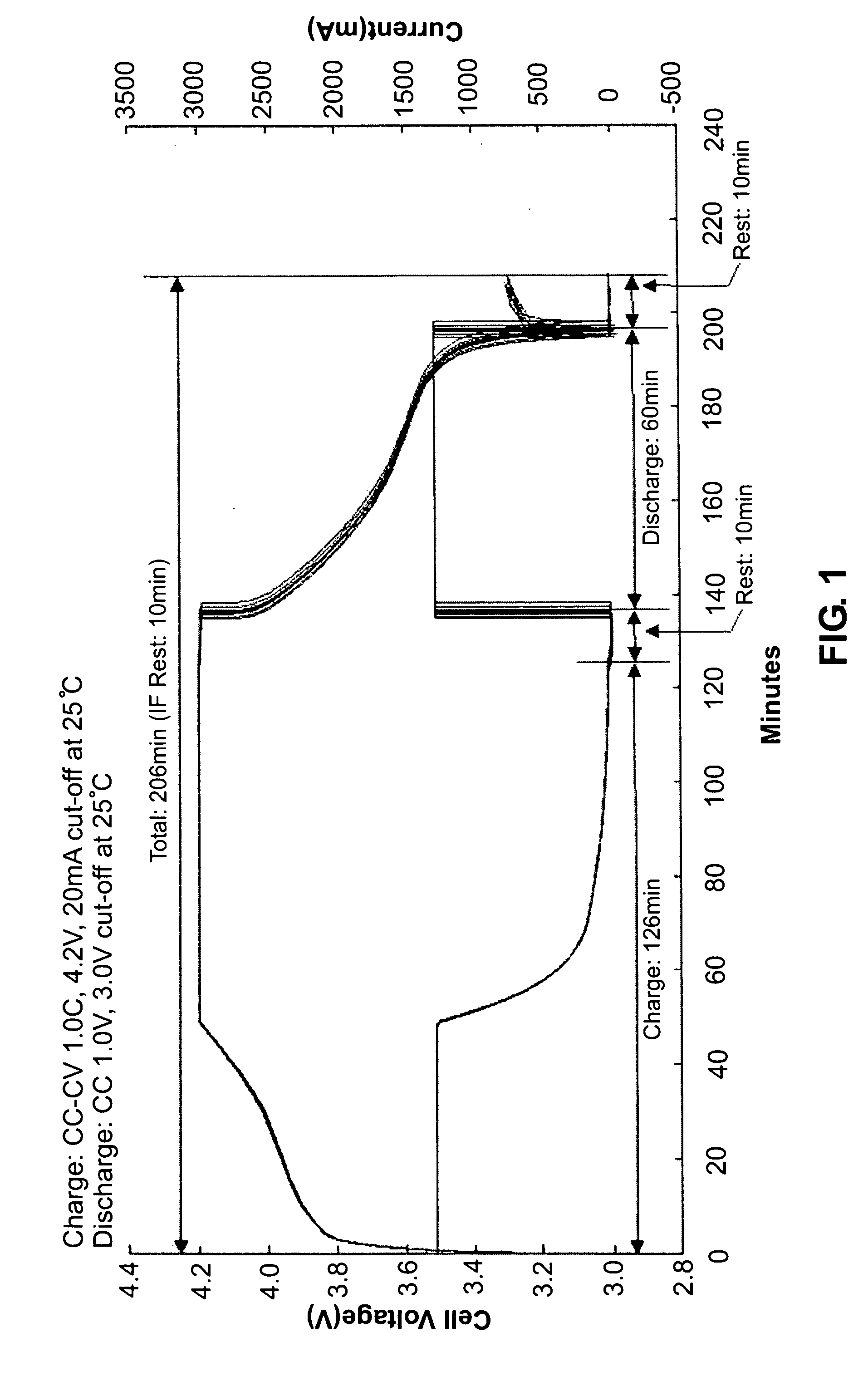
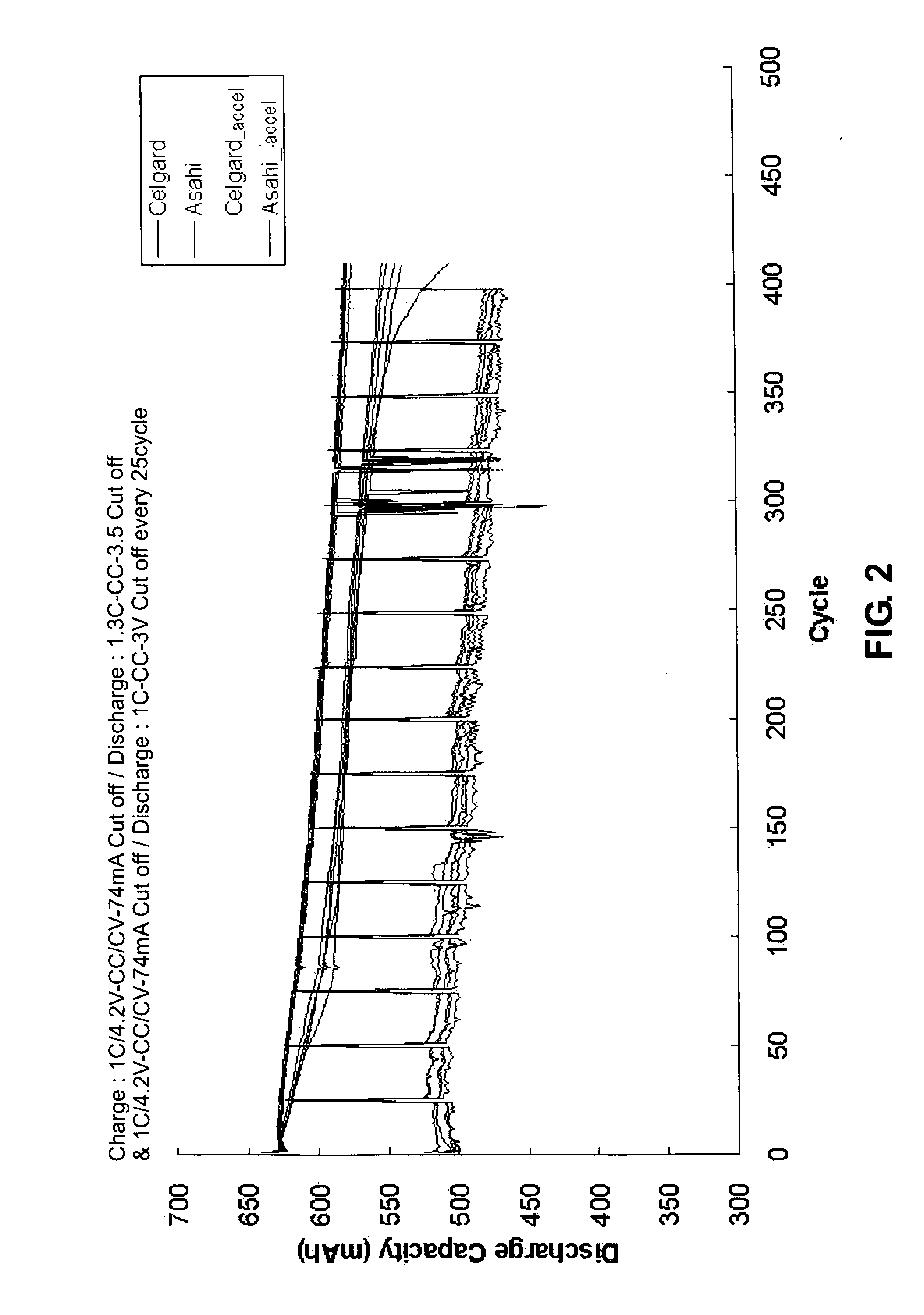
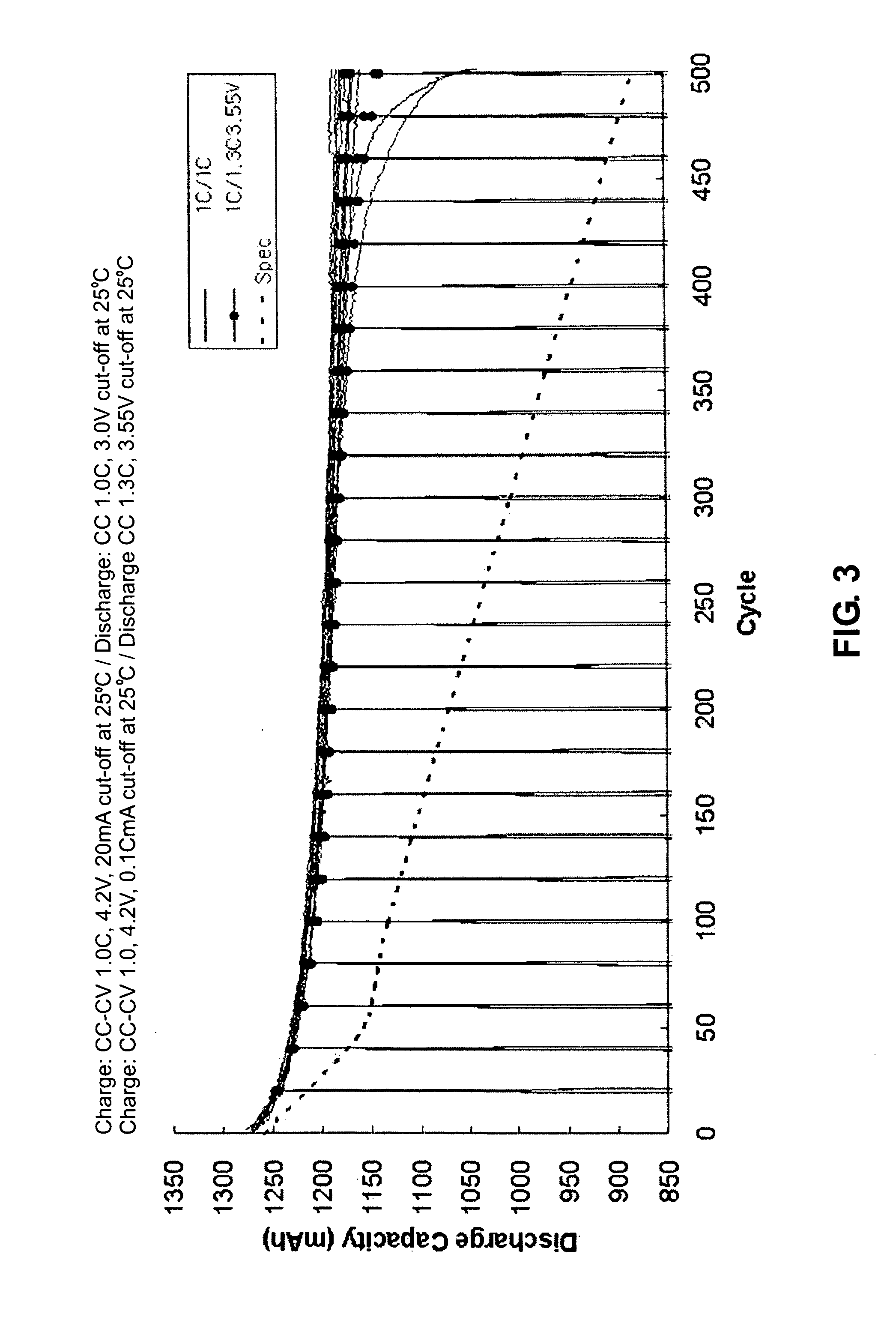
- A method that reduces test time by optimizing charge and discharge parameters such as charge rate, voltage, cut-off current, and rest periods, allowing for accelerated testing with minimal deviation and high reliability, including charging at 1.4 C to 1.6 C, discharging at 1.0 C to 1.4 C, and using specific voltage and cut-off values with reduced rest periods.

Method for measuring cell performance
PatentWO2015080537A1
Innovation
- A method involving alternating cycles of normal and accelerated charging and discharging, with specific sub-cycles and rest periods, to evaluate the cycle life of cells while measuring electrical characteristics like leakage current, resistance, and capacity, allowing for accurate and rapid assessment.


Standardization and Certification Requirements
The standardization and certification landscape for electrochemical cell cycle testing has evolved significantly in response to the growing importance of battery technologies across industries. International standards organizations such as ISO, IEC, and ASTM have developed comprehensive frameworks that establish uniform testing protocols for evaluating cell lifespan. These standards ensure consistency in testing methodologies, enabling reliable comparisons between different cell chemistries and designs across global markets.
Key certification requirements include adherence to IEC 61960 for portable lithium batteries and IEC 62660 for electric vehicle applications, which specify minimum performance criteria for cycle life testing. These standards mandate specific testing conditions including charge/discharge rates, temperature profiles, and end-of-life criteria, typically defined as capacity retention falling below 80% of initial rated capacity.
Regulatory bodies in major markets have implemented certification processes that manufacturers must complete before commercialization. The UN 38.3 testing requirements for lithium batteries establish safety parameters that indirectly impact cycle testing protocols. Similarly, UL 1642 and UL 2580 standards in North America and GB/T standards in China create region-specific certification hurdles that influence testing methodologies.
Emerging certification trends include the development of accelerated testing protocols that can reliably predict long-term cycling performance while reducing testing duration. These protocols require validation against real-world data to ensure their predictive accuracy. Additionally, there is growing emphasis on standardizing testing for second-life applications, where batteries from electric vehicles are repurposed for stationary storage.
The harmonization of standards across different regions remains challenging, with variations in testing requirements creating market entry barriers. Industry consortia such as the Global Battery Alliance are working to establish unified certification frameworks that would streamline compliance processes while maintaining rigorous performance verification.
Environmental certification requirements are increasingly being integrated into cycle testing standards, with emerging regulations requiring documentation of a cell's carbon footprint and recyclability alongside performance metrics. This holistic approach to certification reflects the growing importance of sustainability considerations in battery development and deployment.
Key certification requirements include adherence to IEC 61960 for portable lithium batteries and IEC 62660 for electric vehicle applications, which specify minimum performance criteria for cycle life testing. These standards mandate specific testing conditions including charge/discharge rates, temperature profiles, and end-of-life criteria, typically defined as capacity retention falling below 80% of initial rated capacity.
Regulatory bodies in major markets have implemented certification processes that manufacturers must complete before commercialization. The UN 38.3 testing requirements for lithium batteries establish safety parameters that indirectly impact cycle testing protocols. Similarly, UL 1642 and UL 2580 standards in North America and GB/T standards in China create region-specific certification hurdles that influence testing methodologies.
Emerging certification trends include the development of accelerated testing protocols that can reliably predict long-term cycling performance while reducing testing duration. These protocols require validation against real-world data to ensure their predictive accuracy. Additionally, there is growing emphasis on standardizing testing for second-life applications, where batteries from electric vehicles are repurposed for stationary storage.
The harmonization of standards across different regions remains challenging, with variations in testing requirements creating market entry barriers. Industry consortia such as the Global Battery Alliance are working to establish unified certification frameworks that would streamline compliance processes while maintaining rigorous performance verification.
Environmental certification requirements are increasingly being integrated into cycle testing standards, with emerging regulations requiring documentation of a cell's carbon footprint and recyclability alongside performance metrics. This holistic approach to certification reflects the growing importance of sustainability considerations in battery development and deployment.
Environmental Impact of Battery Lifecycle Testing
Battery lifecycle testing, while essential for technological advancement, carries significant environmental implications that must be carefully considered in the broader context of sustainable development. The energy consumption associated with cycle testing facilities is substantial, with large-scale testing centers often requiring continuous power supply for months or even years to complete comprehensive lifespan evaluations. This energy demand contributes to carbon emissions when non-renewable energy sources are utilized, creating a paradoxical situation where the development of clean energy storage solutions generates its own environmental footprint.
Material waste represents another critical environmental concern in battery testing. Each test cycle typically involves multiple battery units that become degraded or completely depleted by the conclusion of testing protocols. These spent batteries contain various potentially hazardous materials including heavy metals, electrolytes, and other chemicals that require specialized disposal procedures. Without proper management, these materials can contaminate soil and water systems, posing risks to ecosystems and human health.
The cooling systems employed in testing facilities present additional environmental challenges. Temperature control is crucial for accurate cycle testing, but conventional cooling technologies consume significant water resources and often utilize refrigerants with high global warming potential. The water usage associated with these systems can be particularly problematic in regions experiencing water scarcity, while refrigerant leakage contributes to atmospheric warming effects that extend beyond the immediate carbon footprint of energy consumption.
Recent innovations in green testing methodologies have begun addressing these environmental concerns. Virtual testing environments utilizing advanced computational models can significantly reduce the number of physical prototypes required, thereby minimizing material waste. Additionally, accelerated testing protocols that maintain predictive accuracy while shortening test durations help reduce overall energy consumption without compromising data quality.
The implementation of circular economy principles in testing facilities represents a promising approach to environmental impact mitigation. Recovered materials from tested batteries can be redirected into new battery manufacturing or other industrial applications, creating closed-loop systems that minimize waste generation. Furthermore, testing facilities increasingly incorporate renewable energy sources and energy recovery systems to reduce their carbon footprint, with some advanced facilities achieving near-carbon-neutral operations through comprehensive sustainability measures.
Regulatory frameworks worldwide are evolving to address the environmental implications of battery testing. Standards organizations and environmental protection agencies have begun establishing guidelines for sustainable testing practices, including requirements for energy efficiency, waste management protocols, and emissions reporting. These emerging regulations will likely shape the future landscape of electrochemical cell testing, driving further innovations in environmentally responsible testing methodologies.
Material waste represents another critical environmental concern in battery testing. Each test cycle typically involves multiple battery units that become degraded or completely depleted by the conclusion of testing protocols. These spent batteries contain various potentially hazardous materials including heavy metals, electrolytes, and other chemicals that require specialized disposal procedures. Without proper management, these materials can contaminate soil and water systems, posing risks to ecosystems and human health.
The cooling systems employed in testing facilities present additional environmental challenges. Temperature control is crucial for accurate cycle testing, but conventional cooling technologies consume significant water resources and often utilize refrigerants with high global warming potential. The water usage associated with these systems can be particularly problematic in regions experiencing water scarcity, while refrigerant leakage contributes to atmospheric warming effects that extend beyond the immediate carbon footprint of energy consumption.
Recent innovations in green testing methodologies have begun addressing these environmental concerns. Virtual testing environments utilizing advanced computational models can significantly reduce the number of physical prototypes required, thereby minimizing material waste. Additionally, accelerated testing protocols that maintain predictive accuracy while shortening test durations help reduce overall energy consumption without compromising data quality.
The implementation of circular economy principles in testing facilities represents a promising approach to environmental impact mitigation. Recovered materials from tested batteries can be redirected into new battery manufacturing or other industrial applications, creating closed-loop systems that minimize waste generation. Furthermore, testing facilities increasingly incorporate renewable energy sources and energy recovery systems to reduce their carbon footprint, with some advanced facilities achieving near-carbon-neutral operations through comprehensive sustainability measures.
Regulatory frameworks worldwide are evolving to address the environmental implications of battery testing. Standards organizations and environmental protection agencies have begun establishing guidelines for sustainable testing practices, including requirements for energy efficiency, waste management protocols, and emissions reporting. These emerging regulations will likely shape the future landscape of electrochemical cell testing, driving further innovations in environmentally responsible testing methodologies.
Unlock deeper insights with PatSnap Eureka Quick Research — get a full tech report to explore trends and direct your research. Try now!
Generate Your Research Report Instantly with AI Agent
Supercharge your innovation with PatSnap Eureka AI Agent Platform!