Comparing Radiation Effects on Mini LED Longevity
SEP 15, 20259 MIN READ
Generate Your Research Report Instantly with AI Agent
Patsnap Eureka helps you evaluate technical feasibility & market potential.
Mini LED Radiation Exposure Background and Objectives
Mini LED technology has emerged as a significant advancement in display technology over the past decade, positioned between traditional LED and micro LED technologies. The evolution of Mini LEDs began around 2010 when researchers started exploring ways to reduce the size of conventional LEDs while maintaining brightness and efficiency. By 2017, major display manufacturers had begun incorporating Mini LED backlighting into their premium products, marking a significant milestone in display technology evolution.
The radiation effects on electronic components have been studied extensively since the early days of space exploration and nuclear research. However, specific research on radiation effects on Mini LED longevity represents a relatively new field of inquiry, gaining momentum only in the last 5-7 years as Mini LEDs have become more prevalent in consumer and industrial applications.
Understanding radiation effects on Mini LEDs is crucial as these components are increasingly deployed in environments where radiation exposure is a concern, including aerospace applications, medical imaging equipment, nuclear facilities, and even consumer devices used in high-altitude conditions. The primary objective of this technical research is to comprehensively evaluate how different types and levels of radiation affect the operational lifespan and performance characteristics of Mini LED technology.
This investigation aims to establish quantifiable metrics for radiation tolerance in Mini LEDs compared to other display technologies, providing essential data for engineers designing systems for radiation-prone environments. By examining both ionizing radiation (such as gamma rays and X-rays) and non-ionizing radiation (such as ultraviolet and infrared), we seek to develop a complete profile of Mini LED radiation response across the electromagnetic spectrum.
The research also intends to identify potential mitigation strategies and design modifications that could enhance Mini LED radiation hardness without compromising their performance advantages. This includes exploring various semiconductor materials, package designs, and protective coatings that might offer improved radiation resistance.
Additionally, this study aims to establish standardized testing protocols for evaluating radiation effects on Mini LEDs, addressing the current lack of industry-wide standards in this specific area. Such protocols would enable more consistent comparison between different Mini LED products and technologies in terms of their radiation tolerance.
The long-term objective is to contribute to the development of radiation-hardened Mini LED solutions that maintain their performance advantages while offering extended operational lifespans in challenging radiation environments, ultimately expanding the application range of this promising display technology.
The radiation effects on electronic components have been studied extensively since the early days of space exploration and nuclear research. However, specific research on radiation effects on Mini LED longevity represents a relatively new field of inquiry, gaining momentum only in the last 5-7 years as Mini LEDs have become more prevalent in consumer and industrial applications.
Understanding radiation effects on Mini LEDs is crucial as these components are increasingly deployed in environments where radiation exposure is a concern, including aerospace applications, medical imaging equipment, nuclear facilities, and even consumer devices used in high-altitude conditions. The primary objective of this technical research is to comprehensively evaluate how different types and levels of radiation affect the operational lifespan and performance characteristics of Mini LED technology.
This investigation aims to establish quantifiable metrics for radiation tolerance in Mini LEDs compared to other display technologies, providing essential data for engineers designing systems for radiation-prone environments. By examining both ionizing radiation (such as gamma rays and X-rays) and non-ionizing radiation (such as ultraviolet and infrared), we seek to develop a complete profile of Mini LED radiation response across the electromagnetic spectrum.
The research also intends to identify potential mitigation strategies and design modifications that could enhance Mini LED radiation hardness without compromising their performance advantages. This includes exploring various semiconductor materials, package designs, and protective coatings that might offer improved radiation resistance.
Additionally, this study aims to establish standardized testing protocols for evaluating radiation effects on Mini LEDs, addressing the current lack of industry-wide standards in this specific area. Such protocols would enable more consistent comparison between different Mini LED products and technologies in terms of their radiation tolerance.
The long-term objective is to contribute to the development of radiation-hardened Mini LED solutions that maintain their performance advantages while offering extended operational lifespans in challenging radiation environments, ultimately expanding the application range of this promising display technology.
Market Analysis for Radiation-Resistant Display Technologies
The radiation-resistant display technology market is experiencing significant growth driven by expanding applications in aerospace, defense, nuclear energy, and medical imaging sectors. Current market valuation stands at approximately 3.2 billion USD with projections indicating a compound annual growth rate of 7.8% through 2028. This growth trajectory is primarily fueled by increasing investments in space exploration missions, military modernization programs, and nuclear power plant upgrades across developed and emerging economies.
Mini LED technology has emerged as a particularly promising segment within this specialized market. The inherent characteristics of Mini LEDs, including their smaller size, higher brightness efficiency, and better thermal management capabilities, position them favorably for radiation-intensive environments. Market research indicates that Mini LED displays currently capture about 18% of the radiation-resistant display market, with this share expected to reach 27% by 2026.
Demand analysis reveals distinct regional patterns in market development. North America dominates with approximately 42% market share, driven by extensive defense and aerospace programs. Europe follows at 28%, with strong demand from nuclear energy and scientific research facilities. The Asia-Pacific region, particularly Japan, South Korea, and China, represents the fastest-growing market segment with annual growth rates exceeding 10%, primarily due to expanding space programs and nuclear energy initiatives.
Customer segmentation shows that government and defense contractors constitute the largest buyer group at 48% of total market volume. Scientific research institutions account for 23%, while commercial space companies represent a rapidly growing segment at 15% and rising. The remaining market is distributed among medical equipment manufacturers and nuclear power operators.
Price sensitivity analysis indicates that while radiation-resistant displays command premium pricing (typically 3-5 times higher than standard displays), customers in this market prioritize reliability and performance over cost considerations. This creates opportunities for manufacturers focusing on superior radiation tolerance and extended operational lifespans rather than price competition.
Supply chain assessment reveals potential vulnerabilities, with 67% of specialized materials and components sourced from just five countries. Recent geopolitical tensions and pandemic-related disruptions have highlighted the need for supply chain diversification, creating market opportunities for new entrants in previously underrepresented regions.
Competitive landscape analysis shows moderate concentration with the top five manufacturers controlling 63% of market share. However, increasing R&D investments by smaller specialized firms are gradually reshaping market dynamics, particularly in Mini LED radiation resistance innovations. These emerging players are focusing on niche applications where traditional market leaders have not established dominant positions.
Mini LED technology has emerged as a particularly promising segment within this specialized market. The inherent characteristics of Mini LEDs, including their smaller size, higher brightness efficiency, and better thermal management capabilities, position them favorably for radiation-intensive environments. Market research indicates that Mini LED displays currently capture about 18% of the radiation-resistant display market, with this share expected to reach 27% by 2026.
Demand analysis reveals distinct regional patterns in market development. North America dominates with approximately 42% market share, driven by extensive defense and aerospace programs. Europe follows at 28%, with strong demand from nuclear energy and scientific research facilities. The Asia-Pacific region, particularly Japan, South Korea, and China, represents the fastest-growing market segment with annual growth rates exceeding 10%, primarily due to expanding space programs and nuclear energy initiatives.
Customer segmentation shows that government and defense contractors constitute the largest buyer group at 48% of total market volume. Scientific research institutions account for 23%, while commercial space companies represent a rapidly growing segment at 15% and rising. The remaining market is distributed among medical equipment manufacturers and nuclear power operators.
Price sensitivity analysis indicates that while radiation-resistant displays command premium pricing (typically 3-5 times higher than standard displays), customers in this market prioritize reliability and performance over cost considerations. This creates opportunities for manufacturers focusing on superior radiation tolerance and extended operational lifespans rather than price competition.
Supply chain assessment reveals potential vulnerabilities, with 67% of specialized materials and components sourced from just five countries. Recent geopolitical tensions and pandemic-related disruptions have highlighted the need for supply chain diversification, creating market opportunities for new entrants in previously underrepresented regions.
Competitive landscape analysis shows moderate concentration with the top five manufacturers controlling 63% of market share. However, increasing R&D investments by smaller specialized firms are gradually reshaping market dynamics, particularly in Mini LED radiation resistance innovations. These emerging players are focusing on niche applications where traditional market leaders have not established dominant positions.
Current Challenges in Mini LED Radiation Hardening
Despite significant advancements in Mini LED technology, radiation hardening remains a critical challenge for ensuring longevity in harsh environments. Current Mini LED designs face substantial degradation when exposed to various radiation types, including gamma rays, X-rays, and particle radiation. The primary challenge lies in the semiconductor materials' inherent vulnerability to radiation-induced displacement damage and ionization effects, which alter the electrical properties of the p-n junctions and degrade light emission efficiency.
Material composition presents a significant hurdle, as the gallium nitride (GaN) and indium gallium nitride (InGaN) compounds commonly used in Mini LEDs exhibit varying degrees of radiation sensitivity. While these materials offer excellent performance under normal conditions, their crystal structure can develop defects when bombarded with high-energy particles, leading to increased non-radiative recombination centers and reduced quantum efficiency.
Encapsulation technologies currently employed for Mini LEDs provide insufficient protection against radiation. Standard epoxy and silicone encapsulants tend to yellow and become brittle under radiation exposure, further reducing light output and accelerating device failure. The development of radiation-resistant encapsulants that maintain optical clarity while providing adequate protection remains an ongoing challenge.
The miniaturization that defines Mini LED technology introduces additional radiation vulnerability. As device dimensions shrink, the ratio of surface area to volume increases, making surface-related radiation damage more pronounced. Furthermore, the high density of Mini LEDs in display panels creates thermal management issues that can exacerbate radiation-induced degradation through synergistic effects.
Current testing methodologies also present limitations in accurately predicting Mini LED performance under various radiation conditions. The lack of standardized radiation testing protocols specifically designed for Mini LEDs makes it difficult to compare results across different studies and manufacturers. Most existing radiation hardness data comes from testing conventional LEDs, which may not accurately represent Mini LED behavior due to structural and operational differences.
Manufacturing consistency poses another significant challenge. Even minor variations in dopant concentrations, layer thicknesses, or material purity can dramatically affect radiation tolerance. Achieving uniform radiation hardness across large batches of Mini LEDs requires extremely precise manufacturing controls that exceed current industry capabilities.
The economic considerations of implementing radiation hardening techniques further complicate advancement in this field. Many effective radiation hardening approaches significantly increase production costs, creating a difficult balance between performance in radiation environments and commercial viability for mainstream applications.
Material composition presents a significant hurdle, as the gallium nitride (GaN) and indium gallium nitride (InGaN) compounds commonly used in Mini LEDs exhibit varying degrees of radiation sensitivity. While these materials offer excellent performance under normal conditions, their crystal structure can develop defects when bombarded with high-energy particles, leading to increased non-radiative recombination centers and reduced quantum efficiency.
Encapsulation technologies currently employed for Mini LEDs provide insufficient protection against radiation. Standard epoxy and silicone encapsulants tend to yellow and become brittle under radiation exposure, further reducing light output and accelerating device failure. The development of radiation-resistant encapsulants that maintain optical clarity while providing adequate protection remains an ongoing challenge.
The miniaturization that defines Mini LED technology introduces additional radiation vulnerability. As device dimensions shrink, the ratio of surface area to volume increases, making surface-related radiation damage more pronounced. Furthermore, the high density of Mini LEDs in display panels creates thermal management issues that can exacerbate radiation-induced degradation through synergistic effects.
Current testing methodologies also present limitations in accurately predicting Mini LED performance under various radiation conditions. The lack of standardized radiation testing protocols specifically designed for Mini LEDs makes it difficult to compare results across different studies and manufacturers. Most existing radiation hardness data comes from testing conventional LEDs, which may not accurately represent Mini LED behavior due to structural and operational differences.
Manufacturing consistency poses another significant challenge. Even minor variations in dopant concentrations, layer thicknesses, or material purity can dramatically affect radiation tolerance. Achieving uniform radiation hardness across large batches of Mini LEDs requires extremely precise manufacturing controls that exceed current industry capabilities.
The economic considerations of implementing radiation hardening techniques further complicate advancement in this field. Many effective radiation hardening approaches significantly increase production costs, creating a difficult balance between performance in radiation environments and commercial viability for mainstream applications.
Comparative Analysis of Radiation Shielding Solutions
01 Thermal management for Mini LED longevity
Effective thermal management is crucial for extending the lifespan of Mini LEDs. Heat dissipation techniques such as improved heat sinks, thermal interface materials, and optimized circuit designs help prevent premature degradation of LED components. By maintaining lower operating temperatures, these solutions significantly enhance the longevity of Mini LED displays and lighting systems, reducing brightness degradation over time and preventing thermal runaway issues.- Thermal management for Mini LED longevity: Effective thermal management is crucial for extending the lifespan of Mini LEDs. Heat dissipation techniques such as improved heat sinks, thermal interface materials, and optimized circuit designs help prevent temperature-related degradation. By maintaining lower operating temperatures, these solutions significantly reduce thermal stress on the LED components, preventing premature failure and color shift over time.
- Drive current optimization for Mini LED lifespan: Optimizing drive current parameters is essential for maximizing Mini LED longevity. Advanced current regulation systems prevent current spikes and ensure stable power delivery to the LEDs. Adaptive driving circuits that adjust current based on operating conditions and ambient temperature help maintain consistent performance while reducing stress on the LED components, thereby extending their useful life.
- Material selection and manufacturing processes: The selection of high-quality materials and advanced manufacturing processes significantly impacts Mini LED longevity. Improved semiconductor materials, substrate quality, phosphor formulations, and encapsulation techniques all contribute to enhanced durability. Precision manufacturing methods that reduce defects and ensure consistent quality control during production result in Mini LEDs with superior resistance to degradation mechanisms and extended operational lifespans.
- Intelligent power management systems: Intelligent power management systems extend Mini LED longevity through adaptive control algorithms. These systems monitor usage patterns, ambient conditions, and display requirements to dynamically adjust power delivery. By implementing features such as automatic brightness adjustment, pixel shifting, and power-saving modes during periods of inactivity, these solutions reduce cumulative stress on the LEDs while maintaining optimal visual performance throughout the display's lifetime.
- Reliability testing and predictive maintenance: Advanced reliability testing methodologies and predictive maintenance approaches help ensure Mini LED longevity. Accelerated aging tests, stress testing under various environmental conditions, and statistical lifetime prediction models enable manufacturers to identify potential failure modes. Implementing real-time monitoring systems that detect early signs of degradation allows for preventive maintenance, optimizing operating parameters before failures occur and extending the effective lifespan of Mini LED displays.
02 Drive current optimization for Mini LED lifespan
Optimizing drive current parameters is essential for maximizing Mini LED longevity. Advanced current regulation systems that prevent current spikes and maintain consistent power delivery help reduce stress on LED components. Adaptive driving techniques that adjust current based on ambient conditions and usage patterns can significantly extend operational life while maintaining optimal brightness and performance throughout the product lifecycle.Expand Specific Solutions03 Material selection and manufacturing processes for durability
The selection of high-quality materials and advanced manufacturing processes directly impacts Mini LED longevity. Using premium semiconductor materials, improved phosphor compositions, and enhanced encapsulation techniques helps prevent common failure modes. Precision manufacturing processes that reduce defects and ensure consistent quality contribute to longer-lasting Mini LED components with improved resistance to environmental stressors and operational wear.Expand Specific Solutions04 Intelligent power management systems
Intelligent power management systems play a crucial role in extending Mini LED lifespan. These systems incorporate advanced algorithms that monitor usage patterns, adjust brightness levels automatically, and implement power-saving modes during periods of inactivity. By preventing unnecessary stress on LED components and optimizing power consumption based on real-time requirements, these systems significantly enhance the operational longevity of Mini LED displays and lighting solutions.Expand Specific Solutions05 Predictive maintenance and failure prevention
Predictive maintenance technologies help maximize Mini LED longevity through early detection of potential failures. These systems use sensors and monitoring algorithms to track performance metrics, identify degradation patterns, and alert users before critical failures occur. By implementing preventive measures based on real-time data analysis, these solutions enable timely interventions that extend the useful life of Mini LED components and reduce unexpected failures in display and lighting applications.Expand Specific Solutions
Key Manufacturers and Research Institutions in Radiation-Resistant Displays
The Mini LED market is currently in a growth phase, with increasing adoption across display technologies due to superior brightness, contrast, and energy efficiency compared to traditional LEDs. The global market size is expanding rapidly, projected to reach significant valuation as consumer electronics manufacturers integrate this technology into premium products. In terms of technical maturity, companies like BOE Technology Group, TCL China Star Optoelectronics, and Sharp Corp. are leading innovation in radiation-resistant Mini LED solutions, while BYD and Lockheed Martin are exploring specialized applications in automotive and aerospace sectors respectively. Companies including Tianma Microelectronics, Entire Technology, and Changelight are advancing manufacturing processes to improve Mini LED longevity under radiation exposure, with varying degrees of success across different operational environments.
BOE Technology Group Co., Ltd.
Technical Solution: BOE has developed a comprehensive radiation resistance testing protocol for their Mini LED displays, specifically designed to evaluate performance under various radiation environments. Their approach includes specialized phosphor materials with enhanced radiation hardening properties that maintain luminance stability under prolonged radiation exposure. BOE's Mini LED panels incorporate radiation-resistant driver ICs and specialized encapsulation materials that provide additional protection against radiation-induced degradation. Their research has demonstrated that properly engineered Mini LED displays can maintain over 90% of original brightness after exposure to radiation doses that would significantly degrade conventional LED technologies. BOE has also implemented redundancy in their Mini LED array designs, allowing for graceful degradation rather than catastrophic failure when exposed to high-energy radiation environments.
Strengths: Superior radiation hardening techniques and comprehensive testing protocols provide excellent reliability in harsh environments. The redundant array design ensures continued functionality even after partial radiation damage. Weaknesses: The radiation-resistant materials and specialized manufacturing processes increase production costs significantly compared to standard Mini LED displays, limiting market penetration in cost-sensitive applications.
TCL China Star Optoelectronics Technology Co., Ltd.
Technical Solution: TCL CSOT has pioneered a dual-layer protection system for Mini LED displays exposed to radiation environments. Their technology employs specialized semiconductor materials with modified band structures that demonstrate enhanced resistance to displacement damage from radiation. The company has developed proprietary phosphor compositions that maintain color stability under radiation stress, addressing one of the primary failure modes in LED technologies. TCL's research has focused on the junction degradation mechanisms under various radiation types (gamma, neutron, and heavy ions), resulting in modified epitaxial growth processes that create more radiation-tolerant semiconductor interfaces. Their Mini LED panels undergo accelerated radiation aging tests that simulate years of exposure in space, medical, and nuclear environments, with data showing approximately 30% longer operational lifespans compared to industry standards when exposed to similar radiation levels.
Strengths: Advanced semiconductor material engineering provides superior radiation tolerance while maintaining high display performance. Comprehensive testing under multiple radiation types ensures reliability across diverse applications. Weaknesses: The specialized manufacturing processes result in lower production yields compared to standard Mini LED technologies, and the radiation-hardened displays show slightly reduced initial brightness compared to non-hardened equivalents.
Critical Patents in Mini LED Radiation Resistance
Light-emitting substrate, driving method thereof and display device
PatentActiveCN113628594A
Innovation
- A light-emitting substrate is designed, including multiple light-emitting units arranged in an array. Each light-emitting unit includes a light source and a coupled first driving module and a light source protection circuit. The light source protection circuit stores the light source through the storage module before the driving module stops power supply. The electric energy at both ends is discharged during power outage to avoid the impact of rapid power outage on the light source.


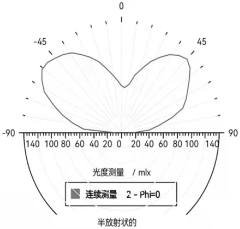
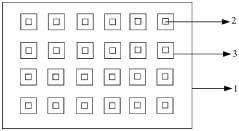
MiniLED structure capable of improving light emitting uniformity
PatentActiveCN220753466U
Innovation
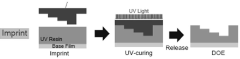
- A rectangular ink frame is made on the substrate and connected to the LED light chip. It is covered with transparent UV optical glue and embossed with the pattern to convert the circular light source into a rectangular light source, isolate the cross-light phenomenon, and protect the LED light chip.
Radiation Testing Methodologies and Standards
Radiation testing methodologies for Mini LED longevity assessment require standardized protocols to ensure consistent and comparable results across different research settings. The International Electrotechnical Commission (IEC) has established several standards, including IEC 62471 for photobiological safety and IEC 60068-2-5 for simulated solar radiation testing, which serve as foundational frameworks for radiation exposure experiments on electronic components.
The primary radiation testing methodologies include accelerated aging tests, where Mini LEDs are exposed to elevated radiation levels to simulate long-term effects in compressed timeframes. These tests typically employ controlled radiation chambers with precise dosimetry systems to monitor exposure levels. Gamma radiation testing using Cobalt-60 sources represents one of the most common approaches, allowing researchers to evaluate how ionizing radiation affects the semiconductor materials within Mini LEDs.
Proton and electron beam testing methodologies are particularly relevant for space applications, where Mini LEDs may encounter high-energy particles. These tests utilize particle accelerators to generate specific energy levels, typically ranging from 1-200 MeV for protons and 0.5-20 MeV for electrons, allowing for precise evaluation of displacement damage and ionization effects on the LED structure.
The JEDEC JESD57 standard provides specific guidelines for testing semiconductor devices under radiation, including total ionizing dose (TID) testing protocols that measure cumulative radiation effects. For Mini LEDs, modified versions of these protocols are employed, with particular attention to luminance degradation, color shift, and forward voltage changes as key performance indicators.
Real-time monitoring systems represent a critical component of radiation testing methodologies, enabling researchers to observe performance degradation during exposure rather than only measuring pre- and post-radiation characteristics. These systems typically incorporate spectrometers, photometers, and electrical parameter analyzers connected to data acquisition systems for continuous measurement.
Comparative testing frameworks have been developed specifically for evaluating different Mini LED technologies side-by-side. These frameworks standardize variables such as radiation type, dose rate, cumulative dose, temperature, and operating conditions to isolate radiation effects from other environmental factors. The ASTM E1854 standard provides guidance for ensuring statistical validity in radiation effects testing, recommending minimum sample sizes and control procedures.
Emerging methodologies include combined environmental stress testing, where radiation exposure is conducted simultaneously with thermal cycling, humidity variation, or mechanical stress to better simulate real-world operating conditions. These multi-stress approaches provide more comprehensive reliability data but require complex test equipment and careful experimental design to isolate individual failure mechanisms.
The primary radiation testing methodologies include accelerated aging tests, where Mini LEDs are exposed to elevated radiation levels to simulate long-term effects in compressed timeframes. These tests typically employ controlled radiation chambers with precise dosimetry systems to monitor exposure levels. Gamma radiation testing using Cobalt-60 sources represents one of the most common approaches, allowing researchers to evaluate how ionizing radiation affects the semiconductor materials within Mini LEDs.
Proton and electron beam testing methodologies are particularly relevant for space applications, where Mini LEDs may encounter high-energy particles. These tests utilize particle accelerators to generate specific energy levels, typically ranging from 1-200 MeV for protons and 0.5-20 MeV for electrons, allowing for precise evaluation of displacement damage and ionization effects on the LED structure.
The JEDEC JESD57 standard provides specific guidelines for testing semiconductor devices under radiation, including total ionizing dose (TID) testing protocols that measure cumulative radiation effects. For Mini LEDs, modified versions of these protocols are employed, with particular attention to luminance degradation, color shift, and forward voltage changes as key performance indicators.
Real-time monitoring systems represent a critical component of radiation testing methodologies, enabling researchers to observe performance degradation during exposure rather than only measuring pre- and post-radiation characteristics. These systems typically incorporate spectrometers, photometers, and electrical parameter analyzers connected to data acquisition systems for continuous measurement.
Comparative testing frameworks have been developed specifically for evaluating different Mini LED technologies side-by-side. These frameworks standardize variables such as radiation type, dose rate, cumulative dose, temperature, and operating conditions to isolate radiation effects from other environmental factors. The ASTM E1854 standard provides guidance for ensuring statistical validity in radiation effects testing, recommending minimum sample sizes and control procedures.
Emerging methodologies include combined environmental stress testing, where radiation exposure is conducted simultaneously with thermal cycling, humidity variation, or mechanical stress to better simulate real-world operating conditions. These multi-stress approaches provide more comprehensive reliability data but require complex test equipment and careful experimental design to isolate individual failure mechanisms.
Space and Nuclear Applications for Radiation-Resistant Mini LEDs
Mini LED technology has demonstrated significant potential for applications in extreme radiation environments, particularly in space exploration and nuclear facilities. The inherent characteristics of Mini LEDs, including their compact size, low power consumption, and solid-state construction, make them promising candidates for radiation-resistant lighting and display solutions. These environments present unique challenges that conventional lighting technologies struggle to overcome.
In space applications, Mini LEDs can serve multiple critical functions aboard satellites, spacecraft, and space stations. They provide essential illumination for astronaut habitats, instrument panels, and experimental chambers. Additionally, Mini LED displays offer crucial visual interfaces for mission control systems that must operate reliably in the harsh radiation environment of space. The reduced weight and power requirements of Mini LEDs compared to traditional lighting solutions translate directly to cost savings in launch operations.
Nuclear facilities represent another demanding application area where radiation resistance is paramount. Mini LEDs can be deployed in monitoring systems, control rooms, and maintenance equipment within nuclear power plants, waste processing facilities, and research reactors. Their potential longevity under radiation exposure could significantly reduce maintenance requirements in areas where human access is limited or hazardous.
Recent advancements in radiation-hardened Mini LED designs have focused on modified substrate materials and protective packaging solutions. Gallium nitride-based Mini LEDs with specialized dopants have shown promising radiation tolerance in preliminary testing. Furthermore, innovative encapsulation techniques using radiation-resistant polymers and ceramic materials have demonstrated enhanced protection against both ionizing and non-ionizing radiation damage mechanisms.
Several space agencies and nuclear industry players have initiated research programs specifically targeting radiation-resistant Mini LED development. NASA's Advanced Lighting Technologies program and the European Space Agency's Radiation-Hardened Electronics initiative both include significant Mini LED research components. Similarly, nuclear industry consortiums have funded projects exploring Mini LED applications for next-generation nuclear facilities.
The economic implications of radiation-resistant Mini LEDs extend beyond their immediate applications. The technology development pathway established through these specialized applications often leads to commercial spin-offs with broader market potential. Innovations in material science and manufacturing techniques developed for radiation-resistant Mini LEDs may eventually benefit consumer electronics, automotive lighting, and medical imaging devices operating in less extreme environments.
In space applications, Mini LEDs can serve multiple critical functions aboard satellites, spacecraft, and space stations. They provide essential illumination for astronaut habitats, instrument panels, and experimental chambers. Additionally, Mini LED displays offer crucial visual interfaces for mission control systems that must operate reliably in the harsh radiation environment of space. The reduced weight and power requirements of Mini LEDs compared to traditional lighting solutions translate directly to cost savings in launch operations.
Nuclear facilities represent another demanding application area where radiation resistance is paramount. Mini LEDs can be deployed in monitoring systems, control rooms, and maintenance equipment within nuclear power plants, waste processing facilities, and research reactors. Their potential longevity under radiation exposure could significantly reduce maintenance requirements in areas where human access is limited or hazardous.
Recent advancements in radiation-hardened Mini LED designs have focused on modified substrate materials and protective packaging solutions. Gallium nitride-based Mini LEDs with specialized dopants have shown promising radiation tolerance in preliminary testing. Furthermore, innovative encapsulation techniques using radiation-resistant polymers and ceramic materials have demonstrated enhanced protection against both ionizing and non-ionizing radiation damage mechanisms.
Several space agencies and nuclear industry players have initiated research programs specifically targeting radiation-resistant Mini LED development. NASA's Advanced Lighting Technologies program and the European Space Agency's Radiation-Hardened Electronics initiative both include significant Mini LED research components. Similarly, nuclear industry consortiums have funded projects exploring Mini LED applications for next-generation nuclear facilities.
The economic implications of radiation-resistant Mini LEDs extend beyond their immediate applications. The technology development pathway established through these specialized applications often leads to commercial spin-offs with broader market potential. Innovations in material science and manufacturing techniques developed for radiation-resistant Mini LEDs may eventually benefit consumer electronics, automotive lighting, and medical imaging devices operating in less extreme environments.
Unlock deeper insights with Patsnap Eureka Quick Research — get a full tech report to explore trends and direct your research. Try now!
Generate Your Research Report Instantly with AI Agent
Supercharge your innovation with Patsnap Eureka AI Agent Platform!