Cycling Stability of Sodium-ion Batteries in Cold Climates: A Technical Study
SEP 19, 20259 MIN READ
Generate Your Research Report Instantly with AI Agent
Patsnap Eureka helps you evaluate technical feasibility & market potential.
Sodium-ion Battery Technology Background and Objectives
Sodium-ion batteries (SIBs) have emerged as a promising alternative to lithium-ion batteries (LIBs) over the past decade, driven by concerns about lithium resource scarcity and geopolitical distribution. The development of SIBs can be traced back to the 1970s and 1980s, but significant research momentum has only been gained in the last 10-15 years as the demand for sustainable energy storage solutions has intensified.
The fundamental working principle of SIBs mirrors that of LIBs, involving the intercalation and de-intercalation of sodium ions between cathode and anode materials during charge-discharge cycles. However, sodium's larger ionic radius (1.02Å compared to lithium's 0.76Å) presents unique challenges for electrode materials design and electrolyte optimization, particularly affecting cycling stability.
Recent technological advancements have significantly improved SIB performance metrics, with energy densities now approaching 160 Wh/kg at the cell level. However, a critical gap remains in their performance under extreme temperature conditions, particularly in cold climates where conventional battery technologies experience substantial capacity fading and reduced efficiency.
The temperature sensitivity of battery performance is governed by fundamental electrochemical principles, including reduced ion mobility, increased electrolyte viscosity, and slower reaction kinetics at lower temperatures. For sodium-ion systems specifically, the larger ionic radius of sodium exacerbates these challenges, making cold-climate performance a particularly significant hurdle for widespread adoption.
Current research indicates that SIBs exhibit distinctive behavior patterns in sub-zero temperatures compared to their lithium counterparts, with some studies suggesting potential advantages in certain electrode-electrolyte combinations. Understanding these mechanisms is crucial for developing cold-climate optimized SIB technologies.
The primary objective of this technical study is to comprehensively analyze the cycling stability of sodium-ion batteries in cold climates, identifying the key degradation mechanisms and potential mitigation strategies. Specifically, we aim to investigate the electrochemical behavior of various sodium-ion cell configurations at temperatures ranging from -30°C to 0°C, with particular focus on capacity retention, rate capability, and long-term cycling performance.
Additionally, this study seeks to establish clear performance benchmarks for cold-climate SIB operation, develop predictive models for temperature-dependent degradation, and propose innovative materials and cell design approaches to enhance low-temperature performance. The ultimate goal is to advance SIB technology toward practical deployment in regions with extreme temperature variations, thereby expanding their potential market applications.
The fundamental working principle of SIBs mirrors that of LIBs, involving the intercalation and de-intercalation of sodium ions between cathode and anode materials during charge-discharge cycles. However, sodium's larger ionic radius (1.02Å compared to lithium's 0.76Å) presents unique challenges for electrode materials design and electrolyte optimization, particularly affecting cycling stability.
Recent technological advancements have significantly improved SIB performance metrics, with energy densities now approaching 160 Wh/kg at the cell level. However, a critical gap remains in their performance under extreme temperature conditions, particularly in cold climates where conventional battery technologies experience substantial capacity fading and reduced efficiency.
The temperature sensitivity of battery performance is governed by fundamental electrochemical principles, including reduced ion mobility, increased electrolyte viscosity, and slower reaction kinetics at lower temperatures. For sodium-ion systems specifically, the larger ionic radius of sodium exacerbates these challenges, making cold-climate performance a particularly significant hurdle for widespread adoption.
Current research indicates that SIBs exhibit distinctive behavior patterns in sub-zero temperatures compared to their lithium counterparts, with some studies suggesting potential advantages in certain electrode-electrolyte combinations. Understanding these mechanisms is crucial for developing cold-climate optimized SIB technologies.
The primary objective of this technical study is to comprehensively analyze the cycling stability of sodium-ion batteries in cold climates, identifying the key degradation mechanisms and potential mitigation strategies. Specifically, we aim to investigate the electrochemical behavior of various sodium-ion cell configurations at temperatures ranging from -30°C to 0°C, with particular focus on capacity retention, rate capability, and long-term cycling performance.
Additionally, this study seeks to establish clear performance benchmarks for cold-climate SIB operation, develop predictive models for temperature-dependent degradation, and propose innovative materials and cell design approaches to enhance low-temperature performance. The ultimate goal is to advance SIB technology toward practical deployment in regions with extreme temperature variations, thereby expanding their potential market applications.
Market Analysis for Cold Climate Energy Storage Solutions
The energy storage market for cold climate regions is experiencing significant growth, driven by the increasing demand for reliable power solutions in extreme weather conditions. The global market for cold-resistant energy storage systems is projected to reach $12.5 billion by 2027, with a compound annual growth rate of 8.3% from 2022. This growth is particularly pronounced in regions such as Northern Europe, Canada, Russia, and parts of China where temperatures frequently drop below freezing.
Sodium-ion batteries are emerging as a promising solution for cold climate energy storage, challenging the dominance of traditional lithium-ion technologies. Market research indicates that sodium-ion batteries could capture up to 15% of the cold climate energy storage market by 2030, representing a substantial shift in technology adoption patterns.
The demand for cold-resistant energy storage solutions is being driven by several key factors. First, the expansion of renewable energy infrastructure in cold regions necessitates robust storage systems that can maintain performance in sub-zero temperatures. Wind farms in northern latitudes and solar installations in alpine regions require energy storage solutions that remain stable throughout seasonal temperature fluctuations.
Second, the electrification of transportation in cold regions has created a significant market opportunity. Electric vehicles operating in cold climates experience substantial range reduction with conventional batteries, creating demand for more cold-resistant alternatives. The commercial vehicle sector, including buses and delivery fleets operating in cold urban environments, represents a particularly promising market segment.
Third, grid stability concerns in remote cold regions are driving investment in distributed energy storage systems. Communities in Alaska, northern Canada, and Scandinavia are increasingly deploying microgrids supported by energy storage to reduce dependence on diesel generators and improve energy security.
Market segmentation analysis reveals that utility-scale applications currently dominate the cold climate energy storage market, accounting for approximately 65% of installations. However, the residential and commercial segments are expected to grow at faster rates over the next five years, with projected annual growth rates of 12% and 10% respectively.
Geographically, North America leads the market with a 38% share, followed by Europe (32%) and Asia-Pacific (24%). However, the fastest growth is anticipated in the Nordic countries, where government incentives for renewable energy integration and carbon reduction targets are creating favorable market conditions for advanced energy storage technologies.
Sodium-ion batteries are emerging as a promising solution for cold climate energy storage, challenging the dominance of traditional lithium-ion technologies. Market research indicates that sodium-ion batteries could capture up to 15% of the cold climate energy storage market by 2030, representing a substantial shift in technology adoption patterns.
The demand for cold-resistant energy storage solutions is being driven by several key factors. First, the expansion of renewable energy infrastructure in cold regions necessitates robust storage systems that can maintain performance in sub-zero temperatures. Wind farms in northern latitudes and solar installations in alpine regions require energy storage solutions that remain stable throughout seasonal temperature fluctuations.
Second, the electrification of transportation in cold regions has created a significant market opportunity. Electric vehicles operating in cold climates experience substantial range reduction with conventional batteries, creating demand for more cold-resistant alternatives. The commercial vehicle sector, including buses and delivery fleets operating in cold urban environments, represents a particularly promising market segment.
Third, grid stability concerns in remote cold regions are driving investment in distributed energy storage systems. Communities in Alaska, northern Canada, and Scandinavia are increasingly deploying microgrids supported by energy storage to reduce dependence on diesel generators and improve energy security.
Market segmentation analysis reveals that utility-scale applications currently dominate the cold climate energy storage market, accounting for approximately 65% of installations. However, the residential and commercial segments are expected to grow at faster rates over the next five years, with projected annual growth rates of 12% and 10% respectively.
Geographically, North America leads the market with a 38% share, followed by Europe (32%) and Asia-Pacific (24%). However, the fastest growth is anticipated in the Nordic countries, where government incentives for renewable energy integration and carbon reduction targets are creating favorable market conditions for advanced energy storage technologies.
Technical Challenges of Na-ion Batteries in Low Temperatures
Sodium-ion batteries (SIBs) face significant performance degradation when operating in cold climates, presenting a major obstacle to their widespread adoption. At low temperatures, the electrochemical kinetics of SIBs slow dramatically, resulting in reduced capacity, diminished power capability, and accelerated aging. The primary challenge stems from the increased viscosity of electrolytes at low temperatures, which impedes sodium ion transport and increases internal resistance.
The intercalation mechanism of sodium ions becomes particularly problematic below 0°C. The larger ionic radius of Na+ compared to Li+ (1.02Å vs. 0.76Å) results in slower diffusion kinetics through the electrode materials, an effect that becomes more pronounced as temperature decreases. This leads to incomplete utilization of active materials and capacity loss during cycling in cold environments.
Solid-electrolyte interphase (SEI) formation dynamics also change significantly at low temperatures. The SEI layer, crucial for battery stability, forms differently and often less effectively in cold conditions. This results in continuous electrolyte decomposition during cycling, contributing to capacity fade and shortened battery lifespan when repeatedly exposed to low-temperature environments.
Electrode materials exhibit varying degrees of sensitivity to temperature fluctuations. Hard carbon anodes, commonly used in SIBs, show particularly poor rate capability at low temperatures due to sluggish sodium insertion/extraction processes. Similarly, cathode materials like layered oxides and polyanionic compounds experience structural stress during cold-temperature cycling, leading to accelerated degradation of the crystal structure.
The electrolyte composition presents another critical challenge. Conventional carbonate-based electrolytes have high freezing points and increased viscosity at low temperatures, severely limiting ionic conductivity. Additionally, the desolvation energy barrier for Na+ ions increases substantially in cold conditions, further hindering charge transfer at electrode-electrolyte interfaces.
Current collector materials also contribute to performance issues at low temperatures. Aluminum, commonly used for cathode current collectors, experiences increased resistance at low temperatures, while copper used for anodes can undergo stress-induced degradation during temperature cycling, affecting the overall battery performance and durability.
Thermal management systems for SIBs require special consideration for cold climate operation. The significant heat generation during fast charging at low temperatures can create dangerous thermal gradients within the cell, potentially leading to localized overheating despite the overall cold environment, which accelerates degradation processes and raises safety concerns.
The intercalation mechanism of sodium ions becomes particularly problematic below 0°C. The larger ionic radius of Na+ compared to Li+ (1.02Å vs. 0.76Å) results in slower diffusion kinetics through the electrode materials, an effect that becomes more pronounced as temperature decreases. This leads to incomplete utilization of active materials and capacity loss during cycling in cold environments.
Solid-electrolyte interphase (SEI) formation dynamics also change significantly at low temperatures. The SEI layer, crucial for battery stability, forms differently and often less effectively in cold conditions. This results in continuous electrolyte decomposition during cycling, contributing to capacity fade and shortened battery lifespan when repeatedly exposed to low-temperature environments.
Electrode materials exhibit varying degrees of sensitivity to temperature fluctuations. Hard carbon anodes, commonly used in SIBs, show particularly poor rate capability at low temperatures due to sluggish sodium insertion/extraction processes. Similarly, cathode materials like layered oxides and polyanionic compounds experience structural stress during cold-temperature cycling, leading to accelerated degradation of the crystal structure.
The electrolyte composition presents another critical challenge. Conventional carbonate-based electrolytes have high freezing points and increased viscosity at low temperatures, severely limiting ionic conductivity. Additionally, the desolvation energy barrier for Na+ ions increases substantially in cold conditions, further hindering charge transfer at electrode-electrolyte interfaces.
Current collector materials also contribute to performance issues at low temperatures. Aluminum, commonly used for cathode current collectors, experiences increased resistance at low temperatures, while copper used for anodes can undergo stress-induced degradation during temperature cycling, affecting the overall battery performance and durability.
Thermal management systems for SIBs require special consideration for cold climate operation. The significant heat generation during fast charging at low temperatures can create dangerous thermal gradients within the cell, potentially leading to localized overheating despite the overall cold environment, which accelerates degradation processes and raises safety concerns.
Current Solutions for Enhancing Low-Temperature Cycling Stability
01 Electrode material engineering for enhanced stability
Advanced electrode materials can significantly improve the cycling stability of sodium-ion batteries. These include specially designed cathode materials with stable crystal structures, anode materials with optimized sodium storage capabilities, and composite materials that can withstand repeated sodium insertion/extraction. Engineering approaches such as nanostructuring, doping, and surface modification help prevent structural degradation during cycling, leading to improved capacity retention and longer battery life.- Electrode material engineering for improved cycling stability: Various electrode materials can be engineered to enhance the cycling stability of sodium-ion batteries. This includes developing novel cathode and anode materials with optimized structures that can accommodate the larger sodium ions during charge-discharge cycles. Modifications such as doping, surface coating, and nanostructuring of electrode materials can significantly reduce volume changes and structural degradation during cycling, leading to improved battery lifespan and performance.
- Electrolyte formulations for enhanced stability: Advanced electrolyte formulations play a crucial role in improving the cycling stability of sodium-ion batteries. By optimizing the composition of electrolytes with appropriate solvents, salts, and additives, the formation of stable solid electrolyte interphase (SEI) layers can be promoted. These formulations help prevent unwanted side reactions at the electrode-electrolyte interface, reduce electrolyte decomposition, and mitigate sodium dendrite formation, all contributing to extended cycle life and improved battery performance.
- Binder and conductive additive optimization: The selection and optimization of binders and conductive additives significantly impact the cycling stability of sodium-ion batteries. Water-soluble binders with strong adhesion properties help maintain electrode integrity during repeated cycling. Similarly, appropriate conductive additives ensure efficient electron transport throughout the electrode, reducing internal resistance and preventing capacity fade. The proper ratio and distribution of these components within the electrode structure are essential for achieving long-term cycling stability.
- Battery management systems for cycle life extension: Advanced battery management systems (BMS) can significantly improve the cycling stability of sodium-ion batteries through optimized charging protocols and operating conditions. These systems monitor and control parameters such as charge-discharge rates, depth of discharge, and operating temperature ranges to prevent conditions that accelerate degradation. Implementing adaptive charging algorithms and state-of-health monitoring enables real-time adjustments that extend battery lifespan and maintain performance over numerous cycles.
- Novel cell designs and manufacturing techniques: Innovative cell designs and manufacturing techniques contribute to enhanced cycling stability in sodium-ion batteries. This includes optimized electrode calendering processes, precise control of electrode thickness and porosity, and novel cell assembly methods that minimize mechanical stress during cycling. Advanced packaging technologies that better accommodate volume changes and improved current collector designs also play important roles in extending cycle life and maintaining capacity retention over extended periods of use.
02 Electrolyte formulations for improved cycling performance
Novel electrolyte compositions play a crucial role in enhancing the cycling stability of sodium-ion batteries. Optimized electrolyte formulations with appropriate solvents, sodium salts, and additives can form stable solid-electrolyte interphase (SEI) layers, prevent unwanted side reactions, and improve ionic conductivity. Electrolyte innovations include flame-retardant additives, concentrated electrolytes, and ionic liquid-based systems that maintain performance over extended cycling periods.Expand Specific Solutions03 Binder and conductive additive optimization
The selection and optimization of binders and conductive additives significantly impact the cycling stability of sodium-ion batteries. Advanced polymer binders provide better adhesion between active materials and current collectors, preventing electrode pulverization during cycling. Conductive additives ensure efficient electron transport throughout the electrode, maintaining performance over numerous charge-discharge cycles. The proper ratio and distribution of these components help maintain electrode integrity and electrical connectivity.Expand Specific Solutions04 Interface engineering and protective coatings
Interface engineering strategies and protective coatings can substantially improve the cycling stability of sodium-ion batteries. These approaches include atomic layer deposition of protective films, surface functionalization of electrode materials, and artificial SEI formation. Such modifications protect electrode surfaces from parasitic reactions with the electrolyte, prevent sodium dendrite formation, and stabilize the electrode-electrolyte interface, resulting in enhanced cycling performance and battery longevity.Expand Specific Solutions05 Advanced battery management and cycling protocols
Implementing sophisticated battery management systems and optimized cycling protocols can significantly enhance the cycling stability of sodium-ion batteries. These include precise voltage control during charging/discharging, temperature management strategies, and adaptive cycling algorithms that adjust based on battery state. Pre-conditioning treatments, formation cycles, and controlled current densities help establish stable electrode interfaces and prevent degradation mechanisms, extending battery cycle life and maintaining capacity retention.Expand Specific Solutions
Leading Companies and Research Institutions in Na-ion Battery Field
The sodium-ion battery market for cold climate applications is in an early growth phase, with increasing interest due to its potential cost advantages and performance in low temperatures. The global market size is projected to expand significantly as technology matures, driven by electric vehicle and grid storage demands. Technologically, the field shows promising developments but remains less mature than lithium-ion counterparts. Leading players include established battery manufacturers like Samsung SDI, Panasonic, and CATL (Ningde Amperex Technology), alongside specialized innovators such as Faradion and Altris AB. Research institutions including Drexel University, Nankai University, and Agency for Science, Technology & Research are advancing fundamental technologies, while companies like Shenzhen Capchem and Zhuhai Saiwei focus on electrolyte solutions specifically addressing cold climate cycling stability challenges.
Ningde Amperex Technology Ltd.
Technical Solution: CATL (Ningde Amperex Technology Ltd.) has developed an advanced sodium-ion battery technology specifically addressing cold climate performance challenges. Their proprietary solution incorporates a novel carbon-based anode material with optimized pore structure and a high-voltage cathode material with superior sodium ion diffusion properties. The company's AB battery system integrates both sodium-ion and lithium-ion cells, leveraging a specially designed battery management system that dynamically allocates power demands between the two chemistries based on temperature conditions. CATL's sodium-ion batteries maintain over 90% capacity retention at -20°C and can achieve 80% charge in 15 minutes at temperatures as low as -10°C. Their electrolyte formulation includes low-freezing point solvents and additives that significantly improve ionic conductivity at sub-zero temperatures.
Strengths: Superior low-temperature performance with demonstrated capacity retention at extreme cold; rapid charging capability in sub-zero conditions; established manufacturing infrastructure allowing for scale. Weaknesses: Energy density remains lower than lithium-ion alternatives; cycling stability at cold temperatures still shows degradation after extended cycles; higher initial production costs compared to conventional lithium-ion batteries.
Uchicago Argonne LLC
Technical Solution: Argonne National Laboratory has developed an advanced sodium-ion battery technology specifically engineered for cold climate performance through their "Low Temperature Sodium-ion Technology" (LTSIT) program. Their approach incorporates a layered P2-type cathode material (Na₀.₇Fe₀.₅Mn₀.₅O₂) with optimized sodium diffusion pathways that maintain functionality at temperatures as low as -40°C. The laboratory has formulated a specialized electrolyte system using a combination of low-freezing point solvents (ethyl acetate and fluoroethylene carbonate) with sodium bis(fluorosulfonyl)imide salt that maintains high ionic conductivity at extreme cold. Their anode design utilizes a hard carbon structure with engineered porosity and surface functionalization to facilitate sodium-ion intercalation at low temperatures. Argonne's research has demonstrated cycling stability with less than 15% capacity fade after 1000 cycles at -20°C, significantly outperforming conventional sodium-ion formulations. The technology also incorporates a protective artificial SEI layer that prevents excessive growth during cold temperature cycling.
Strengths: Cutting-edge research with fundamental understanding of low-temperature sodium-ion transport mechanisms; access to advanced characterization techniques for optimizing materials; strong intellectual property portfolio. Weaknesses: Technology primarily in research phase rather than commercial production; requires industrial partners for scale-up and manufacturing; higher initial costs associated with specialized materials.
Key Patents and Research on Cold-Climate Na-ion Battery Performance
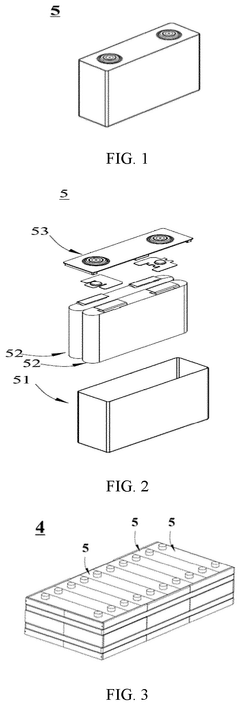
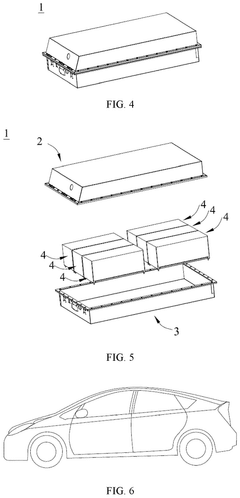
Non-aqueous electrolyte, sodium-ion battery containing same, and electrical apparatus
PatentPendingEP4611104A1
Innovation
- A non-aqueous electrolyte comprising specific sodium salts with electron-rich anions, such as sodium hexafluorophosphate, sodium hexafluoroarsenate, and sodium perchlorate, along with sodium sulfonate, oxalate, and borate salts, is used to regulate the solvation structure and chemical environment of sodium ions, reducing solvent decomposition and film formation.
Preparation method for sodium ion battery porous hard carbon material, and product and use thereof
PatentWO2024000885A1
Innovation
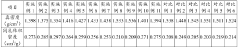
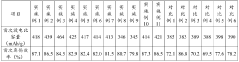
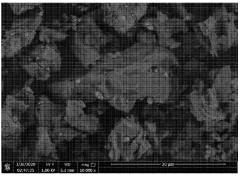
- Using gluconate and glucose together as carbon sources, and by regulating the pore-forming efficiency of gluconate during the carbon pyrolysis process, a porous hard carbon material with a uniform pore structure suitable for sodium ion deintercalation was designed, and the metal was controlled through a preheating step. Oxide quantity and distribution to achieve appropriate pore structure.

Material Science Advancements for Electrolyte and Electrode Optimization
Recent advancements in materials science have significantly contributed to addressing the cycling stability challenges of sodium-ion batteries (SIBs) in cold climates. The electrolyte composition has emerged as a critical factor, with researchers developing novel formulations that maintain ionic conductivity at low temperatures. Traditional carbonate-based electrolytes exhibit high viscosity and reduced ion mobility below 0°C, leading to substantial capacity fade and increased cell impedance.
Fluorinated electrolyte additives have demonstrated promising results by lowering the freezing point and enhancing salt dissociation at low temperatures. Specifically, the incorporation of fluoroethylene carbonate (FEC) and trifluoromethyl propylene carbonate (TFPC) has been shown to form more stable solid electrolyte interphase (SEI) layers that resist degradation during cold-temperature cycling.
Ether-based electrolytes represent another breakthrough, offering superior low-temperature performance compared to conventional carbonate systems. These electrolytes maintain lower viscosity at sub-zero temperatures, facilitating sodium-ion transport even at -20°C. Recent studies have reported retention of up to 80% capacity at -20°C using optimized ether-based formulations, compared to less than 50% for standard electrolytes.
Electrode material optimization has paralleled electrolyte development, with layered oxide cathodes being modified to accommodate the larger sodium-ion radius while maintaining structural integrity during temperature fluctuations. Prussian blue analogs (PBAs) have emerged as particularly promising cathode materials for cold-climate applications due to their open framework structure that facilitates ion diffusion even at reduced temperatures.
For anode materials, hard carbon remains the benchmark, but recent modifications incorporating nitrogen-doping and controlled porosity have enhanced low-temperature performance. These modifications provide additional sodium storage sites and shorter diffusion pathways, mitigating the kinetic limitations experienced at low temperatures.
Composite electrode designs incorporating conductive additives such as graphene and carbon nanotubes have shown remarkable improvements in cold-temperature conductivity. These additives create efficient electron transport networks that remain functional despite the reduced kinetics at low temperatures, maintaining electrode integrity through multiple freeze-thaw cycles.
Interface engineering between electrodes and electrolytes represents the frontier of current research, with artificial SEI layers being developed to specifically address cold-temperature degradation mechanisms. These engineered interfaces prevent dendrite formation and electrolyte decomposition that typically accelerate at low temperatures, extending cycle life by up to 300% in sub-zero conditions compared to unmodified systems.
Fluorinated electrolyte additives have demonstrated promising results by lowering the freezing point and enhancing salt dissociation at low temperatures. Specifically, the incorporation of fluoroethylene carbonate (FEC) and trifluoromethyl propylene carbonate (TFPC) has been shown to form more stable solid electrolyte interphase (SEI) layers that resist degradation during cold-temperature cycling.
Ether-based electrolytes represent another breakthrough, offering superior low-temperature performance compared to conventional carbonate systems. These electrolytes maintain lower viscosity at sub-zero temperatures, facilitating sodium-ion transport even at -20°C. Recent studies have reported retention of up to 80% capacity at -20°C using optimized ether-based formulations, compared to less than 50% for standard electrolytes.
Electrode material optimization has paralleled electrolyte development, with layered oxide cathodes being modified to accommodate the larger sodium-ion radius while maintaining structural integrity during temperature fluctuations. Prussian blue analogs (PBAs) have emerged as particularly promising cathode materials for cold-climate applications due to their open framework structure that facilitates ion diffusion even at reduced temperatures.
For anode materials, hard carbon remains the benchmark, but recent modifications incorporating nitrogen-doping and controlled porosity have enhanced low-temperature performance. These modifications provide additional sodium storage sites and shorter diffusion pathways, mitigating the kinetic limitations experienced at low temperatures.
Composite electrode designs incorporating conductive additives such as graphene and carbon nanotubes have shown remarkable improvements in cold-temperature conductivity. These additives create efficient electron transport networks that remain functional despite the reduced kinetics at low temperatures, maintaining electrode integrity through multiple freeze-thaw cycles.
Interface engineering between electrodes and electrolytes represents the frontier of current research, with artificial SEI layers being developed to specifically address cold-temperature degradation mechanisms. These engineered interfaces prevent dendrite formation and electrolyte decomposition that typically accelerate at low temperatures, extending cycle life by up to 300% in sub-zero conditions compared to unmodified systems.
Environmental Impact and Sustainability of Na-ion Battery Technologies
The environmental impact of sodium-ion batteries represents a significant advantage over traditional lithium-ion technologies, particularly when considering their application in cold climate conditions. Sodium resources are approximately 1,000 times more abundant than lithium in the Earth's crust, with widespread global distribution that reduces geopolitical supply risks and extraction-related environmental concerns. This abundance translates to lower environmental degradation from mining activities compared to lithium extraction, which often involves water-intensive processes in ecologically sensitive areas.
The manufacturing process of sodium-ion batteries demonstrates promising sustainability metrics. Carbon footprints analyses indicate that Na-ion battery production can generate up to 30% less CO2 emissions compared to equivalent lithium-ion batteries, primarily due to less energy-intensive material processing and synthesis requirements. Additionally, the elimination of cobalt and reduced nickel content in many Na-ion chemistries addresses critical ethical and environmental concerns associated with these materials' extraction.
When examining cold climate applications specifically, the environmental benefits become more pronounced. Traditional lithium-ion batteries require energy-intensive heating systems to maintain operational efficiency in sub-zero temperatures, whereas sodium-ion batteries demonstrate inherently better low-temperature performance characteristics. This reduced heating requirement translates to lower operational energy consumption and extended service life in cold environments, further enhancing their sustainability profile through reduced replacement frequency.
End-of-life considerations also favor sodium-ion technology. The materials used in Na-ion batteries are generally less toxic and more readily recyclable than their lithium counterparts. Recent recycling process developments have demonstrated recovery rates exceeding 90% for key sodium-ion battery components, creating potential for closed-loop material systems that significantly reduce environmental impact over multiple product lifecycles.
Water usage represents another critical sustainability metric where sodium-ion batteries excel. Manufacturing processes for Na-ion batteries typically consume 35-40% less water than comparable lithium-ion production, an increasingly important consideration as water scarcity becomes more prevalent globally. This advantage becomes particularly relevant when considering large-scale battery deployment in cold climate regions where water resources may already face pressure from climate change impacts.
Looking forward, life cycle assessment studies suggest that continued optimization of sodium-ion battery manufacturing and recycling processes could further enhance their sustainability advantages, potentially establishing them as the environmentally preferred energy storage solution for cold climate applications where cycling stability remains a primary technical challenge.
The manufacturing process of sodium-ion batteries demonstrates promising sustainability metrics. Carbon footprints analyses indicate that Na-ion battery production can generate up to 30% less CO2 emissions compared to equivalent lithium-ion batteries, primarily due to less energy-intensive material processing and synthesis requirements. Additionally, the elimination of cobalt and reduced nickel content in many Na-ion chemistries addresses critical ethical and environmental concerns associated with these materials' extraction.
When examining cold climate applications specifically, the environmental benefits become more pronounced. Traditional lithium-ion batteries require energy-intensive heating systems to maintain operational efficiency in sub-zero temperatures, whereas sodium-ion batteries demonstrate inherently better low-temperature performance characteristics. This reduced heating requirement translates to lower operational energy consumption and extended service life in cold environments, further enhancing their sustainability profile through reduced replacement frequency.
End-of-life considerations also favor sodium-ion technology. The materials used in Na-ion batteries are generally less toxic and more readily recyclable than their lithium counterparts. Recent recycling process developments have demonstrated recovery rates exceeding 90% for key sodium-ion battery components, creating potential for closed-loop material systems that significantly reduce environmental impact over multiple product lifecycles.
Water usage represents another critical sustainability metric where sodium-ion batteries excel. Manufacturing processes for Na-ion batteries typically consume 35-40% less water than comparable lithium-ion production, an increasingly important consideration as water scarcity becomes more prevalent globally. This advantage becomes particularly relevant when considering large-scale battery deployment in cold climate regions where water resources may already face pressure from climate change impacts.
Looking forward, life cycle assessment studies suggest that continued optimization of sodium-ion battery manufacturing and recycling processes could further enhance their sustainability advantages, potentially establishing them as the environmentally preferred energy storage solution for cold climate applications where cycling stability remains a primary technical challenge.
Unlock deeper insights with Patsnap Eureka Quick Research — get a full tech report to explore trends and direct your research. Try now!
Generate Your Research Report Instantly with AI Agent
Supercharge your innovation with Patsnap Eureka AI Agent Platform!