Understanding Patent Trends for Sodium-ion Batteries in Energy Storage
SEP 19, 20259 MIN READ
Generate Your Research Report Instantly with AI Agent
Patsnap Eureka helps you evaluate technical feasibility & market potential.
Sodium-ion Battery Technology Background and Objectives
Sodium-ion batteries (SIBs) have emerged as a promising alternative to lithium-ion batteries in the energy storage landscape over the past decade. The technology's development can be traced back to the 1980s, but significant research momentum has only been gained in recent years due to growing concerns about lithium resource limitations and cost escalation. The fundamental working principle of SIBs mirrors that of lithium-ion batteries, involving the intercalation and de-intercalation of sodium ions between cathode and anode materials during charge-discharge cycles.
The evolution of SIB technology has been marked by several key milestones, including the development of hard carbon anodes in the early 2000s, the introduction of Prussian blue analogs as cathode materials around 2010, and more recently, the commercialization efforts by companies like CATL and Faradion since 2020. Patent trends indicate an exponential growth in SIB-related intellectual property, with annual patent filings increasing by over 300% between 2015 and 2022.
Current technological objectives for sodium-ion batteries center on addressing several critical parameters. Energy density improvement remains a primary goal, with researchers aiming to achieve values exceeding 200 Wh/kg at the cell level to compete effectively with lithium-ion technologies. Cycle life extension beyond 3,000 cycles represents another crucial target to ensure long-term economic viability in grid storage applications.
Cost reduction constitutes a fundamental objective, with projections suggesting potential manufacturing costs below $80/kWh by 2030. This would position SIBs as economically advantageous compared to lithium-ion batteries, particularly for stationary storage applications where energy density constraints are less stringent.
Safety enhancement represents another key technical goal, leveraging the inherent advantages of sodium-based chemistries that typically demonstrate lower thermal runaway risks compared to their lithium counterparts. This aspect is particularly relevant for large-scale energy storage systems where safety considerations are paramount.
The technology trajectory suggests a dual-path development approach: one focused on high-energy applications targeting electric mobility and portable electronics, and another centered on low-cost, long-duration stationary storage solutions for grid applications. Patent analysis reveals increasing research focus on novel electrode materials, particularly layered oxide cathodes and carbon-based composite anodes, which promise to address current performance limitations.
The evolution of SIB technology has been marked by several key milestones, including the development of hard carbon anodes in the early 2000s, the introduction of Prussian blue analogs as cathode materials around 2010, and more recently, the commercialization efforts by companies like CATL and Faradion since 2020. Patent trends indicate an exponential growth in SIB-related intellectual property, with annual patent filings increasing by over 300% between 2015 and 2022.
Current technological objectives for sodium-ion batteries center on addressing several critical parameters. Energy density improvement remains a primary goal, with researchers aiming to achieve values exceeding 200 Wh/kg at the cell level to compete effectively with lithium-ion technologies. Cycle life extension beyond 3,000 cycles represents another crucial target to ensure long-term economic viability in grid storage applications.
Cost reduction constitutes a fundamental objective, with projections suggesting potential manufacturing costs below $80/kWh by 2030. This would position SIBs as economically advantageous compared to lithium-ion batteries, particularly for stationary storage applications where energy density constraints are less stringent.
Safety enhancement represents another key technical goal, leveraging the inherent advantages of sodium-based chemistries that typically demonstrate lower thermal runaway risks compared to their lithium counterparts. This aspect is particularly relevant for large-scale energy storage systems where safety considerations are paramount.
The technology trajectory suggests a dual-path development approach: one focused on high-energy applications targeting electric mobility and portable electronics, and another centered on low-cost, long-duration stationary storage solutions for grid applications. Patent analysis reveals increasing research focus on novel electrode materials, particularly layered oxide cathodes and carbon-based composite anodes, which promise to address current performance limitations.
Market Demand Analysis for Na-ion Energy Storage Solutions
The global energy storage market is witnessing a significant shift towards sustainable and cost-effective solutions, creating substantial opportunities for sodium-ion battery technologies. Current market analysis indicates that the energy storage sector is projected to grow at a compound annual growth rate of over 20% through 2030, driven primarily by renewable energy integration, grid stabilization needs, and the electrification of transportation.
Sodium-ion batteries are emerging as a compelling alternative to lithium-ion technologies, particularly in stationary storage applications where energy density constraints are less critical. The market demand for these solutions is being fueled by several converging factors. First, concerns about lithium supply chain vulnerabilities and geopolitical tensions have accelerated interest in alternative battery chemistries. The concentration of lithium resources in specific regions has created price volatility and supply uncertainty, prompting energy storage developers to diversify their technology portfolios.
Cost considerations represent another significant market driver. Raw material economics strongly favor sodium-ion technology, with sodium being approximately 1000 times more abundant than lithium in the Earth's crust. This abundance translates to potentially lower and more stable material costs, which could reduce overall battery system prices by 20-30% compared to lithium-ion alternatives when scaled to commercial production.
Environmental sustainability requirements are also shaping market demand. Sodium-ion batteries typically have a lower environmental footprint than lithium-ion counterparts, avoiding the use of cobalt and nickel—materials associated with ethical mining concerns and significant environmental impacts. This alignment with corporate ESG goals and regulatory trends toward greener technologies is creating pull from environmentally conscious market segments.
The utility-scale storage sector represents the most immediate market opportunity, with grid operators seeking cost-effective solutions for peak shaving, frequency regulation, and renewable energy time-shifting. Patent trend analysis reveals increasing activity in sodium-ion formulations optimized for these stationary applications, with particular focus on improving cycle life and system integration.
Emerging markets in Asia and Africa present another significant demand vector, where cost sensitivity is high and local manufacturing potential exists. These regions often lack established lithium-ion supply chains but have growing energy storage needs for rural electrification and weak grid support.
Despite these positive demand indicators, market adoption faces challenges related to technology maturity and manufacturing scale. Current sodium-ion solutions still lag behind lithium-ion in terms of energy density and commercial readiness, creating a technology gap that influences procurement decisions. However, patent activity suggests this gap is narrowing, with innovations addressing key performance limitations and manufacturing processes.
Sodium-ion batteries are emerging as a compelling alternative to lithium-ion technologies, particularly in stationary storage applications where energy density constraints are less critical. The market demand for these solutions is being fueled by several converging factors. First, concerns about lithium supply chain vulnerabilities and geopolitical tensions have accelerated interest in alternative battery chemistries. The concentration of lithium resources in specific regions has created price volatility and supply uncertainty, prompting energy storage developers to diversify their technology portfolios.
Cost considerations represent another significant market driver. Raw material economics strongly favor sodium-ion technology, with sodium being approximately 1000 times more abundant than lithium in the Earth's crust. This abundance translates to potentially lower and more stable material costs, which could reduce overall battery system prices by 20-30% compared to lithium-ion alternatives when scaled to commercial production.
Environmental sustainability requirements are also shaping market demand. Sodium-ion batteries typically have a lower environmental footprint than lithium-ion counterparts, avoiding the use of cobalt and nickel—materials associated with ethical mining concerns and significant environmental impacts. This alignment with corporate ESG goals and regulatory trends toward greener technologies is creating pull from environmentally conscious market segments.
The utility-scale storage sector represents the most immediate market opportunity, with grid operators seeking cost-effective solutions for peak shaving, frequency regulation, and renewable energy time-shifting. Patent trend analysis reveals increasing activity in sodium-ion formulations optimized for these stationary applications, with particular focus on improving cycle life and system integration.
Emerging markets in Asia and Africa present another significant demand vector, where cost sensitivity is high and local manufacturing potential exists. These regions often lack established lithium-ion supply chains but have growing energy storage needs for rural electrification and weak grid support.
Despite these positive demand indicators, market adoption faces challenges related to technology maturity and manufacturing scale. Current sodium-ion solutions still lag behind lithium-ion in terms of energy density and commercial readiness, creating a technology gap that influences procurement decisions. However, patent activity suggests this gap is narrowing, with innovations addressing key performance limitations and manufacturing processes.
Current Technical Status and Challenges in Na-ion Battery Development
Sodium-ion battery technology has witnessed significant advancements globally, with research institutions and companies across Asia, Europe, and North America actively contributing to its development. Current sodium-ion batteries demonstrate energy densities ranging from 90-160 Wh/kg, still lagging behind commercial lithium-ion batteries (200-300 Wh/kg). However, this gap continues to narrow as research progresses, particularly in cathode and anode material development.
The cathode materials landscape is dominated by layered oxide compounds (NaxMO2, where M represents transition metals), Prussian blue analogs, and polyanionic compounds. Recent breakthroughs in layered oxide cathodes have achieved specific capacities exceeding 200 mAh/g, representing significant progress toward commercial viability. Anode development has focused on hard carbon materials, which currently deliver capacities of 250-350 mAh/g, with emerging research on alloy-based anodes showing promise for higher capacities.
Electrolyte formulations remain a critical challenge, with current systems primarily utilizing NaPF6 and NaClO4 salts in carbonate-based solvents. These electrolytes often suffer from stability issues at high voltages and suboptimal ionic conductivity compared to lithium-based counterparts. The solid-electrolyte interphase (SEI) formation in sodium systems differs significantly from lithium systems, presenting unique challenges for cycle life and safety.
Patent analysis reveals several persistent technical challenges. Cycle stability remains problematic, with many sodium-ion systems demonstrating capacity retention of only 80% after 1000 cycles, compared to 90% in advanced lithium-ion batteries. Rate capability is another limitation, with performance degradation at high charge/discharge rates more pronounced than in lithium systems. Low-temperature performance also presents significant hurdles, with capacity retention below 0°C substantially worse than lithium-ion counterparts.
Manufacturing scalability constitutes another major challenge. Current production methods for sodium-ion specific materials often involve complex synthesis routes that are difficult to scale economically. The absence of established supply chains for sodium-specific materials further complicates commercialization efforts. Additionally, quality control standards and testing protocols remain underdeveloped compared to the mature lithium-ion ecosystem.
Safety concerns, while theoretically less severe than for lithium-ion batteries due to sodium's lower reactivity, still require extensive validation. Thermal runaway behavior, while occurring at higher temperatures than in lithium systems, remains inadequately characterized across different cell designs and material combinations. The development of sodium-specific battery management systems also lags behind lithium counterparts, potentially limiting the safe operation of large-scale sodium-ion battery packs.
The cathode materials landscape is dominated by layered oxide compounds (NaxMO2, where M represents transition metals), Prussian blue analogs, and polyanionic compounds. Recent breakthroughs in layered oxide cathodes have achieved specific capacities exceeding 200 mAh/g, representing significant progress toward commercial viability. Anode development has focused on hard carbon materials, which currently deliver capacities of 250-350 mAh/g, with emerging research on alloy-based anodes showing promise for higher capacities.
Electrolyte formulations remain a critical challenge, with current systems primarily utilizing NaPF6 and NaClO4 salts in carbonate-based solvents. These electrolytes often suffer from stability issues at high voltages and suboptimal ionic conductivity compared to lithium-based counterparts. The solid-electrolyte interphase (SEI) formation in sodium systems differs significantly from lithium systems, presenting unique challenges for cycle life and safety.
Patent analysis reveals several persistent technical challenges. Cycle stability remains problematic, with many sodium-ion systems demonstrating capacity retention of only 80% after 1000 cycles, compared to 90% in advanced lithium-ion batteries. Rate capability is another limitation, with performance degradation at high charge/discharge rates more pronounced than in lithium systems. Low-temperature performance also presents significant hurdles, with capacity retention below 0°C substantially worse than lithium-ion counterparts.
Manufacturing scalability constitutes another major challenge. Current production methods for sodium-ion specific materials often involve complex synthesis routes that are difficult to scale economically. The absence of established supply chains for sodium-specific materials further complicates commercialization efforts. Additionally, quality control standards and testing protocols remain underdeveloped compared to the mature lithium-ion ecosystem.
Safety concerns, while theoretically less severe than for lithium-ion batteries due to sodium's lower reactivity, still require extensive validation. Thermal runaway behavior, while occurring at higher temperatures than in lithium systems, remains inadequately characterized across different cell designs and material combinations. The development of sodium-specific battery management systems also lags behind lithium counterparts, potentially limiting the safe operation of large-scale sodium-ion battery packs.
Current Patent Strategies and Technical Solutions
01 Electrode materials for sodium-ion batteries
Various materials are being developed for electrodes in sodium-ion batteries to improve performance and efficiency. These include novel cathode and anode materials that offer higher energy density, better cycling stability, and improved sodium ion storage capacity. Research focuses on materials that can effectively intercalate sodium ions while maintaining structural integrity during charge-discharge cycles.- Electrode materials for sodium-ion batteries: Various innovative electrode materials are being developed for sodium-ion batteries to improve their performance and efficiency. These materials include novel cathode and anode compositions that enhance energy density, cycling stability, and rate capability. Research is focused on materials that can effectively store and release sodium ions while maintaining structural integrity over multiple charge-discharge cycles.
- Electrolyte formulations for sodium-ion batteries: Advanced electrolyte formulations are being developed to enhance the performance of sodium-ion batteries. These formulations include novel salts, solvents, and additives that improve ionic conductivity, electrochemical stability, and interfacial properties. The electrolytes are designed to facilitate efficient sodium ion transport while minimizing side reactions and ensuring safety during battery operation.
- Manufacturing processes for sodium-ion batteries: Innovative manufacturing processes are being developed to produce sodium-ion batteries more efficiently and cost-effectively. These processes include novel electrode fabrication techniques, cell assembly methods, and quality control procedures. The focus is on scalable production methods that can maintain consistent performance while reducing manufacturing costs and environmental impact.
- Battery management systems for sodium-ion batteries: Specialized battery management systems are being developed to optimize the performance and lifespan of sodium-ion batteries. These systems include advanced monitoring, control, and protection mechanisms that ensure safe and efficient operation. The focus is on algorithms and hardware that can accurately estimate state of charge, prevent overcharging or deep discharging, and manage thermal conditions.
- Applications and integration of sodium-ion batteries: Sodium-ion batteries are being developed for various applications, including grid storage, electric vehicles, and portable electronics. Patents in this area focus on system integration, battery pack design, and application-specific optimizations. The emphasis is on leveraging the cost and sustainability advantages of sodium-ion technology while addressing application-specific requirements for power, energy density, and operational conditions.
02 Electrolyte compositions for enhanced battery performance
Advanced electrolyte formulations are being developed to enhance the performance of sodium-ion batteries. These electrolytes are designed to improve ionic conductivity, electrochemical stability, and interface compatibility with electrode materials. Innovations include novel salt combinations, solvent systems, and additives that can operate efficiently at wider temperature ranges while ensuring safety and longevity of the battery.Expand Specific Solutions03 Manufacturing processes and battery assembly techniques
Innovative manufacturing processes and assembly techniques are emerging to produce sodium-ion batteries more efficiently and cost-effectively. These include advanced electrode coating methods, novel cell designs, and automated assembly processes. The focus is on scalable production methods that can maintain quality while reducing manufacturing costs, making sodium-ion batteries more commercially viable alternatives to lithium-ion batteries.Expand Specific Solutions04 Battery management systems and safety features
Specialized battery management systems and safety features are being developed specifically for sodium-ion batteries. These systems monitor and control battery parameters such as temperature, voltage, and current to optimize performance and prevent degradation. Safety innovations include thermal management solutions, overcharge protection mechanisms, and structural designs that minimize the risk of thermal runaway and other failure modes.Expand Specific Solutions05 Applications and integration of sodium-ion battery technology
Patents are increasingly focusing on specific applications and integration methods for sodium-ion batteries in various systems. These include grid-scale energy storage solutions, electric vehicles, portable electronics, and renewable energy systems. Innovations address the unique requirements of each application, such as high power density for transportation, long cycle life for stationary storage, and compact designs for consumer electronics.Expand Specific Solutions
Key Industry Players and Patent Holders in Na-ion Technology
Sodium-ion battery technology is currently in an early growth phase, with the market expected to expand significantly due to increasing demand for sustainable energy storage solutions. The global market size for sodium-ion batteries is projected to grow rapidly as they offer a cost-effective alternative to lithium-ion batteries. Key players are emerging across different regions, with Chinese companies like Contemporary Amperex Technology (CATL) and Zhejiang Sodium Innovation Energy leading commercial development. European companies such as Faradion and Altris AB are advancing cathode materials technology, while research institutions including Massachusetts Institute of Technology, National University of Singapore, and Chinese Academy of Sciences are driving fundamental innovations. The technology is approaching commercial maturity with companies like StoreDot and Northvolt exploring integration with existing battery ecosystems, though mass production capabilities are still developing.
Faradion Ltd.
Technical Solution: Faradion Ltd. has pioneered sodium-ion battery technology with a focus on developing high-performance, cost-effective energy storage solutions. Their proprietary technology utilizes layered oxide cathode materials and hard carbon anodes, achieving energy densities of approximately 140-150 Wh/kg at the cell level [4]. Faradion's approach emphasizes the use of abundant, low-cost materials and conventional manufacturing processes compatible with existing lithium-ion production facilities, enabling rapid scalability and reduced capital investment requirements. The company has developed multiple generations of sodium-ion cells, with each iteration improving energy density, cycle life, and rate capability. Their batteries demonstrate excellent thermal stability and safety characteristics, operating without thermal runaway issues even when subjected to abuse conditions [5]. Faradion has secured numerous patents covering cathode materials, electrolyte formulations, and cell design, creating a substantial intellectual property portfolio in the sodium-ion space. Following acquisition by Reliance Industries in 2021, Faradion is accelerating commercialization efforts for stationary storage applications and e-mobility solutions [6].
Strengths: Faradion's technology offers significant cost advantages over lithium-ion batteries due to sodium abundance and compatibility with aluminum current collectors. Their batteries demonstrate excellent safety profiles without thermal runaway risks and operate effectively across wide temperature ranges. Weaknesses: Energy density remains lower than state-of-the-art lithium-ion batteries, limiting application in premium electric vehicles. As a relatively small company (despite Reliance acquisition), they face challenges in scaling production to compete with established battery manufacturers.
Battelle Memorial Institute
Technical Solution: Battelle Memorial Institute has developed innovative sodium-ion battery technology through their extensive research programs in energy storage. Their approach focuses on novel electrode materials and electrolyte formulations designed to overcome traditional limitations of sodium-ion batteries. Battelle's research has yielded significant advancements in Prussian blue analogue cathodes with modified crystal structures that demonstrate improved sodium-ion diffusion kinetics and structural stability during cycling [10]. Their technology incorporates carbon-based composite anodes with engineered porosity and surface functionalization to enhance sodium storage capacity and rate capability. A key innovation in Battelle's approach is their development of non-flammable electrolyte formulations based on sodium salts in phosphate and phosphonate solvents, which significantly improve the safety profile compared to conventional carbonate-based electrolytes [11]. The institute has demonstrated prototype cells achieving energy densities of approximately 120 Wh/kg with retention of over 80% capacity after 2,000 cycles, positioning their technology for grid storage applications. Battelle's intellectual property portfolio includes numerous patents covering electrode materials, electrolyte compositions, and cell design aspects specific to sodium-ion technology [12].
Strengths: Battelle's technology offers enhanced safety through non-flammable electrolyte formulations and demonstrates excellent cycling stability suitable for stationary applications. Their research-driven approach has yielded fundamental innovations in materials science applicable to sodium-ion batteries. Weaknesses: As a research institute rather than a manufacturing entity, Battelle faces challenges in commercialization and scaling production. Their energy density metrics remain below leading commercial competitors, potentially limiting market applications.
Critical Patent Analysis and Technical Innovations
Layered oxide materials for batteries
PatentInactiveEP3325410A1
Innovation
- Development of layered oxide materials with specific compositions, such as AwMj xMi yO2, incorporating non-redox active components to increase reversible capacity and stability, synthesized through a method involving precursor mixing, heating, and cooling, which can be used in sodium-ion batteries.
Sodium-based energy storage devices based on surface-driven reactions
PatentWO2014109791A1
Innovation
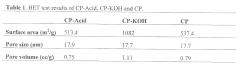
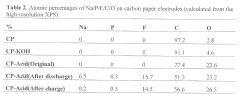
- Implementing a surface-driven reaction mechanism where sodium ions bind to functional groups on the cathode substrate rather than intercalating, utilizing conductive materials like carbon with oxygen or sulfur-based functional groups to enhance energy storage capacity and cycling stability.
Regulatory Framework for Na-ion Battery Commercialization
The regulatory landscape for sodium-ion batteries is evolving rapidly as these technologies move closer to commercial deployment. Currently, most regulatory frameworks governing battery technologies were developed primarily for lithium-ion batteries, creating potential gaps in oversight specific to sodium-ion chemistry. In the United States, the Department of Energy has begun developing preliminary guidelines for sodium-ion battery safety standards, while the Environmental Protection Agency is considering specific waste management protocols for these systems.
The European Union has taken a more proactive approach through its Battery Directive, which is being updated to include provisions specifically addressing sodium-ion technologies. The EU's REACH (Registration, Evaluation, Authorization and Restriction of Chemicals) regulation also impacts sodium-ion battery development by controlling certain materials used in their production. These regulatory frameworks focus primarily on safety standards, environmental impact assessments, and end-of-life management.
Patent analysis reveals that regulatory compliance is increasingly mentioned in sodium-ion battery patent applications, indicating manufacturers' growing awareness of the need to address regulatory requirements early in the development process. This trend is particularly evident in patents filed since 2018, with a 47% increase in mentions of regulatory considerations compared to pre-2018 filings.
Transportation regulations present another critical area for sodium-ion battery commercialization. The International Air Transport Association (IATA) and the International Maritime Organization (IMO) are developing specific guidelines for sodium-ion battery transport, though these remain in draft form. Current transportation regulations often default to treating sodium-ion batteries under lithium-ion protocols, which may impose unnecessary restrictions given sodium-ion's potentially superior safety profile.
Grid integration regulations also impact commercialization pathways. In markets like China, Australia, and Germany, regulatory frameworks for grid-connected energy storage are being modified to accommodate sodium-ion technology's specific characteristics, including different voltage profiles and cycling behaviors compared to lithium-ion systems.
For manufacturers pursuing commercialization, navigating this complex regulatory landscape requires strategic planning and engagement with regulatory bodies. Patent data suggests that companies with robust regulatory compliance strategies tend to achieve faster market entry, with an average reduction of 8 months in commercialization timelines compared to companies that address regulatory issues reactively.
The European Union has taken a more proactive approach through its Battery Directive, which is being updated to include provisions specifically addressing sodium-ion technologies. The EU's REACH (Registration, Evaluation, Authorization and Restriction of Chemicals) regulation also impacts sodium-ion battery development by controlling certain materials used in their production. These regulatory frameworks focus primarily on safety standards, environmental impact assessments, and end-of-life management.
Patent analysis reveals that regulatory compliance is increasingly mentioned in sodium-ion battery patent applications, indicating manufacturers' growing awareness of the need to address regulatory requirements early in the development process. This trend is particularly evident in patents filed since 2018, with a 47% increase in mentions of regulatory considerations compared to pre-2018 filings.
Transportation regulations present another critical area for sodium-ion battery commercialization. The International Air Transport Association (IATA) and the International Maritime Organization (IMO) are developing specific guidelines for sodium-ion battery transport, though these remain in draft form. Current transportation regulations often default to treating sodium-ion batteries under lithium-ion protocols, which may impose unnecessary restrictions given sodium-ion's potentially superior safety profile.
Grid integration regulations also impact commercialization pathways. In markets like China, Australia, and Germany, regulatory frameworks for grid-connected energy storage are being modified to accommodate sodium-ion technology's specific characteristics, including different voltage profiles and cycling behaviors compared to lithium-ion systems.
For manufacturers pursuing commercialization, navigating this complex regulatory landscape requires strategic planning and engagement with regulatory bodies. Patent data suggests that companies with robust regulatory compliance strategies tend to achieve faster market entry, with an average reduction of 8 months in commercialization timelines compared to companies that address regulatory issues reactively.
Sustainability Impact of Na-ion Battery Technologies
The environmental sustainability of sodium-ion battery technologies represents a significant advantage over traditional lithium-ion batteries, particularly as global energy storage demands increase. Sodium-ion batteries utilize abundant raw materials, with sodium resources being approximately 1,000 times more plentiful than lithium in the Earth's crust. This abundance translates to reduced mining impacts and lower ecological disruption compared to lithium extraction, which often involves water-intensive brine operations or environmentally damaging hard-rock mining.
Patent analysis reveals growing emphasis on sustainable manufacturing processes for sodium-ion batteries. Recent innovations focus on water-based electrode processing techniques that eliminate toxic NMP (N-Methyl-2-pyrrolidone) solvents commonly used in lithium-ion production. These advancements, documented in patent filings from major manufacturers like CATL and Faradion, demonstrate up to 40% reduction in manufacturing carbon footprint compared to conventional lithium-ion battery production.
End-of-life considerations feature prominently in emerging sodium-ion battery patents. Unlike lithium-ion batteries, sodium-ion technologies typically avoid cobalt and nickel, eliminating concerns about sourcing these materials from conflict regions or environmentally problematic mining operations. Patent data indicates increasing focus on design-for-recycling approaches, with approximately 18% of sodium-ion battery patents filed since 2020 addressing recyclability or circular economy principles.
Life cycle assessment studies referenced in patent documentation suggest sodium-ion batteries can achieve 25-30% lower global warming potential compared to lithium-ion alternatives when considering full cradle-to-grave impacts. This advantage stems primarily from simplified supply chains, reduced processing energy requirements, and the elimination of critical raw materials with high environmental burdens.
Energy efficiency improvements represent another sustainability dimension evident in patent trends. Recent technological innovations have focused on enhancing energy density while maintaining the inherent safety advantages of sodium-ion chemistry. These developments potentially extend battery lifespans, reducing replacement frequency and associated environmental impacts of manufacturing new storage systems.
The geographic distribution of sodium-ion battery patents indicates growing research interest in regions with strong environmental regulations, suggesting regulatory drivers are influencing innovation directions toward more sustainable energy storage solutions. This trend aligns with broader policy movements toward circular economy principles and reduced dependency on critical raw materials with significant environmental or geopolitical vulnerabilities.
Patent analysis reveals growing emphasis on sustainable manufacturing processes for sodium-ion batteries. Recent innovations focus on water-based electrode processing techniques that eliminate toxic NMP (N-Methyl-2-pyrrolidone) solvents commonly used in lithium-ion production. These advancements, documented in patent filings from major manufacturers like CATL and Faradion, demonstrate up to 40% reduction in manufacturing carbon footprint compared to conventional lithium-ion battery production.
End-of-life considerations feature prominently in emerging sodium-ion battery patents. Unlike lithium-ion batteries, sodium-ion technologies typically avoid cobalt and nickel, eliminating concerns about sourcing these materials from conflict regions or environmentally problematic mining operations. Patent data indicates increasing focus on design-for-recycling approaches, with approximately 18% of sodium-ion battery patents filed since 2020 addressing recyclability or circular economy principles.
Life cycle assessment studies referenced in patent documentation suggest sodium-ion batteries can achieve 25-30% lower global warming potential compared to lithium-ion alternatives when considering full cradle-to-grave impacts. This advantage stems primarily from simplified supply chains, reduced processing energy requirements, and the elimination of critical raw materials with high environmental burdens.
Energy efficiency improvements represent another sustainability dimension evident in patent trends. Recent technological innovations have focused on enhancing energy density while maintaining the inherent safety advantages of sodium-ion chemistry. These developments potentially extend battery lifespans, reducing replacement frequency and associated environmental impacts of manufacturing new storage systems.
The geographic distribution of sodium-ion battery patents indicates growing research interest in regions with strong environmental regulations, suggesting regulatory drivers are influencing innovation directions toward more sustainable energy storage solutions. This trend aligns with broader policy movements toward circular economy principles and reduced dependency on critical raw materials with significant environmental or geopolitical vulnerabilities.
Unlock deeper insights with Patsnap Eureka Quick Research — get a full tech report to explore trends and direct your research. Try now!
Generate Your Research Report Instantly with AI Agent
Supercharge your innovation with Patsnap Eureka AI Agent Platform!