

How Solid sorbents for CO2 capture influence adsorption kinetics and capacity
SEP 28, 20259 MIN READ
Generate Your Research Report Instantly with AI Agent
PatSnap Eureka helps you evaluate technical feasibility & market potential.
CO2 Capture Sorbent Evolution and Objectives
Carbon dioxide capture technology has evolved significantly over the past decades, driven by the urgent need to mitigate climate change impacts. The journey began with conventional absorption methods using liquid amines in the 1930s, which despite their effectiveness, presented challenges including high energy requirements for regeneration, equipment corrosion, and amine degradation. This prompted researchers to explore alternative approaches, leading to the emergence of solid sorbents as promising candidates for CO2 capture applications.
Solid sorbents represent a diverse class of materials including activated carbons, zeolites, metal-organic frameworks (MOFs), and amine-functionalized silicas. The evolution of these materials has been marked by continuous improvements in their structural properties, chemical stability, and adsorption performance. Early generations focused primarily on capacity, while recent developments have increasingly emphasized the critical balance between adsorption capacity and kinetics.
The technological trajectory has been shaped by fundamental breakthroughs in material science, particularly in nanomaterial synthesis and characterization techniques. These advances have enabled precise control over pore structure, surface chemistry, and functional group integration, allowing for tailored sorbent designs that address specific operational requirements across various capture scenarios.
Current research objectives center on developing next-generation solid sorbents that demonstrate superior performance across multiple parameters. Primary goals include achieving high CO2 selectivity in mixed gas environments, maintaining structural integrity over numerous adsorption-desorption cycles, and ensuring rapid kinetics to enable practical implementation in industrial settings. Researchers are particularly focused on understanding the molecular-level interactions that govern adsorption processes to optimize sorbent design.
Energy efficiency represents another critical objective, with significant efforts directed toward minimizing the energy penalty associated with sorbent regeneration. This includes exploring novel regeneration methods such as pressure swing, temperature swing, and hybrid approaches that can substantially reduce the overall energy footprint of the capture process.
Scalability and cost-effectiveness have emerged as paramount considerations for bridging the gap between laboratory innovations and commercial deployment. The field is increasingly prioritizing materials and processes that can be manufactured at scale using readily available precursors and established production methods, ensuring economic viability for widespread adoption.
Looking forward, the technical objectives are expanding to include environmental sustainability across the entire life cycle of sorbent materials. This encompasses the development of bio-derived sorbents, environmentally benign synthesis routes, and end-of-life considerations including recycling and disposal pathways that align with circular economy principles.
Solid sorbents represent a diverse class of materials including activated carbons, zeolites, metal-organic frameworks (MOFs), and amine-functionalized silicas. The evolution of these materials has been marked by continuous improvements in their structural properties, chemical stability, and adsorption performance. Early generations focused primarily on capacity, while recent developments have increasingly emphasized the critical balance between adsorption capacity and kinetics.
The technological trajectory has been shaped by fundamental breakthroughs in material science, particularly in nanomaterial synthesis and characterization techniques. These advances have enabled precise control over pore structure, surface chemistry, and functional group integration, allowing for tailored sorbent designs that address specific operational requirements across various capture scenarios.
Current research objectives center on developing next-generation solid sorbents that demonstrate superior performance across multiple parameters. Primary goals include achieving high CO2 selectivity in mixed gas environments, maintaining structural integrity over numerous adsorption-desorption cycles, and ensuring rapid kinetics to enable practical implementation in industrial settings. Researchers are particularly focused on understanding the molecular-level interactions that govern adsorption processes to optimize sorbent design.
Energy efficiency represents another critical objective, with significant efforts directed toward minimizing the energy penalty associated with sorbent regeneration. This includes exploring novel regeneration methods such as pressure swing, temperature swing, and hybrid approaches that can substantially reduce the overall energy footprint of the capture process.
Scalability and cost-effectiveness have emerged as paramount considerations for bridging the gap between laboratory innovations and commercial deployment. The field is increasingly prioritizing materials and processes that can be manufactured at scale using readily available precursors and established production methods, ensuring economic viability for widespread adoption.
Looking forward, the technical objectives are expanding to include environmental sustainability across the entire life cycle of sorbent materials. This encompasses the development of bio-derived sorbents, environmentally benign synthesis routes, and end-of-life considerations including recycling and disposal pathways that align with circular economy principles.
Market Analysis for Carbon Capture Technologies
The global carbon capture and storage (CCS) market is experiencing significant growth, driven by increasing environmental regulations and the urgent need to reduce greenhouse gas emissions. As of 2023, the market was valued at approximately $7.3 billion, with projections indicating growth to reach $15.3 billion by 2030, representing a compound annual growth rate (CAGR) of 11.2% during the forecast period.
Solid sorbents for CO2 capture represent a rapidly expanding segment within this market. Unlike traditional liquid amine-based capture systems, solid sorbents offer potential advantages in energy efficiency and operational costs, driving their increasing market adoption. The solid sorbent segment is expected to grow at a CAGR of 13.5% through 2030, outpacing the overall CCS market growth.
Geographically, North America currently dominates the carbon capture market, accounting for approximately 35% of global market share, followed by Europe at 28% and Asia-Pacific at 25%. However, the Asia-Pacific region is expected to witness the fastest growth rate due to increasing industrialization and stringent emission regulations being implemented in countries like China and India.
By industry vertical, power generation represents the largest application segment for solid sorbent-based carbon capture technologies, accounting for 42% of the market. This is followed by the oil and gas sector (27%), cement production (15%), and other industrial applications (16%). The power generation sector's dominance is attributed to the large-scale emissions from coal and natural gas power plants and increasing regulatory pressure to decarbonize this sector.
Key market drivers include strengthening climate policies, carbon pricing mechanisms, and government incentives for carbon capture deployment. The U.S. 45Q tax credit, which provides up to $85 per metric ton of CO2 captured and sequestered, has been particularly influential in stimulating market growth in North America. Similarly, the EU's Emissions Trading System and Carbon Border Adjustment Mechanism are creating favorable market conditions in Europe.
Market challenges include high capital costs for implementation, with typical large-scale solid sorbent carbon capture installations requiring investments of $400-700 million. Additionally, the technology's energy penalty, which can reduce a power plant's output by 15-30%, remains a significant barrier to widespread adoption. However, ongoing research in advanced solid sorbents with improved adsorption kinetics and capacity is expected to reduce these penalties over time.
Customer segments show varying adoption rates, with early adopters primarily being large power utilities and industrial facilities in regions with strong carbon regulations or incentives. The market is expected to expand to medium-sized industrial emitters as technology costs decrease and performance improves through advancements in solid sorbent materials.
Solid sorbents for CO2 capture represent a rapidly expanding segment within this market. Unlike traditional liquid amine-based capture systems, solid sorbents offer potential advantages in energy efficiency and operational costs, driving their increasing market adoption. The solid sorbent segment is expected to grow at a CAGR of 13.5% through 2030, outpacing the overall CCS market growth.
Geographically, North America currently dominates the carbon capture market, accounting for approximately 35% of global market share, followed by Europe at 28% and Asia-Pacific at 25%. However, the Asia-Pacific region is expected to witness the fastest growth rate due to increasing industrialization and stringent emission regulations being implemented in countries like China and India.
By industry vertical, power generation represents the largest application segment for solid sorbent-based carbon capture technologies, accounting for 42% of the market. This is followed by the oil and gas sector (27%), cement production (15%), and other industrial applications (16%). The power generation sector's dominance is attributed to the large-scale emissions from coal and natural gas power plants and increasing regulatory pressure to decarbonize this sector.
Key market drivers include strengthening climate policies, carbon pricing mechanisms, and government incentives for carbon capture deployment. The U.S. 45Q tax credit, which provides up to $85 per metric ton of CO2 captured and sequestered, has been particularly influential in stimulating market growth in North America. Similarly, the EU's Emissions Trading System and Carbon Border Adjustment Mechanism are creating favorable market conditions in Europe.
Market challenges include high capital costs for implementation, with typical large-scale solid sorbent carbon capture installations requiring investments of $400-700 million. Additionally, the technology's energy penalty, which can reduce a power plant's output by 15-30%, remains a significant barrier to widespread adoption. However, ongoing research in advanced solid sorbents with improved adsorption kinetics and capacity is expected to reduce these penalties over time.
Customer segments show varying adoption rates, with early adopters primarily being large power utilities and industrial facilities in regions with strong carbon regulations or incentives. The market is expected to expand to medium-sized industrial emitters as technology costs decrease and performance improves through advancements in solid sorbent materials.
Solid Sorbent Technology Status and Barriers
Solid sorbent technology for CO2 capture has emerged as a promising alternative to traditional liquid amine-based absorption methods. Currently, various classes of solid sorbents are being investigated, including activated carbons, zeolites, metal-organic frameworks (MOFs), amine-functionalized silica, and hydrotalcites. Each material class exhibits distinct adsorption mechanisms, with physisorption dominating in porous materials like activated carbons and zeolites, while chemisorption characterizes amine-functionalized materials.
The global research landscape shows concentrated efforts in North America, Europe, and East Asia, with the United States, China, and Germany leading patent applications. Academic institutions continue to drive fundamental research, while industrial players focus on scaling and commercialization challenges. Despite promising laboratory results, most solid sorbent technologies remain at Technology Readiness Levels (TRL) of 3-5, with only a few pilot demonstrations reaching TRL 6-7.
Significant technical barriers persist in the development and implementation of solid sorbents. Material stability presents a major challenge, as many promising sorbents degrade after multiple adsorption-desorption cycles, particularly under real-world conditions with moisture, SOx, and NOx contaminants. This degradation directly impacts the long-term economic viability of these systems. Additionally, the trade-off between adsorption capacity and kinetics remains problematic—materials with high CO2 capacity often exhibit slow adsorption rates, limiting their practical application in industrial settings.
Heat management represents another critical challenge. The exothermic nature of CO2 adsorption generates heat that must be efficiently managed to maintain optimal performance. Conversely, the endothermic desorption process requires substantial energy input, affecting the overall energy efficiency of the capture system. Current regeneration methods often demand high temperatures or deep vacuum conditions, significantly increasing operational costs.
Scalability issues further complicate commercial deployment. Many high-performing materials synthesized in laboratories utilize expensive precursors or complex manufacturing processes that are difficult to scale economically. The mechanical properties of solid sorbents also present challenges, as materials must withstand pressure drops, attrition, and thermal cycling in industrial settings without significant performance degradation.
Recent technological advances have begun addressing these barriers through hierarchical pore structures to enhance mass transfer, composite materials that balance capacity and kinetics, and novel regeneration approaches using pressure-temperature swing combinations. However, substantial research gaps remain in developing materials that simultaneously achieve high capacity, fast kinetics, excellent stability, and cost-effective manufacturability.
The global research landscape shows concentrated efforts in North America, Europe, and East Asia, with the United States, China, and Germany leading patent applications. Academic institutions continue to drive fundamental research, while industrial players focus on scaling and commercialization challenges. Despite promising laboratory results, most solid sorbent technologies remain at Technology Readiness Levels (TRL) of 3-5, with only a few pilot demonstrations reaching TRL 6-7.
Significant technical barriers persist in the development and implementation of solid sorbents. Material stability presents a major challenge, as many promising sorbents degrade after multiple adsorption-desorption cycles, particularly under real-world conditions with moisture, SOx, and NOx contaminants. This degradation directly impacts the long-term economic viability of these systems. Additionally, the trade-off between adsorption capacity and kinetics remains problematic—materials with high CO2 capacity often exhibit slow adsorption rates, limiting their practical application in industrial settings.
Heat management represents another critical challenge. The exothermic nature of CO2 adsorption generates heat that must be efficiently managed to maintain optimal performance. Conversely, the endothermic desorption process requires substantial energy input, affecting the overall energy efficiency of the capture system. Current regeneration methods often demand high temperatures or deep vacuum conditions, significantly increasing operational costs.
Scalability issues further complicate commercial deployment. Many high-performing materials synthesized in laboratories utilize expensive precursors or complex manufacturing processes that are difficult to scale economically. The mechanical properties of solid sorbents also present challenges, as materials must withstand pressure drops, attrition, and thermal cycling in industrial settings without significant performance degradation.
Recent technological advances have begun addressing these barriers through hierarchical pore structures to enhance mass transfer, composite materials that balance capacity and kinetics, and novel regeneration approaches using pressure-temperature swing combinations. However, substantial research gaps remain in developing materials that simultaneously achieve high capacity, fast kinetics, excellent stability, and cost-effective manufacturability.
Current Solid Sorbent Solutions and Mechanisms
01 Metal-organic frameworks (MOFs) for CO2 capture
Metal-organic frameworks represent a promising class of solid sorbents for CO2 capture due to their high surface area, tunable pore size, and customizable chemical functionality. These crystalline materials consist of metal ions or clusters coordinated to organic ligands, forming porous structures that can selectively adsorb CO2. MOFs demonstrate favorable adsorption kinetics and high CO2 capacity, with some variants showing rapid uptake rates and regeneration capabilities under mild conditions. Their performance can be further enhanced through functionalization and post-synthetic modifications.- Metal-organic frameworks (MOFs) for CO2 capture: Metal-organic frameworks (MOFs) are crystalline porous materials that show promising CO2 adsorption properties due to their high surface area and tunable pore structures. These materials can be designed with specific functional groups to enhance CO2 selectivity and capacity. MOFs demonstrate favorable adsorption kinetics and can be regenerated under mild conditions, making them suitable for practical carbon capture applications. Their modular nature allows for systematic improvement of adsorption performance through metal center and organic linker modifications.
- Amine-functionalized sorbents for enhanced CO2 capture: Incorporating amine functional groups into solid sorbents significantly improves CO2 capture capacity through chemical adsorption mechanisms. These amine-functionalized materials form strong chemical bonds with CO2 molecules, enabling high selectivity even at low CO2 concentrations. Various support materials including silica, activated carbon, and polymeric substrates can be modified with amines to create effective CO2 sorbents. The adsorption kinetics can be optimized by controlling the amine loading, type of amine groups, and accessibility of binding sites within the sorbent structure.
- Zeolites and molecular sieves for CO2 adsorption: Zeolites and molecular sieves are aluminosilicate materials with well-defined pore structures that enable selective CO2 capture based on molecular size and polarity. These materials exhibit rapid adsorption kinetics due to their crystalline structure and uniform pore distribution. The CO2 adsorption capacity of zeolites can be enhanced by ion exchange, framework modification, or post-synthesis treatments. Their thermal stability allows for multiple adsorption-desorption cycles without significant degradation in performance, making them suitable for pressure swing adsorption (PSA) and temperature swing adsorption (TSA) processes.
- Carbon-based sorbents for CO2 capture: Carbon-based materials including activated carbon, carbon nanotubes, and graphene derivatives offer excellent CO2 adsorption properties due to their high surface area and pore volume. These materials can be modified through chemical activation, surface functionalization, or doping with heteroatoms to enhance CO2 selectivity and capacity. Carbon-based sorbents typically demonstrate fast adsorption kinetics and good regenerability under mild conditions. Their relatively low cost and environmental compatibility make them attractive for large-scale carbon capture applications. The adsorption performance can be further improved by controlling the pore size distribution and surface chemistry.
- Composite and hybrid sorbents for optimized CO2 capture: Composite and hybrid sorbents combine different materials to leverage their complementary properties for enhanced CO2 capture performance. These materials often integrate components with high adsorption capacity (like amines) with others providing structural stability, heat management, or improved kinetics. Layered or core-shell structures can be designed to optimize both adsorption capacity and kinetics by providing efficient mass transfer pathways. Hybrid organic-inorganic materials can offer synergistic effects that overcome limitations of individual components. These composite approaches allow for tailored sorbent design addressing specific operational requirements such as working capacity, selectivity, and cycling stability.
02 Amine-functionalized sorbents for enhanced CO2 capture
Amine-functionalized materials have emerged as effective solid sorbents for CO2 capture due to their strong chemical affinity for CO2 molecules. These sorbents typically consist of porous supports (such as silica, alumina, or polymers) impregnated or grafted with various amine compounds. The amine groups form carbamates or bicarbonates upon reaction with CO2, enabling high adsorption capacities even at low CO2 partial pressures. These materials demonstrate favorable adsorption kinetics at ambient conditions and can be regenerated at relatively low temperatures, making them suitable for post-combustion carbon capture applications.Expand Specific Solutions03 Carbon-based sorbents for CO2 capture
Carbon-based materials, including activated carbons, carbon molecular sieves, graphene, and carbon nanotubes, serve as effective sorbents for CO2 capture. These materials offer advantages such as high surface area, hydrophobicity, and thermal stability. The adsorption mechanism primarily relies on physical interactions, with CO2 molecules attracted to the carbon surface through van der Waals forces. The adsorption kinetics and capacity can be enhanced through various activation methods, pore structure optimization, and surface functionalization. Carbon-based sorbents are particularly suitable for pressure swing adsorption processes due to their rapid adsorption-desorption kinetics and moderate heat of adsorption.Expand Specific Solutions04 Zeolites and molecular sieves for selective CO2 adsorption
Zeolites and molecular sieves are crystalline aluminosilicate materials with well-defined pore structures that enable selective adsorption of CO2 based on molecular size and polarity. These materials exhibit favorable adsorption kinetics due to their uniform pore channels and high internal surface area. The CO2 capture capacity of zeolites depends on factors such as the silicon-to-aluminum ratio, cation type, and framework structure. Zeolites demonstrate particularly strong performance at low temperatures and can be regenerated through temperature or pressure swing processes. Their selectivity for CO2 over other gases like nitrogen makes them suitable for flue gas applications, though their performance can be negatively affected by moisture.Expand Specific Solutions05 Novel composite and hybrid sorbents for enhanced CO2 capture performance
Composite and hybrid sorbents combine multiple materials to achieve superior CO2 capture performance compared to single-component systems. These innovative materials integrate the advantages of different sorbent types, such as the high capacity of chemical sorbents with the favorable kinetics of physical adsorbents. Examples include polymer-inorganic composites, layered double hydroxides combined with amines, and MOF-based composites. These hybrid materials often demonstrate synergistic effects, resulting in enhanced adsorption capacity, improved kinetics, better selectivity, and greater stability over multiple adsorption-desorption cycles. The composite approach allows for tailoring sorbent properties to specific capture conditions and applications.Expand Specific Solutions
Leading Organizations in Solid Sorbent Research
The solid sorbents for CO2 capture market is in a growth phase, with increasing global focus on carbon reduction technologies. The market size is expanding rapidly, projected to reach significant scale as carbon capture becomes essential for climate goals. Technologically, the field shows varying maturity levels across different sorbent types. Leading players include established energy giants like Saudi Aramco, Shell, ExxonMobil, and Sinopec, who leverage their extensive R&D capabilities, alongside specialized carbon capture innovators such as Climeworks, Carboncapture, and Global Thermostat. Academic institutions like USC, Rice University, and KAIST contribute fundamental research advancing adsorption kinetics and capacity improvements. The competitive landscape reflects a mix of traditional energy companies pivoting toward sustainability and purpose-built carbon capture ventures developing next-generation sorbent technologies.
Carboncapture, Inc.
Technical Solution: Carboncapture has developed a next-generation direct air capture (DAC) technology utilizing specialized zeolite-based solid sorbents with enhanced CO2 adsorption kinetics and capacity. Their proprietary "CarbonOS" system employs a temperature-vacuum swing adsorption process with zeolite materials that have been specifically engineered for atmospheric CO2 capture. Unlike conventional zeolites, Carboncapture's modified materials feature carefully tailored pore structures and surface chemistry that enable selective CO2 adsorption even at the low partial pressures found in ambient air. Their sorbent formulations demonstrate remarkable adsorption kinetics, achieving 60-70% of equilibrium capacity within minutes of exposure to ambient conditions[5]. A key innovation in their approach is the development of modular, shipping container-sized DAC units that can be rapidly deployed and networked together to scale capacity. The regeneration process operates at moderate temperatures (approximately 80-90°C) under partial vacuum, which significantly reduces energy requirements compared to higher-temperature systems. Carboncapture's materials maintain stable performance over thousands of adsorption-desorption cycles with minimal capacity degradation, addressing a critical challenge for commercial viability.
Strengths: Zeolite-based materials offer lower cost and higher stability compared to amine-functionalized sorbents; modular design enables rapid deployment and scaling; moderate regeneration temperatures compatible with various heat sources; demonstrated long-term stability over multiple cycles. Weaknesses: Lower CO2 selectivity in humid conditions may require additional air drying steps; vacuum-assisted regeneration adds complexity and energy requirements; current adsorption capacity per unit volume is lower than some competing technologies; technology is still scaling from pilot to commercial demonstration.
Shell Internationale Research Maatschappij BV
Technical Solution: Shell has developed advanced solid sorbent technologies for CO2 capture focusing on both post-combustion applications and direct air capture scenarios. Their research portfolio includes multiple sorbent classes, with particular emphasis on supported amine materials and novel metal-organic frameworks (MOFs). Shell's proprietary supported amine sorbents feature carefully engineered pore structures that balance surface area with accessibility, achieving CO2 adsorption capacities of 3-4 mmol/g while maintaining rapid adsorption kinetics. A key innovation in their approach is the development of steam-stable amine formulations that resist degradation during regeneration cycles, extending operational lifetime significantly beyond conventional materials[4]. Shell has also pioneered hybrid temperature-vacuum swing adsorption processes that reduce regeneration energy requirements by approximately 30% compared to standard temperature swing approaches. Their research demonstrates that optimized sorbent particle size and bed configurations can dramatically improve mass transfer rates, achieving 70-80% of equilibrium capacity within minutes even at low CO2 partial pressures. Shell has validated these technologies at pilot scale, demonstrating stable performance over 1,000+ cycles with minimal capacity loss, and is currently scaling up for industrial deployment.
Strengths: Diverse portfolio of sorbent technologies optimized for different capture scenarios; enhanced steam stability for long operational lifetime; hybrid regeneration approaches that reduce energy requirements; extensive testing under realistic industrial conditions. Weaknesses: Higher initial capital costs compared to conventional absorption technologies; requires careful process integration to utilize waste heat effectively; potential for dust formation and attrition in fluidized bed configurations; some advanced MOF materials face manufacturing scalability challenges.
Key Innovations in Adsorption Kinetics Enhancement
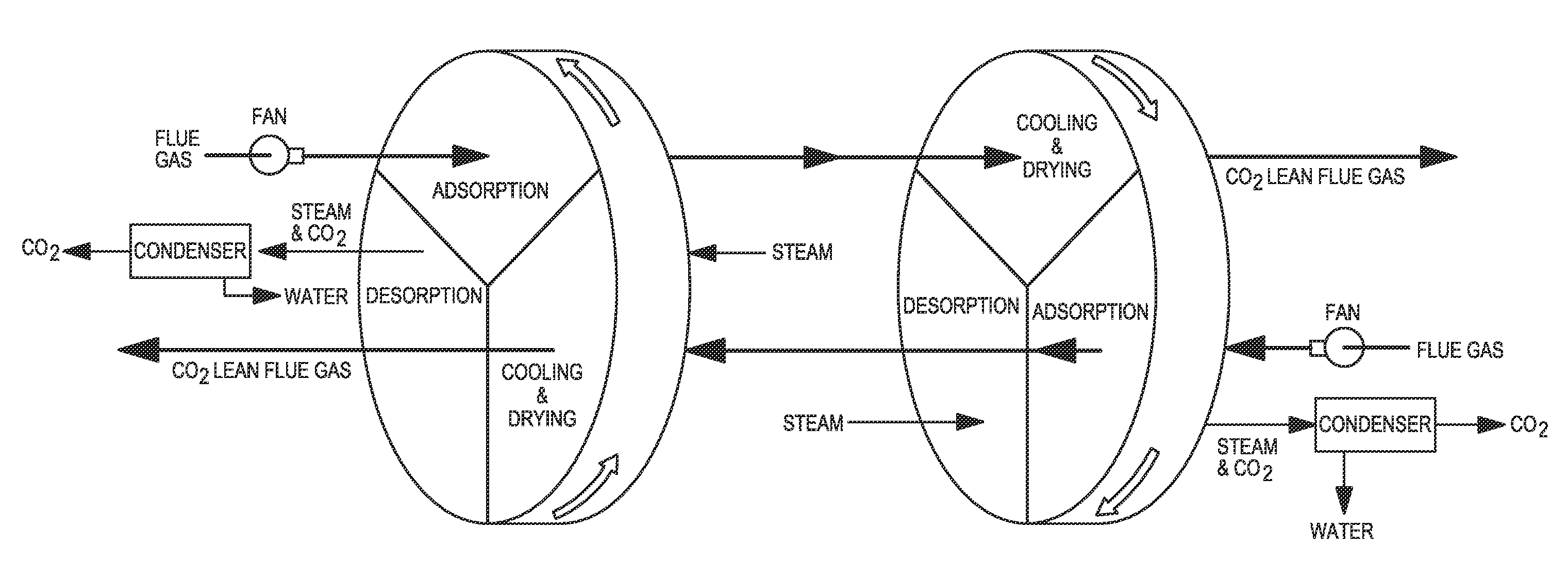
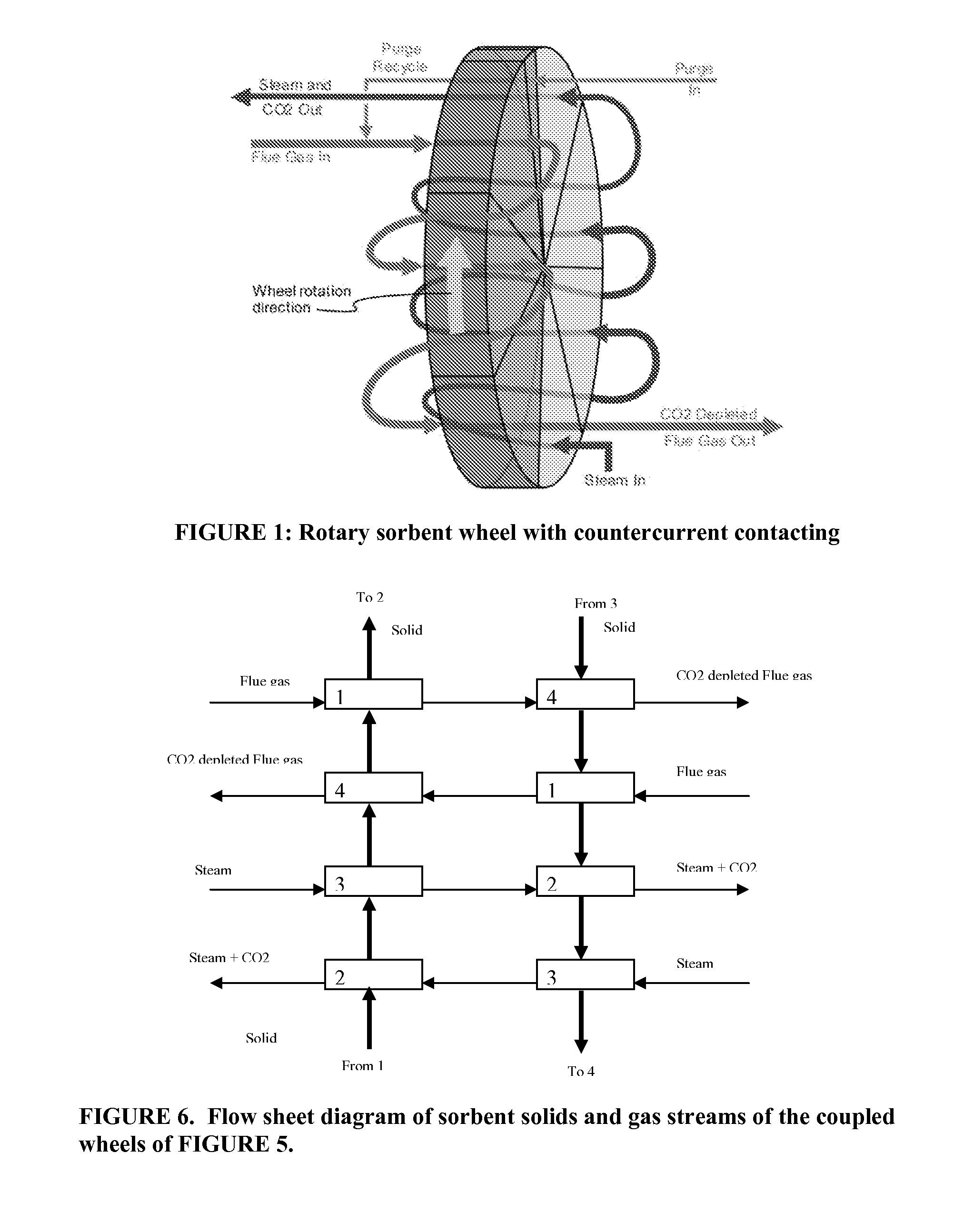
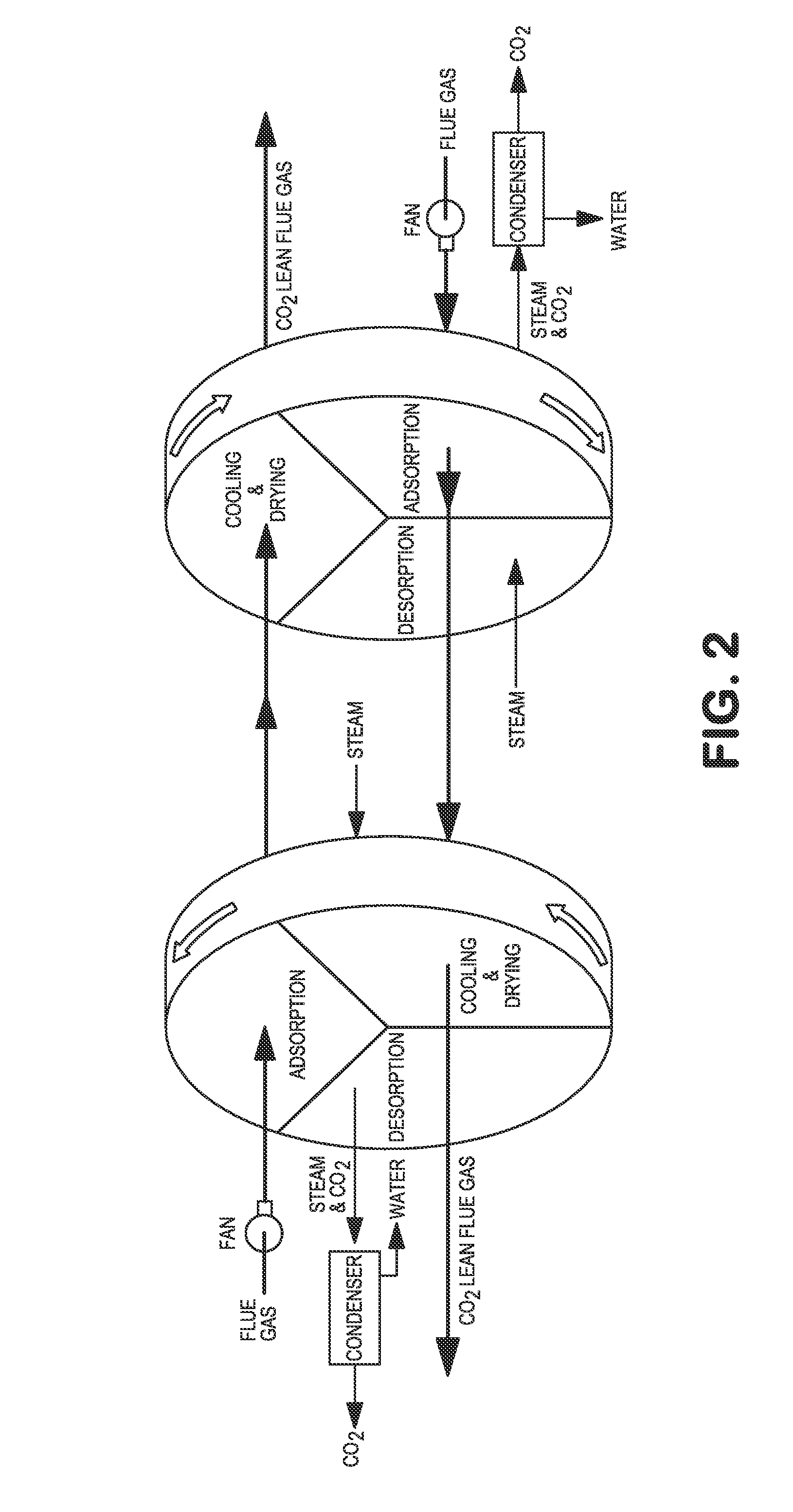
Co2 capture processes using rotary wheel configurations
PatentInactiveUS20140175336A1
Innovation
- A continuous or semi-continuous, cyclic countercurrent sorption-desorption process using solid monolithic sorbents, particularly alkali modified alumina, which provides high CO2 sorption capacity, fast kinetics, and tolerance to moisture and contaminants, integrated with cooling mechanisms to manage temperature and pressure drops, allowing for efficient CO2 capture and purification.

Co2 capture sorbents with low regeneration temperature and high desorption rates
PatentPendingUS20240009613A1
Innovation
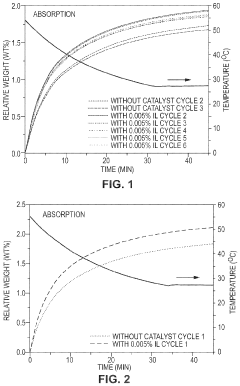
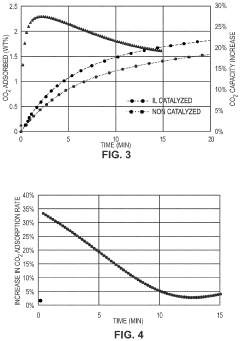
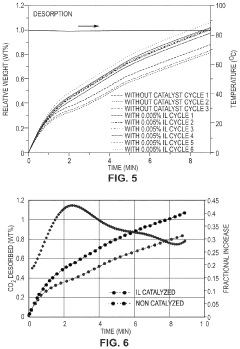
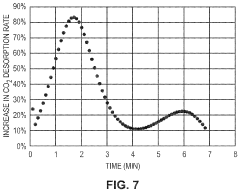
- Development of CO2 capture sorbents comprising a solid support with CO2-sorbing amine and ionic liquid, which enhances CO2 sorption and desorption characteristics, allowing for regeneration at lower temperatures and maintaining high selectivity and capacity through catalytic action.
Environmental Impact Assessment of Sorbent Technologies
The environmental impact of solid sorbent technologies for CO2 capture extends far beyond their primary function of carbon sequestration. When evaluating these technologies, a comprehensive life cycle assessment (LCA) reveals multiple environmental dimensions that must be considered. The production phase of solid sorbents typically involves energy-intensive processes and raw material extraction, which can generate significant carbon footprints that partially offset the intended carbon reduction benefits.
Water usage represents another critical environmental factor, with certain sorbent manufacturing processes requiring substantial water resources. This becomes particularly problematic in water-stressed regions where industrial water consumption competes with agricultural and municipal needs. Additionally, the chemical synthesis of advanced sorbents often involves potentially hazardous substances that require careful handling and disposal protocols to prevent environmental contamination.
The operational phase presents its own environmental considerations. Energy requirements for sorbent regeneration can be substantial, necessitating careful integration with renewable energy sources to maximize net carbon reduction benefits. The durability and regeneration capacity of sorbents directly impact replacement frequency, which in turn affects resource consumption and waste generation throughout the system's operational lifetime.
End-of-life management of spent sorbents introduces further environmental challenges. Some materials may contain components that require specialized disposal procedures or present leaching risks in conventional landfills. The potential for sorbent recycling varies significantly between material classes, with some offering promising circular economy opportunities while others present persistent waste management challenges.
Land use impacts must also be evaluated, particularly for large-scale deployment scenarios. Facilities housing sorbent-based carbon capture systems require substantial physical footprints, potentially competing with other land uses including agriculture, conservation, or urban development. This spatial requirement becomes especially significant when considering the massive scale needed for meaningful climate impact.
Comparative environmental assessments between different sorbent technologies reveal important tradeoffs. While amine-based sorbents demonstrate high CO2 selectivity, they may present greater toxicity concerns than metal-organic frameworks (MOFs) or zeolites. Conversely, some advanced MOFs with exceptional performance characteristics may involve rare earth elements with problematic extraction impacts. These tradeoffs necessitate holistic evaluation frameworks that consider multiple environmental indicators beyond simple carbon capture efficiency.
Water usage represents another critical environmental factor, with certain sorbent manufacturing processes requiring substantial water resources. This becomes particularly problematic in water-stressed regions where industrial water consumption competes with agricultural and municipal needs. Additionally, the chemical synthesis of advanced sorbents often involves potentially hazardous substances that require careful handling and disposal protocols to prevent environmental contamination.
The operational phase presents its own environmental considerations. Energy requirements for sorbent regeneration can be substantial, necessitating careful integration with renewable energy sources to maximize net carbon reduction benefits. The durability and regeneration capacity of sorbents directly impact replacement frequency, which in turn affects resource consumption and waste generation throughout the system's operational lifetime.
End-of-life management of spent sorbents introduces further environmental challenges. Some materials may contain components that require specialized disposal procedures or present leaching risks in conventional landfills. The potential for sorbent recycling varies significantly between material classes, with some offering promising circular economy opportunities while others present persistent waste management challenges.
Land use impacts must also be evaluated, particularly for large-scale deployment scenarios. Facilities housing sorbent-based carbon capture systems require substantial physical footprints, potentially competing with other land uses including agriculture, conservation, or urban development. This spatial requirement becomes especially significant when considering the massive scale needed for meaningful climate impact.
Comparative environmental assessments between different sorbent technologies reveal important tradeoffs. While amine-based sorbents demonstrate high CO2 selectivity, they may present greater toxicity concerns than metal-organic frameworks (MOFs) or zeolites. Conversely, some advanced MOFs with exceptional performance characteristics may involve rare earth elements with problematic extraction impacts. These tradeoffs necessitate holistic evaluation frameworks that consider multiple environmental indicators beyond simple carbon capture efficiency.
Scalability and Industrial Implementation Challenges
The scaling of solid sorbent technologies for CO2 capture from laboratory to industrial scale presents significant challenges that must be addressed for successful commercial implementation. Current pilot-scale demonstrations have shown promising results, but the transition to full industrial scale requires overcoming several critical barriers related to both material properties and process engineering.
Material stability under industrial conditions represents a primary concern, as many promising sorbents exhibit performance degradation when subjected to the harsh environments of real-world flue gas streams. Contaminants such as SOx, NOx, and moisture can significantly reduce adsorption capacity and accelerate sorbent degradation over multiple cycles. Additionally, mechanical stability becomes increasingly important at larger scales, where pressure drops across packed beds and attrition during handling can lead to particle breakdown and operational issues.
Process integration with existing industrial infrastructure presents another layer of complexity. Most industrial facilities were not designed with carbon capture systems in mind, creating spatial constraints and requiring careful consideration of heat integration strategies. The substantial energy requirements for sorbent regeneration must be efficiently managed to minimize the overall energy penalty of the capture process, which directly impacts economic viability.
Manufacturing scalability of high-performance sorbents represents a significant bottleneck. Laboratory-scale synthesis methods often employ expensive precursors or complex procedures that are impractical for ton-scale production. Developing cost-effective, reproducible manufacturing processes while maintaining the desired adsorption properties is essential for commercial deployment. Current estimates suggest that sorbent production costs must decrease by 30-50% to achieve economic viability in most applications.
Equipment design and optimization present additional challenges, particularly regarding heat and mass transfer limitations that become more pronounced at larger scales. Efficient contacting between gas streams and solid sorbents requires careful reactor design to ensure uniform flow distribution and minimize channeling effects. Furthermore, the development of specialized equipment for continuous sorbent handling, including transport between adsorption and regeneration vessels, remains an active area of research.
Techno-economic considerations ultimately determine implementation feasibility. Capital expenditures for solid sorbent systems must compete with alternative capture technologies, while operational costs are heavily influenced by sorbent lifetime, regeneration energy requirements, and maintenance needs. Recent analyses suggest that achieving a CO2 capture cost below $40-50 per ton remains challenging but potentially achievable with continued advances in sorbent performance and process optimization.
Material stability under industrial conditions represents a primary concern, as many promising sorbents exhibit performance degradation when subjected to the harsh environments of real-world flue gas streams. Contaminants such as SOx, NOx, and moisture can significantly reduce adsorption capacity and accelerate sorbent degradation over multiple cycles. Additionally, mechanical stability becomes increasingly important at larger scales, where pressure drops across packed beds and attrition during handling can lead to particle breakdown and operational issues.
Process integration with existing industrial infrastructure presents another layer of complexity. Most industrial facilities were not designed with carbon capture systems in mind, creating spatial constraints and requiring careful consideration of heat integration strategies. The substantial energy requirements for sorbent regeneration must be efficiently managed to minimize the overall energy penalty of the capture process, which directly impacts economic viability.
Manufacturing scalability of high-performance sorbents represents a significant bottleneck. Laboratory-scale synthesis methods often employ expensive precursors or complex procedures that are impractical for ton-scale production. Developing cost-effective, reproducible manufacturing processes while maintaining the desired adsorption properties is essential for commercial deployment. Current estimates suggest that sorbent production costs must decrease by 30-50% to achieve economic viability in most applications.
Equipment design and optimization present additional challenges, particularly regarding heat and mass transfer limitations that become more pronounced at larger scales. Efficient contacting between gas streams and solid sorbents requires careful reactor design to ensure uniform flow distribution and minimize channeling effects. Furthermore, the development of specialized equipment for continuous sorbent handling, including transport between adsorption and regeneration vessels, remains an active area of research.
Techno-economic considerations ultimately determine implementation feasibility. Capital expenditures for solid sorbent systems must compete with alternative capture technologies, while operational costs are heavily influenced by sorbent lifetime, regeneration energy requirements, and maintenance needs. Recent analyses suggest that achieving a CO2 capture cost below $40-50 per ton remains challenging but potentially achievable with continued advances in sorbent performance and process optimization.
Unlock deeper insights with PatSnap Eureka Quick Research — get a full tech report to explore trends and direct your research. Try now!
Generate Your Research Report Instantly with AI Agent
Supercharge your innovation with PatSnap Eureka AI Agent Platform!