How to Maximize Mini LED Performance for VR Headsets
SEP 15, 20259 MIN READ
Generate Your Research Report Instantly with AI Agent
Patsnap Eureka helps you evaluate technical feasibility & market potential.
Mini LED Technology Background and Objectives
Mini LED technology represents a significant advancement in display technology, bridging the gap between traditional LED and OLED displays. Emerging in the mid-2010s, Mini LEDs are characterized by their diminutive size, typically ranging from 50 to 200 micrometers, which is substantially smaller than conventional LEDs but larger than microLEDs. This technology has evolved from traditional LCD backlighting systems, offering enhanced brightness, contrast ratios, and energy efficiency.
The evolution of Mini LED technology has been driven by the increasing demands for higher quality displays across various applications, with virtual reality (VR) headsets representing one of the most challenging use cases. The trajectory of development has been marked by continuous miniaturization of LED components, improvements in manufacturing processes, and innovations in backlight control systems.
For VR applications specifically, the technical evolution has focused on addressing the unique requirements of near-eye displays, including high pixel density, minimal motion blur, reduced latency, and expanded color gamut. These factors are critical for creating immersive virtual environments while minimizing visual discomfort and simulator sickness.
The primary technical objectives for maximizing Mini LED performance in VR headsets encompass several dimensions. First, achieving higher brightness levels is essential to compensate for light loss through VR optics and to deliver vivid visual experiences. Current targets aim for peak brightness exceeding 1,000 nits while maintaining energy efficiency to preserve battery life in standalone headsets.
Second, enhancing local dimming capabilities through increased dimming zones is crucial for achieving OLED-competitive contrast ratios. This involves developing more sophisticated backlight control algorithms and increasing the density of Mini LED arrays to provide more granular control over illumination.
Third, reducing response times to sub-millisecond levels is vital for eliminating motion blur during rapid head movements in VR environments. This requires innovations in both the LED components themselves and the driving circuitry.
Fourth, optimizing the optical stack to minimize reflections and light diffusion is necessary to prevent artifacts like haloing and blooming, which can be particularly distracting in immersive VR experiences.
Finally, addressing thermal management challenges is critical, as the confined space of VR headsets creates significant heat dissipation challenges that can affect both display performance and user comfort during extended usage sessions.
These technical objectives align with the broader industry trend toward creating more immersive, comfortable, and visually stunning VR experiences, positioning Mini LED technology as a promising solution for next-generation VR display systems.
The evolution of Mini LED technology has been driven by the increasing demands for higher quality displays across various applications, with virtual reality (VR) headsets representing one of the most challenging use cases. The trajectory of development has been marked by continuous miniaturization of LED components, improvements in manufacturing processes, and innovations in backlight control systems.
For VR applications specifically, the technical evolution has focused on addressing the unique requirements of near-eye displays, including high pixel density, minimal motion blur, reduced latency, and expanded color gamut. These factors are critical for creating immersive virtual environments while minimizing visual discomfort and simulator sickness.
The primary technical objectives for maximizing Mini LED performance in VR headsets encompass several dimensions. First, achieving higher brightness levels is essential to compensate for light loss through VR optics and to deliver vivid visual experiences. Current targets aim for peak brightness exceeding 1,000 nits while maintaining energy efficiency to preserve battery life in standalone headsets.
Second, enhancing local dimming capabilities through increased dimming zones is crucial for achieving OLED-competitive contrast ratios. This involves developing more sophisticated backlight control algorithms and increasing the density of Mini LED arrays to provide more granular control over illumination.
Third, reducing response times to sub-millisecond levels is vital for eliminating motion blur during rapid head movements in VR environments. This requires innovations in both the LED components themselves and the driving circuitry.
Fourth, optimizing the optical stack to minimize reflections and light diffusion is necessary to prevent artifacts like haloing and blooming, which can be particularly distracting in immersive VR experiences.
Finally, addressing thermal management challenges is critical, as the confined space of VR headsets creates significant heat dissipation challenges that can affect both display performance and user comfort during extended usage sessions.
These technical objectives align with the broader industry trend toward creating more immersive, comfortable, and visually stunning VR experiences, positioning Mini LED technology as a promising solution for next-generation VR display systems.
VR Headset Display Market Analysis
The VR headset display market has experienced significant growth in recent years, driven by increasing consumer interest in immersive gaming experiences and enterprise applications. The global VR headset market was valued at approximately 7.7 billion USD in 2022 and is projected to reach 28.4 billion USD by 2028, growing at a CAGR of 24.3% during the forecast period. This growth trajectory indicates substantial market potential for advanced display technologies like Mini LED.
Consumer demand for VR headsets has shifted dramatically toward higher resolution displays with improved visual fidelity. Market research indicates that consumers now prioritize display quality as a primary purchasing factor, with 68% of potential buyers citing resolution and visual clarity as critical decision points. This represents a marked change from earlier adoption phases when price and content availability were the dominant concerns.
The enterprise segment is emerging as a significant driver of premium display technology adoption in VR headsets. Industries including healthcare, education, and manufacturing are increasingly implementing VR solutions that require exceptional visual performance for training, simulation, and visualization tasks. This segment is expected to grow at 32.1% annually through 2027, outpacing the consumer market.
Regional analysis reveals that North America currently holds the largest market share at 42%, followed by Asia-Pacific at 31% and Europe at 22%. However, the Asia-Pacific region is demonstrating the fastest growth rate, particularly in China, South Korea, and Japan, where domestic manufacturers are rapidly advancing display technologies for VR applications.
Key market segments for VR headset displays include gaming (46% market share), enterprise training (21%), healthcare applications (14%), and education (11%). The gaming segment continues to drive innovation in display technology, demanding higher refresh rates and resolution to reduce motion sickness and enhance immersion.
Consumer price sensitivity analysis indicates three distinct market tiers: entry-level ($200-400), mid-range ($400-800), and premium ($800+). The premium segment, where Mini LED technology would likely position, represents approximately 18% of unit sales but 37% of revenue, highlighting consumers' willingness to pay for superior display performance.
Market forecasts suggest that advanced display technologies will be a primary differentiator in the next generation of VR headsets. Manufacturers capable of delivering higher brightness, better contrast ratios, and reduced latency through technologies like Mini LED are positioned to capture premium market segments and establish technological leadership in this rapidly evolving industry.
Consumer demand for VR headsets has shifted dramatically toward higher resolution displays with improved visual fidelity. Market research indicates that consumers now prioritize display quality as a primary purchasing factor, with 68% of potential buyers citing resolution and visual clarity as critical decision points. This represents a marked change from earlier adoption phases when price and content availability were the dominant concerns.
The enterprise segment is emerging as a significant driver of premium display technology adoption in VR headsets. Industries including healthcare, education, and manufacturing are increasingly implementing VR solutions that require exceptional visual performance for training, simulation, and visualization tasks. This segment is expected to grow at 32.1% annually through 2027, outpacing the consumer market.
Regional analysis reveals that North America currently holds the largest market share at 42%, followed by Asia-Pacific at 31% and Europe at 22%. However, the Asia-Pacific region is demonstrating the fastest growth rate, particularly in China, South Korea, and Japan, where domestic manufacturers are rapidly advancing display technologies for VR applications.
Key market segments for VR headset displays include gaming (46% market share), enterprise training (21%), healthcare applications (14%), and education (11%). The gaming segment continues to drive innovation in display technology, demanding higher refresh rates and resolution to reduce motion sickness and enhance immersion.
Consumer price sensitivity analysis indicates three distinct market tiers: entry-level ($200-400), mid-range ($400-800), and premium ($800+). The premium segment, where Mini LED technology would likely position, represents approximately 18% of unit sales but 37% of revenue, highlighting consumers' willingness to pay for superior display performance.
Market forecasts suggest that advanced display technologies will be a primary differentiator in the next generation of VR headsets. Manufacturers capable of delivering higher brightness, better contrast ratios, and reduced latency through technologies like Mini LED are positioned to capture premium market segments and establish technological leadership in this rapidly evolving industry.
Mini LED Implementation Challenges in VR
Despite the promising advantages of Mini LED technology for VR headsets, several significant implementation challenges must be addressed to maximize performance. The miniaturization of LED chips to dimensions below 100 micrometers creates substantial manufacturing complexities. Traditional pick-and-place methods become increasingly inefficient at this scale, requiring advanced mass transfer techniques that maintain precise positioning while handling thousands of tiny LED elements simultaneously.
Thermal management represents another critical challenge in VR applications. Mini LEDs generate considerable heat during operation, which is particularly problematic in the confined spaces of VR headsets where heat dissipation pathways are limited. Excessive heat not only reduces LED lifespan and efficiency but can also create uncomfortable wearing experiences for users and potentially damage adjacent electronic components.
The driving circuitry for Mini LED arrays presents unique difficulties in VR implementations. The high pixel density required for immersive VR experiences necessitates sophisticated local dimming zones and individual LED control. This complexity increases power requirements and circuit design challenges, particularly problematic for battery-powered VR systems where energy efficiency is paramount.
Optical performance optimization poses additional hurdles. Achieving uniform brightness across the entire display surface requires precise calibration of each Mini LED element. Color consistency becomes challenging when manufacturing variations between individual LEDs create perceptible differences in color temperature and output. These variations are particularly noticeable in VR environments where users are highly sensitive to visual inconsistencies.
Cost considerations remain a significant barrier to widespread adoption. The complex manufacturing processes, increased component count, and sophisticated control systems all contribute to higher production expenses compared to traditional display technologies. Finding the optimal balance between performance improvements and cost-effectiveness represents an ongoing challenge for VR manufacturers.
Integration with existing VR optical systems presents compatibility issues. Mini LED backlighting must work harmoniously with the specialized lenses and optical arrangements used in VR headsets. The form factor constraints of head-mounted displays limit the available space for implementing robust Mini LED solutions while maintaining comfortable weight distribution and ergonomics.
Reliability concerns are amplified in VR applications due to the intensive usage patterns and physical movement associated with virtual reality experiences. Mini LEDs must maintain consistent performance despite potential impacts, temperature fluctuations, and extended usage sessions, requiring robust encapsulation and protection mechanisms that don't compromise optical performance.
Thermal management represents another critical challenge in VR applications. Mini LEDs generate considerable heat during operation, which is particularly problematic in the confined spaces of VR headsets where heat dissipation pathways are limited. Excessive heat not only reduces LED lifespan and efficiency but can also create uncomfortable wearing experiences for users and potentially damage adjacent electronic components.
The driving circuitry for Mini LED arrays presents unique difficulties in VR implementations. The high pixel density required for immersive VR experiences necessitates sophisticated local dimming zones and individual LED control. This complexity increases power requirements and circuit design challenges, particularly problematic for battery-powered VR systems where energy efficiency is paramount.
Optical performance optimization poses additional hurdles. Achieving uniform brightness across the entire display surface requires precise calibration of each Mini LED element. Color consistency becomes challenging when manufacturing variations between individual LEDs create perceptible differences in color temperature and output. These variations are particularly noticeable in VR environments where users are highly sensitive to visual inconsistencies.
Cost considerations remain a significant barrier to widespread adoption. The complex manufacturing processes, increased component count, and sophisticated control systems all contribute to higher production expenses compared to traditional display technologies. Finding the optimal balance between performance improvements and cost-effectiveness represents an ongoing challenge for VR manufacturers.
Integration with existing VR optical systems presents compatibility issues. Mini LED backlighting must work harmoniously with the specialized lenses and optical arrangements used in VR headsets. The form factor constraints of head-mounted displays limit the available space for implementing robust Mini LED solutions while maintaining comfortable weight distribution and ergonomics.
Reliability concerns are amplified in VR applications due to the intensive usage patterns and physical movement associated with virtual reality experiences. Mini LEDs must maintain consistent performance despite potential impacts, temperature fluctuations, and extended usage sessions, requiring robust encapsulation and protection mechanisms that don't compromise optical performance.
Current Mini LED Solutions for VR Applications
01 Mini LED display technology advancements
Recent innovations in Mini LED display technology focus on improving brightness, contrast ratio, and color accuracy. These advancements include optimized LED chip arrangements, enhanced backlight control systems, and improved light distribution techniques. These technologies enable displays with higher dynamic range and more uniform illumination across the screen surface.- Mini LED display technology advancements: Recent advancements in Mini LED display technology have significantly improved performance metrics such as brightness, contrast ratio, and color gamut. These improvements are achieved through optimized LED chip designs, enhanced manufacturing processes, and novel packaging techniques. Mini LED displays offer advantages over traditional LCD and OLED technologies, particularly in high dynamic range applications.
- Backlight unit design for Mini LED displays: Innovative backlight unit designs for Mini LED displays focus on uniform light distribution, reduced optical crosstalk, and improved thermal management. These designs incorporate specialized light guide plates, reflective materials, and optical films to enhance brightness uniformity while minimizing power consumption. Advanced backlight architectures also enable local dimming capabilities for superior contrast performance.
- Thermal management solutions for Mini LED: Effective thermal management is crucial for maintaining optimal Mini LED performance and longevity. Various solutions include advanced heat sink designs, thermal interface materials, and active cooling systems. These thermal solutions help dissipate heat efficiently, prevent thermal runaway, and maintain consistent brightness levels during extended operation, ultimately enhancing the reliability and lifespan of Mini LED displays.
- Mini LED driving circuits and control systems: Sophisticated driving circuits and control systems are essential for maximizing Mini LED performance. These systems include advanced pulse width modulation techniques, current regulation mechanisms, and intelligent dimming algorithms. The driving architecture enables precise control over thousands of Mini LED zones, allowing for enhanced contrast ratio, reduced power consumption, and improved motion handling in dynamic content.
- Manufacturing processes for high-performance Mini LEDs: Advanced manufacturing processes have been developed to produce high-performance Mini LEDs with consistent quality and yield. These processes include precision epitaxial growth techniques, automated transfer methods, and high-accuracy placement technologies. Innovations in mass production capabilities have enabled cost-effective manufacturing of Mini LED displays with improved brightness efficiency, color uniformity, and pixel density for various applications including televisions, monitors, and automotive displays.
02 Thermal management solutions for Mini LED displays
Effective thermal management is crucial for Mini LED performance and longevity. Innovations include advanced heat dissipation structures, thermal interface materials, and cooling systems designed specifically for high-density Mini LED arrays. These solutions help maintain optimal operating temperatures, prevent thermal degradation, and ensure consistent performance across the display.Expand Specific Solutions03 Mini LED driving circuits and control systems
Specialized driving circuits and control systems have been developed to maximize Mini LED performance. These include advanced pulse width modulation techniques, current regulation systems, and intelligent dimming algorithms. Such innovations enable precise control over individual LEDs or zones, reducing power consumption while maintaining image quality and extending the lifespan of the display.Expand Specific Solutions04 Manufacturing processes for Mini LED displays
Improved manufacturing processes have significantly enhanced Mini LED performance and yield rates. Innovations include advanced transfer techniques for precise LED placement, automated inspection systems, and novel bonding methods. These manufacturing advancements have enabled higher density LED arrays, better uniformity, and reduced production costs while maintaining high quality standards.Expand Specific Solutions05 Mini LED integration with other display technologies
Integration of Mini LED technology with other display innovations has created hybrid solutions with enhanced performance characteristics. These combinations include Mini LED backlight units for LCD displays, quantum dot enhancement films with Mini LED arrays, and specialized optical structures. Such integrations leverage the strengths of multiple technologies to achieve superior brightness, contrast, color gamut, and energy efficiency.Expand Specific Solutions
Key Industry Players in Mini LED VR Technology
The Mini LED market for VR headsets is in a growth phase, with increasing market size driven by demand for higher visual performance in immersive applications. The technology maturity varies across competitors, with companies like Samsung Display, BOE Technology, and Goertek leading innovation in this space. Goertek has established itself as a key player by leveraging its expertise in VR optical solutions, while Meta Platforms and Valve Corp focus on integration of Mini LED into their headset ecosystems. Chinese manufacturers including China Star Optoelectronics and Jade Bird Display are rapidly advancing their technical capabilities, particularly in miniaturization and power efficiency. Huawei and Sony Interactive Entertainment represent established technology giants bringing substantial R&D resources to overcome current technical limitations in brightness, contrast ratio, and heat management.
Huawei Technologies Co., Ltd.
Technical Solution: Huawei has engineered a comprehensive Mini LED solution for VR headsets that leverages their expertise in semiconductor manufacturing and display technologies. Their approach features ultra-small LED chips (approximately 40μm) arranged in a high-density matrix with pitches as low as 70μm, enabling thousands of precisely controlled dimming zones. Huawei's VR-optimized Mini LED panels incorporate a multi-layer optical architecture that includes specialized diffusion films and micro-lens arrays to enhance light utilization efficiency while minimizing crosstalk between adjacent zones. The company has developed proprietary driver ICs capable of 14-bit dimming precision (16,384 brightness levels) with response times under 1ms, addressing the critical need for low persistence in VR applications. Their solution utilizes an advanced thermal management system featuring graphene-enhanced heat dissipation layers that maintain consistent performance during extended use while keeping surface temperatures comfortable for users. Huawei has also implemented sophisticated content-adaptive algorithms that analyze incoming video frames to optimize local dimming patterns, significantly reducing haloing artifacts while preserving highlight details in high-contrast VR scenes.
Strengths: Exceptional thermal management capabilities enable sustained high-brightness operation without throttling or user discomfort. Their vertical integration from chip manufacturing to display assembly allows for tight quality control and optimization. Weaknesses: Their most advanced technologies may face export restrictions in certain markets, limiting global availability. The sophisticated dimming algorithms require significant processing power, potentially increasing system requirements.
Valve Corp.
Technical Solution: Valve has developed an innovative Mini LED display solution for VR headsets that focuses on maximizing visual fidelity while minimizing motion-to-photon latency. Their approach utilizes a high-density array of Mini LEDs with pitches under 100 micrometers, combined with a proprietary optical diffusion layer that eliminates visible boundaries between dimming zones - a common issue in VR applications. Valve's system incorporates advanced temporal dithering techniques that effectively increase the perceived bit depth of the display, enabling smoother gradients and more realistic rendering of dark scenes in virtual environments. Their Mini LED implementation features a sophisticated local dimming controller that synchronizes with the VR rendering pipeline, adjusting backlight zones in anticipation of rendered frames to minimize latency. The company has also developed specialized optical coatings that reduce internal reflections within the headset, enhancing contrast and reducing ghosting artifacts. Valve's latest VR-focused Mini LED panels achieve refresh rates of up to 144Hz with brightness levels exceeding 2,500 nits, while their adaptive power management system dynamically adjusts LED intensity based on content brightness, significantly extending battery life in wireless VR applications.
Strengths: Exceptional integration with VR rendering pipelines results in industry-leading motion-to-photon latency performance. Their focus on eliminating visual artifacts specifically problematic in VR (zone boundaries, ghosting) creates a more immersive experience. Weaknesses: Their highly specialized approach may result in higher manufacturing costs compared to more standardized solutions. The complex synchronization between display and rendering systems requires significant software optimization.
Technical Innovations in Mini LED for VR Headsets
Mini LED-based VR display screen and VR device
PatentActiveCN115171549A
Innovation
- Design a VR display screen based on Mini LED by arranging light-emitting elements in an array on the substrate. Each light-emitting element includes a Mini LED chip and packaged colloid. The shape of the colloid near the center of the substrate is different from that of the colloid near the edge of the substrate. Different lighting angles to maximize the concentration of light to the human eye.
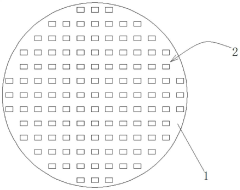
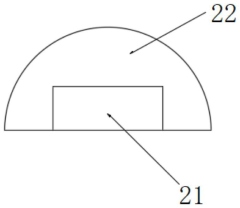
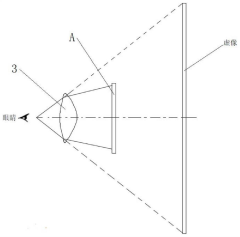
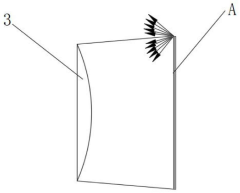
Optical device of head-mounted display
PatentPendingCN114442331A
Innovation
- It uses a direct mini LED backlight module combined with an optical fiber film and an imaging lens to achieve total internal reflection and narrow-angle output of light through a microlens structure and optical fiber array, reducing optical loss and improving light energy utilization. It also uses a TN-type liquid crystal panel and The layer of controlled refractive material further limits the angle and loss of emerging light.


Thermal Management Strategies for Mini LED VR Displays
Effective thermal management is critical for optimizing Mini LED performance in VR headsets, as these displays generate significant heat during operation. The compact form factor of VR devices creates unique thermal challenges that must be addressed through specialized strategies. Heat accumulation can lead to reduced display brightness, color shifting, shortened component lifespan, and even potential safety concerns for users during extended sessions.
Passive cooling solutions represent the foundation of thermal management in Mini LED VR displays. These include strategically designed heat sinks that efficiently dissipate heat away from critical components. Advanced thermal interface materials (TIMs) with high thermal conductivity facilitate improved heat transfer between components and cooling structures. Vapor chambers, which utilize phase-change principles, offer excellent heat spreading capabilities within the limited space constraints of VR headsets.
Active cooling mechanisms complement passive solutions when thermal loads exceed passive capacity. Miniaturized fans can be integrated to create forced air convection, though engineers must carefully balance cooling performance against noise generation and power consumption. Thermoelectric coolers (TECs) provide another option for targeted cooling of critical display components, albeit with higher power requirements. Some premium VR headsets have begun implementing liquid cooling solutions that offer superior thermal performance while maintaining silent operation.
Intelligent thermal management systems represent the cutting edge of Mini LED thermal control. These systems incorporate temperature sensors throughout the display assembly to continuously monitor thermal conditions. Adaptive brightness algorithms automatically adjust display output based on temperature readings, preventing overheating while maximizing visual quality. Dynamic power management techniques can selectively reduce power to non-critical display zones during intensive use scenarios, maintaining performance where visually necessary.
Material innovations are driving significant improvements in thermal management capabilities. Graphene-based thermal solutions offer exceptional thermal conductivity in ultra-thin form factors. Nano-ceramic composites provide electrical isolation while maintaining excellent heat transfer properties. Phase-change materials (PCMs) can absorb thermal energy during peak usage and release it during idle periods, effectively smoothing temperature fluctuations and preventing thermal spikes that could damage sensitive Mini LED components.
Future thermal management approaches will likely integrate multiple strategies into comprehensive thermal solutions. This holistic approach will combine advanced materials, intelligent control systems, and innovative cooling mechanisms to maintain optimal operating temperatures across all usage scenarios, ultimately maximizing Mini LED performance and longevity in next-generation VR headsets.
Passive cooling solutions represent the foundation of thermal management in Mini LED VR displays. These include strategically designed heat sinks that efficiently dissipate heat away from critical components. Advanced thermal interface materials (TIMs) with high thermal conductivity facilitate improved heat transfer between components and cooling structures. Vapor chambers, which utilize phase-change principles, offer excellent heat spreading capabilities within the limited space constraints of VR headsets.
Active cooling mechanisms complement passive solutions when thermal loads exceed passive capacity. Miniaturized fans can be integrated to create forced air convection, though engineers must carefully balance cooling performance against noise generation and power consumption. Thermoelectric coolers (TECs) provide another option for targeted cooling of critical display components, albeit with higher power requirements. Some premium VR headsets have begun implementing liquid cooling solutions that offer superior thermal performance while maintaining silent operation.
Intelligent thermal management systems represent the cutting edge of Mini LED thermal control. These systems incorporate temperature sensors throughout the display assembly to continuously monitor thermal conditions. Adaptive brightness algorithms automatically adjust display output based on temperature readings, preventing overheating while maximizing visual quality. Dynamic power management techniques can selectively reduce power to non-critical display zones during intensive use scenarios, maintaining performance where visually necessary.
Material innovations are driving significant improvements in thermal management capabilities. Graphene-based thermal solutions offer exceptional thermal conductivity in ultra-thin form factors. Nano-ceramic composites provide electrical isolation while maintaining excellent heat transfer properties. Phase-change materials (PCMs) can absorb thermal energy during peak usage and release it during idle periods, effectively smoothing temperature fluctuations and preventing thermal spikes that could damage sensitive Mini LED components.
Future thermal management approaches will likely integrate multiple strategies into comprehensive thermal solutions. This holistic approach will combine advanced materials, intelligent control systems, and innovative cooling mechanisms to maintain optimal operating temperatures across all usage scenarios, ultimately maximizing Mini LED performance and longevity in next-generation VR headsets.
Power Efficiency Optimization for Battery-Powered VR
Power efficiency remains a critical challenge for VR headset manufacturers, particularly when integrating advanced display technologies like Mini LED. Battery-powered VR devices face inherent constraints in power capacity, making optimization essential for delivering acceptable usage times while maintaining high visual performance.
Current VR headsets utilizing Mini LED technology typically consume between 3-7 watts for the display system alone, representing 30-40% of total device power consumption. This significant power draw necessitates strategic optimization approaches across multiple system levels to maximize battery life without compromising the immersive experience.
At the hardware level, implementing dynamic local dimming algorithms specifically calibrated for VR content can reduce power consumption by 15-25%. These algorithms selectively dim or turn off Mini LEDs in darker regions of the display while maintaining brightness in focal areas, effectively balancing power usage with visual quality. Advanced implementations incorporate eye-tracking data to further refine dimming patterns based on user gaze patterns.
Driver circuit optimization presents another significant opportunity, with high-efficiency PWM controllers and voltage regulators capable of reducing power losses by 10-15%. Recent developments in GaN-based driver ICs have demonstrated particular promise, offering superior switching efficiency compared to traditional silicon-based solutions.
Thermal management systems play a dual role in power efficiency. Effective heat dissipation prevents thermal throttling while allowing Mini LEDs to operate at optimal temperatures, where they naturally achieve higher efficiency. Novel phase-change materials and ultra-thin vapor chambers have shown potential to reduce operating temperatures by 5-8°C, translating to approximately 7-12% power savings.
Software-based approaches complement hardware optimizations through content-aware brightness adjustment, frame rate management, and foveated rendering techniques. Machine learning algorithms can dynamically predict optimal power settings based on content characteristics and usage patterns, potentially reducing display power consumption by an additional 10-20% during typical usage scenarios.
Battery chemistry advancements, particularly in silicon-graphene composite anodes and solid-state electrolytes, promise to increase energy density by 30-40% within the next 2-3 years. These developments will directly translate to longer VR usage times without increasing battery size or weight, addressing a fundamental constraint in current designs.
The integration of these optimization strategies requires careful balancing of power efficiency against user experience metrics, with manufacturers increasingly adopting comprehensive power budgeting frameworks that allocate resources dynamically based on application demands and remaining battery capacity.
Current VR headsets utilizing Mini LED technology typically consume between 3-7 watts for the display system alone, representing 30-40% of total device power consumption. This significant power draw necessitates strategic optimization approaches across multiple system levels to maximize battery life without compromising the immersive experience.
At the hardware level, implementing dynamic local dimming algorithms specifically calibrated for VR content can reduce power consumption by 15-25%. These algorithms selectively dim or turn off Mini LEDs in darker regions of the display while maintaining brightness in focal areas, effectively balancing power usage with visual quality. Advanced implementations incorporate eye-tracking data to further refine dimming patterns based on user gaze patterns.
Driver circuit optimization presents another significant opportunity, with high-efficiency PWM controllers and voltage regulators capable of reducing power losses by 10-15%. Recent developments in GaN-based driver ICs have demonstrated particular promise, offering superior switching efficiency compared to traditional silicon-based solutions.
Thermal management systems play a dual role in power efficiency. Effective heat dissipation prevents thermal throttling while allowing Mini LEDs to operate at optimal temperatures, where they naturally achieve higher efficiency. Novel phase-change materials and ultra-thin vapor chambers have shown potential to reduce operating temperatures by 5-8°C, translating to approximately 7-12% power savings.
Software-based approaches complement hardware optimizations through content-aware brightness adjustment, frame rate management, and foveated rendering techniques. Machine learning algorithms can dynamically predict optimal power settings based on content characteristics and usage patterns, potentially reducing display power consumption by an additional 10-20% during typical usage scenarios.
Battery chemistry advancements, particularly in silicon-graphene composite anodes and solid-state electrolytes, promise to increase energy density by 30-40% within the next 2-3 years. These developments will directly translate to longer VR usage times without increasing battery size or weight, addressing a fundamental constraint in current designs.
The integration of these optimization strategies requires careful balancing of power efficiency against user experience metrics, with manufacturers increasingly adopting comprehensive power budgeting frameworks that allocate resources dynamically based on application demands and remaining battery capacity.
Unlock deeper insights with Patsnap Eureka Quick Research — get a full tech report to explore trends and direct your research. Try now!
Generate Your Research Report Instantly with AI Agent
Supercharge your innovation with Patsnap Eureka AI Agent Platform!