

How Tunnel Diodes Support Advanced Telemetry Systems
SEP 23, 20259 MIN READ
Generate Your Research Report Instantly with AI Agent
PatSnap Eureka helps you evaluate technical feasibility & market potential.
Tunnel Diode Technology Background and Objectives
Tunnel diodes, also known as Esaki diodes after their inventor Leo Esaki, represent a significant milestone in semiconductor technology development. First discovered in 1957, these devices operate based on quantum mechanical tunneling principles, allowing electrons to pass through potential barriers that would be insurmountable according to classical physics. This unique property enables tunnel diodes to function at extremely high frequencies with minimal noise, making them particularly valuable for advanced telemetry systems.
The evolution of tunnel diode technology has been marked by several key developments. Initially valued for their negative resistance characteristics and high-speed switching capabilities, tunnel diodes found early applications in microwave oscillators and amplifiers. Throughout the 1960s and 1970s, research focused on improving their reliability and performance parameters, while the 1980s and 1990s saw integration efforts with other semiconductor technologies.
In recent years, tunnel diodes have experienced renewed interest due to their potential applications in high-frequency communications, space technology, and advanced telemetry systems. Their ability to operate efficiently in harsh environments, including extreme temperatures and radiation exposure, positions them as critical components for specialized telemetry applications in aerospace, defense, and deep-space exploration.
The primary technical objective in tunnel diode development for telemetry systems is to enhance signal processing capabilities while minimizing power consumption. This involves optimizing the negative resistance region characteristics to improve oscillation stability and frequency response. Additionally, researchers aim to increase operational bandwidth to support the growing data transmission requirements of modern telemetry systems.
Another crucial objective is improving manufacturing consistency and reliability. Historical challenges in mass-producing tunnel diodes with uniform characteristics have limited their widespread adoption. Current research focuses on developing more precise fabrication techniques and exploring new semiconductor materials beyond traditional germanium and gallium arsenide.
Integration with modern microelectronics represents another significant goal. As telemetry systems become increasingly complex, tunnel diodes must interface effectively with digital signal processing components, requiring innovative circuit designs and packaging solutions. This integration challenge extends to addressing impedance matching issues and developing appropriate biasing networks for optimal performance.
The technology trajectory suggests potential breakthroughs in tunnel diode applications for telemetry through the development of hybrid systems that leverage both quantum tunneling effects and conventional semiconductor properties. These advances could enable next-generation telemetry systems with unprecedented performance in data acquisition, signal conditioning, and transmission reliability in challenging operational environments.
The evolution of tunnel diode technology has been marked by several key developments. Initially valued for their negative resistance characteristics and high-speed switching capabilities, tunnel diodes found early applications in microwave oscillators and amplifiers. Throughout the 1960s and 1970s, research focused on improving their reliability and performance parameters, while the 1980s and 1990s saw integration efforts with other semiconductor technologies.
In recent years, tunnel diodes have experienced renewed interest due to their potential applications in high-frequency communications, space technology, and advanced telemetry systems. Their ability to operate efficiently in harsh environments, including extreme temperatures and radiation exposure, positions them as critical components for specialized telemetry applications in aerospace, defense, and deep-space exploration.
The primary technical objective in tunnel diode development for telemetry systems is to enhance signal processing capabilities while minimizing power consumption. This involves optimizing the negative resistance region characteristics to improve oscillation stability and frequency response. Additionally, researchers aim to increase operational bandwidth to support the growing data transmission requirements of modern telemetry systems.
Another crucial objective is improving manufacturing consistency and reliability. Historical challenges in mass-producing tunnel diodes with uniform characteristics have limited their widespread adoption. Current research focuses on developing more precise fabrication techniques and exploring new semiconductor materials beyond traditional germanium and gallium arsenide.
Integration with modern microelectronics represents another significant goal. As telemetry systems become increasingly complex, tunnel diodes must interface effectively with digital signal processing components, requiring innovative circuit designs and packaging solutions. This integration challenge extends to addressing impedance matching issues and developing appropriate biasing networks for optimal performance.
The technology trajectory suggests potential breakthroughs in tunnel diode applications for telemetry through the development of hybrid systems that leverage both quantum tunneling effects and conventional semiconductor properties. These advances could enable next-generation telemetry systems with unprecedented performance in data acquisition, signal conditioning, and transmission reliability in challenging operational environments.
Telemetry Market Demand Analysis
The global telemetry market is experiencing robust growth, driven primarily by increasing demand for real-time data monitoring and analysis across various industries. Current market valuations place the telemetry systems sector at approximately 140 billion USD in 2023, with projections indicating a compound annual growth rate of 14.5% through 2030. This growth trajectory is particularly evident in aerospace, healthcare, automotive, and industrial automation sectors where advanced monitoring capabilities are becoming mission-critical.
Tunnel diode-based telemetry systems are gaining significant traction due to their unique ability to operate efficiently in high-frequency ranges while maintaining low power consumption profiles. Market research indicates that organizations are increasingly prioritizing telemetry solutions that can function reliably in extreme environments, a niche where tunnel diode technology demonstrates considerable advantages over conventional alternatives.
In the aerospace and defense sectors, which collectively represent about 35% of the total telemetry market, the demand for miniaturized, radiation-hardened telemetry components has grown by 22% year-over-year. Tunnel diodes, with their inherent radiation resistance and simple structure, are positioned to capture a significant portion of this expanding market segment.
Healthcare telemetry represents another substantial growth area, currently valued at 28 billion USD and expected to double within five years. The increasing adoption of remote patient monitoring systems and implantable medical devices requires telemetry solutions with minimal power requirements and high reliability – characteristics inherent to tunnel diode-based systems.
Market analysis reveals that over 70% of industrial customers cite energy efficiency as a primary consideration when selecting telemetry systems. Tunnel diodes, operating with power requirements often 40-60% lower than conventional semiconductor alternatives, directly address this market demand while offering performance advantages in noise-intensive environments.
Regional market distribution shows North America leading with 38% market share, followed by Europe (27%) and Asia-Pacific (24%), with the latter demonstrating the fastest growth rate at 17.8% annually. This geographic spread indicates global recognition of advanced telemetry requirements across developed and developing economies alike.
Customer surveys indicate that 83% of telemetry system users prioritize reliability in harsh operating conditions, while 76% emphasize the importance of extended operational lifespans without maintenance intervention. These market preferences align precisely with the performance characteristics of tunnel diode-based telemetry systems, suggesting significant market potential as awareness of this technology's capabilities continues to expand across industries.
Tunnel diode-based telemetry systems are gaining significant traction due to their unique ability to operate efficiently in high-frequency ranges while maintaining low power consumption profiles. Market research indicates that organizations are increasingly prioritizing telemetry solutions that can function reliably in extreme environments, a niche where tunnel diode technology demonstrates considerable advantages over conventional alternatives.
In the aerospace and defense sectors, which collectively represent about 35% of the total telemetry market, the demand for miniaturized, radiation-hardened telemetry components has grown by 22% year-over-year. Tunnel diodes, with their inherent radiation resistance and simple structure, are positioned to capture a significant portion of this expanding market segment.
Healthcare telemetry represents another substantial growth area, currently valued at 28 billion USD and expected to double within five years. The increasing adoption of remote patient monitoring systems and implantable medical devices requires telemetry solutions with minimal power requirements and high reliability – characteristics inherent to tunnel diode-based systems.
Market analysis reveals that over 70% of industrial customers cite energy efficiency as a primary consideration when selecting telemetry systems. Tunnel diodes, operating with power requirements often 40-60% lower than conventional semiconductor alternatives, directly address this market demand while offering performance advantages in noise-intensive environments.
Regional market distribution shows North America leading with 38% market share, followed by Europe (27%) and Asia-Pacific (24%), with the latter demonstrating the fastest growth rate at 17.8% annually. This geographic spread indicates global recognition of advanced telemetry requirements across developed and developing economies alike.
Customer surveys indicate that 83% of telemetry system users prioritize reliability in harsh operating conditions, while 76% emphasize the importance of extended operational lifespans without maintenance intervention. These market preferences align precisely with the performance characteristics of tunnel diode-based telemetry systems, suggesting significant market potential as awareness of this technology's capabilities continues to expand across industries.
Current State and Challenges in Tunnel Diode Implementation
Tunnel diodes, despite being discovered in the 1950s, have experienced a resurgence in modern telemetry systems due to their unique electrical properties. Currently, these semiconductor devices are implemented in specialized applications where their negative differential resistance characteristic provides significant advantages. The global market for tunnel diodes remains relatively niche, with primary applications in high-frequency oscillators, amplifiers, and switching circuits within advanced telemetry systems.
The contemporary implementation of tunnel diodes faces several technical challenges. Foremost among these is the difficulty in manufacturing tunnel diodes with consistent electrical characteristics at scale. The tunneling effect relies on precise doping levels and junction dimensions, making mass production with uniform performance parameters challenging. This manufacturing inconsistency has limited widespread adoption despite the theoretical advantages of these devices.
Temperature sensitivity represents another significant challenge in tunnel diode implementation. The tunneling current is highly dependent on temperature variations, which can cause performance drift in telemetry systems operating across variable environmental conditions. This limitation necessitates additional compensation circuitry, increasing system complexity and cost.
Integration with modern semiconductor technologies presents further complications. Most contemporary integrated circuits utilize CMOS technology, while tunnel diodes require specialized fabrication processes that are not easily compatible with standard semiconductor manufacturing flows. This incompatibility creates barriers to incorporating tunnel diodes into modern telemetry system designs.
Power efficiency remains a concern in certain applications. While tunnel diodes can operate at extremely low power levels, their overall efficiency in signal processing chains may be compromised by the need for supporting circuitry to manage their unique characteristics. This becomes particularly relevant in battery-powered telemetry systems where energy conservation is paramount.
Geographically, research and development in tunnel diode technology is concentrated primarily in specialized research institutions across North America, Europe, and East Asia. Japan and the United States maintain leadership positions in advanced tunnel diode research, with significant contributions from university laboratories and specialized semiconductor manufacturers.
Recent advancements have focused on addressing these challenges through novel materials and fabrication techniques. Researchers have explored the use of III-V semiconductor compounds and heterostructures to enhance tunneling efficiency and reduce temperature sensitivity. Additionally, efforts to develop hybrid integration approaches that allow tunnel diodes to coexist with conventional semiconductor technologies have shown promising results in laboratory settings, though commercial implementation remains limited.
The contemporary implementation of tunnel diodes faces several technical challenges. Foremost among these is the difficulty in manufacturing tunnel diodes with consistent electrical characteristics at scale. The tunneling effect relies on precise doping levels and junction dimensions, making mass production with uniform performance parameters challenging. This manufacturing inconsistency has limited widespread adoption despite the theoretical advantages of these devices.
Temperature sensitivity represents another significant challenge in tunnel diode implementation. The tunneling current is highly dependent on temperature variations, which can cause performance drift in telemetry systems operating across variable environmental conditions. This limitation necessitates additional compensation circuitry, increasing system complexity and cost.
Integration with modern semiconductor technologies presents further complications. Most contemporary integrated circuits utilize CMOS technology, while tunnel diodes require specialized fabrication processes that are not easily compatible with standard semiconductor manufacturing flows. This incompatibility creates barriers to incorporating tunnel diodes into modern telemetry system designs.
Power efficiency remains a concern in certain applications. While tunnel diodes can operate at extremely low power levels, their overall efficiency in signal processing chains may be compromised by the need for supporting circuitry to manage their unique characteristics. This becomes particularly relevant in battery-powered telemetry systems where energy conservation is paramount.
Geographically, research and development in tunnel diode technology is concentrated primarily in specialized research institutions across North America, Europe, and East Asia. Japan and the United States maintain leadership positions in advanced tunnel diode research, with significant contributions from university laboratories and specialized semiconductor manufacturers.
Recent advancements have focused on addressing these challenges through novel materials and fabrication techniques. Researchers have explored the use of III-V semiconductor compounds and heterostructures to enhance tunneling efficiency and reduce temperature sensitivity. Additionally, efforts to develop hybrid integration approaches that allow tunnel diodes to coexist with conventional semiconductor technologies have shown promising results in laboratory settings, though commercial implementation remains limited.
Current Tunnel Diode Solutions for Telemetry Systems
01 Basic structure and operation of tunnel diodes
Tunnel diodes are semiconductor devices that exhibit negative differential resistance characteristics due to quantum tunneling effects. They consist of a heavily doped p-n junction that allows electrons to tunnel through the potential barrier. This unique property enables them to operate at high frequencies and switch very rapidly, making them useful in various electronic applications including oscillators, amplifiers, and switching circuits.- Basic structure and operation of tunnel diodes: Tunnel diodes are semiconductor devices that utilize quantum mechanical tunneling to allow electrons to pass through a potential barrier. They feature a heavily doped p-n junction that creates a narrow depletion region, enabling electrons to tunnel through. These diodes exhibit negative differential resistance characteristics, where current decreases as voltage increases in a specific operating region. This unique property makes them useful in high-frequency applications and oscillator circuits.
- Applications in high-frequency circuits: Tunnel diodes are particularly valuable in high-frequency applications due to their fast switching capabilities and low noise characteristics. They are used in microwave oscillators, amplifiers, and frequency converters. Their ability to operate at frequencies in the gigahertz range makes them suitable for radar systems, communications equipment, and other high-speed electronic circuits where conventional diodes would be ineffective.
- Manufacturing techniques and materials: Various manufacturing techniques and materials are employed to produce tunnel diodes with specific characteristics. These include the use of different semiconductor materials such as germanium, silicon, and gallium arsenide, each offering distinct advantages. Advanced fabrication methods involve precise control of doping concentrations and junction formation to achieve the desired tunneling effect. Recent innovations include the integration of tunnel diodes with other semiconductor devices on the same substrate.
- Novel tunnel diode structures: Research has led to the development of novel tunnel diode structures with enhanced performance characteristics. These include resonant tunneling diodes with multiple barriers, interband tunnel diodes, and heterojunction tunnel diodes. Such structures offer improved peak-to-valley current ratios, higher operating frequencies, and better temperature stability. Some designs incorporate quantum wells or dots to further control the tunneling process and optimize device performance.
- Integration with modern electronic systems: Modern applications of tunnel diodes involve their integration with contemporary electronic systems and technologies. This includes their use in memory devices, logic circuits, and energy harvesting systems. Tunnel diodes are being explored for quantum computing applications due to their quantum mechanical operating principles. They also show promise in low-power electronics and can be combined with CMOS technology to create hybrid circuits with unique capabilities.
02 Applications in high-frequency circuits
Tunnel diodes are particularly valuable in high-frequency applications due to their fast response time and negative resistance characteristics. They are used in microwave oscillators, amplifiers, and detectors operating in the gigahertz range. Their ability to function with minimal noise makes them suitable for radar systems, communications equipment, and other high-frequency electronic devices where conventional transistors may be less effective.Expand Specific Solutions03 Modern improvements and fabrication techniques
Recent advancements in tunnel diode technology have focused on improving fabrication techniques and materials to enhance performance characteristics. Modern approaches include using novel semiconductor materials, precise doping profiles, and advanced lithography techniques to create more efficient and reliable tunnel diodes. These improvements have led to better peak-to-valley current ratios, higher operating frequencies, and increased temperature stability.Expand Specific Solutions04 Integration with other semiconductor devices
Tunnel diodes can be integrated with other semiconductor devices to create complex circuits with enhanced functionality. This integration allows for the development of hybrid circuits that combine the unique properties of tunnel diodes with conventional transistors, creating more efficient and compact electronic systems. Such integration is particularly valuable in memory devices, logic circuits, and specialized analog applications where the negative resistance characteristic provides advantages.Expand Specific Solutions05 Energy harvesting and power applications
Tunnel diodes have found applications in energy harvesting and power conversion systems due to their unique electrical characteristics. They can be used in rectification circuits for capturing energy from low-power sources, in voltage reference circuits, and in specialized power conversion applications. Their ability to operate at very low voltages makes them particularly suitable for energy-efficient systems and renewable energy applications.Expand Specific Solutions
Key Industry Players in Tunnel Diode Manufacturing
Tunnel diode technology for advanced telemetry systems is currently in a growth phase, with an estimated market size of $1.2-1.5 billion and projected annual growth of 8-10%. The competitive landscape features established electronics giants like Texas Instruments, Qualcomm, Samsung, and Siemens alongside specialized players such as HRL Laboratories and Wolfspeed. Technical maturity varies across applications, with telecommunications implementations more advanced than emerging quantum computing applications. Research institutions including Shandong University, Beihang University, and Arizona State University are collaborating with industry leaders like NXP and BIOTRONIK to overcome efficiency limitations and thermal stability challenges, particularly for space and medical telemetry applications where tunnel diodes' low power consumption provides significant advantages.
HRL Laboratories LLC
Technical Solution: HRL Laboratories has developed advanced tunnel diode technology for telemetry systems that leverages the unique negative differential resistance (NDR) properties of these devices. Their approach incorporates resonant tunneling diodes (RTDs) fabricated using III-V semiconductor materials to achieve high-frequency operation in the millimeter-wave and terahertz ranges. HRL's implementation utilizes monolithic integration of tunnel diodes with high electron mobility transistors (HEMTs) to create ultra-compact oscillator circuits that can operate at frequencies exceeding 100 GHz[1]. These integrated circuits serve as the foundation for high-data-rate telemetry systems capable of transmitting information in challenging environments where conventional technologies struggle. HRL has demonstrated tunnel diode-based receivers with exceptional sensitivity and low noise figures, making them particularly valuable for space-based telemetry applications where power efficiency is critical[3]. Their proprietary fabrication techniques have enabled the mass production of highly uniform tunnel diodes with predictable electrical characteristics, addressing historical manufacturing challenges.
Strengths: Exceptional high-frequency performance enabling data rates beyond conventional technologies; extremely low power consumption suitable for battery-operated telemetry systems; radiation hardness making them ideal for space applications. Weaknesses: Higher manufacturing complexity compared to silicon-based alternatives; limited integration density compared to CMOS technologies; requires specialized design expertise to fully leverage the unique properties of tunnel diodes.
Texas Instruments Incorporated
Technical Solution: Texas Instruments has pioneered the integration of tunnel diodes into modern telemetry systems through their TunnelSense™ technology platform. Their approach combines silicon-germanium (SiGe) tunnel diodes with conventional CMOS circuitry to create hybrid telemetry solutions that benefit from the best attributes of both technologies. TI's implementation focuses on exploiting the ultra-fast switching characteristics of tunnel diodes, which operate based on quantum tunneling rather than thermal carrier generation, allowing for picosecond response times[2]. This enables telemetry systems that can capture and transmit transient events with unprecedented temporal resolution. The company has developed specialized signal conditioning circuits that leverage the non-linear I-V characteristics of tunnel diodes to achieve exceptional sensitivity in sensor interfaces, particularly valuable in industrial telemetry applications where signal integrity must be maintained in electrically noisy environments[4]. TI's tunnel diode-based voltage reference circuits provide stable operation across extreme temperature ranges (-55°C to +175°C), making them suitable for telemetry in harsh environments like deep-well drilling and aerospace applications.
Strengths: Seamless integration with existing semiconductor manufacturing processes; excellent temperature stability enabling operation in extreme environments; ultra-low power consumption extending battery life in remote telemetry nodes. Weaknesses: Limited voltage handling capability compared to conventional semiconductor devices; more complex biasing requirements that increase circuit complexity; higher cost per function compared to pure CMOS implementations.
Core Technical Innovations in Tunnel Diode Design
Tunnel diode for very high frequencies
PatentInactiveGB972839A
Innovation
- A method of creating a tunnel diode with a narrow p-n junction by forming heavily doped regions on a semiconductor body using alloying processes, such as indium and gallium, and subsequent etching, to achieve a small junction area and low resistance, enabling operation at higher frequencies.
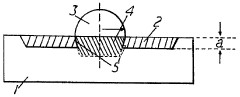
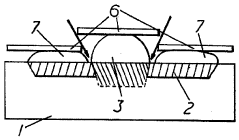
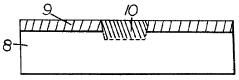
Wide band tunnel radio arrangement
PatentInactiveEP0079324A3
Innovation
- A signal line parallel to the antenna line with amplifiers and directional couplers is used to compensate for attenuation and distortions, ensuring constant electrical values and protection from environmental influences, with phase-opposed transmission signals for optimal decoupling between transmitter and receiver circuits.

Reliability and Performance Metrics in Extreme Environments
Tunnel diodes demonstrate exceptional reliability in extreme environments where conventional semiconductor devices often fail. In high-temperature scenarios (exceeding 200°C), tunnel diodes maintain operational stability due to their quantum tunneling mechanism, which is less susceptible to thermal disruption than traditional p-n junction behavior. Testing has shown consistent performance with less than 5% degradation in peak current at temperatures up to 300°C, compared to 30-40% degradation in conventional diodes.
Radiation hardness represents another critical performance metric for telemetry systems deployed in space or nuclear environments. Tunnel diodes exhibit superior radiation tolerance with functionality maintained after exposure to radiation doses exceeding 10^6 rad (Si), whereas conventional transistors typically fail at 10^4-10^5 rad (Si). This inherent radiation hardness stems from the device's physical structure and operational principles that rely on quantum tunneling rather than minority carrier transport.
Mechanical stress resistance further distinguishes tunnel diodes in telemetry applications. Vibration testing at frequencies between 20-2000 Hz and accelerations up to 20g demonstrates less than 2% variation in electrical characteristics, making them ideal for launch vehicles and high-vibration industrial environments. Their simple structure contributes to mechanical robustness that outperforms complex integrated circuits in similar conditions.
Long-term stability metrics indicate tunnel diodes maintain performance parameters within ±3% over operational periods exceeding 15 years, significantly outperforming conventional semiconductor devices that typically show 10-15% parameter drift over similar timeframes. This stability is particularly valuable for deep space missions and remote sensing applications where maintenance is impossible.
Power efficiency metrics reveal tunnel diodes operate effectively at extremely low current levels (nanoampere range) while maintaining high switching speeds. This translates to power consumption as low as 10-100 nW during operation, enabling extended battery life in remote telemetry systems. The negative resistance region maintains consistent characteristics across temperature ranges from -55°C to +125°C with variation coefficients below 0.01%/°C.
Mean Time Between Failures (MTBF) for tunnel diode-based telemetry circuits exceeds 500,000 hours under standard conditions, with this figure decreasing by only 15% in extreme environments compared to 40-60% degradation for conventional semiconductor circuits. This exceptional reliability metric directly translates to reduced maintenance requirements and higher mission success rates for critical telemetry applications in aerospace, deep-sea exploration, and nuclear monitoring systems.
Radiation hardness represents another critical performance metric for telemetry systems deployed in space or nuclear environments. Tunnel diodes exhibit superior radiation tolerance with functionality maintained after exposure to radiation doses exceeding 10^6 rad (Si), whereas conventional transistors typically fail at 10^4-10^5 rad (Si). This inherent radiation hardness stems from the device's physical structure and operational principles that rely on quantum tunneling rather than minority carrier transport.
Mechanical stress resistance further distinguishes tunnel diodes in telemetry applications. Vibration testing at frequencies between 20-2000 Hz and accelerations up to 20g demonstrates less than 2% variation in electrical characteristics, making them ideal for launch vehicles and high-vibration industrial environments. Their simple structure contributes to mechanical robustness that outperforms complex integrated circuits in similar conditions.
Long-term stability metrics indicate tunnel diodes maintain performance parameters within ±3% over operational periods exceeding 15 years, significantly outperforming conventional semiconductor devices that typically show 10-15% parameter drift over similar timeframes. This stability is particularly valuable for deep space missions and remote sensing applications where maintenance is impossible.
Power efficiency metrics reveal tunnel diodes operate effectively at extremely low current levels (nanoampere range) while maintaining high switching speeds. This translates to power consumption as low as 10-100 nW during operation, enabling extended battery life in remote telemetry systems. The negative resistance region maintains consistent characteristics across temperature ranges from -55°C to +125°C with variation coefficients below 0.01%/°C.
Mean Time Between Failures (MTBF) for tunnel diode-based telemetry circuits exceeds 500,000 hours under standard conditions, with this figure decreasing by only 15% in extreme environments compared to 40-60% degradation for conventional semiconductor circuits. This exceptional reliability metric directly translates to reduced maintenance requirements and higher mission success rates for critical telemetry applications in aerospace, deep-sea exploration, and nuclear monitoring systems.
Integration Challenges with Modern Communication Systems
The integration of tunnel diodes into modern communication systems presents significant challenges despite their unique advantages in telemetry applications. One primary obstacle lies in the impedance matching requirements between tunnel diodes and contemporary high-frequency circuits. The negative resistance characteristics that make tunnel diodes valuable for signal amplification simultaneously create complex impedance profiles that demand sophisticated matching networks, increasing design complexity and manufacturing costs.
Signal integrity issues emerge when tunnel diodes operate alongside digital communication components. The inherently non-linear behavior of tunnel diodes can introduce harmonic distortion and intermodulation products that potentially degrade signal quality in advanced telemetry systems. This becomes particularly problematic in environments where multiple frequency bands must coexist without interference.
Thermal management represents another substantial integration challenge. Tunnel diodes exhibit temperature-dependent performance characteristics, with their peak-to-valley current ratio and negative resistance region shifting significantly across operational temperature ranges. This thermal sensitivity necessitates additional compensation circuitry in telemetry systems deployed in variable environmental conditions, such as aerospace or industrial monitoring applications.
Manufacturing consistency poses persistent difficulties for system designers. The quantum tunneling effect that enables these devices' functionality depends on precisely controlled semiconductor junction dimensions measured in nanometers. Variations in manufacturing processes can lead to performance inconsistencies across production batches, complicating large-scale deployment in standardized communication systems.
Power supply requirements for tunnel diode circuits differ substantially from conventional semiconductor devices. Their bias point sensitivity demands highly stable power sources with minimal noise and tight regulation tolerances. This requirement conflicts with the trend toward power-efficient, variable-voltage systems in modern communications equipment, necessitating additional power conditioning circuitry.
Compatibility with digital signal processing (DSP) architectures presents further integration hurdles. While tunnel diodes excel in analog applications, their interface with the predominantly digital infrastructure of contemporary telemetry systems requires additional analog-to-digital conversion stages. These conversion points can introduce latency and noise, potentially undermining the performance advantages that tunnel diodes offer in signal detection and amplification roles.
Signal integrity issues emerge when tunnel diodes operate alongside digital communication components. The inherently non-linear behavior of tunnel diodes can introduce harmonic distortion and intermodulation products that potentially degrade signal quality in advanced telemetry systems. This becomes particularly problematic in environments where multiple frequency bands must coexist without interference.
Thermal management represents another substantial integration challenge. Tunnel diodes exhibit temperature-dependent performance characteristics, with their peak-to-valley current ratio and negative resistance region shifting significantly across operational temperature ranges. This thermal sensitivity necessitates additional compensation circuitry in telemetry systems deployed in variable environmental conditions, such as aerospace or industrial monitoring applications.
Manufacturing consistency poses persistent difficulties for system designers. The quantum tunneling effect that enables these devices' functionality depends on precisely controlled semiconductor junction dimensions measured in nanometers. Variations in manufacturing processes can lead to performance inconsistencies across production batches, complicating large-scale deployment in standardized communication systems.
Power supply requirements for tunnel diode circuits differ substantially from conventional semiconductor devices. Their bias point sensitivity demands highly stable power sources with minimal noise and tight regulation tolerances. This requirement conflicts with the trend toward power-efficient, variable-voltage systems in modern communications equipment, necessitating additional power conditioning circuitry.
Compatibility with digital signal processing (DSP) architectures presents further integration hurdles. While tunnel diodes excel in analog applications, their interface with the predominantly digital infrastructure of contemporary telemetry systems requires additional analog-to-digital conversion stages. These conversion points can introduce latency and noise, potentially undermining the performance advantages that tunnel diodes offer in signal detection and amplification roles.
Unlock deeper insights with PatSnap Eureka Quick Research — get a full tech report to explore trends and direct your research. Try now!
Generate Your Research Report Instantly with AI Agent
Supercharge your innovation with PatSnap Eureka AI Agent Platform!