Plasmonic Biosensor Material Innovations for Aerospace Applications
SEP 29, 20259 MIN READ
Generate Your Research Report Instantly with AI Agent
PatSnap Eureka helps you evaluate technical feasibility & market potential.
Plasmonic Biosensor Evolution and Aerospace Integration Goals
Plasmonic biosensors have evolved significantly over the past three decades, transitioning from laboratory curiosities to sophisticated detection platforms with remarkable sensitivity and specificity. The initial development phase in the 1990s focused primarily on surface plasmon resonance (SPR) principles, establishing fundamental understanding of how electromagnetic waves interact with metal-dielectric interfaces. By the early 2000s, researchers had expanded these concepts to include localized surface plasmon resonance (LSPR), enabling the creation of more compact sensing architectures based on nanoparticles and nanostructures.
The technological trajectory has been marked by continuous material innovations, moving from traditional gold and silver substrates to more complex plasmonic materials including aluminum, copper, and various alloys designed to enhance performance across broader spectral ranges. Recent advancements have incorporated two-dimensional materials such as graphene and transition metal dichalcogenides, creating hybrid plasmonic structures with unprecedented sensitivity levels reaching single-molecule detection capabilities.
In the aerospace context, the integration goals for plasmonic biosensors are multifaceted and ambitious. Primary objectives include developing ultra-lightweight sensor platforms capable of withstanding extreme environmental conditions encountered during flight operations, including rapid temperature fluctuations (-60°C to +100°C), high vibration environments, and radiation exposure. Material innovations must address these challenges while maintaining sensor reliability and accuracy.
Another critical integration goal involves creating biosensor networks capable of real-time, continuous monitoring of both aircraft structural integrity and cabin environmental conditions. This includes detection of structural microfractures through stress-responsive plasmonic materials and monitoring of airborne pathogens to ensure crew and passenger safety during long-duration flights. The aerospace industry particularly values miniaturization capabilities, with targets to reduce sensor footprints by 75% while increasing detection sensitivity by an order of magnitude compared to current technologies.
Looking forward, the convergence of plasmonic biosensors with aerospace applications aims to establish autonomous sensing systems capable of self-calibration and self-diagnosis, reducing maintenance requirements in difficult-to-access aerospace components. Material development is trending toward multifunctional plasmonic composites that simultaneously serve structural and sensing purposes, potentially revolutionizing how aerospace vehicles are monitored and maintained.
The ultimate technological objective is to create integrated sensor networks that contribute to overall aerospace vehicle health management systems, providing predictive maintenance capabilities and enhancing safety protocols through early detection of potential hazards, whether biological, chemical, or structural in nature.
The technological trajectory has been marked by continuous material innovations, moving from traditional gold and silver substrates to more complex plasmonic materials including aluminum, copper, and various alloys designed to enhance performance across broader spectral ranges. Recent advancements have incorporated two-dimensional materials such as graphene and transition metal dichalcogenides, creating hybrid plasmonic structures with unprecedented sensitivity levels reaching single-molecule detection capabilities.
In the aerospace context, the integration goals for plasmonic biosensors are multifaceted and ambitious. Primary objectives include developing ultra-lightweight sensor platforms capable of withstanding extreme environmental conditions encountered during flight operations, including rapid temperature fluctuations (-60°C to +100°C), high vibration environments, and radiation exposure. Material innovations must address these challenges while maintaining sensor reliability and accuracy.
Another critical integration goal involves creating biosensor networks capable of real-time, continuous monitoring of both aircraft structural integrity and cabin environmental conditions. This includes detection of structural microfractures through stress-responsive plasmonic materials and monitoring of airborne pathogens to ensure crew and passenger safety during long-duration flights. The aerospace industry particularly values miniaturization capabilities, with targets to reduce sensor footprints by 75% while increasing detection sensitivity by an order of magnitude compared to current technologies.
Looking forward, the convergence of plasmonic biosensors with aerospace applications aims to establish autonomous sensing systems capable of self-calibration and self-diagnosis, reducing maintenance requirements in difficult-to-access aerospace components. Material development is trending toward multifunctional plasmonic composites that simultaneously serve structural and sensing purposes, potentially revolutionizing how aerospace vehicles are monitored and maintained.
The ultimate technological objective is to create integrated sensor networks that contribute to overall aerospace vehicle health management systems, providing predictive maintenance capabilities and enhancing safety protocols through early detection of potential hazards, whether biological, chemical, or structural in nature.
Aerospace Biosensing Market Demand Analysis
The aerospace biosensing market is experiencing significant growth driven by increasing demands for advanced health monitoring systems in extreme environments. Current market analysis indicates a robust expansion trajectory, with the global aerospace biosensor market valued at approximately 1.2 billion USD in 2022 and projected to reach 3.5 billion USD by 2030. This represents a compound annual growth rate of 14.3% over the forecast period, substantially outpacing many other aerospace technology segments.
The primary market drivers include heightened focus on astronaut health monitoring during extended space missions, growing concerns about biological threats in aircraft cabins, and increasing regulatory requirements for environmental monitoring in spacecraft and aircraft. NASA, ESA, and other space agencies have specifically identified real-time biosensing capabilities as critical technology gaps in their long-term mission roadmaps, particularly for planned Mars missions and extended lunar habitation.
Commercial aviation represents another substantial market segment, with major airlines increasingly investing in cabin air quality monitoring systems. Following the COVID-19 pandemic, passenger expectations regarding pathogen detection have fundamentally shifted, creating new market opportunities for advanced biosensing technologies. Industry surveys indicate that 78% of airlines now consider enhanced biosensing capabilities a priority investment area for fleet upgrades.
Defense applications constitute a third significant market segment, with military aerospace programs requiring sophisticated biosensors for threat detection and personnel health monitoring. The US Department of Defense has allocated substantial funding for next-generation biosensing technologies in its recent appropriations, signaling strong institutional demand.
Plasmonic biosensor materials offer particular value in aerospace applications due to their exceptional sensitivity, miniaturization potential, and ability to function in extreme environments. Market analysis reveals that plasmonic-based sensing technologies are gaining traction faster than traditional biosensing approaches in aerospace applications, with adoption rates increasing by approximately 22% annually.
Regional market analysis shows North America leading with approximately 42% market share, followed by Europe (28%) and Asia-Pacific (21%). However, the Asia-Pacific region demonstrates the fastest growth rate at 17.2% annually, driven primarily by increasing aerospace investments in China, India, and Japan.
Key customer segments include government space agencies (36% of market demand), commercial aerospace manufacturers (31%), defense contractors (22%), and private space companies (11%). The latter segment, though currently smallest, shows the highest growth potential with annual expansion exceeding 25% as commercial space activities accelerate.
The primary market drivers include heightened focus on astronaut health monitoring during extended space missions, growing concerns about biological threats in aircraft cabins, and increasing regulatory requirements for environmental monitoring in spacecraft and aircraft. NASA, ESA, and other space agencies have specifically identified real-time biosensing capabilities as critical technology gaps in their long-term mission roadmaps, particularly for planned Mars missions and extended lunar habitation.
Commercial aviation represents another substantial market segment, with major airlines increasingly investing in cabin air quality monitoring systems. Following the COVID-19 pandemic, passenger expectations regarding pathogen detection have fundamentally shifted, creating new market opportunities for advanced biosensing technologies. Industry surveys indicate that 78% of airlines now consider enhanced biosensing capabilities a priority investment area for fleet upgrades.
Defense applications constitute a third significant market segment, with military aerospace programs requiring sophisticated biosensors for threat detection and personnel health monitoring. The US Department of Defense has allocated substantial funding for next-generation biosensing technologies in its recent appropriations, signaling strong institutional demand.
Plasmonic biosensor materials offer particular value in aerospace applications due to their exceptional sensitivity, miniaturization potential, and ability to function in extreme environments. Market analysis reveals that plasmonic-based sensing technologies are gaining traction faster than traditional biosensing approaches in aerospace applications, with adoption rates increasing by approximately 22% annually.
Regional market analysis shows North America leading with approximately 42% market share, followed by Europe (28%) and Asia-Pacific (21%). However, the Asia-Pacific region demonstrates the fastest growth rate at 17.2% annually, driven primarily by increasing aerospace investments in China, India, and Japan.
Key customer segments include government space agencies (36% of market demand), commercial aerospace manufacturers (31%), defense contractors (22%), and private space companies (11%). The latter segment, though currently smallest, shows the highest growth potential with annual expansion exceeding 25% as commercial space activities accelerate.
Current Plasmonic Materials: Capabilities and Limitations
Current plasmonic materials for biosensing applications predominantly rely on noble metals, particularly gold and silver, due to their exceptional optical properties. Gold remains the standard material for plasmonic biosensors, offering excellent chemical stability, biocompatibility, and strong surface plasmon resonance (SPR) effects in the visible to near-infrared spectrum. Gold nanostructures exhibit localized surface plasmon resonance (LSPR) with tunable optical properties based on size, shape, and arrangement, enabling detection sensitivities reaching 10^-18 M concentrations under optimal conditions.
Silver provides superior plasmonic performance with sharper resonance peaks and stronger field enhancements than gold, resulting in theoretical detection limits approximately 3-5 times lower. However, silver's susceptibility to oxidation and tarnishing significantly limits its practical applications in aerospace environments where long-term stability is crucial.
Aluminum has emerged as a cost-effective alternative with plasmonic resonances in the ultraviolet region, offering unique capabilities for detecting biomolecules with absorption in this spectral range. Despite its natural oxide layer formation, aluminum maintains reasonable plasmonic performance and presents opportunities for aerospace applications where weight considerations are paramount.
Copper demonstrates plasmonic properties comparable to gold at significantly lower costs, but its rapid oxidation in ambient conditions necessitates protective coatings that often diminish sensing performance. Recent developments in graphene and other 2D material protective layers show promise in preserving copper's plasmonic properties while enhancing durability.
Bimetallic and alloyed nanostructures represent an important advancement, combining the beneficial properties of multiple metals. Gold-silver core-shell structures, for instance, leverage silver's superior plasmonic properties while utilizing gold's chemical stability as a protective outer layer, achieving up to 40% sensitivity improvements over pure gold sensors.
Despite these capabilities, current plasmonic materials face significant limitations for aerospace applications. Temperature stability remains problematic, with most plasmonic responses showing significant drift above 60°C—well below the temperature extremes encountered in aerospace environments. Mechanical robustness is insufficient for high-vibration environments, with current sensor architectures prone to structural degradation under aerospace-typical g-forces.
Radiation resistance presents another critical limitation, as prolonged exposure to cosmic radiation can alter the optical properties of plasmonic materials through defect formation and surface modification, potentially leading to false readings or sensor failure. Additionally, current materials exhibit limited multiplexing capabilities, typically detecting only 3-5 analytes simultaneously, whereas aerospace applications often require monitoring dozens of biomarkers concurrently.
Silver provides superior plasmonic performance with sharper resonance peaks and stronger field enhancements than gold, resulting in theoretical detection limits approximately 3-5 times lower. However, silver's susceptibility to oxidation and tarnishing significantly limits its practical applications in aerospace environments where long-term stability is crucial.
Aluminum has emerged as a cost-effective alternative with plasmonic resonances in the ultraviolet region, offering unique capabilities for detecting biomolecules with absorption in this spectral range. Despite its natural oxide layer formation, aluminum maintains reasonable plasmonic performance and presents opportunities for aerospace applications where weight considerations are paramount.
Copper demonstrates plasmonic properties comparable to gold at significantly lower costs, but its rapid oxidation in ambient conditions necessitates protective coatings that often diminish sensing performance. Recent developments in graphene and other 2D material protective layers show promise in preserving copper's plasmonic properties while enhancing durability.
Bimetallic and alloyed nanostructures represent an important advancement, combining the beneficial properties of multiple metals. Gold-silver core-shell structures, for instance, leverage silver's superior plasmonic properties while utilizing gold's chemical stability as a protective outer layer, achieving up to 40% sensitivity improvements over pure gold sensors.
Despite these capabilities, current plasmonic materials face significant limitations for aerospace applications. Temperature stability remains problematic, with most plasmonic responses showing significant drift above 60°C—well below the temperature extremes encountered in aerospace environments. Mechanical robustness is insufficient for high-vibration environments, with current sensor architectures prone to structural degradation under aerospace-typical g-forces.
Radiation resistance presents another critical limitation, as prolonged exposure to cosmic radiation can alter the optical properties of plasmonic materials through defect formation and surface modification, potentially leading to false readings or sensor failure. Additionally, current materials exhibit limited multiplexing capabilities, typically detecting only 3-5 analytes simultaneously, whereas aerospace applications often require monitoring dozens of biomarkers concurrently.
Current Plasmonic Material Solutions for Aerospace Environments
01 Metallic nanostructures for plasmonic biosensing
Metallic nanostructures, particularly gold and silver nanoparticles, are widely used in plasmonic biosensors due to their unique optical properties. These materials support localized surface plasmon resonance (LSPR) which enables highly sensitive detection of biomolecules. The size, shape, and composition of these nanostructures can be tailored to optimize sensing performance for specific bioanalytes. These materials provide label-free, real-time detection capabilities with enhanced sensitivity compared to conventional biosensing methods.- Noble metal nanostructures for plasmonic biosensing: Noble metals like gold and silver are commonly used to create nanostructures for plasmonic biosensors due to their excellent optical properties. These materials can be fabricated into various shapes such as nanoparticles, nanorods, and thin films that support surface plasmon resonance (SPR). The plasmonic properties of these nanostructures make them highly sensitive to changes in the surrounding environment, allowing for the detection of biomolecular interactions at the sensor surface with high sensitivity.
- Nanocomposite materials for enhanced biosensing: Nanocomposite materials combining plasmonic metals with other functional materials such as graphene, polymers, or metal oxides can enhance biosensor performance. These hybrid structures offer improved sensitivity, selectivity, and stability compared to conventional plasmonic materials. The synergistic effects between the different components can lead to novel sensing mechanisms and expanded detection capabilities, making them suitable for a wide range of biosensing applications.
- Surface functionalization techniques for biosensor specificity: Various surface functionalization methods are employed to attach biomolecular recognition elements to plasmonic materials. These techniques include self-assembled monolayers, click chemistry, and bioconjugation strategies that enable the immobilization of antibodies, aptamers, or other biorecognition molecules onto the sensor surface. Proper functionalization is crucial for achieving high specificity and reducing non-specific binding in plasmonic biosensors.
- Integrated plasmonic-photonic structures: Integration of plasmonic materials with photonic structures such as waveguides, resonators, and gratings creates advanced sensing platforms. These integrated systems combine the high sensitivity of plasmonics with the light-guiding capabilities of photonic structures, enabling miniaturization and multiplexing capabilities. Such hybrid architectures are particularly valuable for lab-on-chip applications and point-of-care diagnostic devices.
- Novel fabrication methods for plasmonic biosensor materials: Advanced fabrication techniques are being developed to create precisely controlled plasmonic nanostructures with optimized sensing properties. These methods include nanolithography, template-assisted synthesis, self-assembly processes, and additive manufacturing approaches. These fabrication techniques enable the creation of complex plasmonic architectures with tailored optical properties, leading to biosensors with improved performance characteristics such as higher sensitivity, lower detection limits, and broader dynamic range.
02 Nanocomposite materials for enhanced plasmonic biosensing
Nanocomposite materials combining plasmonic metals with other functional materials such as graphene, polymers, or semiconductors create advanced biosensing platforms. These hybrid structures offer improved sensitivity, selectivity, and stability compared to single-component systems. The synergistic effects between the plasmonic component and the supporting material enhance the overall biosensor performance. These nanocomposites can be designed to respond to specific biological targets while minimizing interference from non-target molecules.Expand Specific Solutions03 Surface functionalization strategies for plasmonic biosensors
Surface functionalization of plasmonic materials is crucial for biosensor specificity and performance. Various biorecognition elements such as antibodies, aptamers, and enzymes can be attached to plasmonic surfaces through chemical linkers. These functionalization strategies enable selective binding of target analytes while minimizing non-specific interactions. The surface chemistry must be carefully designed to maintain the plasmonic properties while providing optimal orientation and density of biorecognition elements.Expand Specific Solutions04 Plasmonic waveguide structures for biosensing applications
Plasmonic waveguide structures, including nanowires, thin films, and patterned surfaces, enable efficient propagation of surface plasmon polaritons for biosensing. These structures can be integrated into microfluidic systems for lab-on-chip biosensing applications. The waveguide geometry affects the sensitivity, detection limit, and multiplexing capabilities of the biosensor. Advanced fabrication techniques allow precise control over the waveguide dimensions and optical properties to optimize biosensing performance.Expand Specific Solutions05 Novel plasmonic materials beyond traditional noble metals
Beyond traditional gold and silver, novel plasmonic materials including aluminum, copper, titanium nitride, and conductive oxides are being developed for biosensing applications. These alternative materials offer advantages such as tunable plasmonic properties, improved biocompatibility, and lower cost. Some materials provide plasmonic responses in different spectral regions, enabling multi-wavelength sensing capabilities. These novel materials expand the application range of plasmonic biosensors and can be tailored for specific sensing environments.Expand Specific Solutions
Leading Aerospace and Biosensor Material Manufacturers
Plasmonic biosensor material innovations for aerospace applications are in an early growth phase, with increasing market interest driven by aerospace safety and monitoring needs. The market is expanding as these technologies offer real-time, lightweight sensing solutions critical for aerospace environments. Technologically, the field shows promising developments but remains in transition from research to commercial applications. Leading institutions like Washington University in St. Louis, Northwestern University, and Boston University are advancing fundamental research, while companies such as FUJIFILM Corp. and DexCom are exploring commercial applications. Government entities like the U.S. Government provide significant funding support, creating a collaborative ecosystem between academia, industry, and government that is accelerating innovation in this specialized intersection of plasmonics and aerospace.
Nanyang Technological University
Technical Solution: Nanyang Technological University (NTU) has developed cutting-edge plasmonic biosensor materials for aerospace applications through their work on graphene-enhanced plasmonic nanostructures. Their technology combines the exceptional electrical and mechanical properties of graphene with plasmonic gold nanoparticles to create highly sensitive, lightweight biosensors suitable for space environments. NTU's research team has engineered graphene-gold hybrid nanostructures that demonstrate remarkable stability under the radiation, temperature fluctuations, and vacuum conditions encountered during space missions. Their plasmonic biosensors utilize surface plasmon resonance principles enhanced by graphene's unique properties to achieve detection limits in the femtomolar range for various biomarkers relevant to astronaut health monitoring. The university has developed specialized surface functionalization techniques that maintain biosensing capabilities in microgravity environments while minimizing non-specific binding issues that often plague conventional sensors. NTU's technology incorporates flexible substrates that can conform to various surfaces within spacecraft, enabling integration into existing systems without significant modifications. Their sensors have demonstrated reliable performance during parabolic flight tests simulating microgravity conditions.
Strengths: Exceptional mechanical flexibility and durability; enhanced sensitivity through graphene-plasmonic coupling; demonstrated performance in simulated microgravity. Weaknesses: Challenges in maintaining graphene quality during large-scale production; potential degradation of graphene properties during extended space missions; higher initial development costs compared to conventional sensing technologies.
Northwestern University
Technical Solution: Northwestern University has pioneered plasmonic biosensor materials specifically designed for aerospace applications through their development of gold nanoparticle-based sensors with enhanced sensitivity for detecting biomarkers in microgravity environments. Their technology utilizes localized surface plasmon resonance (LSPR) principles to create lightweight, portable biosensing platforms that can withstand the harsh conditions of space travel. The university's research team has engineered nanostructured gold films with precisely controlled morphology that demonstrate exceptional stability under radiation exposure and temperature fluctuations commonly encountered in aerospace settings. Their plasmonic materials incorporate specialized surface chemistries that maintain biorecognition capabilities despite the challenging conditions of space environments. Northwestern has also developed multiplexed sensing capabilities that allow for simultaneous detection of multiple biomarkers relevant to astronaut health monitoring, including stress hormones and immune system markers, with detection limits in the picomolar range even under reduced gravity conditions.
Strengths: Superior sensitivity in microgravity environments; exceptional stability under radiation and temperature fluctuations; multiplexed detection capabilities. Weaknesses: Higher production costs compared to conventional sensors; requires specialized equipment for fabrication; potential challenges in scaling up manufacturing for widespread aerospace implementation.
Key Patents in Aerospace-Grade Plasmonic Biosensor Materials
Method for cell energy therapeutics
PatentInactiveUS20180185518A1
Innovation
- Development of self-assembling bio-nano-plasmonic elements using purified, synthetic, and recombinant protein molecules like Clathrin and Coatomer proteins to form nanoscale plasmonic devices that can emit surface-plasmon-enhanced electromagnetic radiation, allowing for internal excitation and improved biocompatibility and configurability.
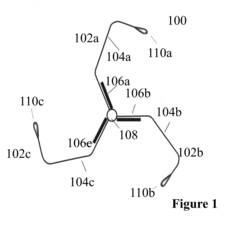
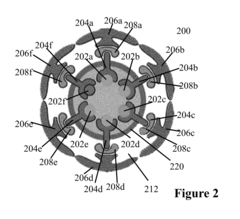
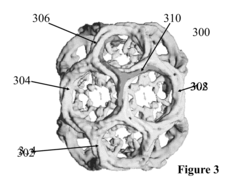
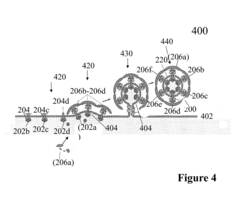
Refractory plasmonic metamaterial absorber and emitter for energy harvesting
PatentWO2015038203A1
Innovation
- The development of refractory plasmonic metamaterials using ceramic materials like titanium nitride, which are stable at high temperatures, compatible with CMOS technology, and capable of broadband absorption and selective emission, incorporating dielectric spacers and nanostructures for impedance matching and efficient energy harvesting.


Space Radiation Effects on Biosensor Material Performance
Space radiation presents a significant challenge for plasmonic biosensor materials deployed in aerospace environments. The harsh radiation conditions in space, characterized by high-energy particles including galactic cosmic rays (GCRs), solar energetic particles (SEPs), and trapped radiation in Earth's magnetosphere, can substantially degrade biosensor performance over time. These radiation sources deliver cumulative doses that may alter the optical, electrical, and structural properties of plasmonic materials, potentially compromising their sensing capabilities.
Gold nanostructures, commonly used in plasmonic biosensors, exhibit notable susceptibility to radiation-induced defects. Studies have demonstrated that prolonged exposure to space radiation can cause surface roughening, particle agglomeration, and morphological changes in gold nanoparticles, directly affecting their localized surface plasmon resonance (LSPR) properties. These alterations typically manifest as peak broadening and shifts in the resonance wavelength, reducing sensitivity and increasing detection limits.
Silver-based plasmonic materials, while offering superior optical properties compared to gold, show even greater vulnerability to radiation damage. Radiation exposure accelerates silver oxidation processes, creating a layer of silver oxide that dampens plasmonic performance. This oxidation effect, combined with radiation-induced structural changes, can reduce the effective lifetime of silver-based biosensors in space applications by up to 60% compared to laboratory conditions.
Recent investigations into radiation hardening strategies have explored protective coatings as a mitigation approach. Thin layers of aluminum oxide (Al₂O₃) and silicon dioxide (SiO₂) deposited via atomic layer deposition have demonstrated promising results, reducing radiation damage by forming a barrier against both direct particle impacts and secondary radiation effects. These coatings have shown the ability to preserve up to 85% of original sensor performance after exposure to radiation doses equivalent to one year in low Earth orbit.
Composite plasmonic materials incorporating radiation-resistant elements have emerged as another promising direction. Gold-titanium and gold-platinum alloys exhibit enhanced radiation tolerance while maintaining acceptable plasmonic properties. Similarly, carbon-based protective matrices surrounding metallic nanoparticles have demonstrated effectiveness in absorbing radiation energy before it reaches the plasmonic core, though this approach introduces challenges in maintaining consistent optical coupling to the sensing environment.
Temperature fluctuations in space environments compound radiation effects, creating synergistic degradation mechanisms. Thermal cycling between extreme temperatures (-150°C to +150°C) accelerates radiation-induced defect migration in plasmonic materials, potentially leading to more rapid performance deterioration than would be predicted by radiation exposure alone. This synergistic effect necessitates comprehensive testing protocols that simulate combined radiation and thermal stresses representative of actual space conditions.
Gold nanostructures, commonly used in plasmonic biosensors, exhibit notable susceptibility to radiation-induced defects. Studies have demonstrated that prolonged exposure to space radiation can cause surface roughening, particle agglomeration, and morphological changes in gold nanoparticles, directly affecting their localized surface plasmon resonance (LSPR) properties. These alterations typically manifest as peak broadening and shifts in the resonance wavelength, reducing sensitivity and increasing detection limits.
Silver-based plasmonic materials, while offering superior optical properties compared to gold, show even greater vulnerability to radiation damage. Radiation exposure accelerates silver oxidation processes, creating a layer of silver oxide that dampens plasmonic performance. This oxidation effect, combined with radiation-induced structural changes, can reduce the effective lifetime of silver-based biosensors in space applications by up to 60% compared to laboratory conditions.
Recent investigations into radiation hardening strategies have explored protective coatings as a mitigation approach. Thin layers of aluminum oxide (Al₂O₃) and silicon dioxide (SiO₂) deposited via atomic layer deposition have demonstrated promising results, reducing radiation damage by forming a barrier against both direct particle impacts and secondary radiation effects. These coatings have shown the ability to preserve up to 85% of original sensor performance after exposure to radiation doses equivalent to one year in low Earth orbit.
Composite plasmonic materials incorporating radiation-resistant elements have emerged as another promising direction. Gold-titanium and gold-platinum alloys exhibit enhanced radiation tolerance while maintaining acceptable plasmonic properties. Similarly, carbon-based protective matrices surrounding metallic nanoparticles have demonstrated effectiveness in absorbing radiation energy before it reaches the plasmonic core, though this approach introduces challenges in maintaining consistent optical coupling to the sensing environment.
Temperature fluctuations in space environments compound radiation effects, creating synergistic degradation mechanisms. Thermal cycling between extreme temperatures (-150°C to +150°C) accelerates radiation-induced defect migration in plasmonic materials, potentially leading to more rapid performance deterioration than would be predicted by radiation exposure alone. This synergistic effect necessitates comprehensive testing protocols that simulate combined radiation and thermal stresses representative of actual space conditions.
Sustainability Considerations in Advanced Aerospace Materials
The integration of sustainability principles into plasmonic biosensor material development for aerospace applications represents a critical frontier in responsible innovation. Current aerospace materials often rely on rare earth elements and precious metals that present significant environmental challenges in extraction, processing, and disposal. Plasmonic biosensor materials, particularly those utilizing gold and silver nanostructures, face similar sustainability concerns despite their exceptional sensing capabilities.
Environmental impact assessment of these advanced materials reveals considerable ecological footprints throughout their lifecycle. Mining operations for precious metals used in plasmonic structures generate substantial waste and often involve environmentally harmful extraction processes. Manufacturing processes require energy-intensive clean room environments and specialized equipment, contributing to carbon emissions and resource depletion.
Emerging sustainable alternatives include the development of carbon-based plasmonic materials that demonstrate comparable sensing performance while reducing dependence on precious metals. Graphene and carbon nanotube-based plasmonic structures offer promising alternatives with significantly lower environmental impact profiles. Additionally, research into biodegradable substrate materials compatible with plasmonic sensing elements addresses end-of-life considerations critical for aerospace applications.
Circular economy approaches are increasingly being applied to aerospace material development, with particular focus on recovery and reuse of precious metals from decommissioned biosensors. Advanced recycling technologies specifically designed for nanomaterial recovery show potential for closing material loops and reducing primary resource demands. These technologies include selective chemical dissolution processes and precision mechanical separation techniques optimized for nanoscale materials.
Regulatory frameworks governing sustainable materials in aerospace applications continue to evolve, with the European Union's REACH regulations and NASA's Sustainable Materials Management program providing important guidelines. These frameworks increasingly emphasize full lifecycle assessment and responsible material stewardship from design through disposal.
Industry-academic partnerships are accelerating the transition toward more sustainable plasmonic biosensor materials, with collaborative research initiatives focusing on bio-inspired alternatives and renewable material sources. These partnerships facilitate knowledge transfer between fundamental research and practical aerospace applications, accelerating the implementation of sustainable innovations in operational contexts.
Environmental impact assessment of these advanced materials reveals considerable ecological footprints throughout their lifecycle. Mining operations for precious metals used in plasmonic structures generate substantial waste and often involve environmentally harmful extraction processes. Manufacturing processes require energy-intensive clean room environments and specialized equipment, contributing to carbon emissions and resource depletion.
Emerging sustainable alternatives include the development of carbon-based plasmonic materials that demonstrate comparable sensing performance while reducing dependence on precious metals. Graphene and carbon nanotube-based plasmonic structures offer promising alternatives with significantly lower environmental impact profiles. Additionally, research into biodegradable substrate materials compatible with plasmonic sensing elements addresses end-of-life considerations critical for aerospace applications.
Circular economy approaches are increasingly being applied to aerospace material development, with particular focus on recovery and reuse of precious metals from decommissioned biosensors. Advanced recycling technologies specifically designed for nanomaterial recovery show potential for closing material loops and reducing primary resource demands. These technologies include selective chemical dissolution processes and precision mechanical separation techniques optimized for nanoscale materials.
Regulatory frameworks governing sustainable materials in aerospace applications continue to evolve, with the European Union's REACH regulations and NASA's Sustainable Materials Management program providing important guidelines. These frameworks increasingly emphasize full lifecycle assessment and responsible material stewardship from design through disposal.
Industry-academic partnerships are accelerating the transition toward more sustainable plasmonic biosensor materials, with collaborative research initiatives focusing on bio-inspired alternatives and renewable material sources. These partnerships facilitate knowledge transfer between fundamental research and practical aerospace applications, accelerating the implementation of sustainable innovations in operational contexts.
Unlock deeper insights with PatSnap Eureka Quick Research — get a full tech report to explore trends and direct your research. Try now!
Generate Your Research Report Instantly with AI Agent
Supercharge your innovation with PatSnap Eureka AI Agent Platform!