What regulatory frameworks govern solid oxide electrolysis cells
OCT 9, 20259 MIN READ
Generate Your Research Report Instantly with AI Agent
Patsnap Eureka helps you evaluate technical feasibility & market potential.
SOEC Regulatory Background and Development Goals
Solid Oxide Electrolysis Cells (SOECs) have emerged as a promising technology for clean hydrogen production and carbon utilization, operating within a complex regulatory landscape that continues to evolve globally. The regulatory frameworks governing SOECs span multiple domains including energy policy, environmental protection, industrial safety, and international trade standards, creating a multifaceted compliance environment for developers and manufacturers.
In the European Union, SOECs fall under the Renewable Energy Directive (RED II) which establishes targets for renewable hydrogen production and sets sustainability criteria. The EU Hydrogen Strategy further supports SOEC development through dedicated funding mechanisms and regulatory incentives. Additionally, the European Green Deal provides a comprehensive policy framework promoting technologies that enable decarbonization, with SOECs recognized as a key enabler for sector coupling between electricity and gas networks.
The United States regulatory approach to SOECs is primarily driven by the Department of Energy's Hydrogen Program and the recent Inflation Reduction Act, which allocates substantial funding for clean hydrogen technologies. The Clean Hydrogen Production Standard establishes emissions thresholds that SOEC technology is well-positioned to meet. Safety regulations are administered through OSHA standards for high-temperature operations and hydrogen handling, while environmental compliance is governed by EPA frameworks.
In Asia, Japan's Strategic Roadmap for Hydrogen and Fuel Cells includes specific provisions for electrolysis technologies, with SOEC development supported through the Green Innovation Fund. China's regulatory framework is embedded within its Hydrogen Energy Industry Development Plan (2021-2035), which emphasizes indigenous technology development and manufacturing scale-up for electrolysis systems including SOECs.
International standards organizations play a crucial role in harmonizing technical requirements across jurisdictions. The International Electrotechnical Commission (IEC) Technical Committee 105 has developed standards specific to electrolysis technologies, while ISO/TC 197 addresses hydrogen technologies more broadly. These standards establish performance metrics, safety protocols, and testing methodologies that facilitate global market access for SOEC technologies.
The development goals for SOEC technology are increasingly aligned with regulatory objectives worldwide: achieving cost competitiveness with conventional hydrogen production methods, demonstrating long-term durability under variable operating conditions, and establishing manufacturing processes that ensure consistent quality at scale. Regulatory frameworks are evolving to incorporate performance-based standards rather than prescriptive requirements, allowing for technological innovation while maintaining safety and environmental protection.
As the hydrogen economy expands, regulatory convergence is anticipated through international cooperation initiatives such as the International Partnership for Hydrogen and Fuel Cells in the Economy (IPHE) and Mission Innovation, which seek to establish common principles for hydrogen certification and regulatory approaches across major markets.
In the European Union, SOECs fall under the Renewable Energy Directive (RED II) which establishes targets for renewable hydrogen production and sets sustainability criteria. The EU Hydrogen Strategy further supports SOEC development through dedicated funding mechanisms and regulatory incentives. Additionally, the European Green Deal provides a comprehensive policy framework promoting technologies that enable decarbonization, with SOECs recognized as a key enabler for sector coupling between electricity and gas networks.
The United States regulatory approach to SOECs is primarily driven by the Department of Energy's Hydrogen Program and the recent Inflation Reduction Act, which allocates substantial funding for clean hydrogen technologies. The Clean Hydrogen Production Standard establishes emissions thresholds that SOEC technology is well-positioned to meet. Safety regulations are administered through OSHA standards for high-temperature operations and hydrogen handling, while environmental compliance is governed by EPA frameworks.
In Asia, Japan's Strategic Roadmap for Hydrogen and Fuel Cells includes specific provisions for electrolysis technologies, with SOEC development supported through the Green Innovation Fund. China's regulatory framework is embedded within its Hydrogen Energy Industry Development Plan (2021-2035), which emphasizes indigenous technology development and manufacturing scale-up for electrolysis systems including SOECs.
International standards organizations play a crucial role in harmonizing technical requirements across jurisdictions. The International Electrotechnical Commission (IEC) Technical Committee 105 has developed standards specific to electrolysis technologies, while ISO/TC 197 addresses hydrogen technologies more broadly. These standards establish performance metrics, safety protocols, and testing methodologies that facilitate global market access for SOEC technologies.
The development goals for SOEC technology are increasingly aligned with regulatory objectives worldwide: achieving cost competitiveness with conventional hydrogen production methods, demonstrating long-term durability under variable operating conditions, and establishing manufacturing processes that ensure consistent quality at scale. Regulatory frameworks are evolving to incorporate performance-based standards rather than prescriptive requirements, allowing for technological innovation while maintaining safety and environmental protection.
As the hydrogen economy expands, regulatory convergence is anticipated through international cooperation initiatives such as the International Partnership for Hydrogen and Fuel Cells in the Economy (IPHE) and Mission Innovation, which seek to establish common principles for hydrogen certification and regulatory approaches across major markets.
Market Analysis for Solid Oxide Electrolysis Technology
The global market for solid oxide electrolysis cell (SOEC) technology is experiencing significant growth, driven by increasing focus on hydrogen as a clean energy carrier and the urgent need for decarbonization across industries. Current market valuations place the SOEC sector at approximately $300 million as of 2023, with projections indicating potential growth to reach $1.5 billion by 2030, representing a compound annual growth rate of over 25%.
The demand for SOEC technology is primarily concentrated in regions with ambitious climate targets and substantial renewable energy infrastructure. Europe currently leads the market adoption, accounting for nearly 45% of global installations, followed by North America at 30% and Asia-Pacific at 20%. This regional distribution closely aligns with regulatory frameworks that incentivize green hydrogen production and carbon reduction initiatives.
Key market segments for SOEC applications include industrial hydrogen production, power-to-gas energy storage, synthetic fuel production, and industrial heat applications. The industrial sector represents the largest current market share at approximately 40%, driven by decarbonization efforts in steel manufacturing, ammonia production, and refining processes. Energy storage applications are growing most rapidly, with a 35% year-over-year increase, as grid operators seek solutions for managing intermittent renewable energy sources.
Customer demand patterns reveal increasing interest in scalable, modular SOEC systems that can be deployed incrementally as hydrogen demand grows. Market research indicates that total cost of ownership, rather than initial capital expenditure alone, is becoming the dominant decision factor for potential adopters, with particular emphasis on operational efficiency, stack durability, and system reliability.
Competitive pricing analysis shows that SOEC technology is approaching cost parity with conventional hydrogen production methods in regions with low-cost renewable electricity and supportive regulatory frameworks. The levelized cost of hydrogen production via SOEC has decreased by approximately 30% over the past five years, though it remains 15-20% higher than steam methane reforming without carbon capture in most markets.
Market barriers include high upfront capital costs, limited manufacturing scale, and competition from alternative electrolysis technologies such as PEM and alkaline systems. However, SOEC's superior efficiency at high temperatures and ability to utilize waste heat from industrial processes provide significant competitive advantages in specific applications, particularly those requiring high-temperature steam or integration with industrial processes.
The demand for SOEC technology is primarily concentrated in regions with ambitious climate targets and substantial renewable energy infrastructure. Europe currently leads the market adoption, accounting for nearly 45% of global installations, followed by North America at 30% and Asia-Pacific at 20%. This regional distribution closely aligns with regulatory frameworks that incentivize green hydrogen production and carbon reduction initiatives.
Key market segments for SOEC applications include industrial hydrogen production, power-to-gas energy storage, synthetic fuel production, and industrial heat applications. The industrial sector represents the largest current market share at approximately 40%, driven by decarbonization efforts in steel manufacturing, ammonia production, and refining processes. Energy storage applications are growing most rapidly, with a 35% year-over-year increase, as grid operators seek solutions for managing intermittent renewable energy sources.
Customer demand patterns reveal increasing interest in scalable, modular SOEC systems that can be deployed incrementally as hydrogen demand grows. Market research indicates that total cost of ownership, rather than initial capital expenditure alone, is becoming the dominant decision factor for potential adopters, with particular emphasis on operational efficiency, stack durability, and system reliability.
Competitive pricing analysis shows that SOEC technology is approaching cost parity with conventional hydrogen production methods in regions with low-cost renewable electricity and supportive regulatory frameworks. The levelized cost of hydrogen production via SOEC has decreased by approximately 30% over the past five years, though it remains 15-20% higher than steam methane reforming without carbon capture in most markets.
Market barriers include high upfront capital costs, limited manufacturing scale, and competition from alternative electrolysis technologies such as PEM and alkaline systems. However, SOEC's superior efficiency at high temperatures and ability to utilize waste heat from industrial processes provide significant competitive advantages in specific applications, particularly those requiring high-temperature steam or integration with industrial processes.
Global Regulatory Status and Technical Challenges
Solid oxide electrolysis cells (SOECs) operate within a complex global regulatory landscape that varies significantly across regions. In the European Union, SOECs fall under the Renewable Energy Directive (RED II), which establishes sustainability criteria for renewable hydrogen production. The EU Hydrogen Strategy further supports SOEC development through targeted funding mechanisms and regulatory incentives. Additionally, the European Green Deal provides a comprehensive framework promoting clean hydrogen technologies, with SOECs recognized as a key enabler for decarbonization efforts.
In the United States, regulatory oversight is more fragmented, with the Department of Energy (DOE) serving as the primary federal entity supporting SOEC research and development through programs like the Hydrogen and Fuel Cell Technologies Office. The Clean Hydrogen Production Standard, established under the Infrastructure Investment and Jobs Act, sets criteria for hydrogen production with minimal carbon intensity, indirectly influencing SOEC deployment.
Asian markets present varying regulatory approaches. Japan's Strategic Roadmap for Hydrogen and Fuel Cells provides substantial support for SOEC technologies, while China's New Energy Vehicle (NEV) policy and hydrogen strategy incorporate SOECs within broader electrification initiatives. South Korea's Hydrogen Economy Roadmap similarly positions SOECs as strategic technologies for future energy systems.
Technical standards governing SOECs include IEC 62282 for fuel cell technologies, which provides specifications for safety, installation, and performance. ISO/TC 197 addresses hydrogen technologies more broadly, establishing standards for hydrogen production systems including electrolysis. These international standards are often adopted or referenced in national regulatory frameworks.
Despite these frameworks, significant regulatory challenges persist. The lack of harmonized global standards creates market fragmentation, complicating international deployment of SOEC technologies. Certification procedures for green hydrogen production using SOECs remain inconsistent across jurisdictions, creating uncertainty for manufacturers and investors. Additionally, grid connection regulations often fail to address the specific characteristics of SOEC systems, particularly regarding their potential for grid balancing services.
Safety regulations present another challenge, as existing frameworks for hydrogen production and handling may not fully address the unique operational parameters of high-temperature SOECs. This regulatory gap increases compliance costs and creates market entry barriers for innovative SOEC designs. Furthermore, life-cycle assessment methodologies for determining the environmental impact of SOEC systems vary significantly between regulatory regimes, complicating comparative analysis and technology validation.
In the United States, regulatory oversight is more fragmented, with the Department of Energy (DOE) serving as the primary federal entity supporting SOEC research and development through programs like the Hydrogen and Fuel Cell Technologies Office. The Clean Hydrogen Production Standard, established under the Infrastructure Investment and Jobs Act, sets criteria for hydrogen production with minimal carbon intensity, indirectly influencing SOEC deployment.
Asian markets present varying regulatory approaches. Japan's Strategic Roadmap for Hydrogen and Fuel Cells provides substantial support for SOEC technologies, while China's New Energy Vehicle (NEV) policy and hydrogen strategy incorporate SOECs within broader electrification initiatives. South Korea's Hydrogen Economy Roadmap similarly positions SOECs as strategic technologies for future energy systems.
Technical standards governing SOECs include IEC 62282 for fuel cell technologies, which provides specifications for safety, installation, and performance. ISO/TC 197 addresses hydrogen technologies more broadly, establishing standards for hydrogen production systems including electrolysis. These international standards are often adopted or referenced in national regulatory frameworks.
Despite these frameworks, significant regulatory challenges persist. The lack of harmonized global standards creates market fragmentation, complicating international deployment of SOEC technologies. Certification procedures for green hydrogen production using SOECs remain inconsistent across jurisdictions, creating uncertainty for manufacturers and investors. Additionally, grid connection regulations often fail to address the specific characteristics of SOEC systems, particularly regarding their potential for grid balancing services.
Safety regulations present another challenge, as existing frameworks for hydrogen production and handling may not fully address the unique operational parameters of high-temperature SOECs. This regulatory gap increases compliance costs and creates market entry barriers for innovative SOEC designs. Furthermore, life-cycle assessment methodologies for determining the environmental impact of SOEC systems vary significantly between regulatory regimes, complicating comparative analysis and technology validation.
Current Compliance Solutions for SOEC Implementation
01 Electrode materials and structures for SOECs
Advanced electrode materials and structures are crucial for improving the performance of solid oxide electrolysis cells. These include novel cathode and anode compositions that enhance electrochemical reactions, reduce polarization resistance, and improve durability under operating conditions. Structured electrodes with optimized porosity and thickness can facilitate gas diffusion and increase active reaction sites, leading to higher efficiency in hydrogen or syngas production.- Electrode materials and structures for solid oxide electrolysis cells: Various electrode materials and structures are used in solid oxide electrolysis cells to enhance performance and durability. These include specialized cathode and anode materials that offer improved conductivity, catalytic activity, and resistance to degradation under operating conditions. Advanced electrode structures such as porous designs facilitate efficient gas diffusion and electrochemical reactions at the triple-phase boundaries, which is crucial for the electrolysis process.
- Electrolyte compositions for high-temperature operation: Specialized electrolyte materials are developed for solid oxide electrolysis cells that can withstand high operating temperatures while maintaining ionic conductivity. These materials typically include yttria-stabilized zirconia (YSZ), gadolinium-doped ceria (GDC), or other ceramic compositions that offer stability at elevated temperatures. The electrolyte composition significantly impacts the cell's efficiency, durability, and operating temperature range.
- System integration and stack design for solid oxide electrolysis: Innovative stack designs and system integration approaches are employed to optimize the performance of solid oxide electrolysis cells. These include novel cell stacking configurations, sealing technologies, and interconnect designs that minimize electrical resistance and ensure uniform gas distribution. Advanced thermal management systems are also incorporated to maintain optimal operating temperatures and prevent thermal stress-induced degradation.
- Hydrogen and syngas production methods using solid oxide electrolysis: Solid oxide electrolysis cells are utilized for efficient hydrogen and syngas production through high-temperature electrolysis of water or co-electrolysis of water and carbon dioxide. These processes leverage the high operating temperatures of solid oxide cells to reduce the electrical energy required for electrolysis. Various operational strategies and feed compositions are employed to optimize production rates and energy efficiency while minimizing degradation of cell components.
- Degradation mitigation and lifetime enhancement techniques: Various approaches are developed to mitigate degradation and enhance the lifetime of solid oxide electrolysis cells. These include protective coatings for electrodes and interconnects, dopants that improve material stability, and operational strategies that minimize thermal cycling and chemical stresses. Advanced monitoring and control systems are also implemented to detect early signs of degradation and adjust operating conditions accordingly, thereby extending the useful life of the cells.
02 Electrolyte compositions and fabrication methods
The development of advanced electrolyte materials focuses on improving ionic conductivity while maintaining mechanical and chemical stability at high operating temperatures. Various fabrication techniques are employed to create thin, dense electrolyte layers that minimize ohmic resistance. Composite electrolytes and doped materials are designed to enhance oxygen ion transport properties while preventing electronic conduction, which is essential for efficient electrolysis operation.Expand Specific Solutions03 System integration and stack design
Innovative stack designs and system integration approaches are developed to optimize the overall performance of solid oxide electrolysis cells. These include improved sealing technologies, interconnect designs, and thermal management systems that enhance durability and efficiency. Advanced stack configurations focus on minimizing internal resistance, ensuring uniform current distribution, and facilitating easy assembly and maintenance, which are critical for commercial-scale hydrogen production applications.Expand Specific Solutions04 High-temperature operation and thermal management
Operating solid oxide electrolysis cells at elevated temperatures (700-900°C) presents both advantages and challenges. Thermal management strategies are developed to control temperature gradients, prevent thermal cycling damage, and optimize energy efficiency. Advanced materials and designs that can withstand high-temperature operation while maintaining structural integrity are essential for long-term stability and performance of the electrolysis systems.Expand Specific Solutions05 Reversible operation and co-electrolysis capabilities
Reversible solid oxide cells that can function in both fuel cell and electrolysis modes offer flexibility for energy storage and conversion applications. Additionally, co-electrolysis capabilities allow simultaneous reduction of steam and carbon dioxide to produce syngas, which can be further processed into various hydrocarbon fuels. These advanced functionalities require specialized materials and designs that can withstand the challenging conditions of switching between operating modes while maintaining performance and durability.Expand Specific Solutions
Key Regulatory Bodies and Industry Stakeholders
The regulatory landscape for solid oxide electrolysis cells (SOECs) is evolving as the technology matures, with varying frameworks across regions. Currently, the market is in an early growth phase, characterized by significant R&D investments and emerging commercial applications. Key players include established energy companies like Bloom Energy Corp. and Topsoe A/S, who are advancing SOEC technology for hydrogen production and carbon utilization. Academic institutions such as Tsinghua University and Technical University of Denmark collaborate with industrial partners like Air Liquide and China Petroleum & Chemical Corp. to address technical challenges. The regulatory environment primarily focuses on safety standards, emissions reduction targets, and renewable energy integration, with different approaches in Europe, North America, and Asia reflecting regional energy priorities.
Bloom Energy Corp.
Technical Solution: Bloom Energy has developed a comprehensive regulatory compliance framework for their solid oxide electrolysis cells (SOECs) technology. Their approach integrates multiple regulatory standards including IEC 62282 for fuel cell technologies and ASME B31.12 for hydrogen piping systems. The company has pioneered a modular certification approach that allows their SOEC systems to meet varying international standards while maintaining core technology consistency. Bloom's regulatory strategy includes proactive engagement with authorities like the US Department of Energy and European Commission to shape emerging hydrogen economy regulations. Their systems incorporate advanced safety monitoring that meets UL 2267 standards for fuel cell power systems, with particular attention to high-temperature operation safety protocols required by NFPA 853 guidelines for installation of stationary fuel cell power systems[1][3]. Bloom has also developed specific compliance pathways for grid interconnection that align with IEEE 1547 standards, facilitating integration of their electrolysis systems with existing power infrastructure.
Strengths: Industry-leading experience navigating complex regulatory landscapes across multiple jurisdictions; established relationships with regulatory bodies; modular compliance approach allows rapid market entry in new regions. Weaknesses: Regulatory compliance increases system costs; varying international standards require market-specific modifications; high-temperature operation presents additional safety compliance challenges.
Topsoe A/S
Technical Solution: Topsoe has developed a sophisticated regulatory compliance framework for their SOEC technology that addresses both European and international standards. Their approach centers on their proprietary eCOs™ technology, which integrates compliance with the EU's Renewable Energy Directive II (RED II) for green hydrogen production certification. Topsoe's regulatory strategy includes comprehensive lifecycle assessment protocols that align with ISO 14040/14044 standards to validate environmental claims and carbon intensity metrics. Their SOEC systems incorporate safety features that comply with the EU's ATEX directive for equipment in explosive atmospheres and the Pressure Equipment Directive (PED) for high-temperature operation. Topsoe has pioneered a regulatory pathway that addresses the unique challenges of high-temperature electrolysis, including thermal management safety protocols that meet EN 50465 standards[2]. The company actively participates in standards development through organizations like CEN/CENELEC and ISO, helping shape emerging hydrogen quality standards such as ISO 14687 for hydrogen fuel quality specifications.
Strengths: Deep expertise in European regulatory frameworks; strong focus on green hydrogen certification pathways; established relationships with European standardization bodies. Weaknesses: Regulatory approach more focused on European markets than global standards; complex certification processes for integrated systems; high compliance costs potentially impact commercial competitiveness.
Critical Standards and Certification Requirements
Solid oxide electrolysis unit
PatentPendingUS20250297377A1
Innovation
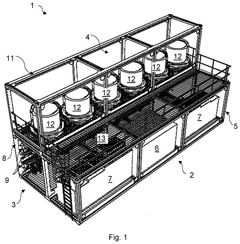
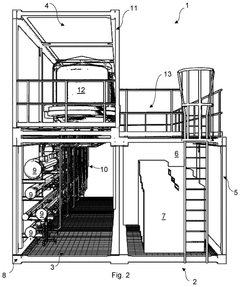
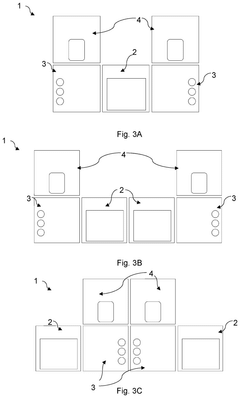
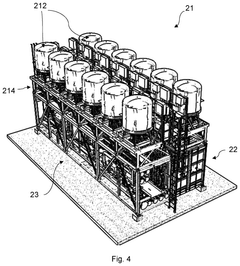
- The arrangement of Solid Oxide Electrolysis cores above power supply and piping modules, with compact design of power supply and fluidic transfer components, reduces the footprint and simplifies maintenance by keeping connections short and accessible.
Solid Oxide Electrolysis Cell, Method for Manufacturing Solid Oxide Electrolysis Cell, Solid Oxide Electrolysis Module, Electrochemical Device, and Energy System
PatentPendingUS20250207267A1
Innovation
- Incorporating a first electrode layer with specific pore configurations, including pores of 0.75 μm² or more in the vertical cross section, and a metal support structure to manage oxygen release and prevent peeling, while using low-temperature processing to maintain structural integrity.


International Policy Harmonization Efforts
The global nature of climate change and energy transition challenges has prompted increasing efforts toward international policy harmonization for solid oxide electrolysis cell (SOEC) technologies. Currently, regulatory frameworks for SOECs vary significantly across regions, creating barriers to technology transfer, market development, and widespread adoption. The European Union leads with its comprehensive Hydrogen Strategy, which explicitly addresses electrolysis technologies including SOECs within its regulatory framework. The EU's approach integrates safety standards, efficiency requirements, and certification processes that specifically account for high-temperature electrolysis operations.
In contrast, the United States has adopted a more fragmented regulatory approach, with oversight divided between the Department of Energy, Environmental Protection Agency, and various state-level authorities. This has resulted in inconsistent standards that complicate interstate deployment of SOEC technologies. Japan and South Korea have developed specialized regulatory frameworks focused on hydrogen production technologies, with particular attention to high-temperature electrolysis systems and their integration with nuclear power sources.
Recent international coordination efforts have emerged through platforms such as the International Partnership for Hydrogen and Fuel Cells in the Economy (IPHE) and the Clean Energy Ministerial Hydrogen Initiative. These forums are working to develop common terminology, safety protocols, and performance metrics specifically for high-temperature electrolysis technologies. The International Electrotechnical Commission (IEC) has established Technical Committee 105, which is developing global standards for SOEC systems that address operational parameters, safety requirements, and testing methodologies.
The Mission Innovation initiative has created a dedicated working group on electrolysis technologies that focuses on regulatory alignment across member countries. This group has published recommendations for harmonized certification processes and technical standards that could facilitate international trade and technology transfer for SOEC systems. Additionally, the International Organization for Standardization (ISO) is developing standards under ISO/TC 197 that specifically address hydrogen production technologies including high-temperature electrolysis.
Bilateral agreements between major economies are also contributing to regulatory harmonization. The EU-Japan Partnership on Sustainable Hydrogen has established mutual recognition of certification standards for electrolysis technologies, while the US-India Strategic Clean Energy Partnership includes provisions for aligned regulatory approaches to advanced electrolysis systems. These efforts collectively aim to reduce market fragmentation and accelerate global deployment of SOEC technologies through consistent regulatory frameworks.
In contrast, the United States has adopted a more fragmented regulatory approach, with oversight divided between the Department of Energy, Environmental Protection Agency, and various state-level authorities. This has resulted in inconsistent standards that complicate interstate deployment of SOEC technologies. Japan and South Korea have developed specialized regulatory frameworks focused on hydrogen production technologies, with particular attention to high-temperature electrolysis systems and their integration with nuclear power sources.
Recent international coordination efforts have emerged through platforms such as the International Partnership for Hydrogen and Fuel Cells in the Economy (IPHE) and the Clean Energy Ministerial Hydrogen Initiative. These forums are working to develop common terminology, safety protocols, and performance metrics specifically for high-temperature electrolysis technologies. The International Electrotechnical Commission (IEC) has established Technical Committee 105, which is developing global standards for SOEC systems that address operational parameters, safety requirements, and testing methodologies.
The Mission Innovation initiative has created a dedicated working group on electrolysis technologies that focuses on regulatory alignment across member countries. This group has published recommendations for harmonized certification processes and technical standards that could facilitate international trade and technology transfer for SOEC systems. Additionally, the International Organization for Standardization (ISO) is developing standards under ISO/TC 197 that specifically address hydrogen production technologies including high-temperature electrolysis.
Bilateral agreements between major economies are also contributing to regulatory harmonization. The EU-Japan Partnership on Sustainable Hydrogen has established mutual recognition of certification standards for electrolysis technologies, while the US-India Strategic Clean Energy Partnership includes provisions for aligned regulatory approaches to advanced electrolysis systems. These efforts collectively aim to reduce market fragmentation and accelerate global deployment of SOEC technologies through consistent regulatory frameworks.
Environmental Impact Assessment Guidelines
Environmental Impact Assessment (EIA) guidelines for Solid Oxide Electrolysis Cells (SOECs) are increasingly critical as these technologies advance toward commercial deployment. Regulatory bodies worldwide have established frameworks that require comprehensive assessment of environmental impacts before SOEC installations can be approved. These guidelines typically mandate evaluation of air quality impacts, particularly regarding potential emissions of nitrogen oxides, sulfur dioxide, and particulate matter during operation and manufacturing processes.
Water resource management represents another crucial component of SOEC environmental assessment guidelines. Regulatory frameworks often require detailed analysis of water consumption patterns, potential contamination risks, and wastewater management strategies. This is particularly important for SOECs operating in water-stressed regions, where additional safeguards may be mandated.
Life cycle assessment (LCA) requirements have become standard in most jurisdictions' EIA guidelines for hydrogen production technologies. These assessments must quantify environmental impacts across the entire SOEC lifecycle - from raw material extraction through manufacturing, operation, and eventual decommissioning. The European Union's Hydrogen Strategy explicitly references the need for standardized LCA methodologies specific to electrolysis technologies.
Waste management protocols within EIA guidelines address the handling of spent materials, particularly ceramic components and rare earth elements used in SOECs. The EU Waste Electrical and Electronic Equipment (WEEE) Directive and similar regulations in other regions establish specific requirements for recycling and proper disposal of these materials, with increasing emphasis on circular economy principles.
Land use considerations feature prominently in SOEC environmental assessment guidelines, especially for large-scale installations. These typically require evaluation of habitat disruption, biodiversity impacts, and land restoration plans. In the United States, the National Environmental Policy Act (NEPA) process mandates thorough assessment of these factors for federally-funded SOEC projects.
Emerging regulatory trends indicate increasing integration of environmental justice considerations into EIA guidelines. This includes requirements to assess whether SOEC facilities might disproportionately impact vulnerable communities through land use changes, emissions, or other environmental factors. The US Environmental Protection Agency has recently strengthened these requirements for energy transition technologies.
Carbon accounting methodologies are becoming more sophisticated within regulatory frameworks governing SOECs. Guidelines increasingly require quantification of lifecycle greenhouse gas emissions and carbon intensity metrics, particularly important for SOECs powered by various electricity sources. These assessments help determine eligibility for green hydrogen certification schemes and associated financial incentives.
Water resource management represents another crucial component of SOEC environmental assessment guidelines. Regulatory frameworks often require detailed analysis of water consumption patterns, potential contamination risks, and wastewater management strategies. This is particularly important for SOECs operating in water-stressed regions, where additional safeguards may be mandated.
Life cycle assessment (LCA) requirements have become standard in most jurisdictions' EIA guidelines for hydrogen production technologies. These assessments must quantify environmental impacts across the entire SOEC lifecycle - from raw material extraction through manufacturing, operation, and eventual decommissioning. The European Union's Hydrogen Strategy explicitly references the need for standardized LCA methodologies specific to electrolysis technologies.
Waste management protocols within EIA guidelines address the handling of spent materials, particularly ceramic components and rare earth elements used in SOECs. The EU Waste Electrical and Electronic Equipment (WEEE) Directive and similar regulations in other regions establish specific requirements for recycling and proper disposal of these materials, with increasing emphasis on circular economy principles.
Land use considerations feature prominently in SOEC environmental assessment guidelines, especially for large-scale installations. These typically require evaluation of habitat disruption, biodiversity impacts, and land restoration plans. In the United States, the National Environmental Policy Act (NEPA) process mandates thorough assessment of these factors for federally-funded SOEC projects.
Emerging regulatory trends indicate increasing integration of environmental justice considerations into EIA guidelines. This includes requirements to assess whether SOEC facilities might disproportionately impact vulnerable communities through land use changes, emissions, or other environmental factors. The US Environmental Protection Agency has recently strengthened these requirements for energy transition technologies.
Carbon accounting methodologies are becoming more sophisticated within regulatory frameworks governing SOECs. Guidelines increasingly require quantification of lifecycle greenhouse gas emissions and carbon intensity metrics, particularly important for SOECs powered by various electricity sources. These assessments help determine eligibility for green hydrogen certification schemes and associated financial incentives.
Unlock deeper insights with Patsnap Eureka Quick Research — get a full tech report to explore trends and direct your research. Try now!
Generate Your Research Report Instantly with AI Agent
Supercharge your innovation with Patsnap Eureka AI Agent Platform!