
Method for synchronously detecting four viruses of carnation
A technology for simultaneous detection and detection methods, applied in the determination/inspection of microorganisms, biochemical equipment and methods, DNA/RNA fragments, etc., to achieve the effect of easy distinction, good compatibility, and appropriate fragment length difference
- Summary
- Abstract
- Description
- Claims
- Application Information
AI Technical Summary
Problems solved by technology
Method used
Image

Examples
Embodiment 1 4
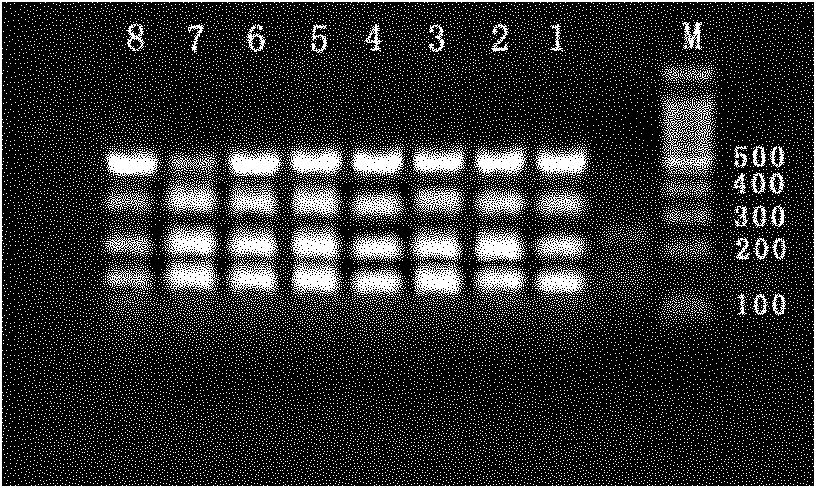
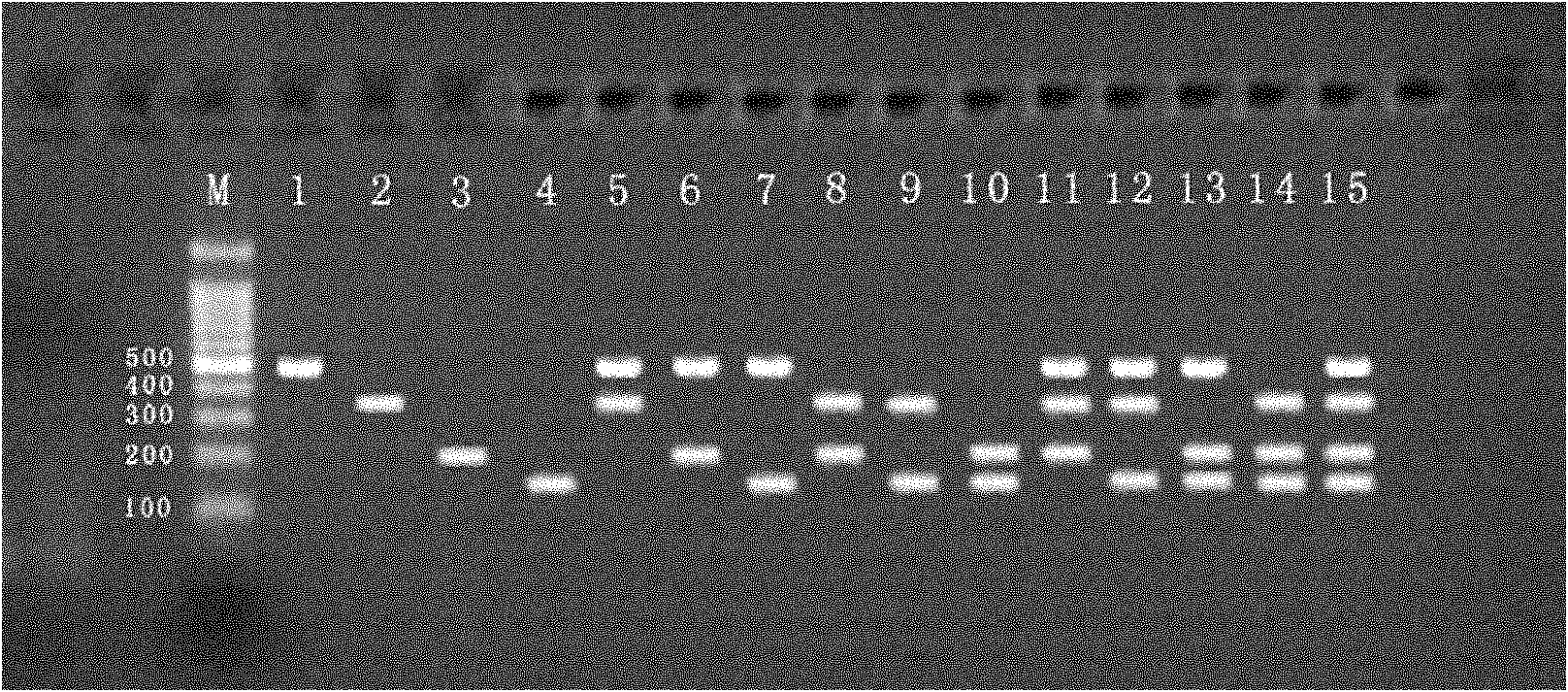
[0040] Example 1 Quadruple compound RT-MPCR technique detects carnation CarMV, CNFV, CRSV, CLV four kinds of viruses
[0041] 1.1 Primer design for CarMV, CNFV, CRSV, CLV
[0042] By designing primers with Primer 5.0 software, four pairs of specific viral primers with good compatibility were screened out, and the sequences are shown in the table below.
[0043] The primer sequence of table 1 CarMV, CNFV, CRSV, CLV
[0044]
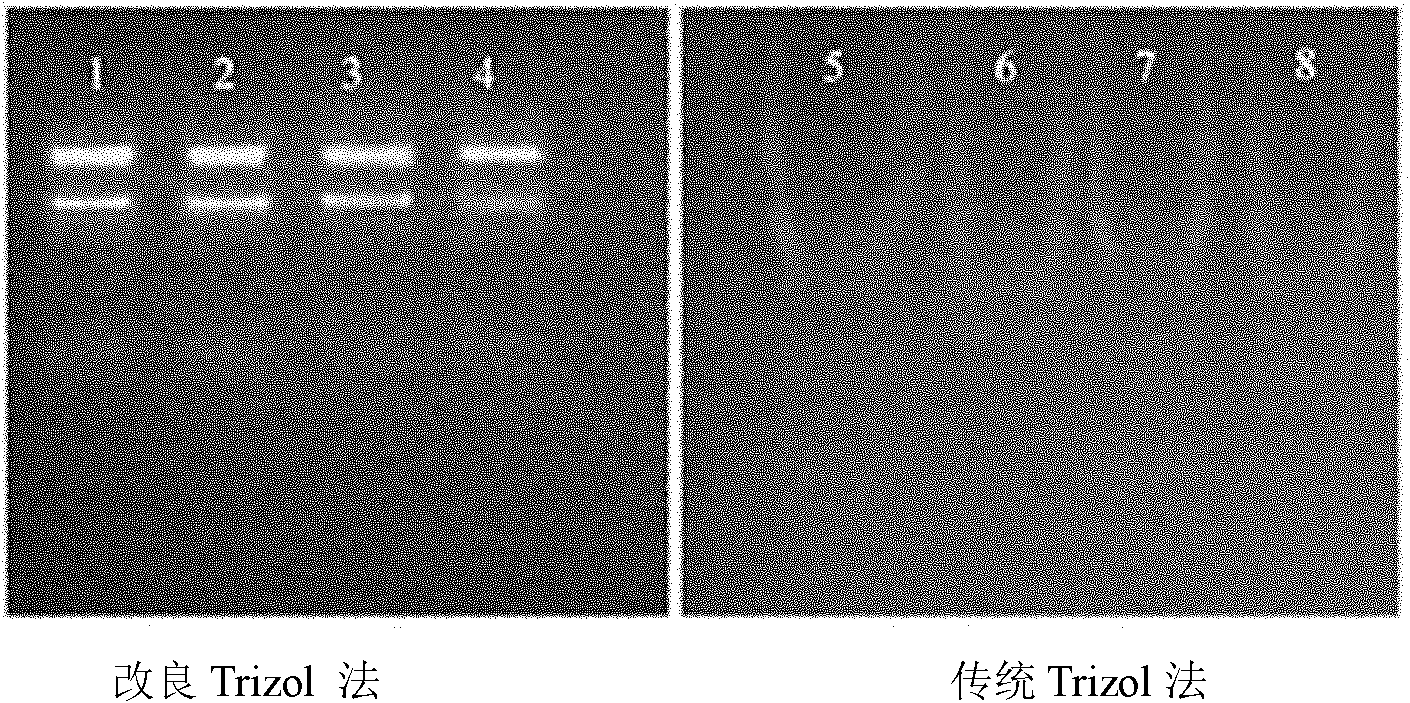
[0045] 1.2 RNA extraction
[0046] (1) Weigh 0.1 g of young leaves or petals of Carnation 'Master', 'Yafen' and 'Freedom' (purchased from Yunnan Academy of Agricultural Sciences) into a mortar, and grind into a very fine powder under liquid nitrogen, The powder was quickly transferred to a pre-cooled 1.5mL centrifuge tube, 1mL Trizol (Invitrogen) was added, mixed thoroughly with a vortex mixer, and left to stand at room temperature for 5min to fully lyse.
[0047] (2) Centrifuge at 13,000 rpm at 4°C for 10 min, absorb the supernatant, add an equal vo...
Embodiment 2
[0062] The RT-MPCR system optimization of embodiment 2 carnation four kinds of virus detection
[0063] In order to optimize the RT-MPCR system of the present invention, based on the RT-MPCR system established above, the components and concentrations in the PCR system were studied. The basic principles of optimizing the PCR system are: obtaining clear and stable target-specific products; low cost; short reaction time, etc.
[0064] The main factors affecting multiplex PCR include: the size of the fragment amplified by each pair of primers, primer design, pairing and competitive amplification between primers, annealing temperature and primer concentration.
[0065] 2.1 Optimization of annealing temperature
[0066] The annealing temperature (annealing temperature) has a very important influence on the success or failure of the PCR test.
[0067] In this experiment, TC-512 gradient PCR instrument from Techne Company was used to explore the annealing temperature of the reaction...
PUM
 Login to View More
 Abstract
Description
Claims
Application Information
 Login to View More