
Application of resveratrol in preparation of drugs for treatment of human bronchial epithelial cell injury
A technology of bronchial epithelium and resveratrol, applied in the direction of drug combination, effective ingredients of hydroxyl compounds, respiratory diseases, etc.
Patent Information
- Authority / Receiving Office
- CN · China
- Patent Type
- Applications(China)
- Current Assignee / Owner
- Publication Date
- 2019-05-31
- Estimated Expiration
- Not applicable · inactive patent
Smart Images
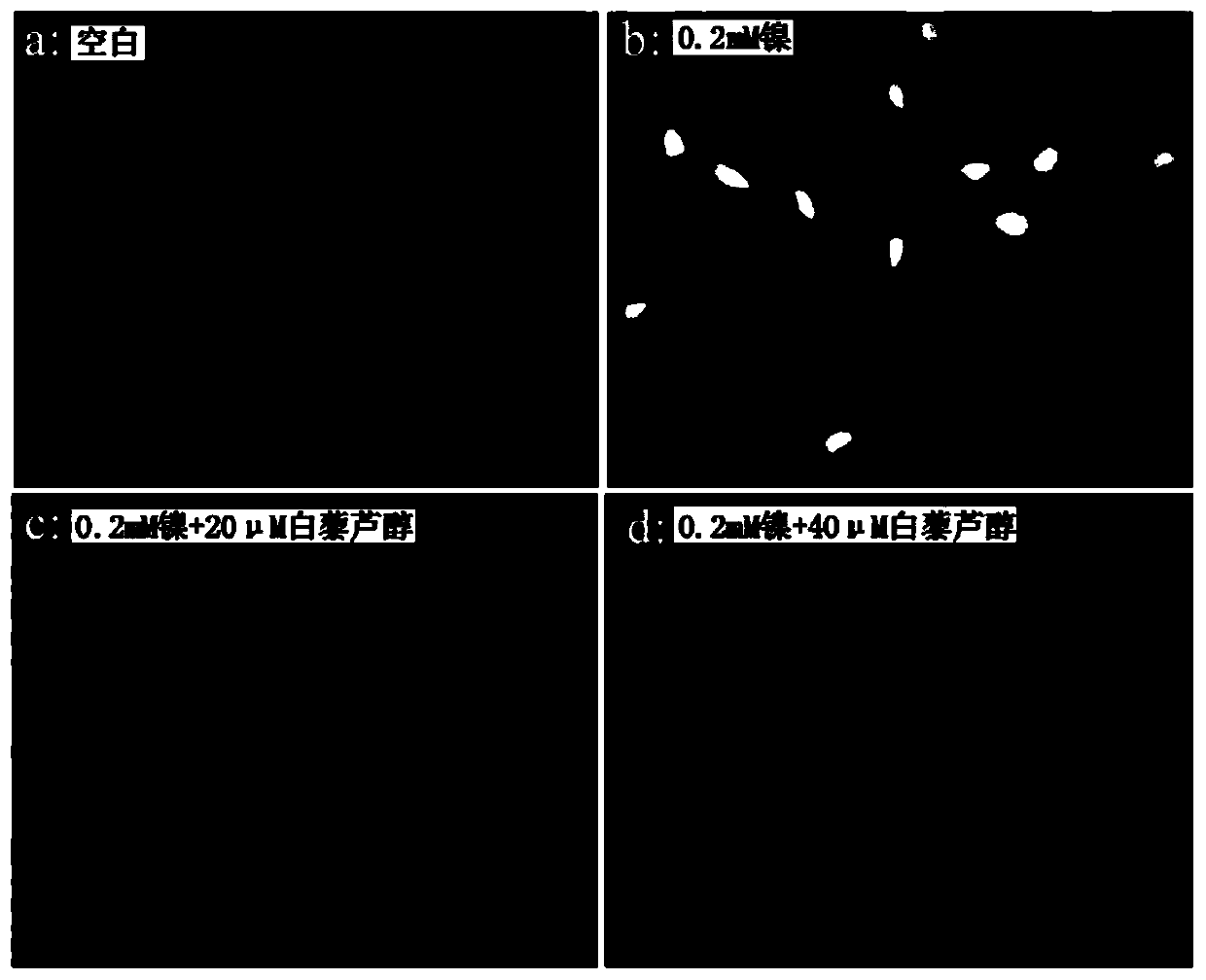
Figure 1 
Figure 2 
Figure 3
Abstract
Description
technical field
[0001] The invention belongs to the technical field of research and development of health food, and in particular relates to the application of resveratrol in the preparation of resisting the damage of human bronchial epithelial cells induced by divalent nickel ions. Background technique
[0002] Heavy metal pollution refers to environmental pollution caused by heavy metals or their compounds, mainly caused by human factors such as mining, waste gas discharge, sewage irrigation, and the use of products with heavy metals exceeding the standard. Heavy metals cannot be degraded by microorganisms and can be passed and enriched through the food chain, which poses a great potential threat to humans and other organisms. Due to human activities, the content of heavy metals in the environment has increased, exceeding the normal range, directly endangering human health and deteriorating the quality of the environment. Heavy metals enter the human body through breathin...
Examples
Embodiment 1
[0034] 1. Resveratrol inhibited the production of ROS in BEAS-2B cells damaged by nickel ions.
[0035] Methods: Human pulmonary bronchial epithelial cells (BEAS-2B) in the logarithmic growth phase were inoculated into 12-well culture plates, and placed at 37°C, 5% CO 2 Cells were cultured overnight in an incubator to adhere to the wall. Different concentrations of resveratrol (20 and 40 μM) were added, placed in an incubator for pre-incubation for 3 h, and then 0.2 mM nickel was added to continue culturing in the incubator for 24 h. Remove the culture medium, rinse once with PBS, add diluted ROS fluorescent probe DCFH-DA with a final concentration of 50uM, wrap in tin foil, and incubate in a 37°C incubator for 45min. After fixing with 4% paraformaldehyde at room temperature for 30 min, the cells were washed 3 times with PBS. After sealing, observe under the fluorescence microscope, the results are as follows: figure 1 shown.
[0036] Reactive oxygen species (ROS) are a by...