
Clique based clustering for named entity recognition system
a named entity recognition and clustering technology, applied in the field of clustering and classification arts, informational arts, computer arts, etc., can solve the problems of limiting flexibility, high computational complexity, and difficulty in manually, automatically, or semi-automatically assigning annotations or labels to a large number of groups
- Summary
- Abstract
- Description
- Claims
- Application Information
AI Technical Summary
Problems solved by technology
Method used
Image

Examples
Embodiment Construction
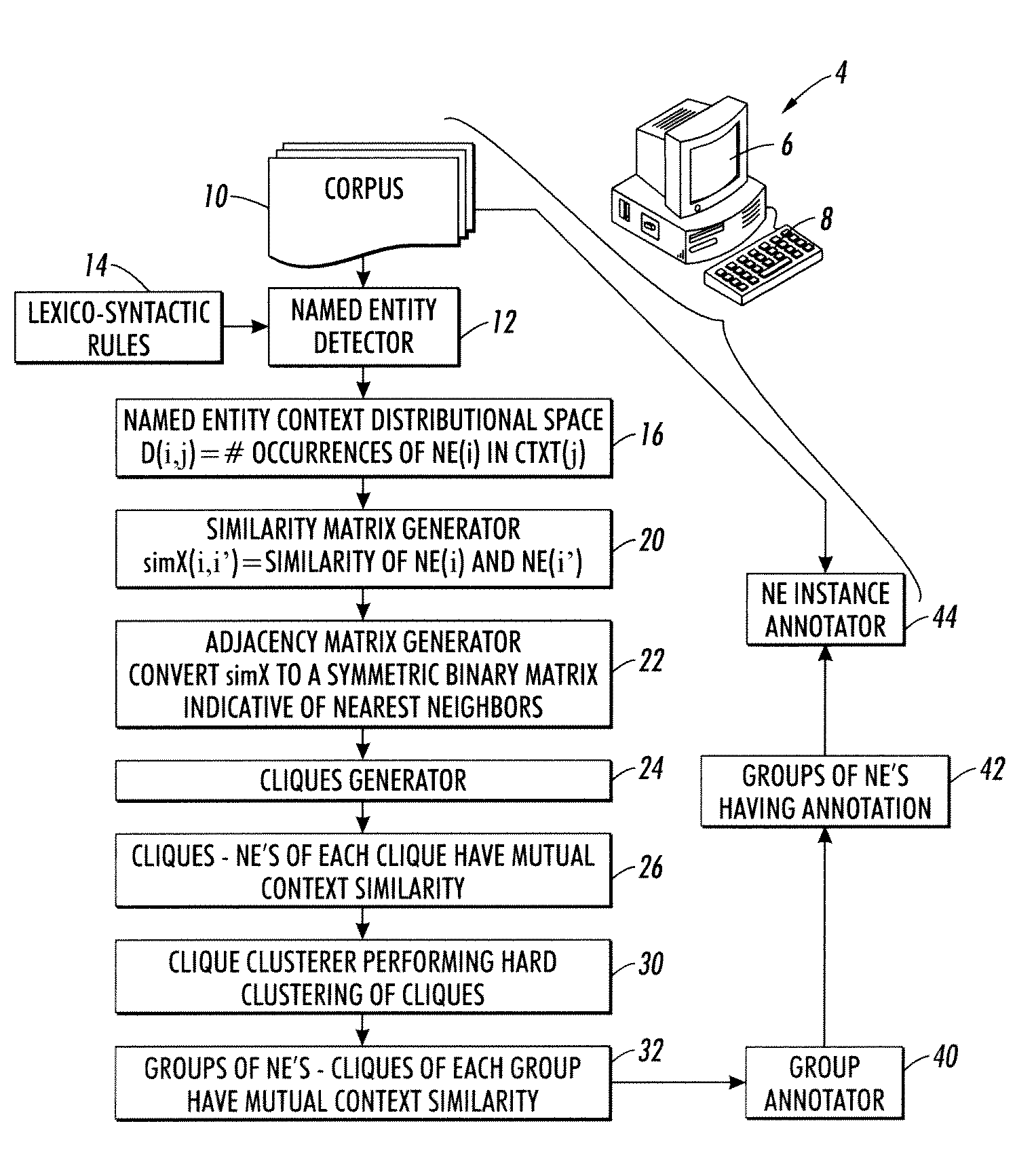
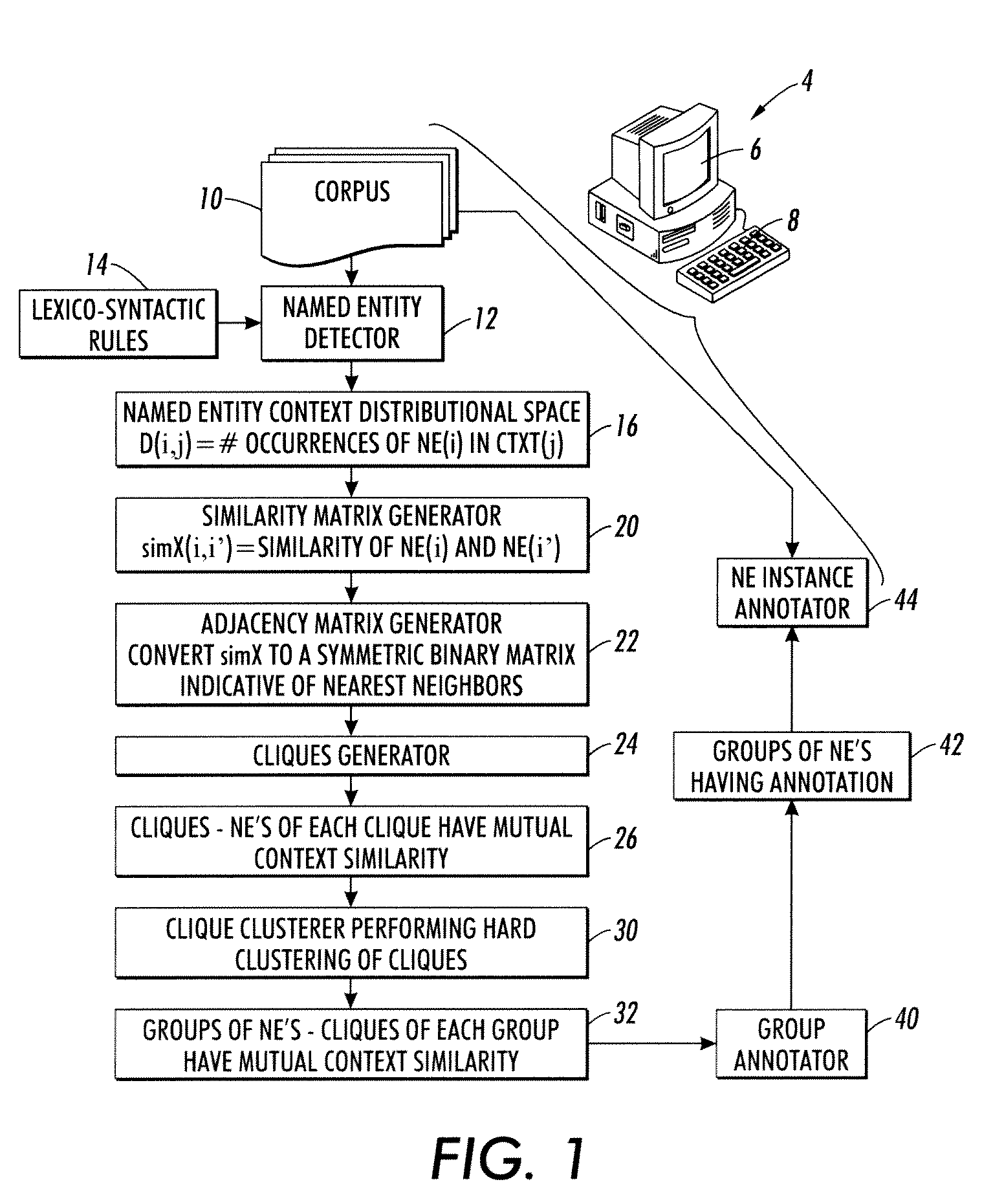
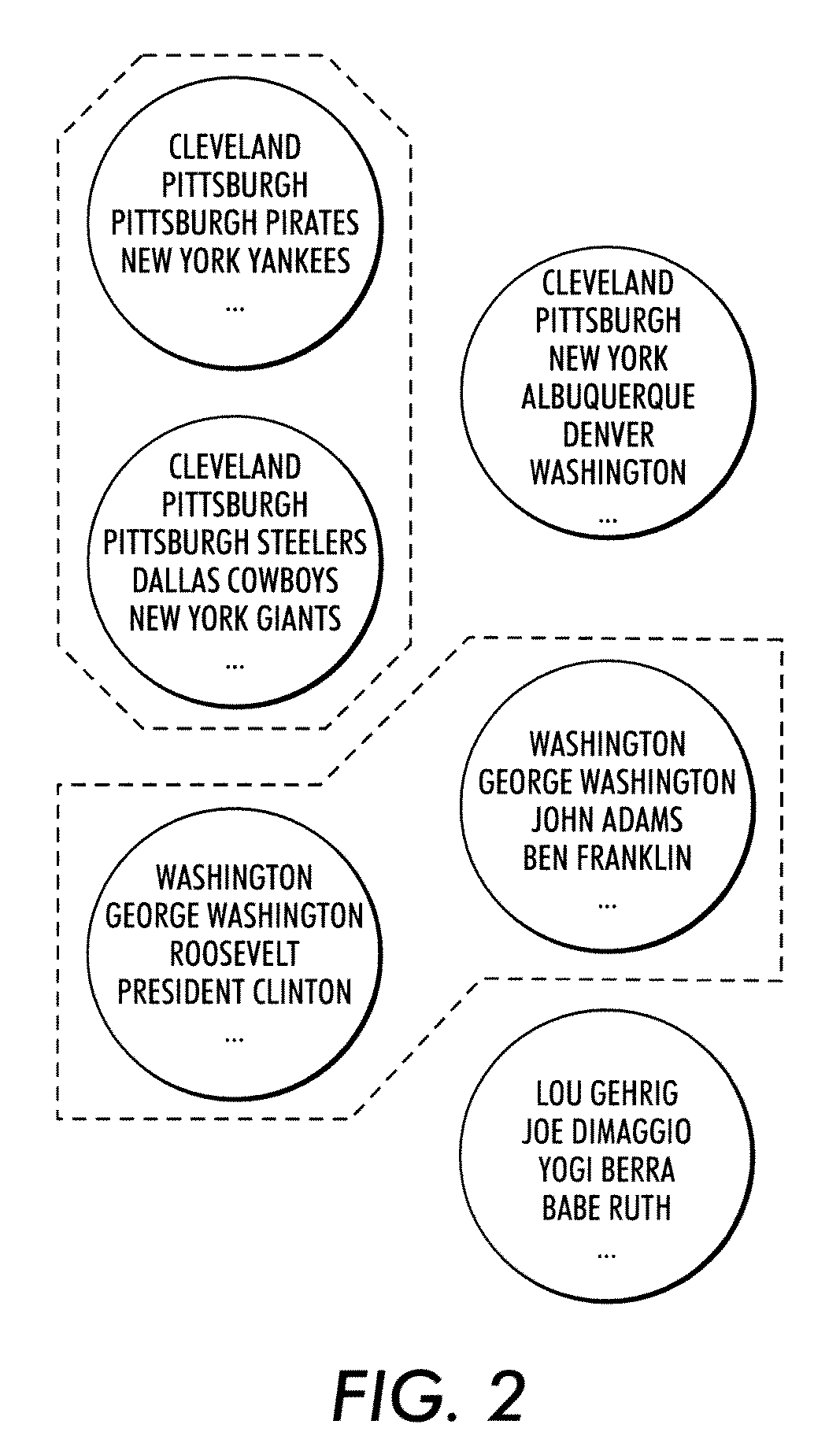
[0010]The soft clustering approaches disclosed herein employ clustering of cliques to generate nonexclusive groups without designating a priori the number of groups. Cliques, as used herein, are nonexclusive groups of items in which every pair of items in the clique has similarity of features. This requirement of pairwise similarity for each pair of items in the clique is a strong requirement, which typically leads to generation of a large number of cliques, some of which may have few items. Thus, grouping into cliques provide high specificity, and additionally as nonexclusive groupings such cliques comport with the nonexclusivity requirement of soft clustering.
[0011]On the other hand, clique grouping techniques tend to generate a large number of small cliques, due to the requirement that each item of the clique must exhibit pairwise similarity with every other item in the clique. Having many small cliques can be problematic for applications such as named entity recognition.
[0012]Th...
PUM
 Login to View More
 Abstract
Description
Claims
Application Information
 Login to View More