
Toe piece for gliding apparatus and gliding apparatus equipped with such binding
- Summary
- Abstract
- Description
- Claims
- Application Information
AI Technical Summary
Benefits of technology
Problems solved by technology
Method used
Image

Examples
Embodiment Construction
[0041]The same elements are designated by the same reference numerals in all of the drawing figures.
[0042]In the following description, reference will be made to terms such as “horizontal”, “vertical”, “longitudinal”, “transverse”, “upper”, “lower”, “top”, “bottom”, “front”, and “rear”. These terms should be considered as relative with respect to the normal position which the retaining device occupies on a ski, and the normal advance direction of the ski. In addition, the term “upright” is used to describe elements which, when mounted on a ski, extend upward in relation to the ski. These elements are then oriented substantially vertically. Similarly, the term “recumbent” is used for element which, when mounted on a ski, extend substantially in a plane parallel to ski. These elements are then oriented substantially horizontally. For example, “longitudinal” refers to a direction along the longitudinal axis of the ski, or along vertical plane containing such axis.
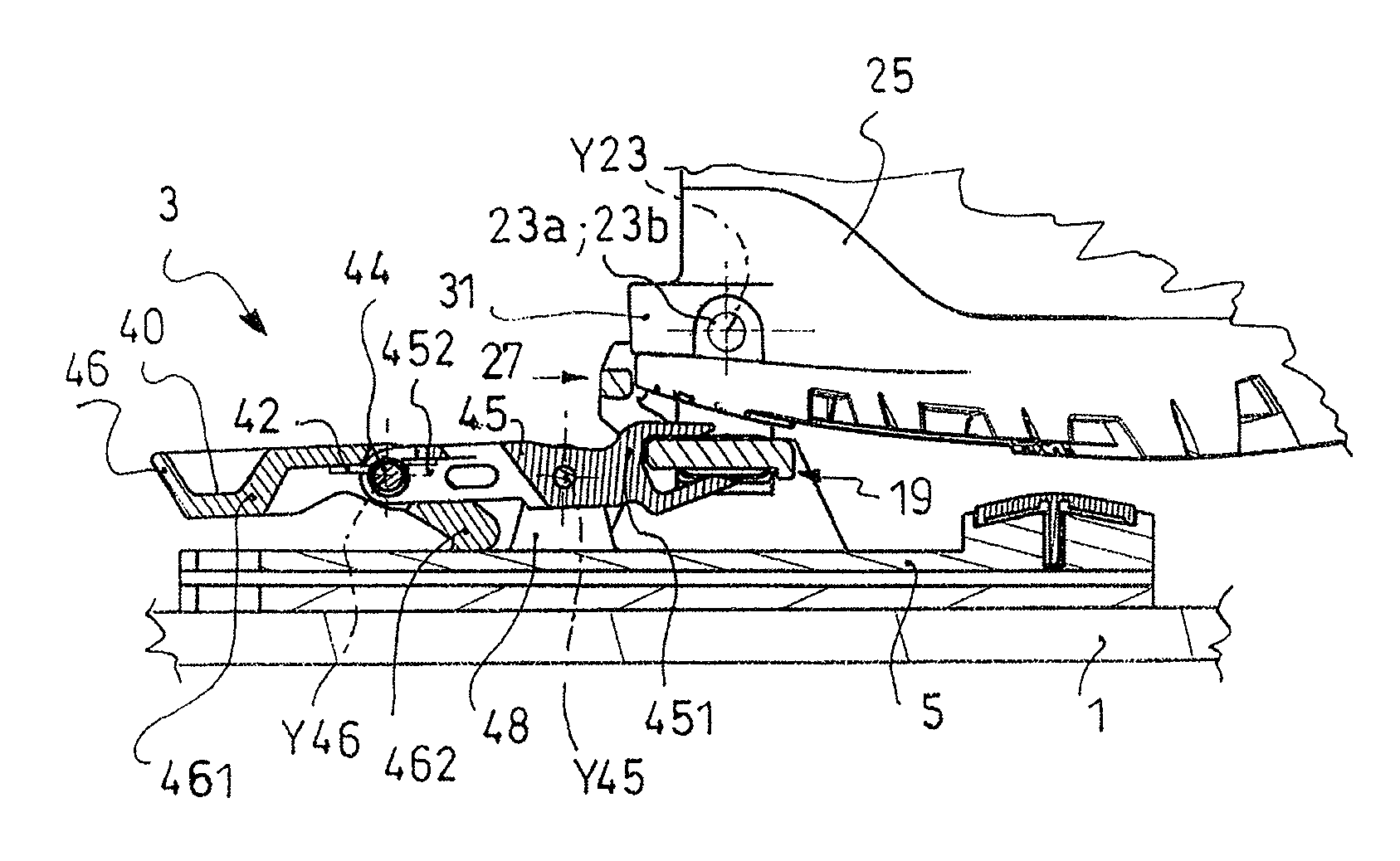
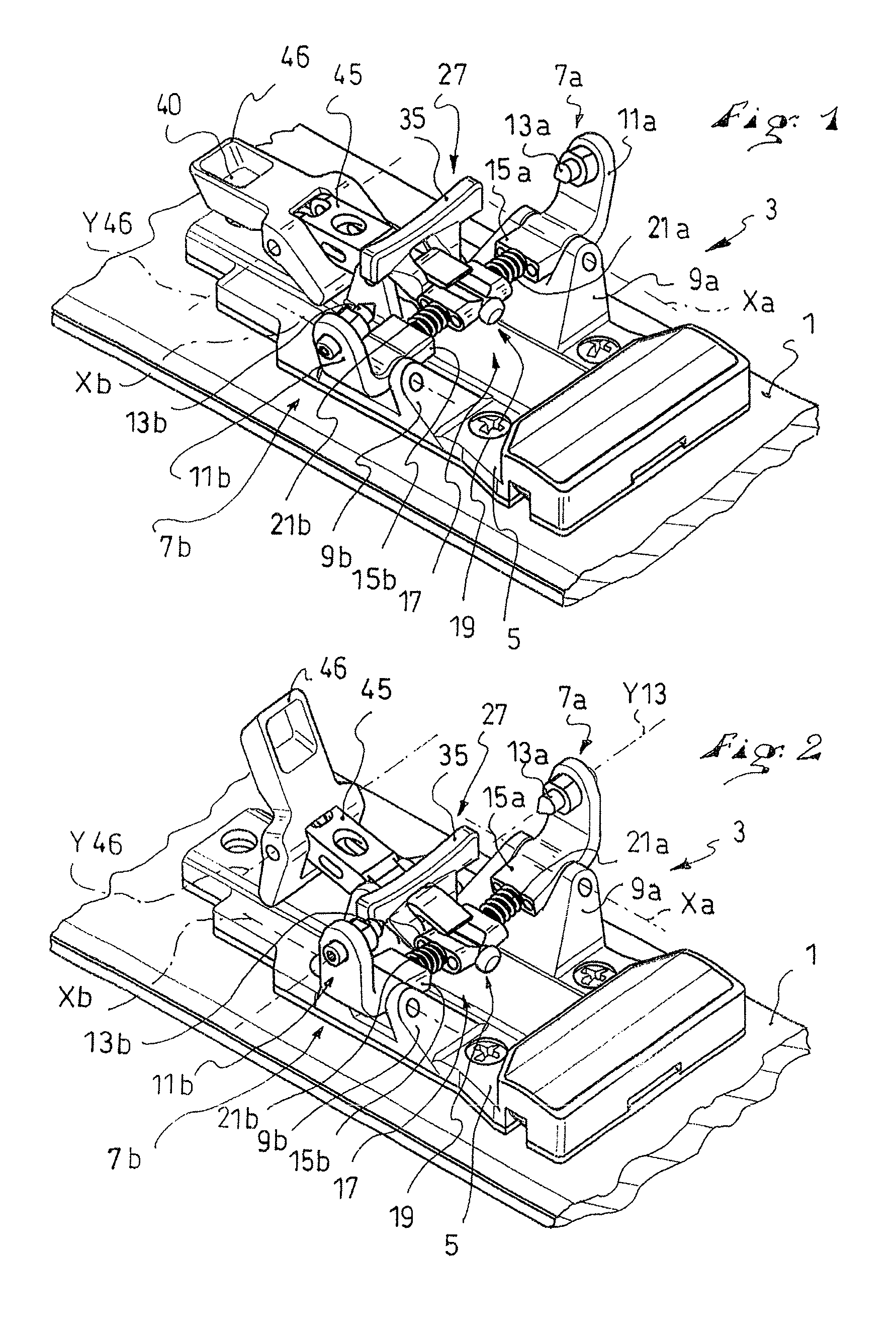
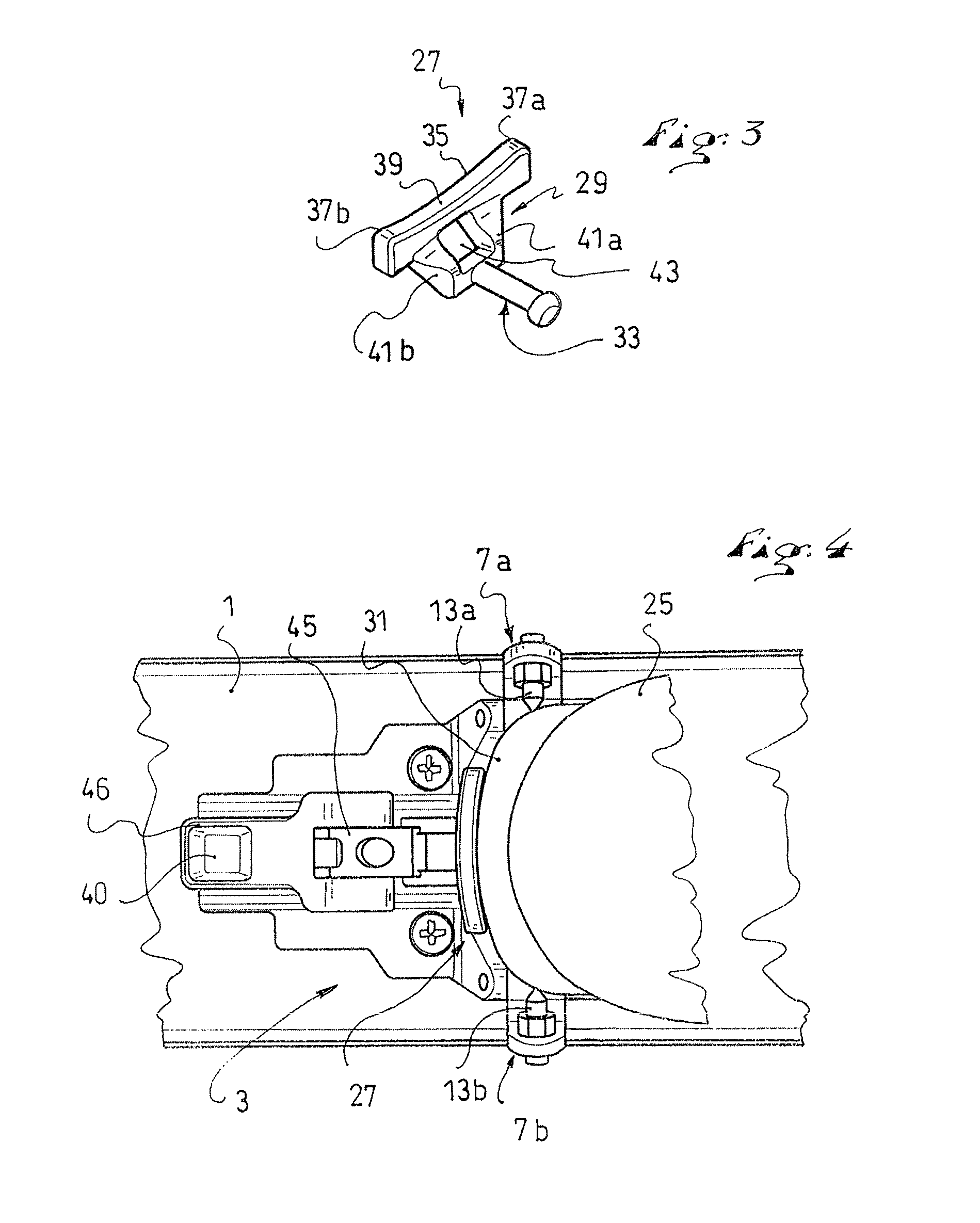
[0043]FIG. 1 shows a f...
PUM
 Login to View More
 Abstract
Description
Claims
Application Information
 Login to View More