
Guidewire devices having distally extending coils and shapeable tips
a technology of shapeable tips and guidewires, which is applied in the field of guidewire devices having shapeable tips and distally extending coils, can solve the problems of increasing frictional surface contact between the guidewire and the vasculature, hindering the movement of the guidewire through the vasculature passage, and several limitations, so as to reduce the tendency of resilient forces and achieve effective torquability
- Summary
- Abstract
- Description
- Claims
- Application Information
AI Technical Summary
Benefits of technology
Problems solved by technology
Method used
Image

Examples
Embodiment Construction
Introduction
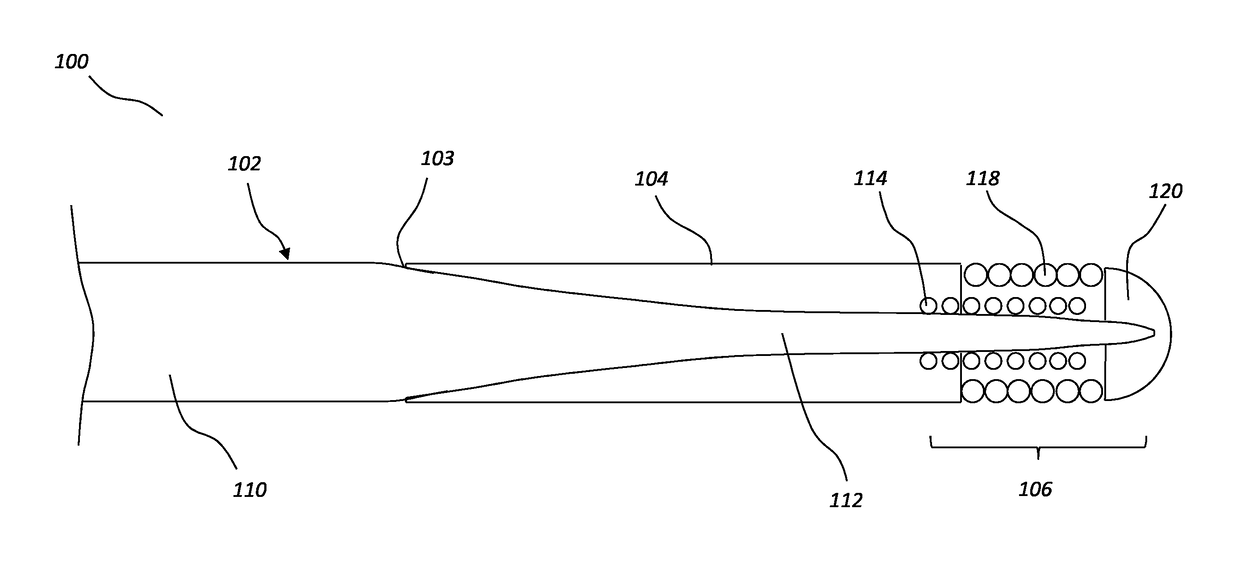
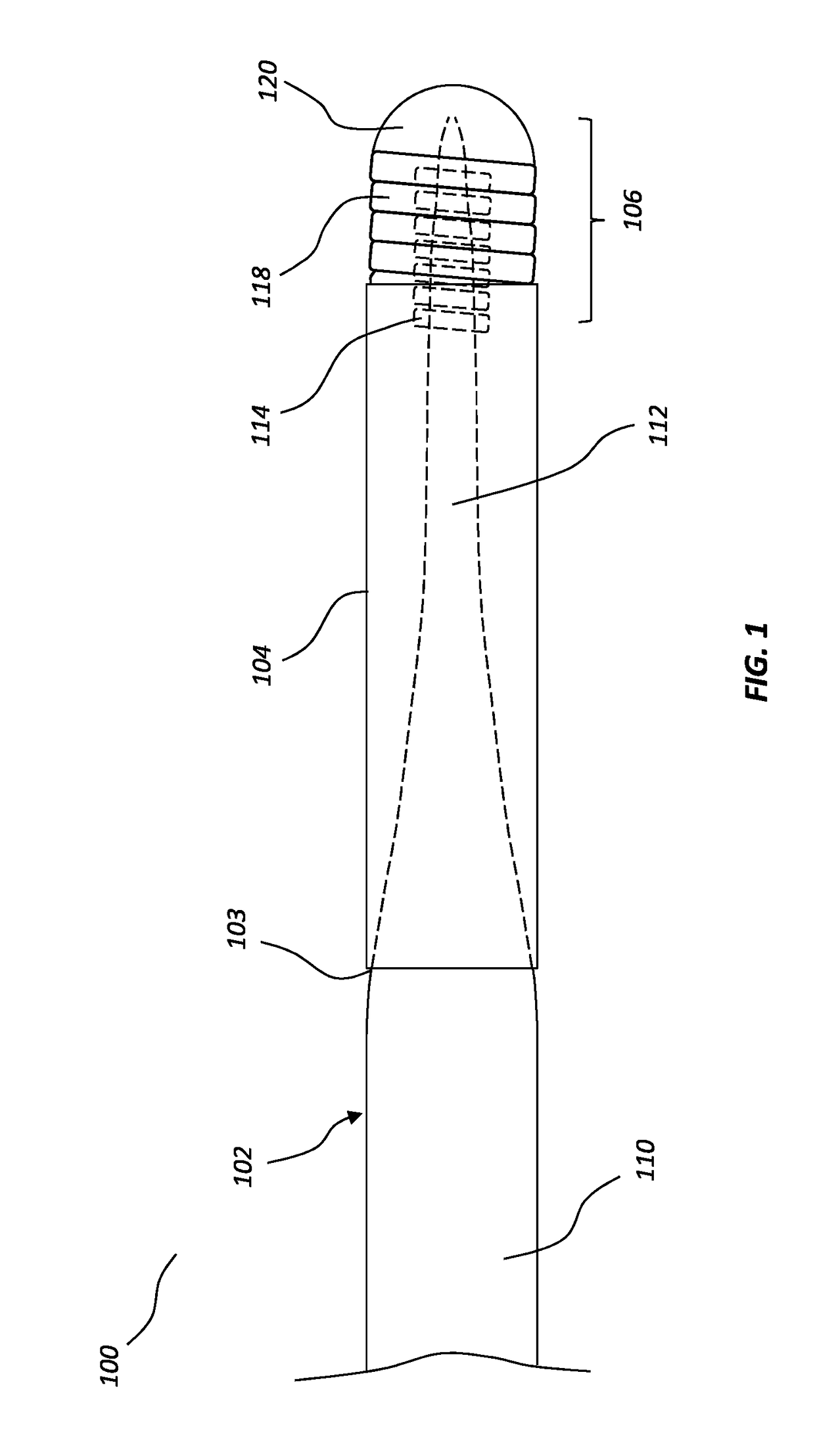
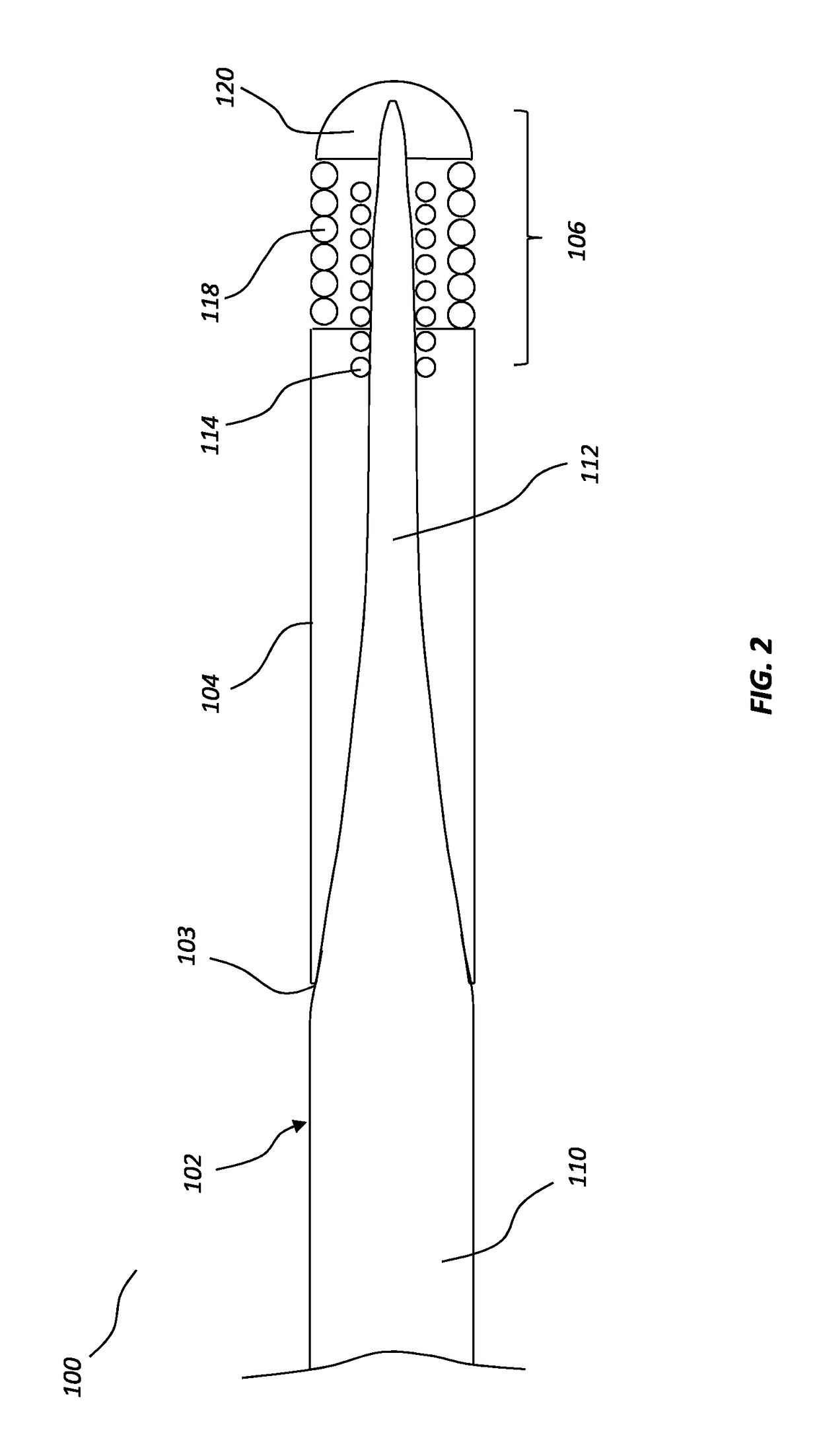
[0017]The present disclosure relates to guidewire devices providing effective anatomical navigation capabilities. The ability to steer and direct a guidewire to a targeted anatomical location depends on balancing and optimizing tradeoffs between torquability and the ability to maintain a shaped tip. A guidewire device may include a shapeable tip to allow an operator to point the tip in a desired direction within the vasculature by rotating the distal tip. However, if the torquability of such a guidewire device is insufficient, the operator will be unable to transmit torsional forces all the way to the shaped distal tip to control the orientation of the shaped distal tip. This hindrance will become increasingly problematic as the guidewire device is advanced farther into the vasculature and experiences increasing frictional resistance. In addition, if a guidewire device is unable to properly form and maintain a shaped tip, it will have limited ability to adjust tip orient...
PUM
| Property | Measurement | Unit |
|---|---|---|
| distance | aaaaa | aaaaa |
| distance | aaaaa | aaaaa |
| length | aaaaa | aaaaa |
Abstract
Description
Claims
Application Information
 Login to View More