
Clamping connector for spinal fixation systems
a technology of fixing system and connector, which is applied in the field of spinal fixation system, can solve the problems of unreliable durability, difficult to properly position the rod and the coupling elements, and the pedicle screws may not properly align with the longitudinal spinal rod
- Summary
- Abstract
- Description
- Claims
- Application Information
AI Technical Summary
Benefits of technology
Problems solved by technology
Method used
Image

Examples
Embodiment Construction
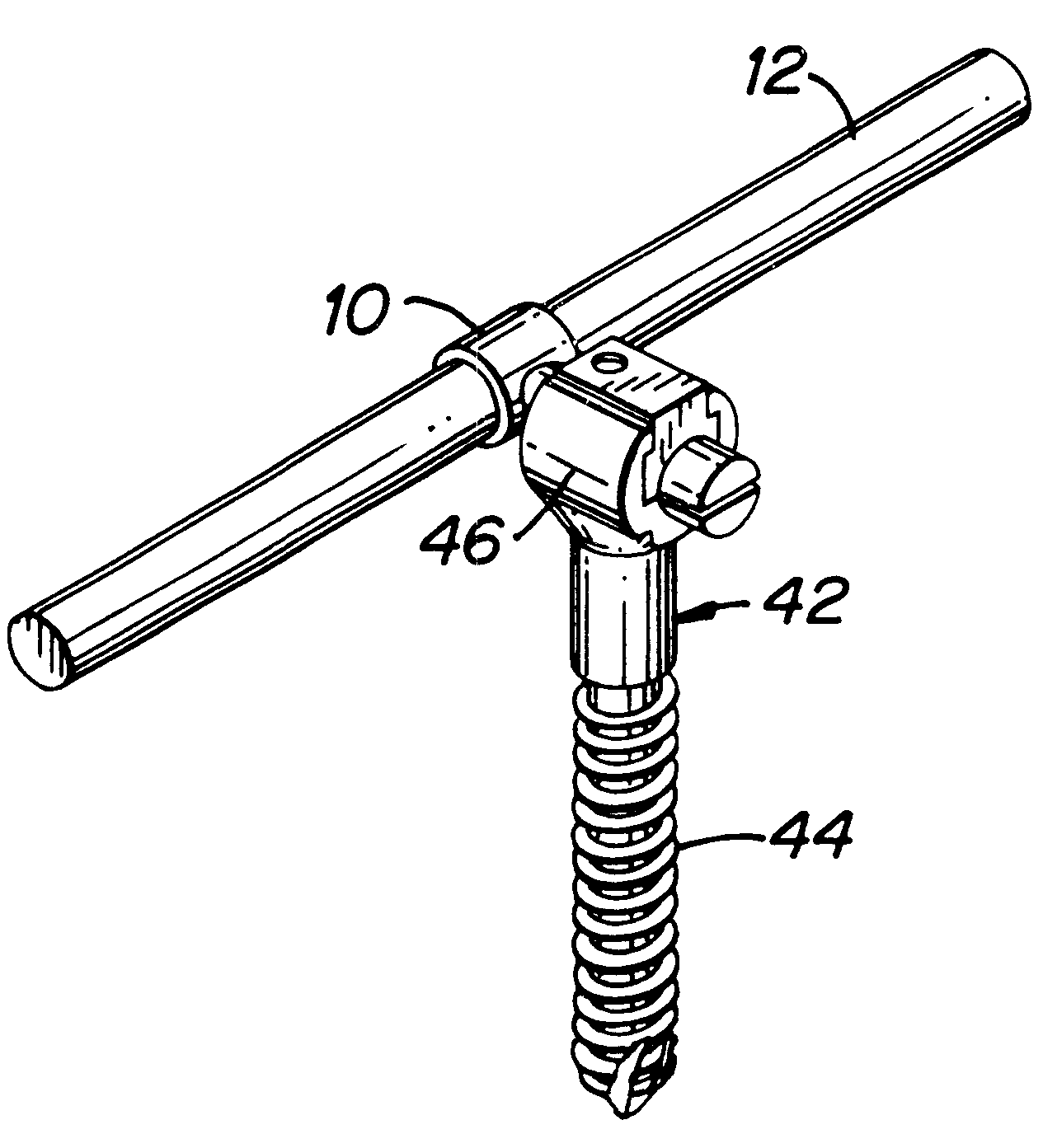
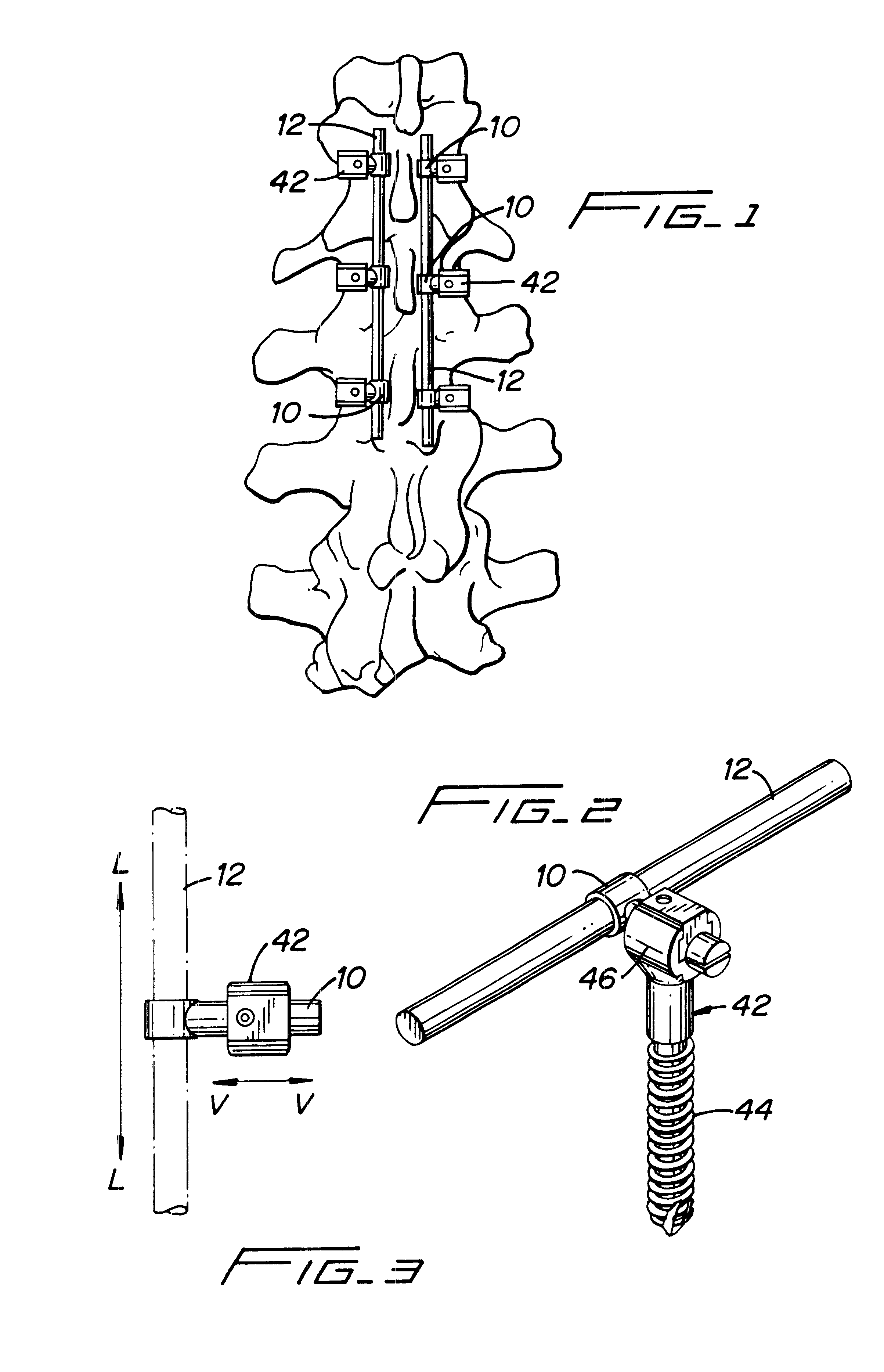
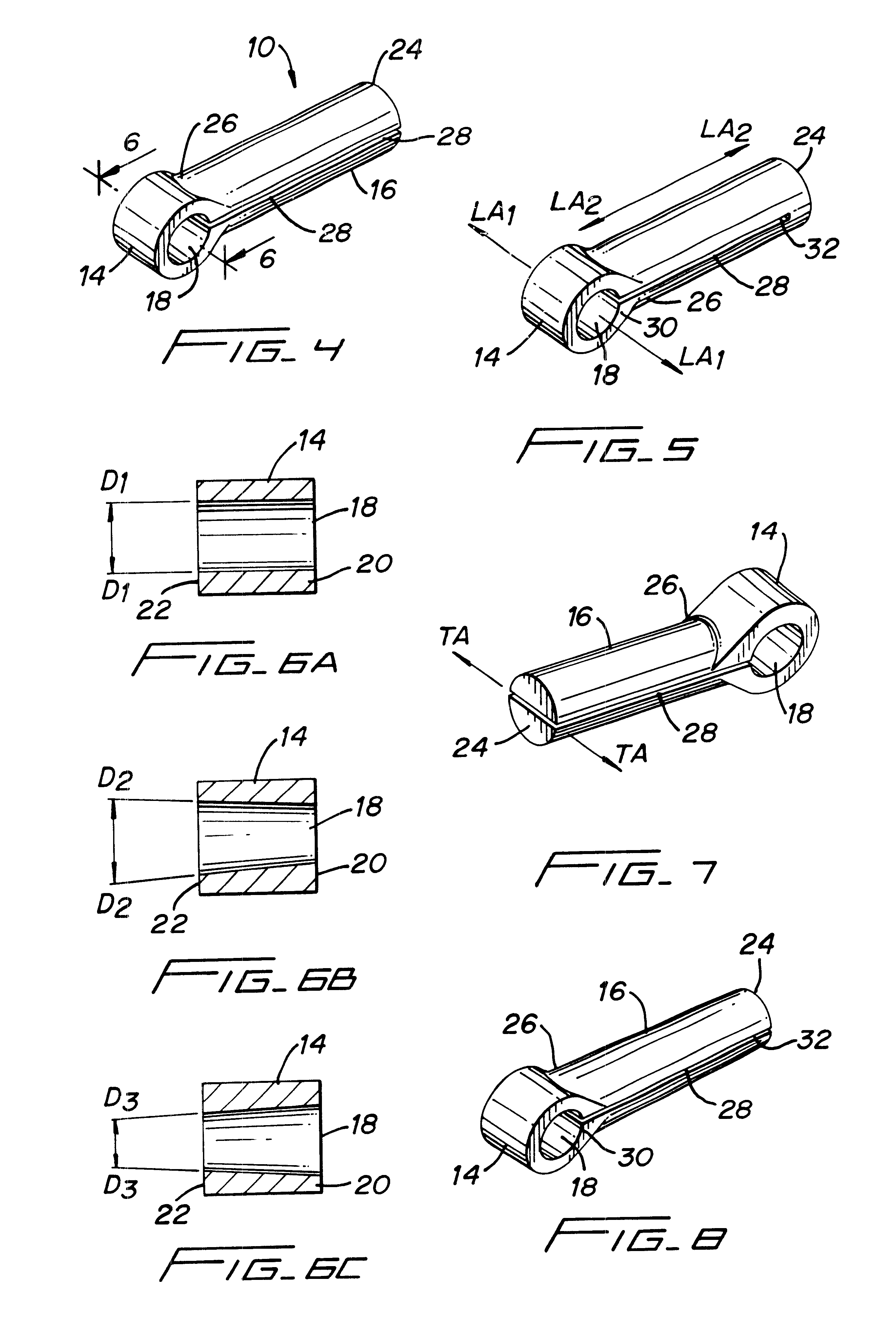
The present invention is directed to a one piece connector 10 that is used in spinal fixation systems such as the one shown in FIG. 1. Spinal fixation systems typically include spinal rods 12 and pedicle screws 42 or bone bolts (not shown). The one piece connector 10 includes a body portion 14 and a leg portion 16 (FIGS. 4 and 7). Body portion 14, in a preferred embodiment is generally cylindrical in shape with a longitudinal through bore 18 that has a longitudinal axis LA1--LA1, as shown in FIG. 5. However, body portion 14 can also have other shapes, such as for example, a spherical, oval or cubic shape. Bore 18 has a first end 20 and a second end 22 and an inside diameter D1--D1 (FIG. 6A) that in one embodiment is a constant dimension along the longitudinal axis LA1--LA1 from first end 20 to second end 22. Alternatively bore 18 can taper from a smaller inside diameter at first end 20 to a larger inside diameter D2--D2 at end 22 as shown in FIG. 6B or conversely bore 18 can taper f...
PUM
 Login to View More
 Abstract
Description
Claims
Application Information
 Login to View More