
Method and composition for removing uremic toxins in dialysis processes
a dialysis process and uremic toxins technology, applied in the field of dialysis processes, can solve the problems of renal failure, inability to excrete the daily metabolic load of fixed hydrogen ions, and inability to balance water, minerals, etc., and achieve the effect of improving the dialysis procedur
Patent Information
- Authority / Receiving Office
- US · United States
- Current Assignee / Owner
- Publication Date
- 2007-07-10
Smart Images
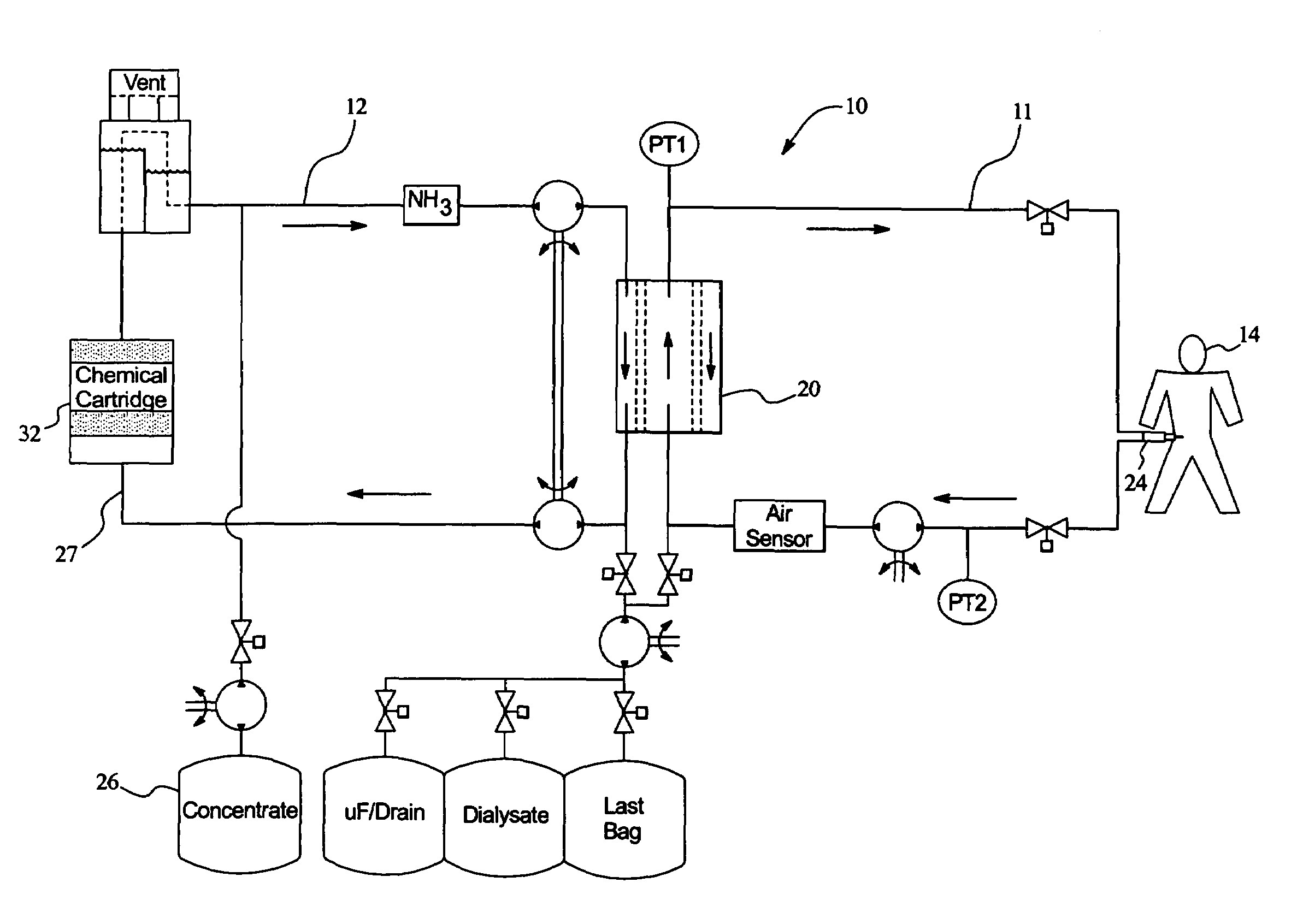
Figure 1 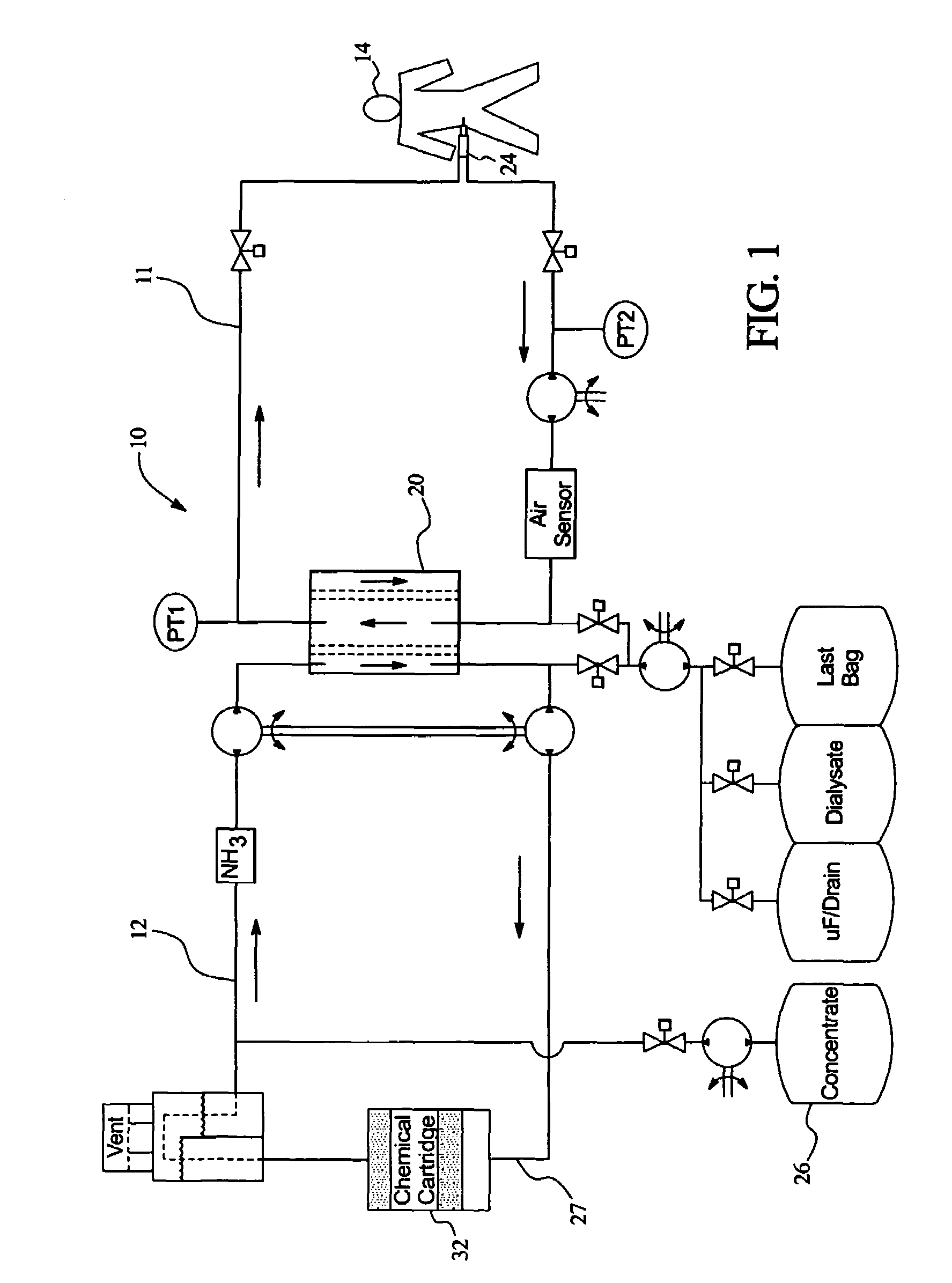
Figure 2 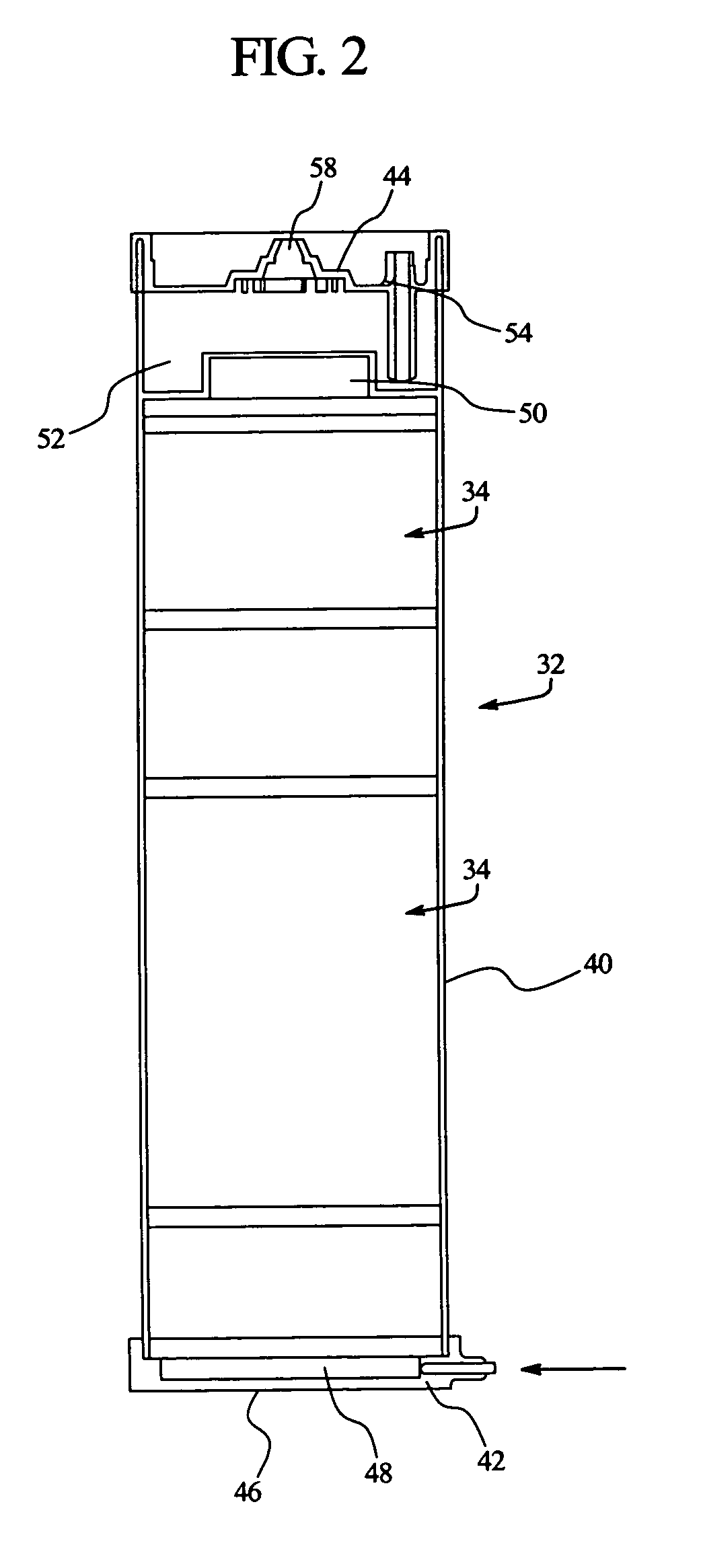
Figure 3
Abstract
Description
BACKGROUND OF THE INVENTION
[0001] The present invention relates generally to methods of treatment. More specifically, the present invention relates to dialysis processes.
[0002] Due to disease or insult or other causes, the renal system can fail. In renal failure of any cause, there are several physiological derangements. The balance of water, minerals (Na, K, Cl, Ca, P, Mg, SO4) and the excretion of daily metabolic load of fixed hydrogen ions is no longer possible in renal failure. During renal failure, toxic end products of nitrogen metabolism (urea, creatinine, uric acid, and others) can accumulate in blood and tissues.
[0003] Dialysis processes have been devised for the separation of elements in a solution by diffusion across a semi-permeable membrane (diffusive solute transport) down a concentration gradient. Principally, dialysis comprises two methods: hemodialysis and peritoneal dialysis.
[0004] Hemodialysis treatment utilizes the patient's blood to remove waste, toxins, and excess ...
Examples
Embodiment Construction
[0064]The present invention relates to methods of providing dialysis treatment. Additionally, the present invention relates to systems for providing dialysis. More specifically, in an embodiment, the present invention provides improved cartridges that are used to remove uremic toxins.
[0065]In a preferred embodiment, the present invention relates to systems and components for use in continuous flow peritoneal dialysis procedure. However, it should be noted that the present invention can be used in a variety of methods for providing dialysis including hemodialysis and peritoneal dialysis
[0066]Continuous flow peritoneal dialysis is achieved by continuously infusing into and draining from the peritoneum a solution. For example, a closed loop or recirculating dialysis can be used where the solution is continuously recirculated to the patient. This can have the advantage of substantially reducing the amount of solution needed for a treatment. However, it is necessary to regenerate the sol...