
Use of high pressure processing to aid in the hair or feather removal from animal carcasses/hides
a high-pressure processing and animal carcass technology, applied in poultry processing, slaughtering accessories, butchering, etc., can solve the problems of difficult to remove hair from dark haired pigs than from white haired pigs, and difficult to remove hair and feathers from carcasses
- Summary
- Abstract
- Description
- Claims
- Application Information
AI Technical Summary
Benefits of technology
Problems solved by technology
Method used
Image

Examples
example 1
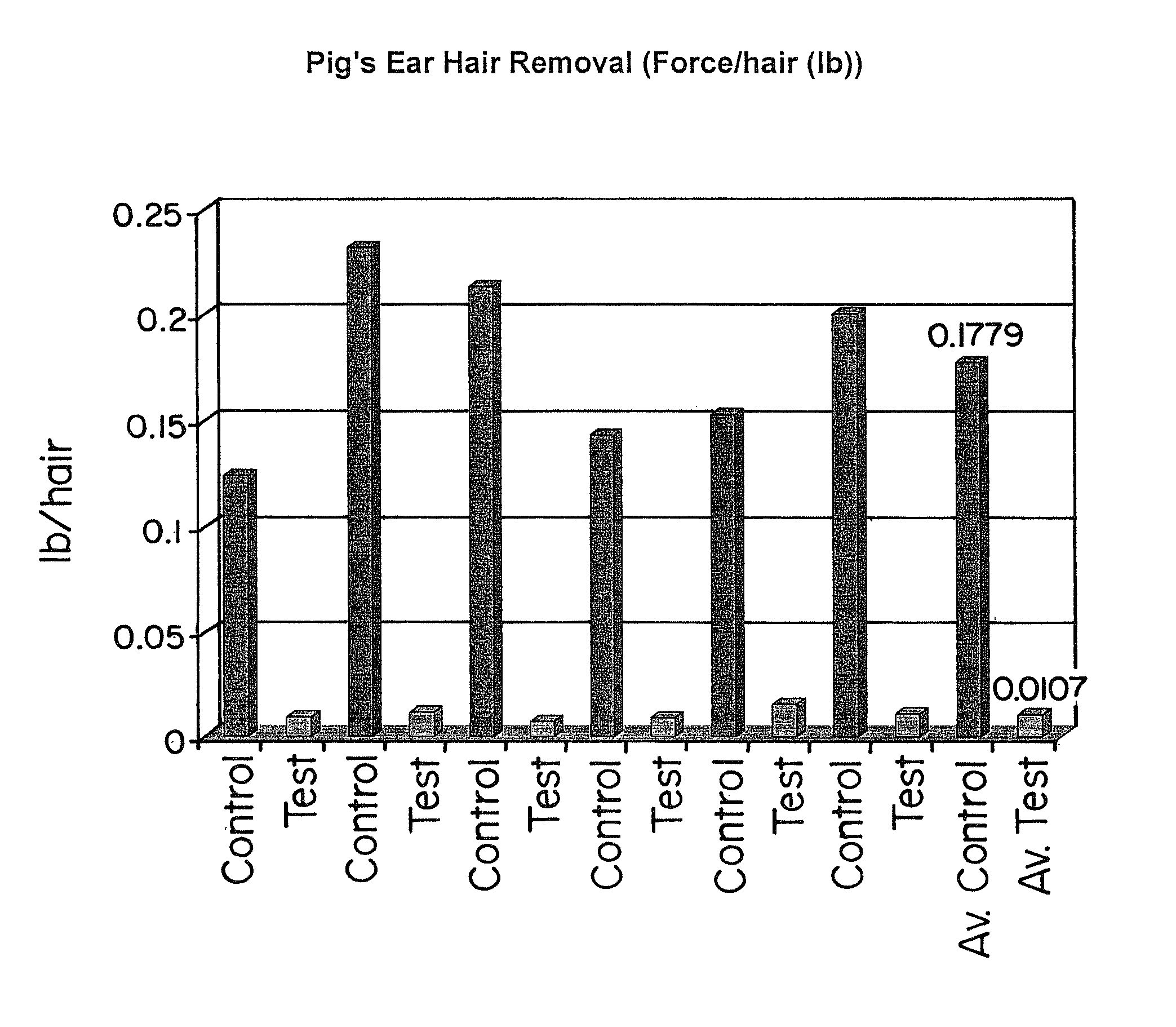
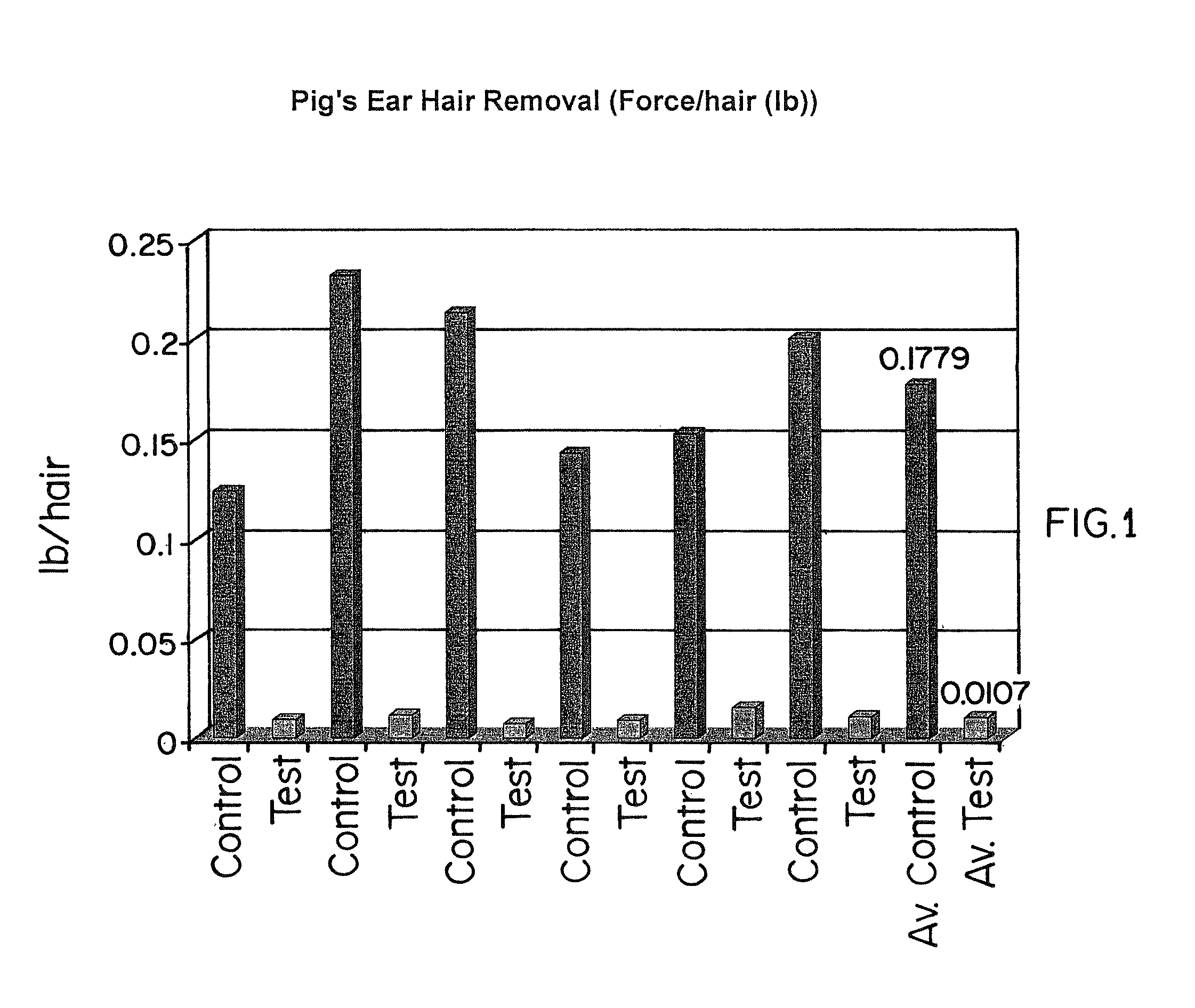
[0034]In the first example, two sets of paired ears were processed. Three measurements of the force required to remove hair from the skin were taken per ear. For the control ears, the test was conducted at room temperature and there was no scalding or further processing. For the test ears, the ears were subjected to a pressure of 225 MPa (megapascals) for 60 seconds. The water that was utilized in the vessel of the high pressure processing equipment was at 40° F. As can be seen in FIG. 1, the amount of force required to remove the hair from the pig's ear is significantly less when it has been processed with high pressure processing. There was a significant difference in the six tests that were run. Compared to the control ears, the test ears required a ten fold reduction of force to remove hair, 0.0107 pounds versus 0.1779 pounds. For this example, and the other examples, a WBS program, attached on a T.A.T.O. Plus Texture Analyzer from Texture Technology Corp., Scarsdale, N.Y. 10583...
example 2
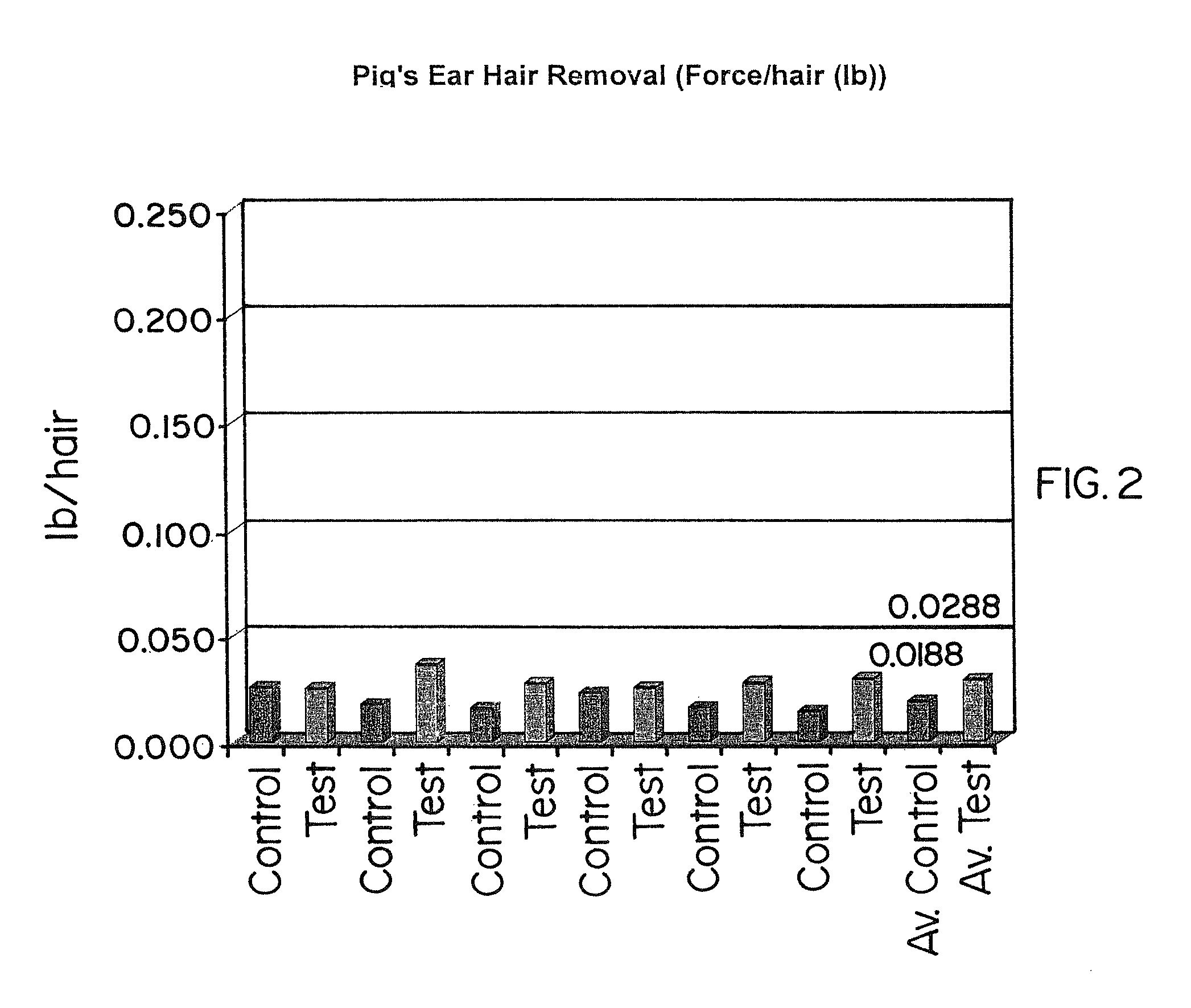
[0036]In example 2, two sets of paired ears were utilized for each test. Three measurements of the force required to remove hair from the skin were taken per ear. Control ears were scalded in 138° F. water for 5 to 6 minutes. The purpose of the hot water was to simulate the current commercial scald tank conditions. The measurements were made immediately after scalding. Test ears were subjected to high pressure processing at 225 MPa for 60 seconds. The water utilized in the vessel was approximately 40° F. and the measurements were taken shortly after being high pressure processed. As can be seen, the high pressure processing results in similar hair removal capabilities, but at lower water temperature than scalding. However, the water temperature for scalding is almost 100° F. higher than it is for the high pressure processing in this example. This higher temperature, for longer periods of time, detrimentally affects the quality of the hide and meat if the meat was also subjected to t...
example 3
[0037]The chart shown in FIG. 3 shows the results of pig ears being treated with high pressure processing and water temperature of approximately 95° F. The ears were treated for 15 seconds at various pressures, from 0 to 220 MPa. Example 3 demonstrates that the pressure should be above 50 MPa to have a positive effect on the loosening of the hair from pig ears. At 100 MPa and above, the hair removal is dramatically improved.
PUM
 Login to View More
 Abstract
Description
Claims
Application Information
 Login to View More