
Lead dioxide electrode, preparation method of lead dioxide electrode and application of lead dioxide electrode in treatment of reactive dyes
A lead dioxide and reactive dye technology, applied in the field of environmental pollution control, can solve the problems of many intermediate products, long process flow, slow treatment process, etc., and achieve the effects of simple operation, cost reduction and simple device
Patent Information
- Authority / Receiving Office
- CN · China
- Patent Type
- Applications(China)
- Current Assignee / Owner
- Publication Date
- 2012-08-22
- Estimated Expiration
- Not applicable · inactive patent
Smart Images
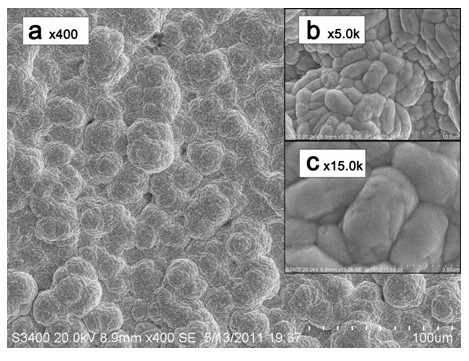
Figure 1 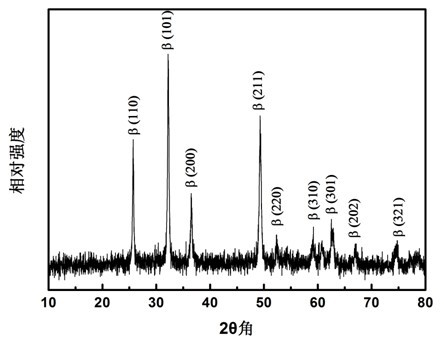
Figure 2 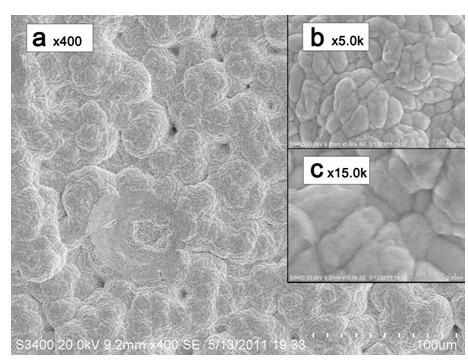
Figure 3
Abstract
Description
[0001] Technical field
[0002] The invention is the field of environmental pollution control. It specifically involves a method of electrochemical catalytic oxidation. Method preparation nano -nanotoxide electrodes and its application of active dyeing. Background technique
[0003] Dyes play a pivotal role in people's daily life, and have been widely used in many industries such as textiles, paper, leather, and food.However, due to the loss and residue during production and use, the dyes inevitably entered the wastewater and produced a large amount of dye wastewater.The complicated structure and composition of dyes cause obvious features of the "three highs and one low" (high color, high toxicity, high salinity, and low vibrato) of dye wastewater, which makes dye wastewater recognized as difficult to handle high -concentration organic wastewaterEssenceAs the largest country for dye production and use, the effective treatment of dye wastewater needs to be resolved urgently. [00...
Examples
Embodiment 1
[0036] 1) Grind the titanium plate successively with coarse and fine sandpaper, so that the surface of the titanium plate presents a uniform light gray luster.
[0037] 2) Immerse the polished titanium plate in 40 wt% NaOH solution, and wash it with alkali at 80 °C for 2 hours to remove grease and other pollutants on the surface of the titanium plate.
[0038] 3) The titanium plate after alkali washing was immersed in 15 wt% oxalic acid solution and pickled at 90 °C for 2 hours to remove the TiO on the surface of the titanium plate. 2 .
[0039] 4) The pickled titanium plate was used as the anode, the Pt electrode was used as the cathode, and the electrolyte consisted of 0.8 wt% NaF, 1.6 wt% NaF 2 SO 4 , 10 wt% polyethylene glycol and 87.6 wt% ultrapure water, etched at a constant voltage of 25 V for 1 hour, and then calcined in a muffle furnace at 500 °C for 3 hours.
[0040] 5) With Pt as the anode, the titanium plate treated in step 4) as the cathode, will contain 10 wt%...
Embodiment 2
[0047] 1) Grind the titanium plate successively with coarse and fine sandpaper, so that the surface of the titanium plate presents a uniform light gray luster.
[0048] 2) Immerse the polished titanium plate in 60 wt% NaOH solution, and wash it with alkali at 60 °C for 4 hours to remove grease and other pollutants on the surface of the titanium plate.
[0049] 3) The titanium plate after alkali washing was immersed in 10 wt% oxalic acid solution and pickled at 60°C for 2 hours to remove the TiO on the surface of the titanium plate. 2 .
[0050] 4) The pickled titanium plate is used as the anode, the Pt electrode is used as the cathode, and the electrolyte is composed of 0.5wt%NaF, 1wt%Na 2 SO 4 , 5 wt% polyethylene glycol and 93.5 wt% ultrapure water, etched at a constant voltage of 15V for 3 hours, and then calcined in a muffle furnace at 550 °C for 1.5 hours.
[0051] 5) With Pt as the anode, the titanium plate treated in step 4) as the cathode, will contain 25 wt% SnCl ...
Embodiment 3
[0058] 1) Grind the titanium plate successively with coarse and fine sandpaper, so that the surface of the titanium plate presents a uniform light gray luster.
[0059] 2) Immerse the polished titanium plate in 50 wt% NaOH solution, and wash it with alkali at 70 °C for 3 hours to remove grease and other pollutants on the surface of the titanium plate.
[0060] 3) The titanium plate after alkali washing was immersed in 20 wt% oxalic acid solution and pickled at 95 °C for 4 hours to remove the TiO on the surface of the titanium plate. 2 .
[0061] 4) The pickled titanium plate was used as the anode, the Pt electrode was used as the cathode, and the electrolyte was composed of 2 wt% NaF, 5 wt% Na 2 SO 4 , 20 wt% polyethylene glycol and 73 wt% ultrapure water, etched at a constant voltage of 25 V for 2 hours, and then calcined in a muffle furnace at 550 °C for 3 hours.
[0062] 5) With Pt as the anode, the titanium plate treated in step 4) as the cathode, will contain 15 wt% Sn...