
Bone cement filling balloon device
A technology of bone cement and balloon, applied in the field of medical devices, can solve the problems of difficult operation of balloon operation, unsuitable for minimally invasive operation, unable to fill bone cement, etc., to improve operation efficiency and success rate, shorten operation time, injection The effect of shortening time
Patent Information
- Authority / Receiving Office
- CN · China
- Patent Type
- Patents(China)
- Current Assignee / Owner
- Publication Date
- 2015-07-29
Smart Images
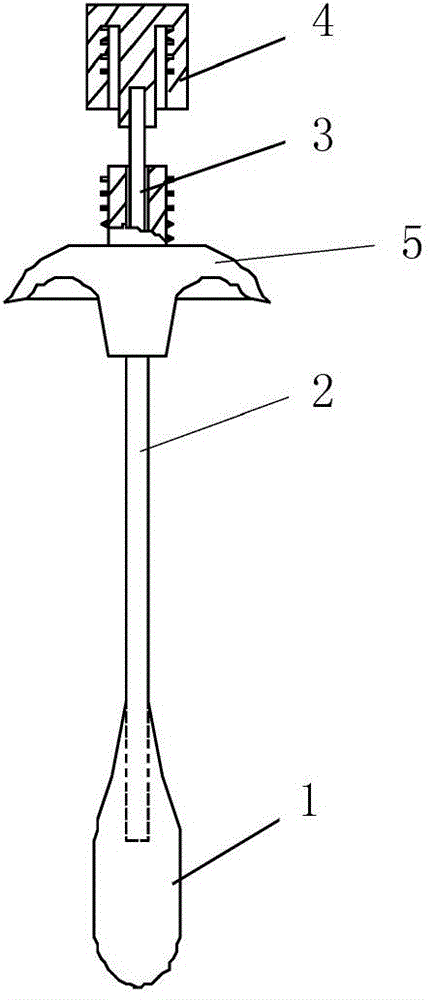
Figure 1 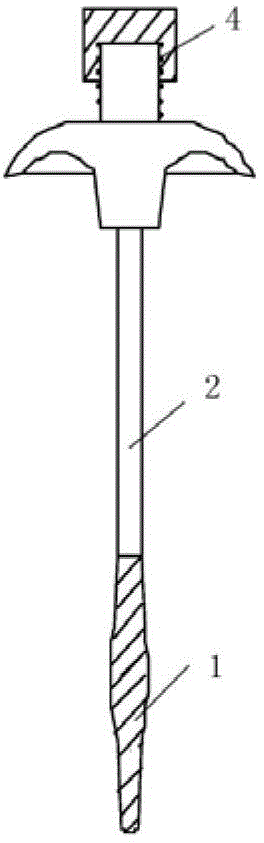
Figure 2
Abstract
Description
technical field
[0001] The invention belongs to the field of medical devices, in particular to a bone cement filling balloon device for percutaneous kyphoplasty. Background technique
[0002] Vertebroplasty is a treatment method that injects filling material into the vertebral body through the pedicle to increase the compression resistance of the vertebral body, prevent further collapse of the vertebral body, relieve low back pain and restore the height of the vertebral body. In open surgery for spinal fractures, bone slurry is used as a filling material, but bone slurry cannot immediately restore the strength and stability of the vertebral body.
[0003] In 1984, Galibert et al. in France treated a case of C 2 In the case of vertebral body invasive vertebral hemangioma, the method of percutaneous puncture into the vertebral body was firstly used, and the method of injecting polymethylmethacrylate (PMMA), commonly known as "bone cement", into the vertebral body was successf...
Examples
Embodiment 1
[0031] Using poly DL lactic acid (molecular weight: 50,000) as a raw material, the balloon 1 was prepared by electrospinning, with a thickness of 0.2 mm, a volume of 3 ml, and a handle diameter of 3.5 mm. Holes with a diameter of about 0.01 mm are evenly distributed on the surface of the balloon. The open end of the absorbable balloon 1 is connected to the outer or inner surface of the injector 2 away from the handle end, and the length of the injector 2 is 60 mm. Insert the balloon preloading rod 3 from the interface of the injector 2 that has been connected to the absorbable balloon 1 until the balloon is fully stretched, rotate the preloading rod until the balloon is fully attached to the balloon preloading rod, and the balloon The preloading rod is locked with the locking mechanism 4 on the handle 5 of the injector.
Embodiment 2
[0033] Pass the absorbable balloon device of Example 1 through the working tube with a diameter of 4 mm and a length of 100 mm, so that the balloon is completely exposed outside the working tube, loosen the locking device on the pre-installed rod, reversely rotate and take out the pre-installed rod. Prepare bone cement PMMA10ml, inhale a sufficient amount of bone cement into the external syringe with pressure display after 20s, and then connect it to the interface of bone cement injector 2, inject slowly until the pressure shows 0.5kgf / cm when the added amount is 4ml 2, There is no leakage on the surface of the balloon, and the balloon is not ruptured. After the bone cement solidifies, hold the balloon filled with bone cement with your hand, turn the handle of the injector lightly to disconnect the absorbable balloon filled with bone cement from the injector, and pull out the injector.
Embodiment 3
[0035] Using L lactic acid-glycolic acid copolymer as raw material (molecular weight 80,000), the balloon 1 was prepared by electrospinning, with a thickness of 0.15 mm, a volume of 8 ml, and a handle diameter of 3.2 mm. A laser drilling machine is used to form dozens of holes 6 with a diameter of about 1.0 mm on the surface of the balloon. The open end of the absorbable balloon 1 is connected to the outer or inner surface of the injector 2 away from the handle end, and the length of the injector 2 is 220 mm. Insert the balloon preloading rod 3 from the interface of the injector 2 that has been connected to the absorbable balloon 1 until the balloon is fully stretched, rotate the preloading rod until the balloon is fully attached to the balloon preloading rod, and the balloon The preloading rod is locked with the locking mechanism 4 on the handle 5 of the injector. Inject the bone cement in the same manner as in Example 2 until the pressure shows 0.8kgf / cm when the amount add...