
Stress and strain measurement method of steel bar under high temperature and variable loading rate
A technology for measuring steel stress and strain, applied to measuring devices, instruments, etc., can solve the problems of steel full strain and inaccurate measurement results
Patent Information
- Authority / Receiving Office
- CN · China
- Patent Type
- Patents(China)
- Current Assignee / Owner
- Publication Date
- 2016-01-20
Smart Images
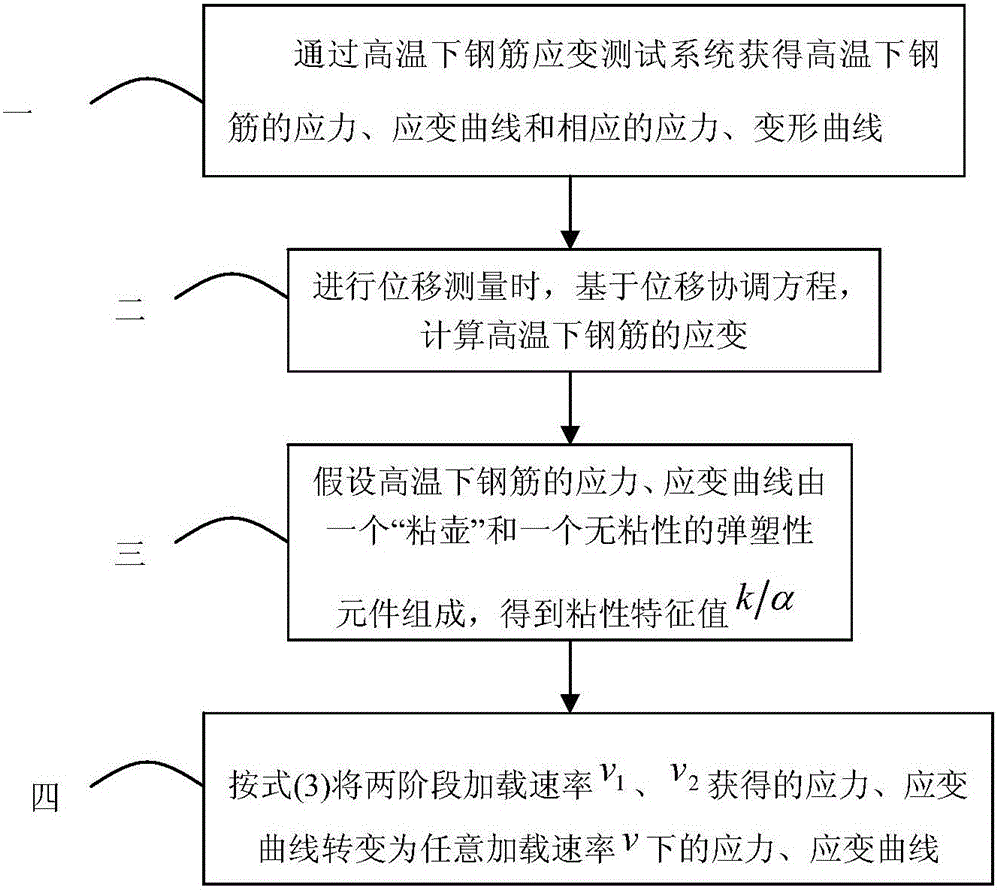
Figure 1 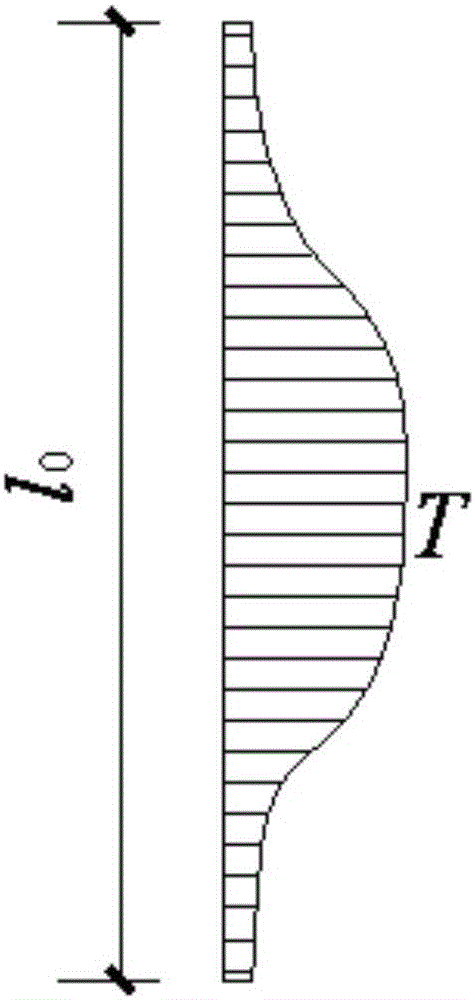
Figure 2 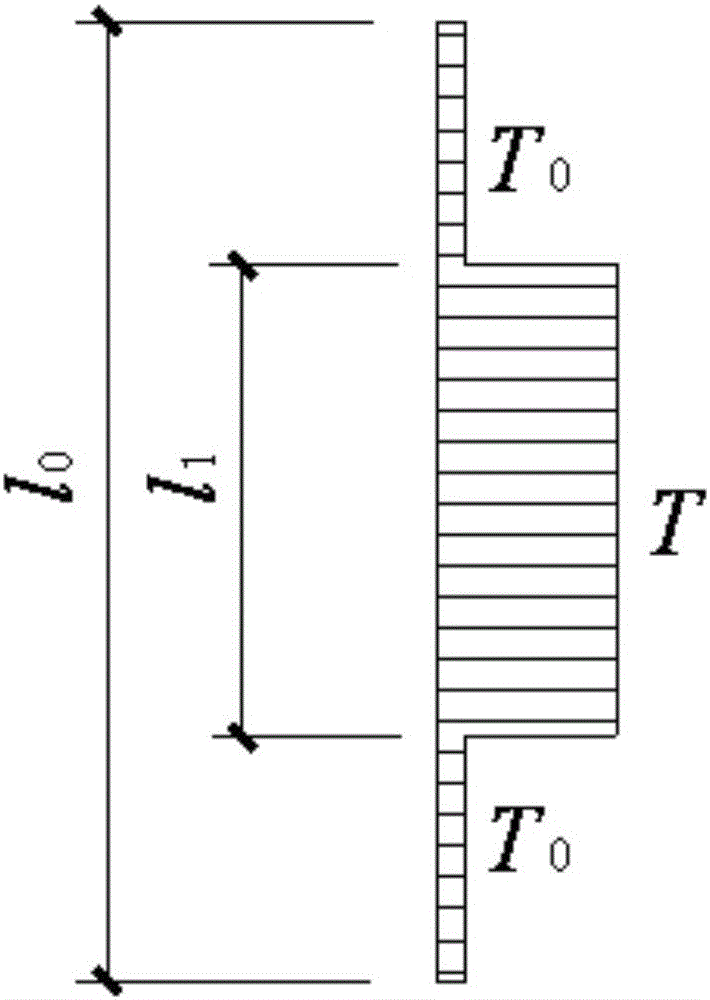
Figure 3
Abstract
Description
technical field
[0001] The invention relates to a method for testing building material stress and strain in the field of civil engineering. Background technique
[0002] The ultimate tensile strain of steel bars used in building structures at high temperatures can reach 20%, but the range of high-temperature strain extensometers in the steel bar strain test system at high temperatures is limited (generally ±0.03), and the existing high-temperature strain extensometers cannot directly obtain the steel bars at high temperatures. Full strain. At the same time, the strength of the steel bar varies with the loading rate at high temperature, resulting in inaccurate measurement results. Contents of the invention
[0003] The invention aims to solve the problem that the existing high-temperature (20-1100°C) strain extensometer cannot directly obtain the full strain of the steel bar at high temperature and the measurement results are inaccurate, and provides a method for measuring...
Examples
specific Embodiment approach 1
[0036] Specific implementation mode 1: The steel bar stress and strain measurement method under the high temperature variable loading rate of the present implementation mode includes the following contents:
[0037] 1. Obtain the stress and strain curves and corresponding stress and deformation curves of steel bars at high temperature through the steel bar strain test system at high temperature;
[0038] Wherein, the maximum value of strain in the stress and strain curves is ε 0 , ε 0 Less than the ultimate tensile strain of the steel bar at high temperature;
[0039] Rebar strain less than ε 0 When the loading rate is v 1 ; The steel bar strain test system simultaneously measures the stress, strain, stress, and displacement of steel bars at high temperatures;
[0040] When the steel strain exceeds ε 0 When the high-temperature strain extensometer in the steel bar strain test system reaches the measuring range, the steel bar strain test system automatically switches to di...
specific Embodiment approach 2
[0061] Embodiment 2: This embodiment is different from Embodiment 1 in that: the high temperature in the step 1 is 20-1100°C. Other steps and parameters are the same as those in Embodiment 1.
specific Embodiment approach 3
[0062] Embodiment 3: The difference between this embodiment and Embodiment 1 or 2 is that the high temperature in the step 1 is 50-1000°C. Other steps and parameters are the same as those in Embodiment 1 or Embodiment 2.