
Method for synthesizing resinous vitamin D3 by using micro-flow photoreaction technology and micro-flow photochemical reactor
A technology of chemical reactor and photochemical reaction, which is applied in the field of organic photochemical synthesis, can solve the problems of cumbersome processing process and complex structure of reaction device, and achieve the effect of simple and easy operation of the preparation process and large-scale production
Patent Information
- Authority / Receiving Office
- CN · China
- Patent Type
- Applications(China)
- Current Assignee / Owner
- Publication Date
- 2014-02-05
Smart Images
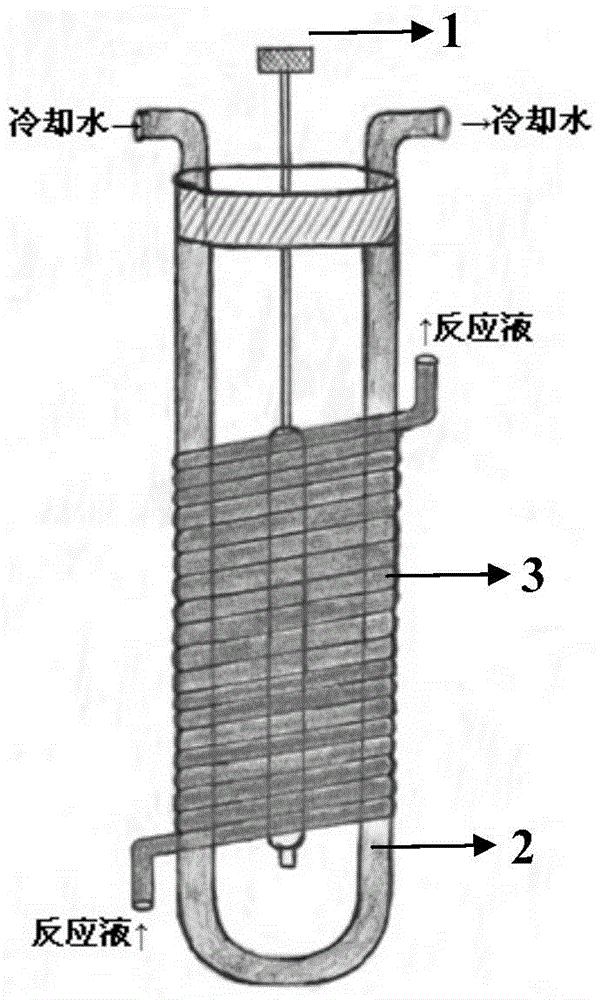
Figure 1 
Figure 2 
Figure 3
Abstract
Description
technical field
[0001] The invention belongs to the field of organic photochemical synthesis, in particular to the synthesis of resinous vitamin D using microfluidic reaction technology 3 method, and for the synthesis of resinous vitamin D 3 microfluidic photochemical reactor. Background technique
[0002] Vitamin D 3 It is one of the important vitamins essential for the normal growth and reproduction of humans, livestock, and poultry, and appropriate amounts of vitamin D need to be added to food and feed 3 . With the development of society and the improvement of people's living standards, vitamin D 3 It has broad market prospects both domestically and internationally.
[0003] In 2002, the applicant in this case invented the photochemical synthesis of vitamin D 3 method (ZL02104444.9), and successfully realized industrial production through Zhejiang Garden Group. The technology fills our VD 3 The technical gap in production has made our country become the master of ...
Examples
Embodiment 1
[0031] Such as figure 1 shown, for the synthesis of resinous vitamin D 3The microfluidic photochemical reactor consists of a light source 1, a cold trap 2 and a microfluidic tube 3.
[0032] The cold trap 2 is a U-shaped interlayer container with a cooling water inlet and outlet made of quartz or borosilicate glass, and the micro-pipe made of quartz or borosilicate glass is the micro-flow tube 3 and A 450W high-pressure mercury lamp (such as GGZ1000-1 from Beijing Electric Light Source Research Institute) wrapped around the outer wall of the cold trap and placed in the inner cavity of the cold trap at the place where the microfluid tube is wound is the light source 1 .
[0033] The micro-flow tube is a micro-pipe with an inner diameter of 2mm and a length of 8-10m, which can filter out light with a wavelength shorter than 305nm.
[0034] Synthesis of resinous vitamin D using the microfluidic photochemical reactor described above 3
[0035] (1) Photoisomerization of 7-dehy...
Embodiment 2
[0042] Utilize the microflow photochemical reactor of embodiment 1 to carry out synthetic resinous vitamin D 3
[0043] (1) Photoreaction of 7-dehydrocholesterol
[0044] In a 500mL round bottom flask, under nitrogen protection, 16.5g of 7-dehydrocholesterol was dissolved in 275mL of pentane-methanol (10:1, V / V) mixed solvent, and 33mg of 2,6-di-tert-butyl -P-methoxyphenol, mixed evenly with magnetic stirring, is prepared into a photochemical reaction solution; after passing nitrogen in the photochemical reaction solution for 30 minutes, turn on condensed water, a 450W high-pressure mercury lamp, and a peristaltic pump in turn, and pass through the peristaltic pump. The photochemical reaction solution was continuously injected into the microflow tube of the microflow photochemical reactor at a speed of 4.5mL / min to carry out the light reaction until the prepared photochemical reaction solution flowed out. During the light reaction, the temperature of the photoreaction solutio...
Embodiment 3
[0049] In a 500mL round bottom flask, under nitrogen protection, dissolve 16.5g of 7-dehydrocholesterol in 330mL of hexane-dioxane (5:1, V / V) mixed solvent, add 15mg of 2,6-di-tert-butyl base-p-methoxyphenol, mixed evenly with magnetic stirring, and prepared into a photochemical reaction solution; after passing nitrogen gas into the photochemical reaction solution for 30 minutes, turn on condensed water, a 450W high-pressure mercury lamp, and a peristaltic pump in turn, and pass through the peristaltic pump. The photochemical reaction solution was continuously injected into the microflow tube of the microflow photochemical reactor at a speed of 6 mL / min to carry out the light reaction until the prepared photochemical reaction solution flowed out. During the light reaction process, the temperature of the photoreaction solution was controlled to be 23~28℃; use conical flask to receive the precursor pre-vitamin D flowing out from the outlet of micro-flow tube after light reaction ...