
Multi-channel nerve repair catheter and mold with tissue inductive function
A nerve repair and inductive technology, applied in the medical field, can solve problems such as easy inactivation, affect nerve regeneration, biocompatibility differences, etc., achieve good degradability and biocompatibility, repair peripheral nerve defects, and mechanical strength. guaranteed effect
Patent Information
- Authority / Receiving Office
- CN · China
- Patent Type
- Patents(China)
- Current Assignee / Owner
- Publication Date
- 2016-04-27
Smart Images
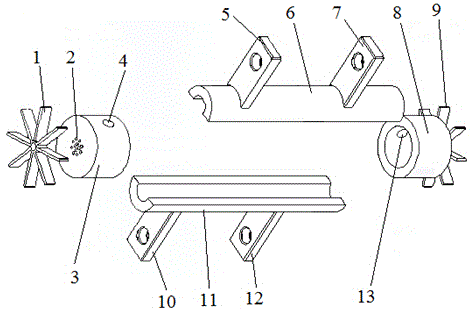
Figure 1 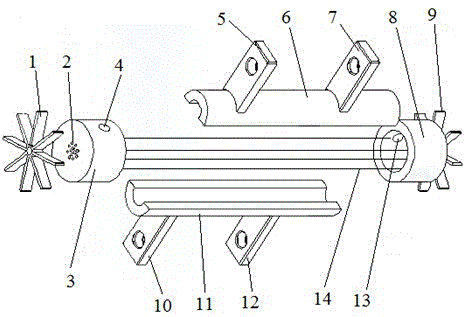
Figure 2 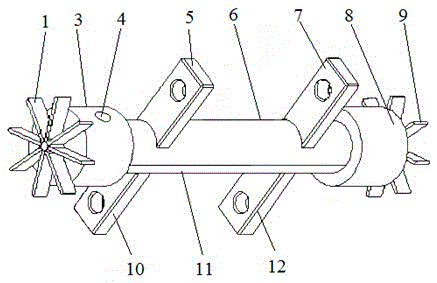
Figure 3
Abstract
Description
technical field
[0001] The invention belongs to the technical field of medicine, and relates to a nerve repair catheter, in particular to a multi-channel nerve repair catheter with tissue inductive function; the invention also relates to a mold used in the preparation process of the multi-channel nerve repair catheter. Background technique
[0002] Peripheral nerve injury is one of the most common clinical injuries. With the development of modern construction industry, transportation industry and the frequent occurrence of major natural disasters and local wars, the incidence of peripheral nerve injury is increasing year by year. Peripheral nerve injury often causes degeneration and dysfunction in the innervated area, which affects the physical and mental health and quality of life of patients for a long time, and has become one of the challenges facing the world's medicine.
[0003] The use of tissue engineering methods to construct different nerve conduits through natural...
Examples
Embodiment 1
[0071] According to the mass ratio of 1:5, salidroside and chitosan were respectively taken, mixed uniformly, and chitosan-coated salidroside microspheres were prepared by using the tripolyphosphate method; the microspheres were treated with 1% genipin Cross-link at 37°C for 1 hour, vacuum freeze-dry for later use; dissolve polylactic acid-polyglycolic acid copolymer in chloroform to obtain a saturated solution, add 10 mg of prepared microspheres, stir with a magnetic stirrer at 50 rpm for 2 hours, and volatilize in a fume hood Remove chloroform, centrifuge at 4°C and 15,000rpm for 10 minutes, add appropriate amount of distilled water to disperse to obtain compound salidroside sustained-release microspheres, dry at room temperature for later use; use light microscope, laser particle size analyzer and scanning electron microscope to evaluate compound salidroside respectively Morphology, particle size characteristics and characterization of sustained-release microspheres; in vitr...
Embodiment 2
[0073]According to the mass ratio of 1:10, salidroside and chitosan were respectively taken, mixed evenly, and chitosan-coated salidroside microspheres were prepared by using the tripolyphosphate method; the microspheres were treated with 1% genipin Cross-link at 37°C for 1 hour, vacuum freeze-dry for later use; dissolve polylactic acid-polyglycolic acid copolymer in chloroform to obtain a saturated solution, add 10 mg of the prepared microspheres, stir with a magnetic stirrer at 60 rpm for 2 hours, and place in a fume hood Remove chloroform in the medium, centrifuge at 4°C and 15000rpm for 10min, add appropriate amount of distilled water to disperse to obtain composite salidroside sustained-release microspheres, dry at room temperature for later use; use light microscope, laser particle size analyzer and scanning electron microscope to evaluate composite rhodiola respectively Morphology, particle size characteristics and characterization of glucoside sustained-release microsph...
Embodiment 3
[0075] According to the mass ratio of 1:50, salidroside and chitosan were respectively taken, mixed evenly, and chitosan-coated salidroside microspheres were prepared by using the tripolyphosphate method; the microspheres were treated with 1% genipin Cross-link at 37°C for 1 hour, vacuum freeze-dry for later use; dissolve polylactic acid-polyglycolic acid copolymer in chloroform to obtain a saturated solution, add 10 mg of microspheres, stir with a magnetic stirrer at 55 rpm for 2 hours, and volatilize in a fume hood Remove chloroform, centrifuge at 4°C and 15,000 rpm for 10 minutes at high speed, add appropriate amount of distilled water to disperse to obtain composite salidroside sustained-release microspheres, dry at room temperature for later use; use light microscope, laser particle size analyzer and scanning electron microscope to evaluate composite rhodiola Morphology, particle size characteristics and characterization of glucoside sustained-release microspheres; in vitr...