
A kind of enzyme-responsive insecticidal slow-release agent and preparation method thereof
An enzyme-responsive, sustained-release agent technology, applied in the field of new formulations of pesticides, to achieve the effects of delayed release, loss prevention, and a wide range of sources
Patent Information
- Authority / Receiving Office
- CN · China
- Patent Type
- Patents(China)
- Current Assignee / Owner
- Publication Date
- 2021-04-09
Smart Images
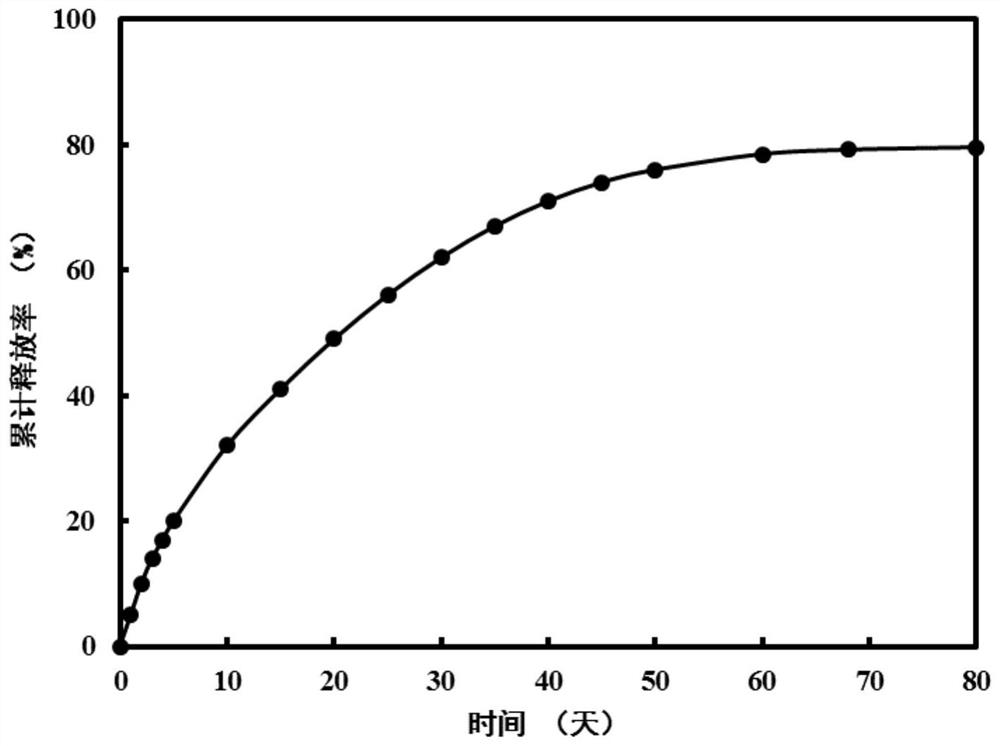
Figure 1 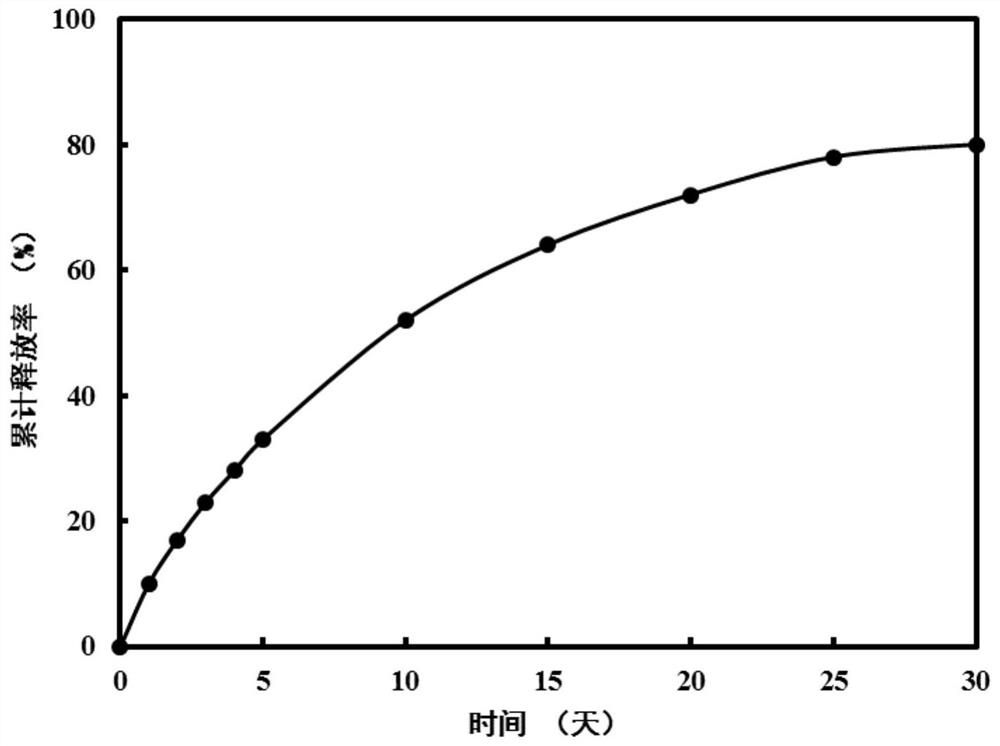
Figure 2 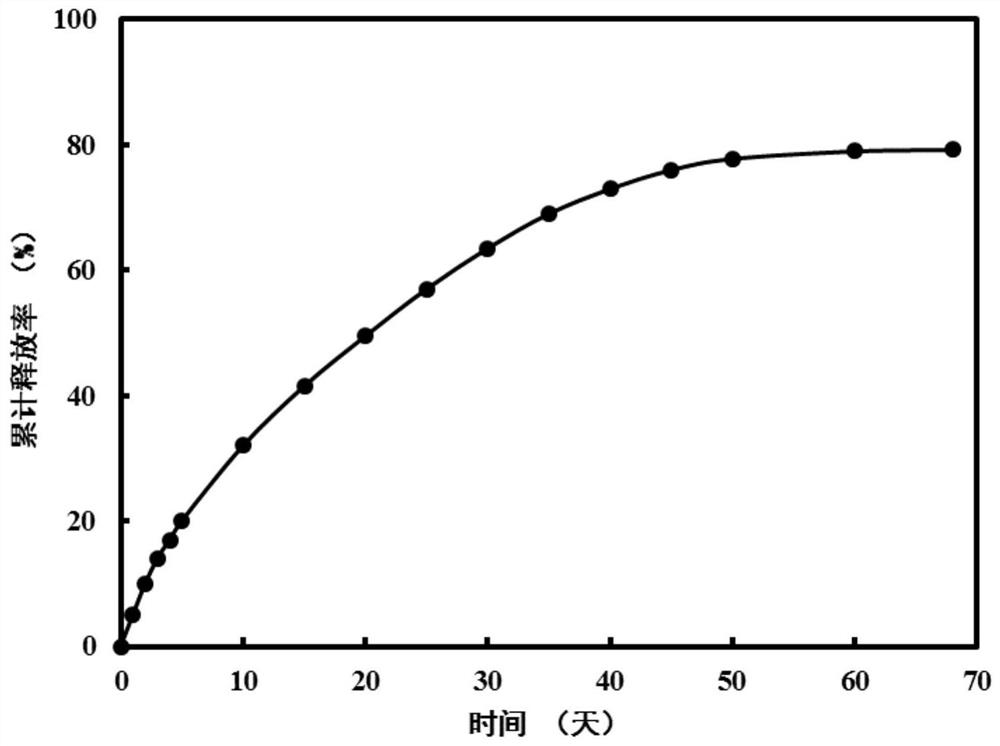
Figure 3
Abstract
Description
technical field
[0001] The invention belongs to the technical field of new formulations of insecticides, and in particular relates to an enzyme-responsive insecticide slow-release agent and a preparation method thereof. Background technique
[0002] Pesticides have the advantages of high efficiency, quickness, economy, simple operation, and low labor intensity in the prevention and control of crop diseases, insect pests and weeds, and play an irreplaceable important role in the integrated pest control. In 2016, the production volume of chemical pesticides in China reached 3.778 million tons, and the usage amounted to 1.8 million tons, mainly conventional pesticide formulations such as emulsifiable concentrate, wettable powder and water emulsion.
[0003] Due to the problems of a large number of organic solvents used in conventional pesticide formulations, dust drift, poor dispersibility, etc., and the ability to control the release of active ingredients, more than 90% of the...
Examples
Embodiment 1
[0040] (1) Add 2.5g polystyrene nanospheres, 2mL ammonia water, 9.6g deionized water, 0.80g cetyltrimethylammonium bromide (CTAB) and 11.0g ethanol to the flask, ultrasonically disperse for half an hour, turn on Stir for 30 minutes, add 1.5 g of ethyl orthosilicate to the above reaction system, and react for 48 hours at room temperature;
[0041] (2) Calcining the product in a muffle furnace at 600°C for 8 hours to obtain hollow nano-silica A;
[0042] (3) Add toluene and 1.0 g of hollow nano-silica A obtained in step (2) to the three-necked flask, ultrasonically disperse for half an hour and control the reaction temperature at 110° C., add dropwise 0.3 g of anilinomethyltriethoxysilane, React for 20 hours, centrifuge to remove the supernatant, wash the obtained solid, and repeat three times to obtain aniline-modified hollow nano-silica B;
[0043] (4) Add the obtained aniline-modified hollow nano-silica B and cyantraniliprole N,N-dimethylformamide solution into the flask, an...
Embodiment 2
[0051] (1) Add 2.5g polystyrene nanospheres, 4.0mL ammonia water, 19.2g deionized water, 1.6g cetyltrimethylammonium bromide (CTAB) and 22.0g ethanol to the flask, and ultrasonically disperse for half an hour. Start stirring for 30 minutes, add 1.5 g of ethyl orthosilicate to the above reaction system, and react for 60 hours at room temperature;
[0052] (2) Calcining the product in a muffle furnace at 600°C for 8 hours to obtain hollow nano-silica A;
[0053] (3) Add toluene and 1.0 g of hollow nano-silica A obtained in step (2) to the three-necked flask, ultrasonically disperse for half an hour and control the reaction temperature at 100° C., dropwise add 0.4 g of anilinomethyltriethoxysilane, React for 24 hours, centrifuge to remove the supernatant, wash the obtained solid, and repeat three times to obtain aniline-modified hollow nano-silica B;
[0054] (4) Add the obtained aniline-modified hollow nano-silica B, chlorantraniliprole N,N-dimethylformamide solution into the f...
Embodiment 3
[0061] (1) Add 2.5g polystyrene nanospheres, 1mL ammonia water, 4.8g deionized water, 0.40g cetyltrimethylammonium bromide (CTAB) and 5.5g ethanol to the flask, ultrasonically disperse for half an hour, and turn on Stir for 30 minutes, add 1.5 g of ethyl orthosilicate to the above reaction system, and react for 48 hours at room temperature;
[0062] (2) Calcining the product in a muffle furnace at 600°C for 8 hours to obtain hollow nano-silica A;
[0063] (3) Add toluene and 1.0 g of hollow nano-silica A obtained in step (2) to the three-necked flask, ultrasonically disperse for half an hour and control the reaction temperature at 90° C., dropwise add 0.3 g of anilinomethyltriethoxysilane, React for 24 hours, centrifuge to remove the supernatant, wash the obtained solid, and repeat three times to obtain aniline-modified hollow nano-silica B;
[0064] (4) Add the obtained aniline-modified hollow nano-silica B and cyantraniliprole N,N-dimethylformamide solution into the flask, ...