
Method for determining compound in aerosol brown carbon
An aerosol and compound technology, applied in the field of analytical chemistry, can solve the problems of low separation degree of imidazole compounds, inability to accurately determine components, and unsatisfactory separation effect, etc., to achieve improved detection efficiency, low operation difficulty, and simple and easy-to-obtain reagents Effect
Patent Information
- Authority / Receiving Office
- CN · China
- Patent Type
- Applications(China)
- Current Assignee / Owner
- Publication Date
- 2018-11-23
- Estimated Expiration
- Not applicable · inactive patent
Smart Images
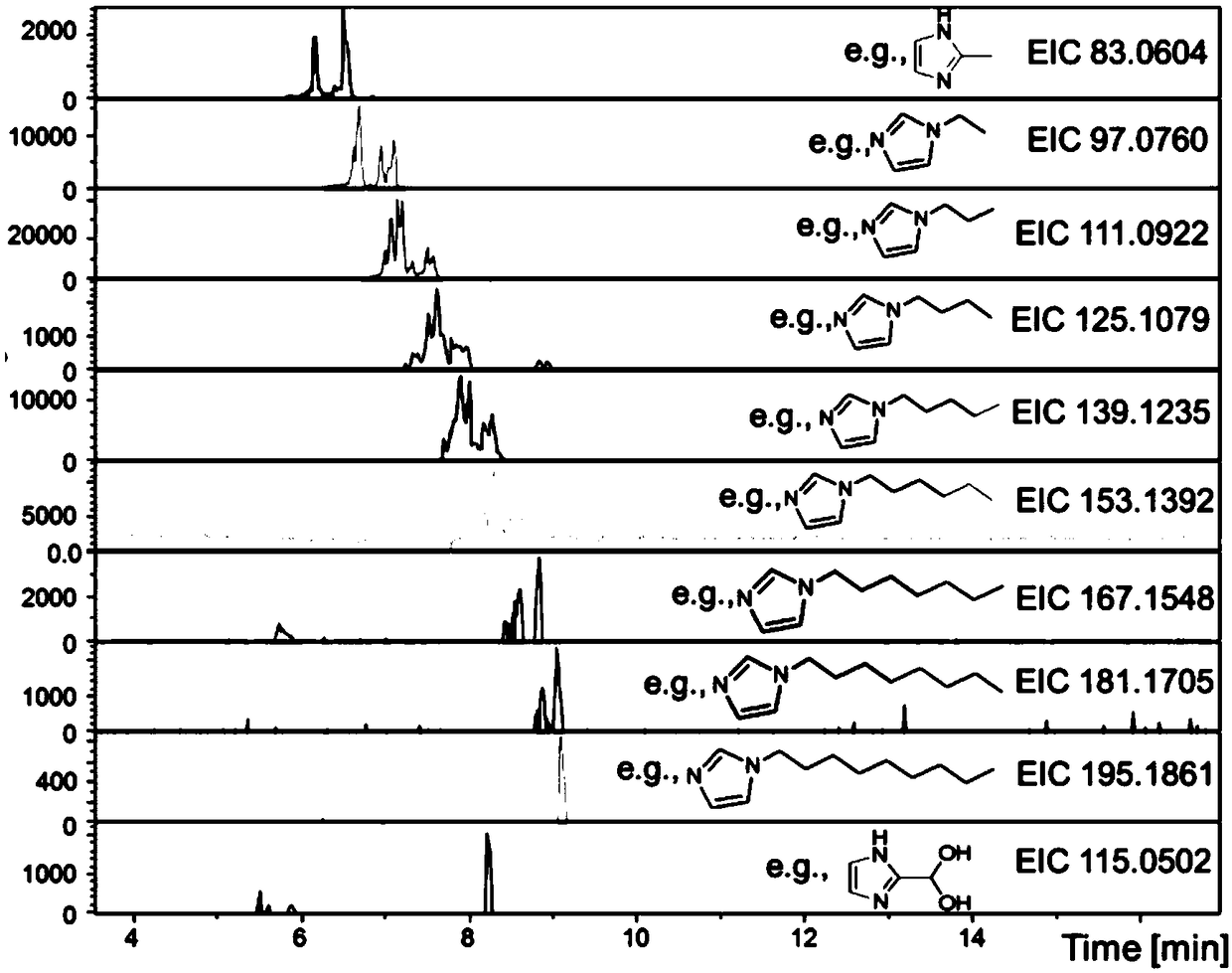
Figure 1 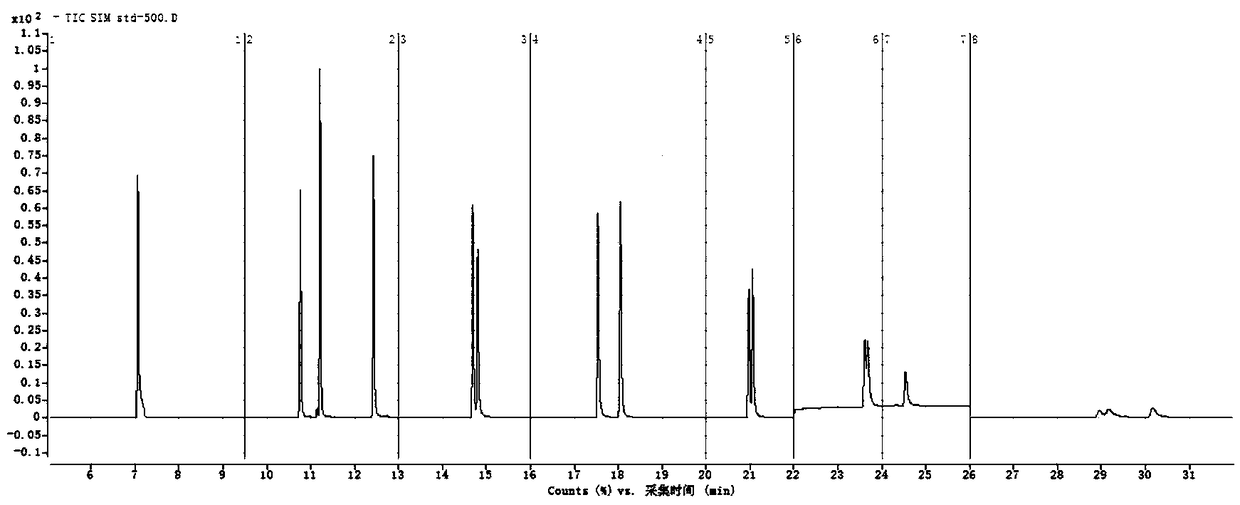
Figure 2 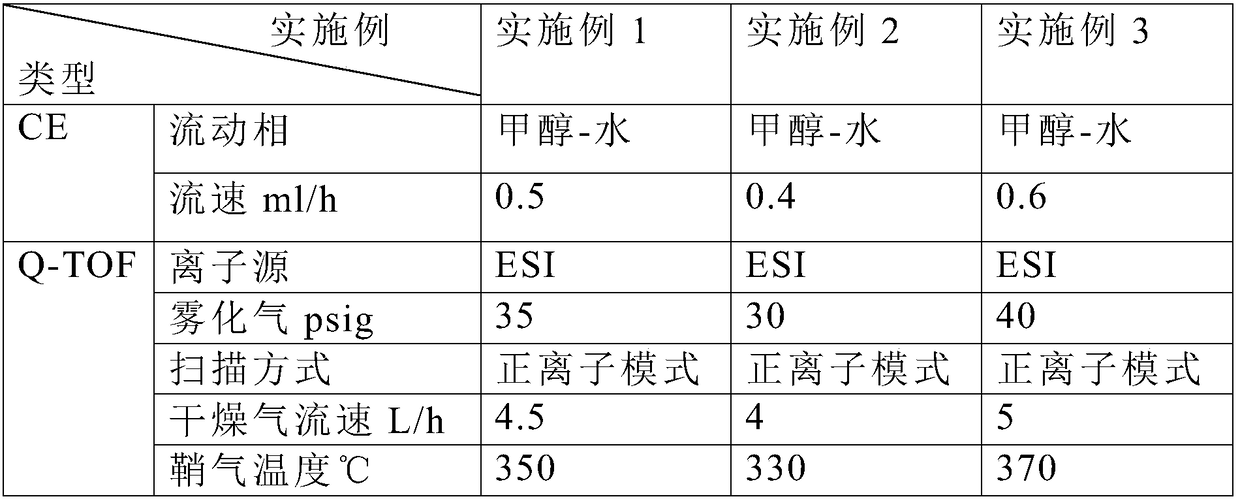
Figure 3
Abstract
Description
technical field
[0001] The invention belongs to the technical field of analytical chemistry, in particular to a method for measuring compounds in aerosol brown carbon. Background technique
[0002] Atmospheric aerosol brown carbon has a great impact on radiative forcing, regional environmental quality, and global climate change. Aerosol brown carbon is currently considered to be mainly composed of aromatic rings, including oxygen-containing, nitrogen-containing and other large molecular weight substances, or humic acid substances. The main source is primary incomplete combustion or transformation. Primary sources include biomass combustion and motor vehicle emissions; secondary sources include high NO x Aromatic secondary organic pollutants produced under the environment. The chemical composition of the aerosol brown carbon is unknown.
[0003] Capillary electrophoresis, abbreviated as CE in English, is a chromatographic separation analysis method. CE is often used for t...
Examples
Embodiment 1
[0033] Sample Collection: Aerosol brown carbon samples were collected with a Teflon membrane.
[0034] Pre-treatment: Dissolve the sample in methanol, ultrasonically oscillate, extract for 30 minutes, then filter with a 0.45 μm filter membrane to remove impurities, and then use nitrogen to purge the filtrate to concentrate, and the concentrated sample is mixed with methanol-water with a volume ratio of 50:50 The mixed solvent was dissolved to form a 200 μl mixed solution.
[0035] Instrumental analysis: inject the mixed solution into capillary electrophoresis through the injection needle for separation, use methanol-water solution as the mobile phase, control the flow rate of the mobile phase to 0.5ml / h, and then enter the quadrupole-time-of-flight tandem mass spectrometer through the series tube, and compare the mixed solution Qualitative and quantitative analysis of compounds.
Embodiment 2
[0037] Sample Collection: Aerosol brown carbon samples were collected with a quartz membrane.
[0038] Pre-treatment: Dissolve the sample in methanol, ultrasonically oscillate, extract for 25 minutes, then filter with a 0.4 μm filter membrane to remove impurities, and then use nitrogen to purge the filtrate to concentrate, and the concentrated sample is mixed with methanol-water with a volume ratio of 50:50 The mixed solvent was dissolved to form a 190 μl mixed solution.
[0039] Instrumental analysis: The mixed solution is injected into capillary electrophoresis through the injection needle for separation, and then enters the quadrupole-time-of-flight tandem mass spectrometer through the series tube, and the compounds in the mixed solution are qualitatively and quantitatively analyzed.
Embodiment 3
[0041] Sample Collection: Aerosol brown carbon samples were collected with a Teflon membrane.
[0042] Pre-treatment: Dissolve the sample in methanol, ultrasonically oscillate, extract for 35 minutes, then filter with a 0.5 μm filter membrane to remove impurities, and then use nitrogen to sweep the filtrate to concentrate, and the concentrated sample is mixed with methanol-water with a volume ratio of 50:50 The mixed solvent was dissolved to form a 210 μl mixed solution.
[0043] Instrumental analysis: The mixed solution is injected into capillary electrophoresis through the injection needle for separation, and then enters the quadrupole-time-of-flight tandem mass spectrometer through the series tube, and the compounds in the mixed solution are qualitatively and quantitatively analyzed.