
Method and application of femtosecond laser direct writing processing with near 4π solid angle by using triangular prism
A femtosecond laser and triangular table technology, applied in metal processing equipment, laser welding equipment, manufacturing tools, etc., can solve the problems of laser focus elongation and different light guiding characteristics.
Patent Information
- Authority / Receiving Office
- CN · China
- Patent Type
- Patents(China)
- Current Assignee / Owner
- Publication Date
- 2020-05-19
Smart Images
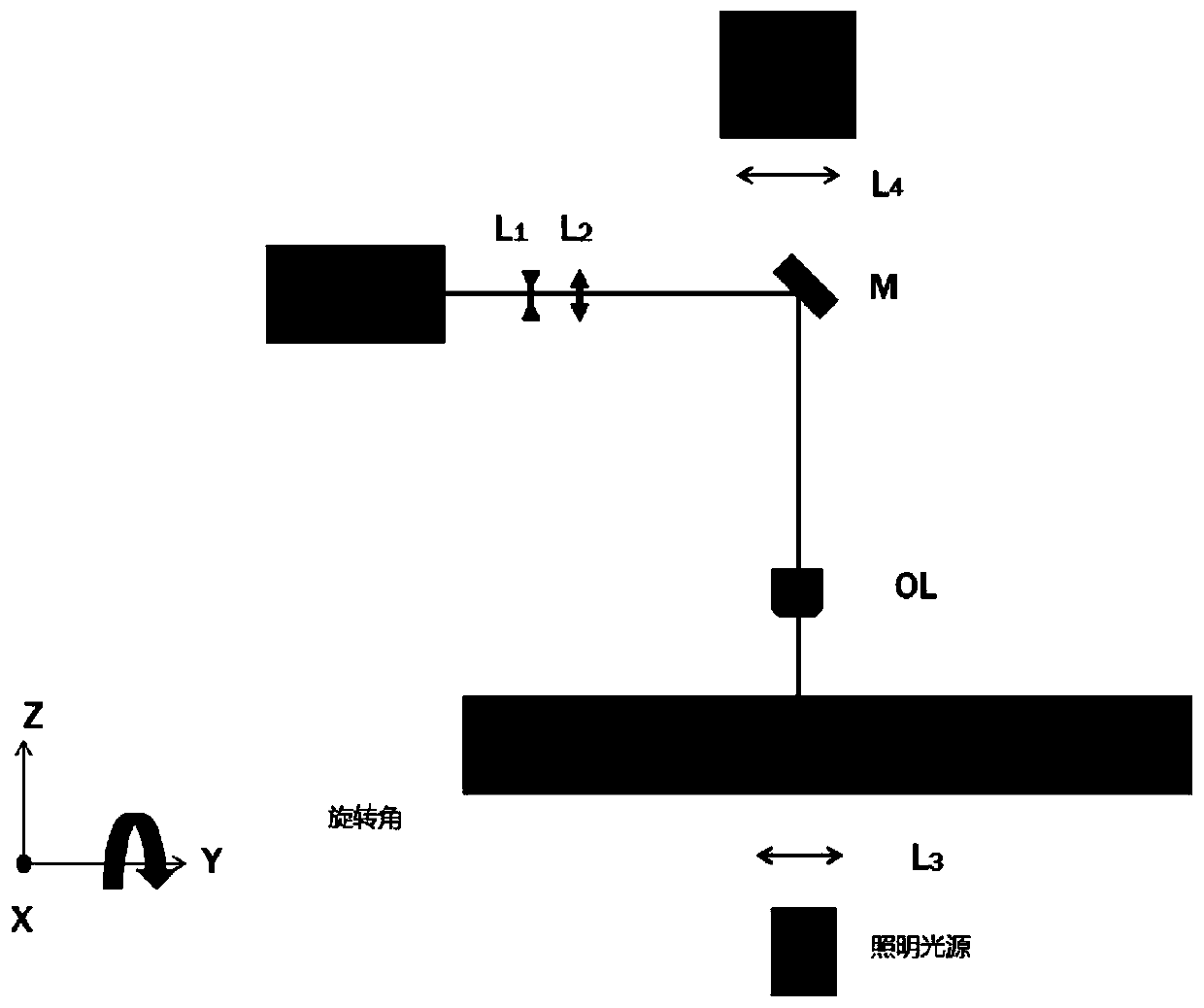
Figure 1 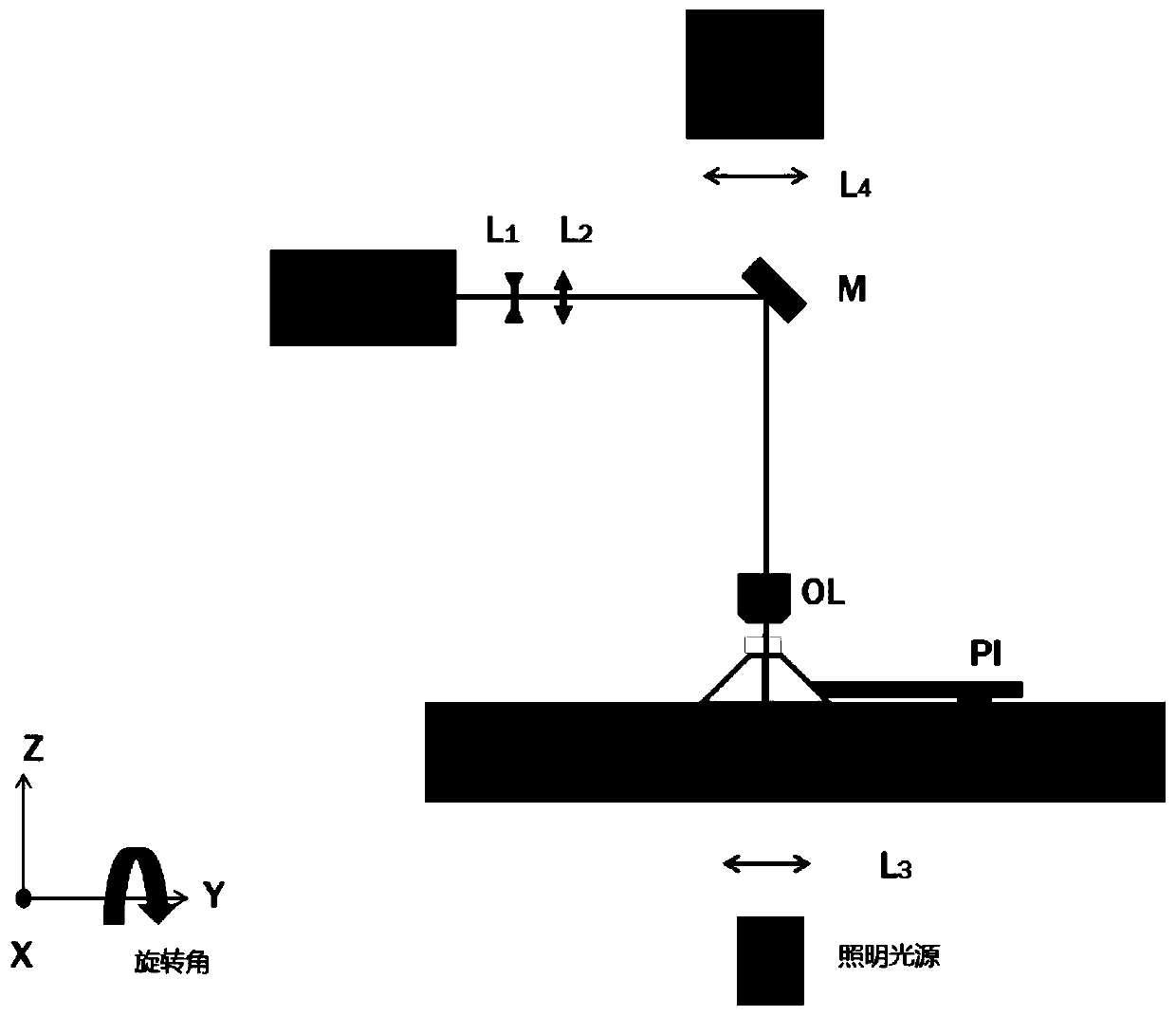
Figure 2 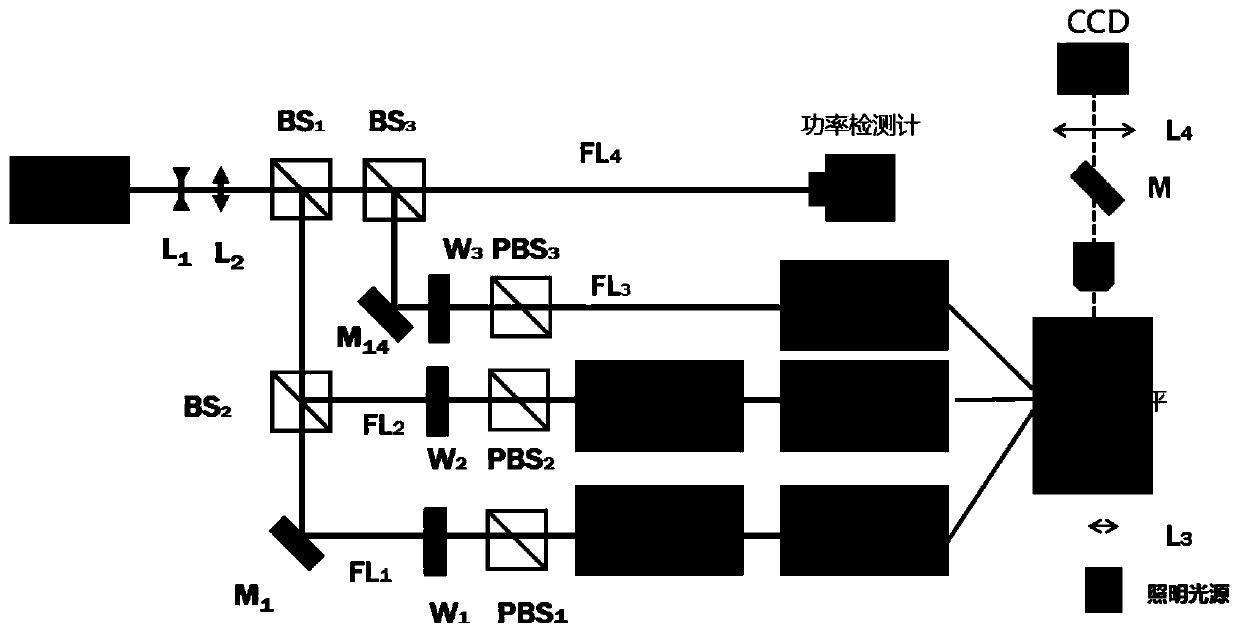
Figure 3
Abstract
Description
technical field
[0001] The invention belongs to the technical field of laser processing, and specifically relates to the use of triangular prisms for three-photon excitation to improve the defocus problem of femtosecond laser large embedded depth direct writing processing. By dividing the femtosecond laser into three beams and adjusting the three beam pulses Synchronized with time, the three sub-beams of femtosecond laser pulses are incident on the side of the triangular prism to improve the defocus problem of femtosecond laser internal processing, so as to realize the three-dimensional embedding with continuously variable processing depth based on the principle of multi-photon excitation Direct write processing of formula structure.
[0002] technical background
[0003] Laser processing is widely used in the field of micro-nano processing due to its three-dimensional processing capability and low processing cost. However, since its working substance is light, after light is...
Examples
Embodiment 1
[0049] Embodiment 1 A three-photon excitation focal spot is formed by using a triangular frustum prism to make three sub-beams of femtosecond laser beams orthogonally.
[0050] The single-beam processing method is replaced by the method of "combining" energy with three-photon excitation, and the energy required to modify the processed material is provided in this way. A triangular prism and a refractive index matching liquid are added on the surface of the sample, so that the laser is normally incident on the three sides of the triangular prism, so that the laser beam is not refracted when it is incident on the triangular prism and inside the sample, and the three sub-beams The femtosecond laser is orthogonally converged to form a near-spherical focus with a solid angle of nearly 4π. Compared with the severe defocus of a single femtosecond laser in direct writing processing with a large buried depth, this method effectively overcomes the single-beam Defocus problem of laser in...
Embodiment 2
[0066] Example 2 uses a three-photon excitation focus with a solid angle of nearly 4π to implement a three-dimensional embedded waveguide quantum device.
[0067] By adjusting the time synchronization of sub-beam femtosecond laser pulses and using space synchronization, the three sub-beam femtosecond laser beams are incident on the three sides of the triangular prism, avoiding internal damage caused by the refraction phenomenon caused by light incident from different media. The problem of defocusing, and the three-photon excitation focus with a solid angle of nearly 4π can be obtained deep inside the material, and its energy distribution has a near-spherical characteristic, which solves the problem of defocusing in laser processing.
[0068] Near 4π solid angle femtosecond laser direct writing processing of three-dimensional embedded structures by using triangular prism assisted three-photon excitation:
[0069] (1) Leveling of the sample stage and the triangular prism; with e...