
Method for inducing differentiation and seedling formation of passion fruit stem section callus
A technology for callus induction and passion fruit, applied in the field of plant cultivation, can solve the problems of few patent documents of passion fruit, no reports in analysis and research, and solve the problems of uneven quality of seedlings, high planting survival rate, and high growth rate. quick effect
Patent Information
- Authority / Receiving Office
- CN · China
- Patent Type
- Applications(China)
- Current Assignee / Owner
- Publication Date
- 2020-06-19
- Estimated Expiration
- Not applicable · inactive patent
Smart Images
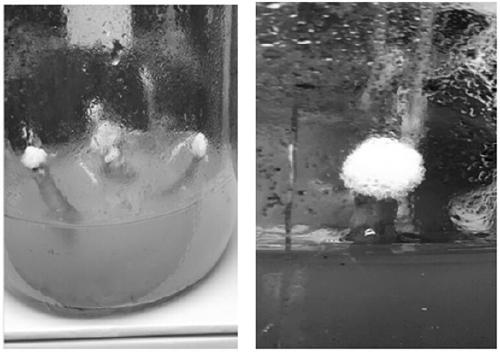
Figure 1 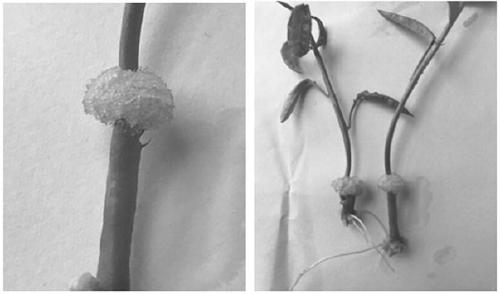
Figure 2 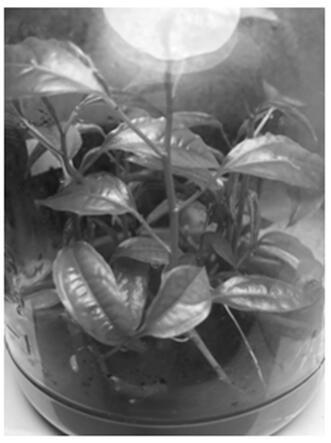
Figure 3
Abstract
Description
technical field
[0001] The invention belongs to the field of plant cultivation, and in particular relates to a method for inducing callus on cut surface of passion fruit stem to differentiate into seedlings. Background technique
[0002] Passion fruit: Passion fruit, also known as passion fruit, Brazil nut, egg fruit. Passion fruit is rich in amino acids, multivitamins, carotenoids, superoxide dismutase (SOD), selenium and various trace elements needed by the human body. Passion fruit is known as the king of VC in fruits. Regular consumption of passion fruit has the functions of refreshing the mind, beautifying the skin, promoting body fluid and quenching thirst, helping digestion, reducing phlegm and relieving cough, relieving constipation, promoting blood circulation and strengthening the body, and improving human immunity. At present, the quality of passion fruit seedlings is uneven, the seedlings are infected with diseases (mainly viral diseases), and the varieties are...
Examples
Embodiment 1
[0021] (1) Collection and disinfection of explants: use mature passion fruit stems as explants, select new shoots of vigorously growing and disease-free plants, wash the surface of tap water, soak in 1wt.% sodium hypochlorite solution for 15 min, and rinse with tap water Rinse well, sterilize in 75% alcohol by volume for 10 seconds, then sterilize with 0.1wt.% mercuric chloride for 5 minutes, and rinse with sterile water for 4 times;
[0022] (2) Induction culture: Under sterile conditions, the sterilized branches were cut into 1.2 cm stem segments and inserted upright into the induction medium. The light was continuously illuminated for 8 h every day, and the light intensity was 1200 lx. The culture temperature was 27 °C during the day and 21°C, cultivate for 130 days;
[0023] (3) Subculture; the seedlings formed on the induction medium were cut into stems with buds under aseptic conditions and transplanted into the growth medium, with continuous light for 12 h every day, li...
Embodiment 2
[0029] (1) Collection and disinfection of explants: use mature passion fruit stems as explants, select new shoots of vigorously growing and disease-free plants, wash the surface of tap water, soak in 1wt.% sodium hypochlorite solution for 15 min, and rinse with tap water Rinse well, sterilize in 75% alcohol by volume for 10 seconds, then sterilize with 0.1wt.% mercuric chloride for 6 minutes, and rinse with sterile water for 5 times;
[0030] (2) Induction culture: Cut the sterilized shoots into 1.3 cm stems and insert them upright into the induction medium under sterile conditions, continuously light for 8 hours a day, light intensity 1000 lx, culture temperature 21-27 ℃, cultivate 130 days;
[0031] (3) Subculture; the seedlings formed on the induction medium were cut into stems with buds under aseptic conditions and transplanted into the growth medium, with continuous light for 12 h every day, light intensity of 2 000 lx, and culture temperature of 25± 1 ℃, cultivated for ...
Embodiment 3
[0038] (1) Collection and disinfection of explants: use mature passion fruit stems as explants, select new shoots of vigorously growing and disease-free plants, wash the surface of tap water, soak in 1wt.% sodium hypochlorite solution for 15 min, and rinse with tap water Rinse well, sterilize in 75% alcohol by volume for 10 seconds, then sterilize with 0.1wt.% mercuric chloride for 6 minutes, and rinse 4 times with sterile water;
[0039] (2) Induction culture: Under sterile conditions, cut the sterilized branches into 1.3 cm stems and insert them upright into the induction medium, with continuous light for 8 hours a day, light intensity of 1500 lx, and culture temperature of 21-27 °C. 130 days;
[0040](3) Subculture; the seedlings formed on the induction medium were cut into stems with buds under aseptic conditions and transplanted into the growth medium, with continuous light for 12 h every day, light intensity of 2500 lx, and culture temperature of 25±1 ℃, cultivated for ...