
Phakic intraocular lens
A technology of intraocular lens and crystalline lens, applied in the direction of intraocular lens, ocular implants, etc., can solve the problems of high pre-judgment of patients' postoperative safety problems, safety hazards, etc., and achieve the effect of excellent deformation stability
Patent Information
- Authority / Receiving Office
- CN · China
- Current Assignee / Owner
- Publication Date
- 2020-07-03
Smart Images
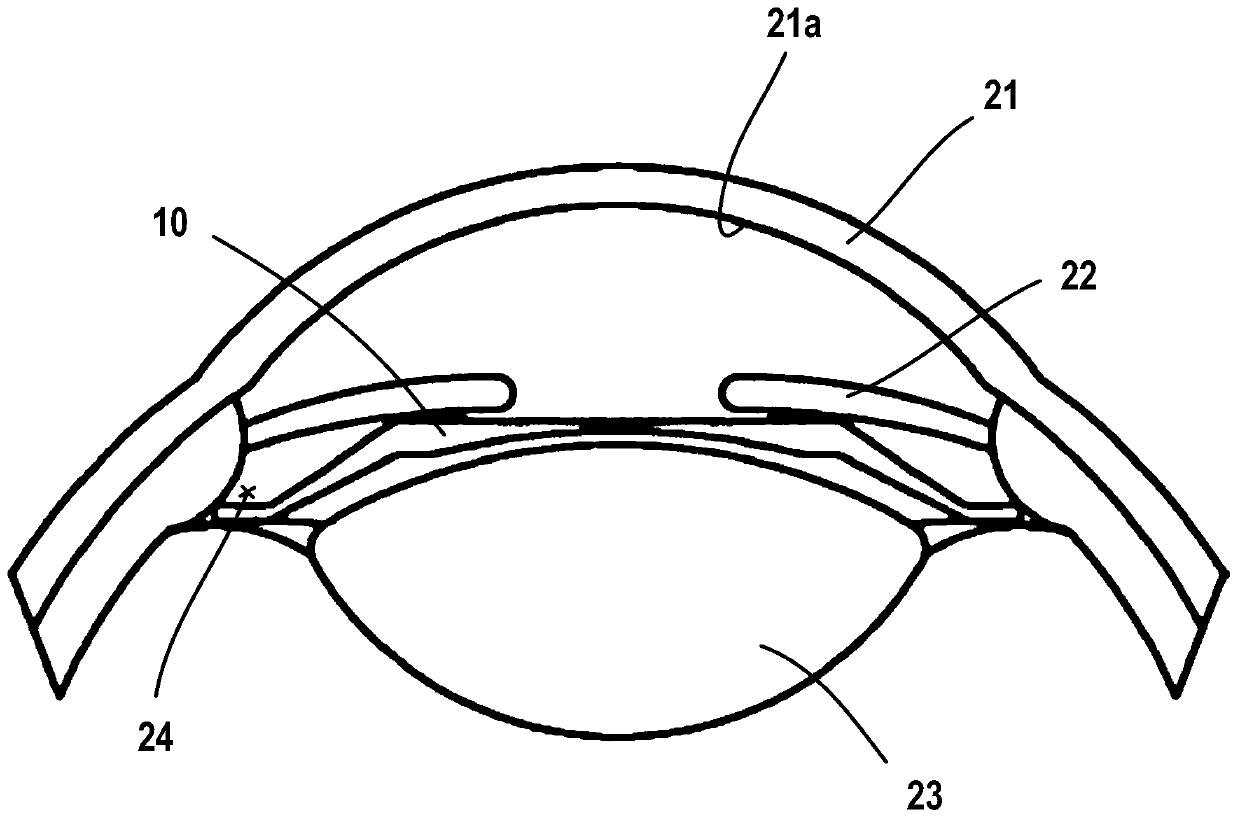
Figure 1 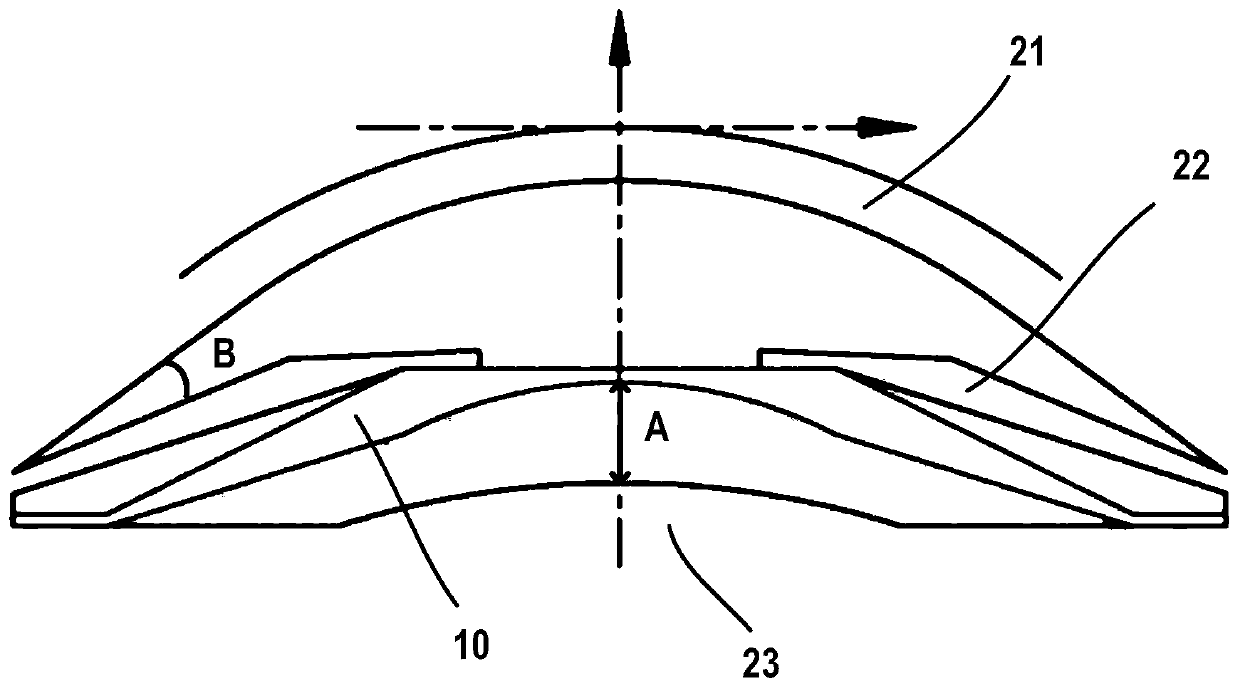
Figure 2 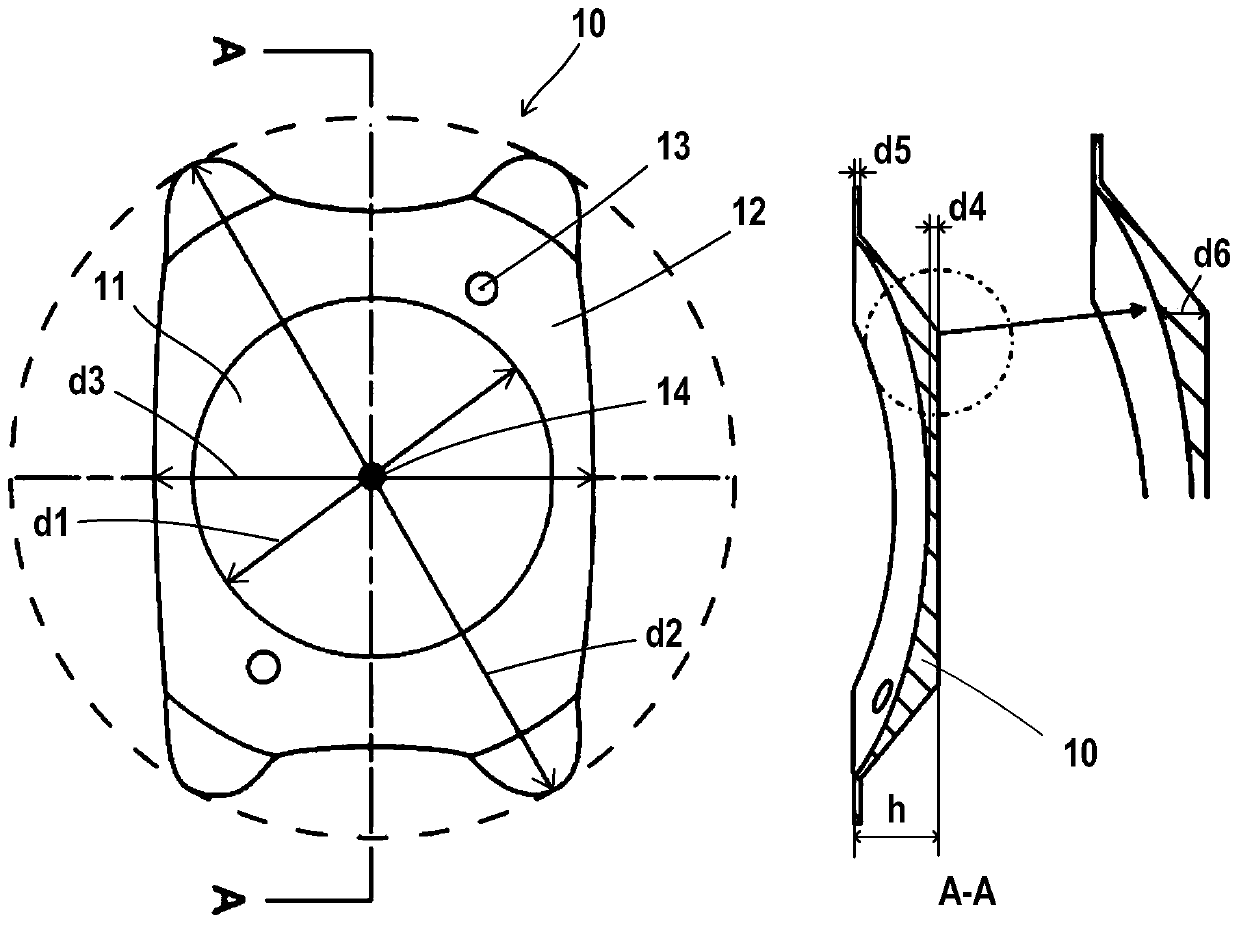
Figure 3
Abstract
Description
technical field
[0001] The present invention relates to a phakic artificial lens. Background technique
[0002] Phakic intraocular lenses (PIOLs) are classified according to the implantation location and fixation method, including anterior chamber angle-supported phakic intraocular lenses, iris-fixed phakic intraocular lenses, and posterior chamber phakic intraocular lenses.
[0003] As a posterior chamber phakic intraocular lens, such as figure 1 , 2 As shown, it consists of an optical part and a supporting part, and is implanted between the natural lens 23 and the iris 22, and its supporting part (support haptic) is supported in the ciliary sulcus 24. By implanting the posterior chamber type phakic intraocular lens 10, the refractive state of the human eye can be changed.
[0004] After the posterior chamber type phakic intraocular lens 10 is implanted, a sufficient distance must be kept between the corneal endothelium 21a of the cornea 21 and the natural lens 23 to pre...
Examples
preparation example Construction
[0061] 1) Preparation method of the material
[0062] The preparation method of the material is a relatively conventional method, which is briefly described here. All example materials were prepared as follows and all monomers were purified by distillation under reduced pressure. In a 250ml beaker, mix acrylate monomers in corresponding proportions, including but not limited to hydroxyethyl methacrylate (HEMA), ethyl acrylate (EA), ethyl methacrylate (EMA), acrylic acid- 2-Phenoxyethyl acrylate (POEA), butyl acrylate (BA), hydroxyethyl acrylate (HEA), phenylethyl acrylate (PEA), phenylethyl methacrylate (PEMA), benzyl methacrylate Ethyl ethyl ester (BMA), ethoxy ethyl methacrylate (EOEMA), ethoxy ethoxy ethyl acrylate (EOEOEA) and ethylene glycol dimethacrylate (EGDMA), butylene glycol diacrylate (BDDA), etc., and add initiator and light absorber, fully stir and filter, transfer to a special mold.
[0063]The various utensils and molds used in the above implementation proce...
Embodiment 1
[0069] A hydrophilic acrylate material having a refractive index of 1.502 and a water content of 8% was used. The material has a Young's modulus of elasticity of 1.25 MPa. This material is used to make intraocular lenses, and the specific design parameters are shown in Table 1.
[0070] Table 1 Intraocular lens design parameters
[0071]
[0072] where Ra is the radius of curvature of the front surface of the crystal, and Rp is the radius of curvature of the rear surface of the crystal.
[0073] There are phakic intraocular lenses with the above specifications, and 5 pieces are made for each diopter. After being fully hydrated, different pressures are applied to the phakic intraocular lenses in the horizontal direction and the axial direction respectively. The pressure is read by an electronic balance, and the unit is Gram (g), Table 2 shows the measured results, that is, the axial displacement of the intraocular lens under different pressures applied in the horizontal di...
Embodiment 2
[0077] A hydrophobic acrylate material having a refractive index of 1.55 was used. The material has a Young's modulus of elasticity of 2.0 MPa. Use this material to make intraocular lenses with different specifications, and the specific design parameters are shown in Table 3.
[0078] Table 3 Intraocular lens design parameters
[0079]
[0080] where Ra is the radius of curvature of the front surface of the crystal, and Rp is the radius of curvature of the rear surface of the crystal.
[0081] There are phakic intraocular lenses with the above specifications, and 5 are made each. After fully hydrating, different pressures are applied to the phakic intraocular lenses in the horizontal direction and the axial direction respectively. The pressure is read by an electronic balance, and the unit is grams (g ), Table 4 shows the measured axial displacement of the intraocular lens under different pressures applied in the horizontal direction and axial direction. It can be seen f...