
A kind of preparation method of molybdenum catalyst and its application
A catalyst and solvent technology, which is applied in the field of molybdenum catalyst preparation, can solve the problems of unsuitability for large-scale industrialization, ineffective recovery of catalysts, low peroxide selectivity, etc., and achieve trace peroxide residues and excellent catalytic activity , The effect of high conversion rate of oxidant
Patent Information
- Authority / Receiving Office
- CN · China
- Patent Type
- Patents(China)
- Current Assignee / Owner
- Publication Date
- 2022-07-12
Smart Images
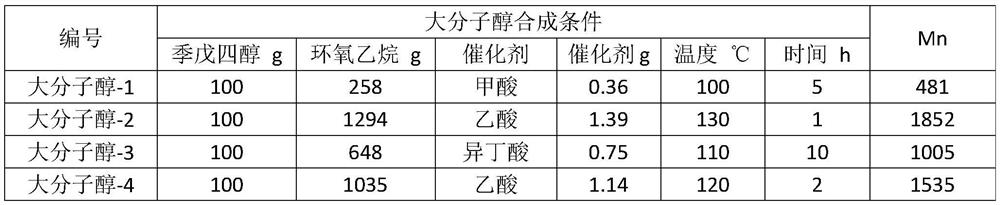
Figure 1 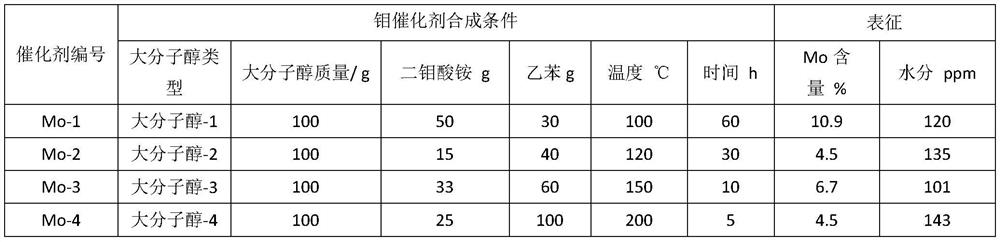
Figure 2 
Figure 3
Abstract
Description
technical field
[0001] The invention relates to the field of catalysts, in particular to a preparation method of a molybdenum catalyst and its application in epoxidation reaction.
[0002] technical background
[0003] Ethylene oxide, also known as styrene oxide, is an important organic synthesis intermediate and epoxy resin diluent.
[0004] At present, the main process of ethylene oxide is the halohydrin method, but this method has serious environmental pollution. In order to find an environment-friendly preparation method, the direct oxidation method has attracted more and more attention. The direct oxidation method mainly uses crop oxidants such as hydrogen peroxide and TBHP, but needs to add relatively expensive metal catalysts in the reaction, and the catalysts currently used are mainly molybdenum catalysts and homogeneous catalytic systems, and the selectivity of peroxides in the system is low. The unconverted peroxide increases the difficulty of post-treatment, and t...
Examples
Embodiment 1
[0041] The preparation method of platinum catalyst in the present invention is as follows:
[0042] First, 100 g of pentaerythritol and 0.36 g of formic acid were added to the reaction kettle, and after nitrogen replacement, heated to 100° C., 258 g of ethylene oxide was added to the kettle within 1 h, and then the reaction was continued for 5 h, and the ethylene oxide was removed under reduced pressure. The macromolecule alcohol was obtained, and Mn=481 by GPC analysis.
[0043] Take 100 g of macromolecular alcohol obtained above, 50 g of ammonium dimolybdate, and 30 g of ethylbenzene into another reaction kettle, and react at 100 ° C for 60 h. After the reaction is completed, the temperature is lowered to room temperature, and possible residual solid substances are removed by filtration to obtain a molybdenum catalyst. , No. Mo-1.
[0044] The preparations of other catalysts are the same as the above-mentioned methods, and the specific feeding amounts and conditions are con...
Embodiment 2-5
[0051] For the four catalysts prepared in Example 1, the epoxidation reactions were evaluated respectively:
[0052] Take the evaluation of catalyst Mo-1 as an example to introduce the evaluation method:
[0053] 565.8g of styrene, 5.6g of hydroquinone, and 0.2g of catalyst Mo-1 were added to the epoxidation reaction kettle. After nitrogen replacement was completed, the temperature was raised to 110°C, and 295.8g of tert-butyl was added to the system within 1 hour. base hydrogen peroxide (concentration is 55%), the reaction was continued for 1 h after the addition, and then the temperature was lowered to 30°C. After analysis, the conversion rate of tert-butyl hydroperoxide was 99.2%, and the selectivity of ethylene oxide was 98.3%.
[0054] The evaluation of other catalysts is the same as the above method, and the specific feeding amount and conditions are controlled in the following table.
Embodiment 8-11
[0062] After evaluating the reaction and cooling down as above, solids were all precipitated, and solid substances were obtained by simple sedimentation and decantation. After unified and simple drying treatment (100 ° C drying for 4 h), solid substances 0.16g, 0.24g, and 0.54g were obtained in Examples 2-5, respectively. , 0.88g. These four solids are numbered Mo-1', Mo-2', Mo-3', Mo-4', respectively.