

Formula of botanical antioxidant and preparation method
A technology of antioxidants and plants, which is applied in the direction of food ingredients as antioxidants, food science, and the function of food ingredients. It can solve the problems of unsatisfactory antioxidant effects of natural vitamin E, and achieve easy large-scale production and large-scale production. The effect of chemical production and enhancement of physiological function
Patent Information
- Authority / Receiving Office
- CN · China
- Patent Type
- Applications(China)
- Current Assignee / Owner
- Publication Date
- 2021-01-05
- Estimated Expiration
- Not applicable · inactive patent
Smart Images
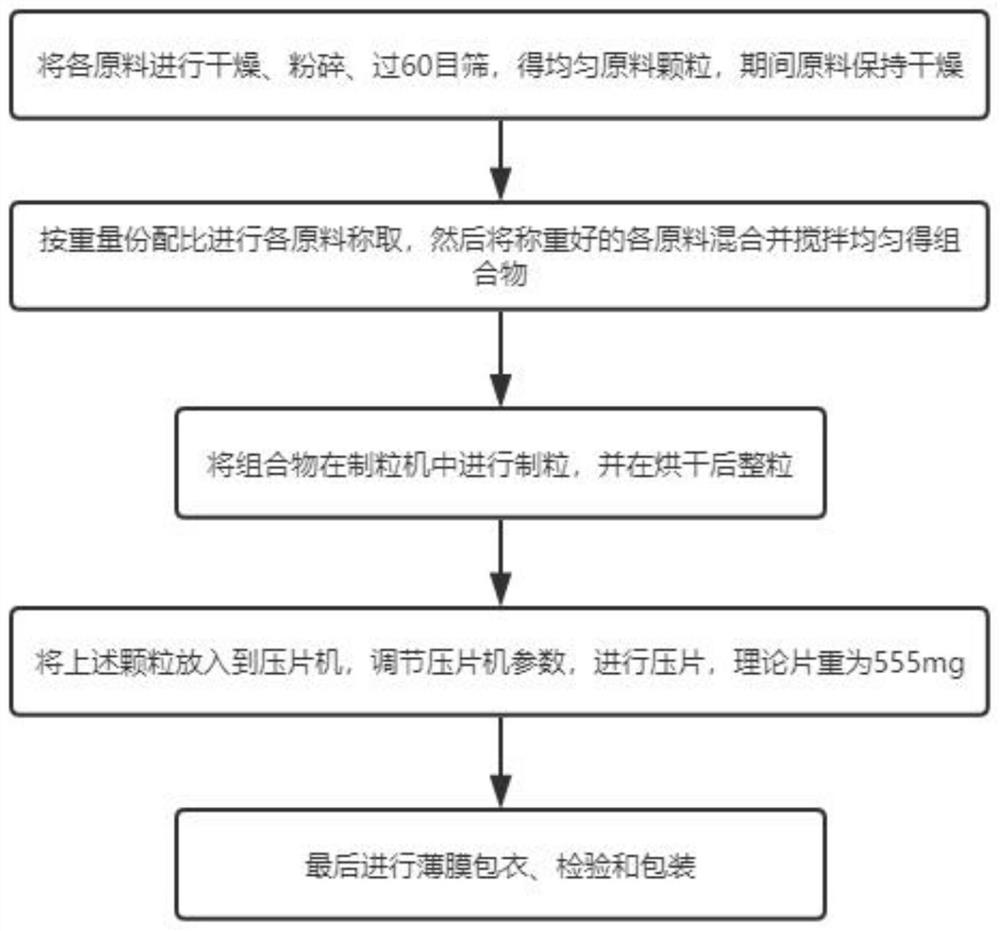
Figure 1
Abstract
Description
technical field
[0001] The invention relates to the technical field of health drink products, in particular to a plant antioxidant formula and a preparation method. Background technique
[0002] Antioxidants can be divided into synthetic antioxidants and natural antioxidants according to their sources. Synthetic antioxidants such as BHA (butyl hydroxyanisole), BHT (dibutyl hydroxytoluene), PG (propyl gallate), etc., they are used In many foods to prevent rancidity and oxidation of oils and fats. Because of worrying about the potential harm to health of synthetic antioxidants, such as BHA, which is carcinogenic in animal experiments, the main antioxidants are vitamin C and vitamin E. The cost of vitamin C plant extraction is too high, and it is mainly artificially synthesized at present; it has been found out The antioxidant effect of natural vitamin E on vegetable oil is not ideal. Finding antioxidant substances from natural plants is a research hotspot. Antioxidant substan...
Examples
Embodiment 1
[0046] A plant antioxidant formulation such as figure 1 As shown, it includes the following components by weight: 150 parts of nicotinamide mononucleotide, 60 parts of nicotinamide adenine dinucleotide, 25 parts of grape seed extract, 25 parts of ginsenoside, 40 parts of magnesium stearate, 5 parts of silicon, 150 parts of hydroxypropyl methylcellulose.
[0047] The preparation method of the nicotinamide mononucleotide comprises the following steps:
[0048] S1: Add substrate solution to the reaction kettle: 30ml of ATP, 30ml of xylose, 20ml of MgCl2, 10ml of KC1 and 100ml of Tris-HCl buffer, adjust the pH of the substrate solution to 7.5-8.0;
[0049]S2: then add following catalytic enzyme: ribose phosphate pyrophosphate kinase 6g / L substrate solution, ribose-5-phosphate isomerase 10g / L substrate solution, ribulose-3-phosphate isomerase 11g / L bottom substance solution, xylulokinase 10g / L substrate solution, xylose isomerase 10g / L substrate solution, react after stirring;
...
Embodiment 2
[0077] A plant antioxidant formulation such as figure 1 As shown, it includes the following ingredients by weight: 130 parts of nicotinamide mononucleotide, 50 parts of nicotinamide adenine dinucleotide, 45 parts of grape seed extract, 35 parts of ginsenoside, 50 parts of magnesium stearate, 5 parts of silicon, 130 parts of hydroxypropyl methylcellulose.
[0078] The preparation method of the nicotinamide mononucleotide comprises the following steps:
[0079] S1: Add substrate solution to the reaction kettle: 30ml of ATP, 30ml of xylose, 20ml of MgCl2, 10ml of KC1 and 100ml of Tris-HCl buffer, adjust the pH of the substrate solution to 7.5-8.0;
[0080] S2: then add following catalytic enzyme: ribose phosphate pyrophosphate kinase 6g / L substrate solution, ribose-5-phosphate isomerase 10g / L substrate solution, ribulose-3-phosphate isomerase 11g / L bottom substance solution, xylulokinase 10g / L substrate solution, xylose isomerase 10g / L substrate solution, react after stirring; ...