
Silicon wafer waste powder solid waste treatment method and product thereof
A processing method and powder technology, applied in cement production and other directions, can solve problems such as not very high purity, no silica fume waste found, and achieve the effects of simple process, low cost, and reduced energy consumption
Patent Information
- Authority / Receiving Office
- CN · China
- Patent Type
- Applications(China)
- Current Assignee / Owner
- Publication Date
- 2021-01-05
- Estimated Expiration
- Not applicable · inactive patent
Smart Images
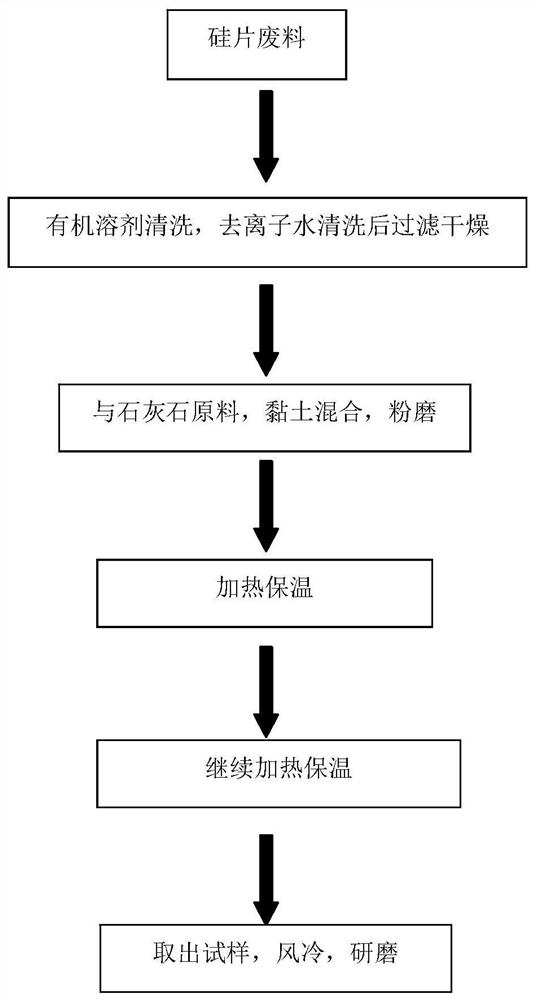
Figure 1 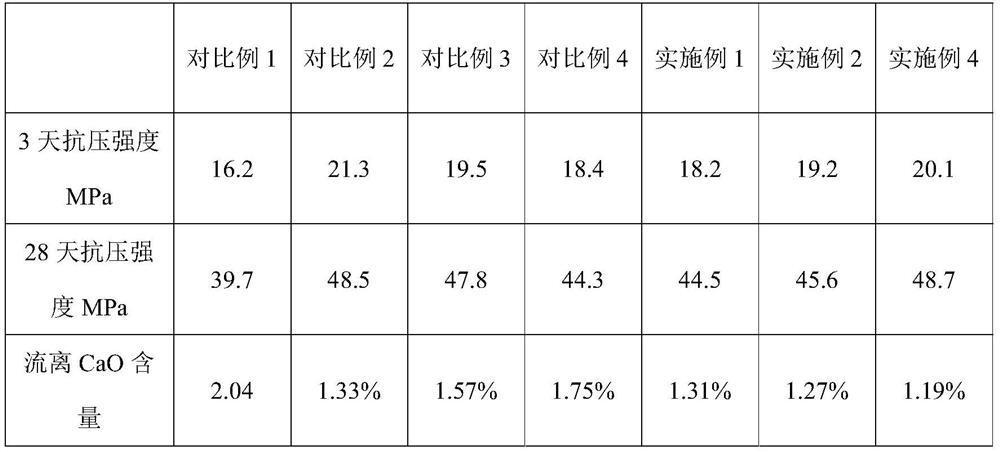
Figure 2
Abstract
Description
technical field
[0001] The invention belongs to the field of building materials, and in particular relates to a solid waste treatment method for silicon wafer waste powder, a product thereof and cement prepared therefrom. Background technique
[0002] In the semiconductor industry, whether it is the cutting and grinding of silicon rods or the grinding of wafers in the packaging process, silicon powder waste will be generated. For silicon powder waste, there is no effective treatment method, and it is generally treated as solid waste. Tan Yi from Dalian University of Technology and others used diamond wire to cut photovoltaic materials—silicon wafers, and recycled the silicon wafer waste as lithium-ion negative electrode materials [CN108987677A]. Li Xiang from Jiangsu University preprocessed silicon wafer powder through high temperature Under the heating, made of SiC fiber material [CN111115634A]. Of course, for silicon powder waste, the chemical composition is simple Si, bu...
Examples
Embodiment 1
[0025] The silicon wafer waste powder was soaked in a mixed solution of ethanol and acetone with a volume ratio of 1:1, stirred for 20 min, filtered and rinsed with deionized water, and dried at 100 °C. Mix limestone powder, dried silicon wafer waste, and clay at a mass ratio of 1.4:0.1:0.3. After mixing evenly, put it into a reaction furnace and heat it. The heating rate is 10°C / min, heated to 800°C, and kept for 2 hours. , and then continue to heat to 1450 ° C, heat preservation for 2 hours. The sample was taken out, air-cooled to room temperature, and ground through a 80 μm square hole sieve to obtain cement clinker. Add water and stir, the water-cement ratio is 0.44, pour the cement slurry into a 4×4×16cm triple mold, vibrate and form, standard curing for 3 days, measure its compressive strength according to GB175-2017 after 28 days, and use glycerin— The ethanol method is used to determine the free calcium oxide content in cement according to GB / T12573, and the results a...
Embodiment 2
[0027] The silicon wafer waste powder was soaked in a mixed solution of ethanol and acetone with a volume ratio of 1:1, stirred for 20 min, filtered and rinsed with deionized water, and dried at 100 °C. Mix limestone powder, dried silicon chip waste, and clay at a mass ratio of 1.4:0.2:0.2. After mixing evenly, put it into a reaction furnace for heating. The heating rate is 10°C / min, heated to 900°C, and kept for 2 hours. . Then continue heating to 1450°C and keep the temperature for 2 hours. The sample was taken out, air-cooled to room temperature, and ground through a 80 μm square hole sieve to obtain cement clinker. Add water and stir, the water-cement ratio is 0.44, pour the cement slurry into a 4×4×16cm triple mold, vibrate and form, standard curing for 3 days, measure its compressive strength according to GB175-2017 after 28 days, and use glycerin— The ethanol method is used to determine the free calcium oxide content in cement according to GB / T12573, and the results a...
Embodiment 3
[0029] The silicon wafer waste powder was soaked in a mixed solution of ethanol and acetone with a volume ratio of 1:1, stirred for 20 min, filtered and rinsed with deionized water, and dried at 100 °C. Mix limestone powder, dried silicon wafer waste, and clay at a mass ratio of 1.4:0.15:0.25. After mixing evenly, put it into a reaction furnace and heat it. The heating rate is 10°C / min, heated to 850°C, and kept for 2 hours. . Then continue heating to 1450°C and keep the temperature for 2 hours. The sample was taken out, air-cooled to room temperature, and ground through a 80 μm square hole sieve to obtain cement clinker. Add water and stir, the water-cement ratio is 0.44, pour the cement slurry into a 4×4×16cm triple mold, vibrate and form, standard curing for 3 days, measure its compressive strength according to GB175-2017 after 28 days, and use glycerin— The ethanol method is used to determine the free calcium oxide content in cement according to GB / T12573, and the result...