
Ternary high-information-content embedding method for low-resolution video
A low-resolution, information embedding technology, which is applied in digital video signal modification, image communication, electrical components, etc., can solve problems such as low average information embedding, few non-zero quantization coefficients, and lack of solutions in existing technologies. Achieve broad market application prospects and high commercial value
Patent Information
- Authority / Receiving Office
- CN · China
- Current Assignee / Owner
- Publication Date
- 2021-08-27
Smart Images
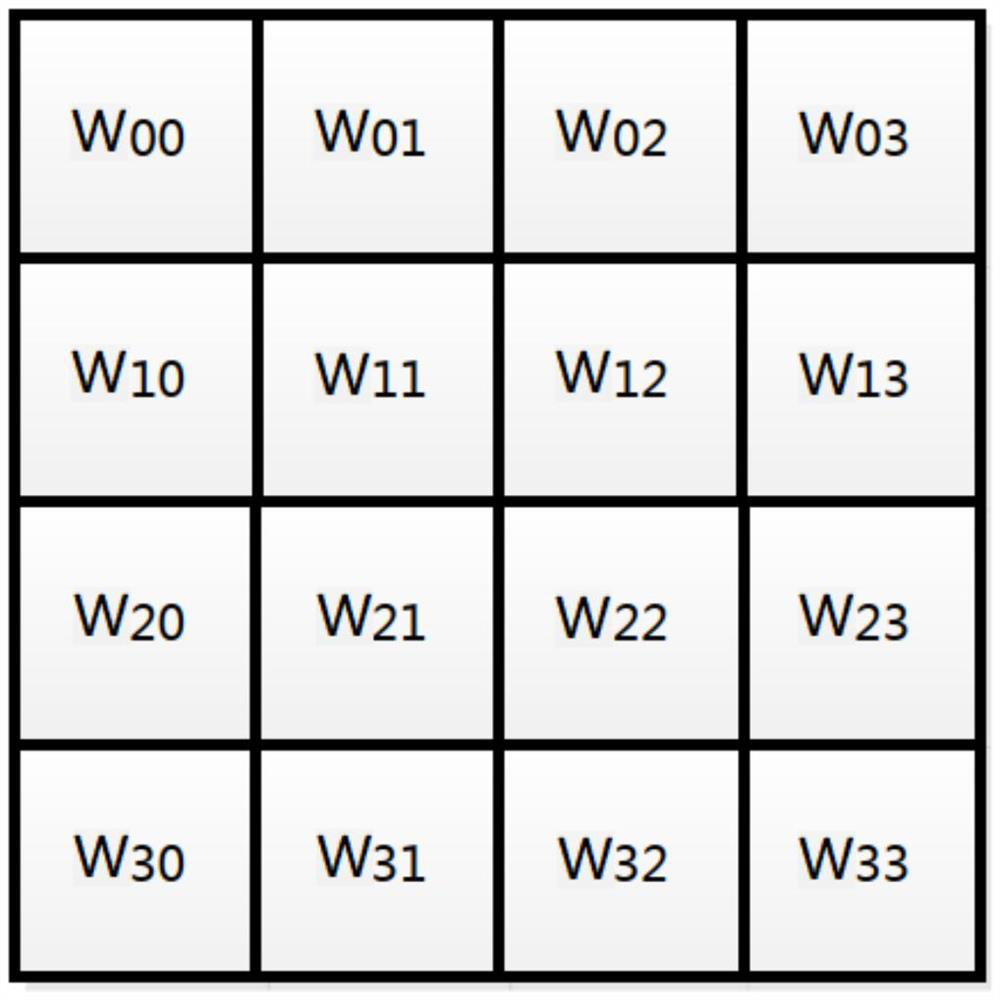
Figure 1 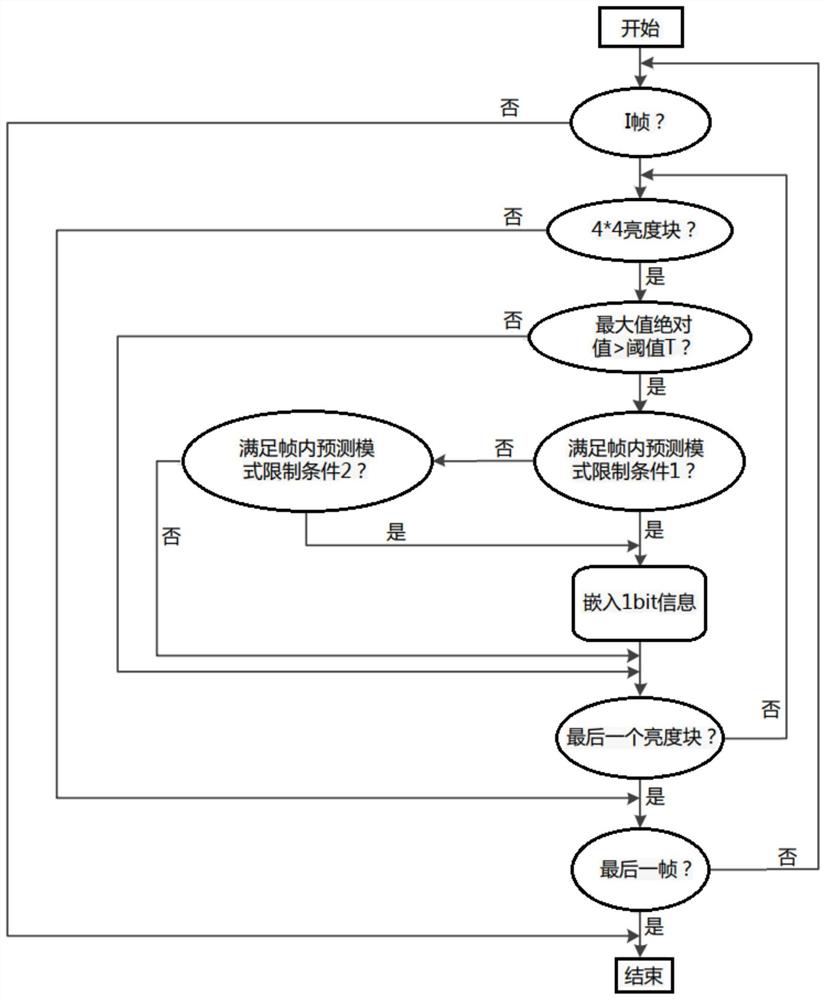
Figure 2 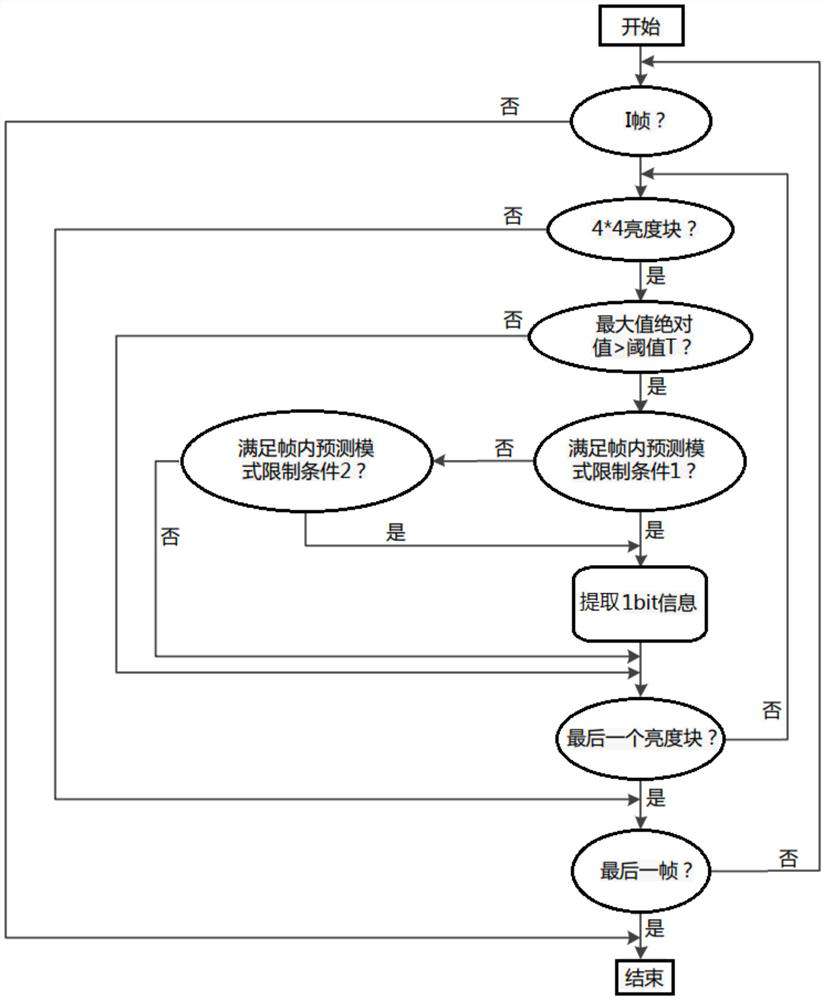
Figure 3
Abstract
Description
technical field
[0001] The invention relates to a video ternary high-information embedding method, in particular to a low-resolution video ternary high-information embedding method, and belongs to the technical field of video high-information embedding. Background technique
[0002] With the rapid development of the mobile Internet, people pay more and more attention to privacy protection and information security. In recent years, information hiding technology has developed rapidly. Using popular digital carrier files to transmit private information can ensure that private information will not be discovered. The new generation of high-efficiency video coding standard (HEVC) contains the latest coding technology, which has excellent compression performance and unique Parallel processing design, widely used in various video services.
[0003] High-efficiency video coding HEVC adopts DCT and discrete sine transform DST, which is one of the more advanced video codecs at present...
Examples
Embodiment Construction
[0053] The following is a further description of the technical solution of the low-resolution video ternary high-information embedding method provided by the present invention in conjunction with the accompanying drawings, so that those skilled in the art can better understand the present invention and implement it.
[0054] There are already many H.264 video information concealment algorithms based on the DCT domain in the existing technology, but DCT and DST technologies are used in the HEVC intra-frame encoding process, and all 4*4 brightness prediction blocks use DST technology, which makes the previous H.264 based on H. The video information concealment algorithm in the DCT domain of .264 video is no longer applicable to HEVC video. The present invention proposes a ternary information embedding method suitable for low-resolution video, which replaces the parity binary information embedding method of the prior art. When the number of embedded bits is the same and the unit i...