
Combined treatment method of polycyclic aromatic hydrocarbon wastewater
A technology of polycyclic aromatic hydrocarbons and treatment methods, applied in the field of wastewater treatment, can solve problems such as complex wastewater components, achieve the effects of increasing mass transfer and heat transfer, good sealing, and saving materials
Patent Information
- Authority / Receiving Office
- CN · China
- Current Assignee / Owner
- Publication Date
- 2022-04-15
Smart Images
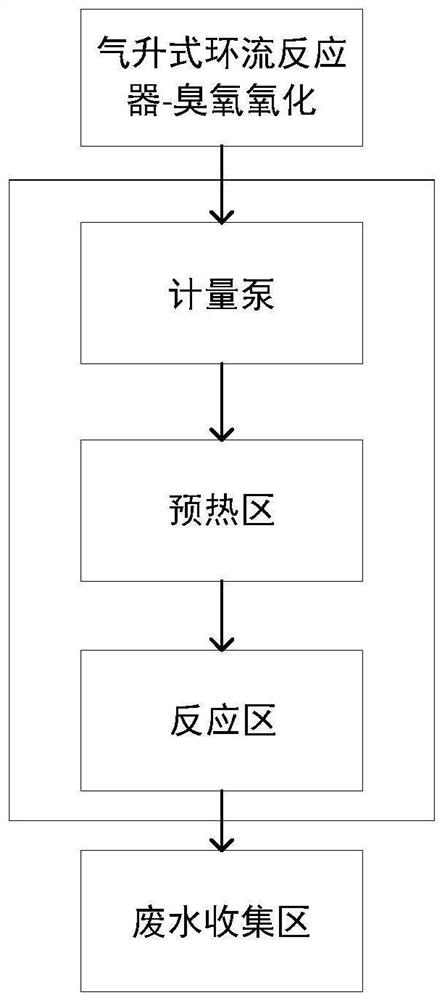
Figure 1 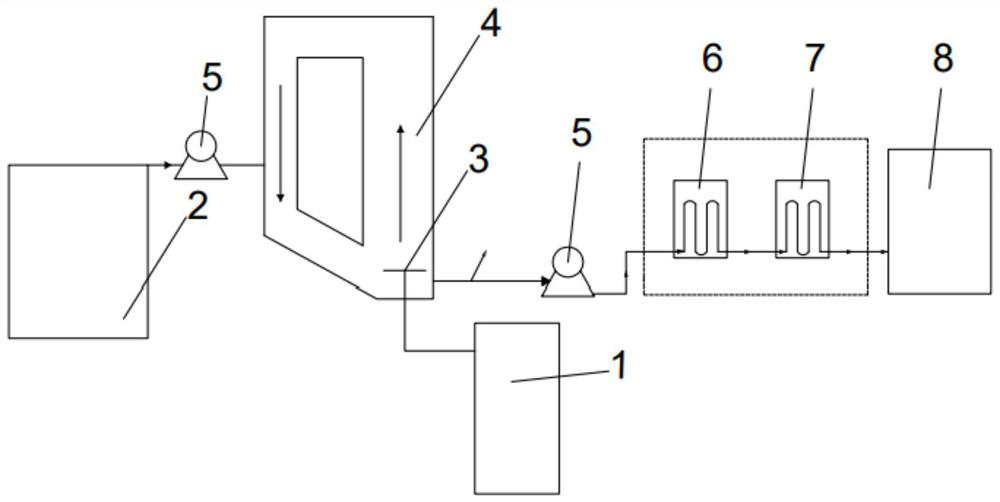
Figure 2 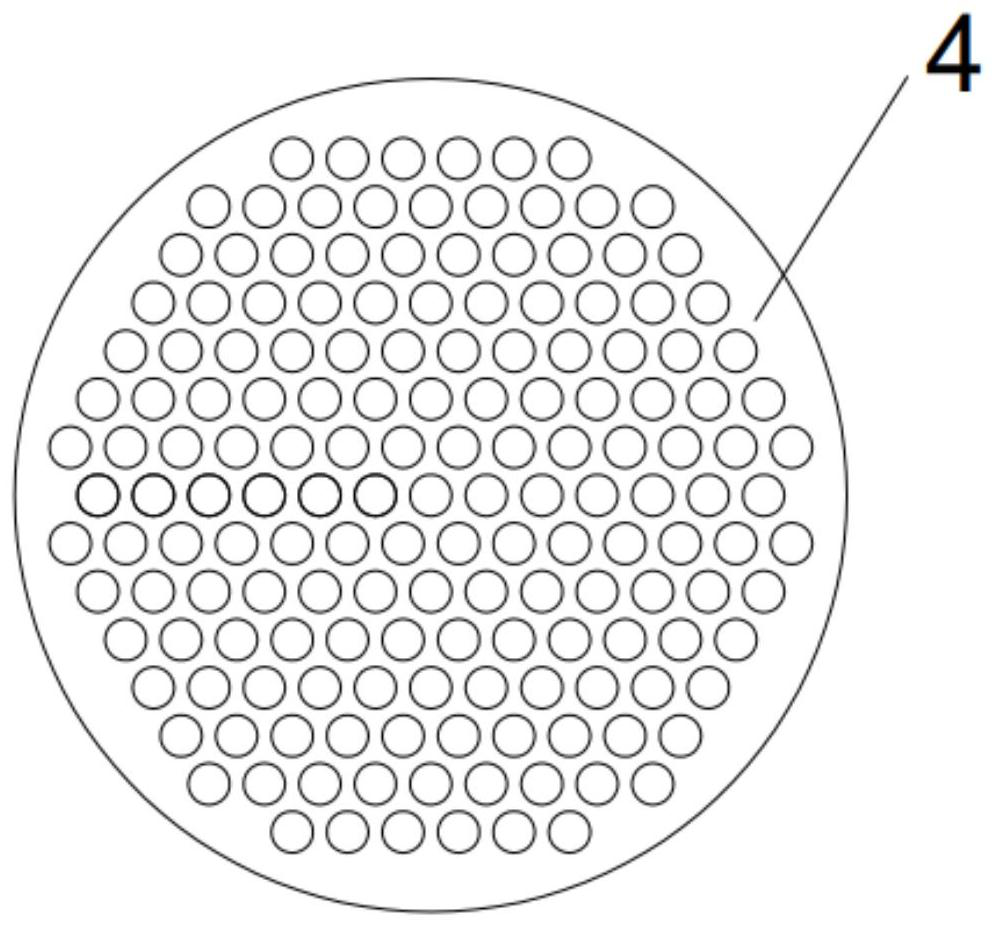
Figure 3
Abstract
Description
technical field
[0001] The invention relates to a method for jointly treating polycyclic aromatic hydrocarbon wastewater by using ozone oxidation and wet oxidation, which belongs to wastewater treatment technology. Background technique
[0002] At present, PAH wastewater is mainly divided into physical methods, chemical methods and biological methods; physical methods mainly include adsorption, coagulation and sedimentation, etc.; chemical methods mainly include different advanced oxidation methods; biological methods mainly include aerobic biological treatment, anaerobic biological treatment, etc. oxygen biological treatment.
[0003] Advanced oxidation mainly includes electrochemical oxidation, photocatalytic oxidation, ozone oxidation, Fenton oxidation and wet oxidation. Among them, the ozone oxidation method refers to the wastewater treatment technology that uses ozone as an oxidant to oxidize the organic matter in the wastewater, which can improve the B / C and the biode...
Examples
Embodiment 1
[0034] (1) Get polycyclic aromatic hydrocarbon wastewater (COD: 23476mg / L, BOD: 2817mg / L, B / C=0.12, content of polycyclic aromatic hydrocarbons=1265mg / L) add in the waste water storage tank and adjust pH to be 1, through The metering pump enters the air-lift loop reactor, in which ozone enters from the air inlet at the bottom of the tower, and a gas splitter is installed at the bottom of the tower, and the wastewater enters the reactor from the downflow area of the reactor. The COD mass ratio is 1:1. The reaction time is 1h.
[0035] (2) The waste water after the reaction flows out from the water outlet at the bottom of the tower, and it is detected by sampling. At this time, the effluent COD=6703mg / L, BOD=1609mg / L, B / C=0.24, and the content of polycyclic aromatic hydrocarbons=690mg / L.
[0036] (3) The wastewater oxidized by ozone enters the microchannel reactor through the metering pump (wherein the structural combination is a-straight channel, b-circular cake type pulse v...
Embodiment 2
[0039] (1) Get polycyclic aromatic hydrocarbon wastewater (COD: 22954mg / L, BOD: 2525mg / L, B / C=0.11, polycyclic aromatic hydrocarbon substance content is 1480mg / L) and add in the waste water storage tank and adjust pH to be 2, through The metering pump enters the air-lift loop reactor, in which ozone enters from the air inlet at the bottom of the tower, and a gas splitter is installed at the bottom of the tower, and the wastewater enters the reactor from the downflow area of the reactor. The COD mass ratio is 1:2. The reaction time is 1.5h.
[0040](2) The waste water after the reaction flows out from the water outlet at the bottom of the tower, and it is detected by sampling. At this time, the effluent COD=6003mg / L, BOD=2041mg / L, B / C=0.34, and the content of polycyclic aromatic hydrocarbons=101mg / L.
[0041] (3) The wastewater oxidized by ozonation enters the microchannel reactor through the metering pump (wherein the structural combination is a-straight channel, c-orthorho...
Embodiment 3
[0044] (1) Get polycyclic aromatic hydrocarbon wastewater (COD: 30279mg / L, BOD: 4239mg / L, B / C=0.14, polycyclic aromatic hydrocarbon substance content is 1585mg / L) and add in the waste water storage tank and adjust pH to be 3, through The metering pump enters the air-lift loop reactor, in which ozone enters from the air inlet at the bottom of the tower, and a gas splitter is installed at the bottom of the tower, and the wastewater enters the reactor from the downflow area of the reactor. The COD mass ratio is 1:3. The reaction time is 2h.
[0045] (2) The waste water after the reaction flows out from the water outlet at the bottom of the tower, and it is detected by sampling. At this time, the effluent COD=6075mg / L, BOD=2005mg / L, B / C=0.33, and the content of polycyclic aromatic hydrocarbons=121mg / L.
[0046] (3) The wastewater after ozone oxidation enters the microchannel reactor through the metering pump (wherein the structural combination is b-round cake type pulse variabl...