
Synergistic insecticidal composition containing lufenuron and thiamethoxam
A combination agent, thiamethoxam technology, applied in the directions of insecticides, biocides, animal repellents, etc., can solve the problem of high cost of use
Patent Information
- Authority / Receiving Office
- CN · China
- Current Assignee / Owner
- Publication Date
- 2022-07-01
Smart Images
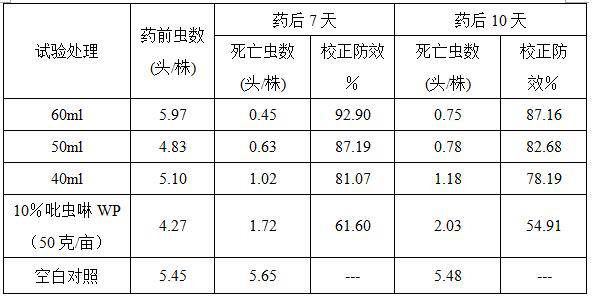
Figure 1 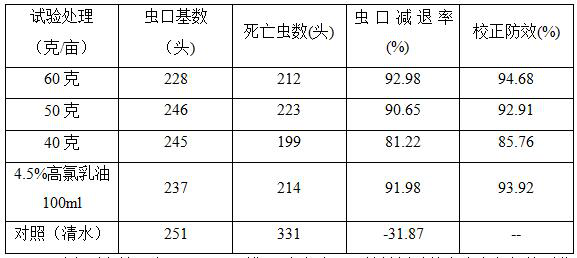
Figure 2 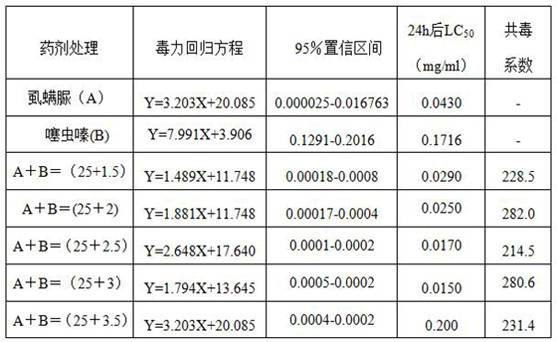
Figure 3
Abstract
Description
technical field
[0001] The invention relates to the technical field of pesticide production. Background technique
[0002] Flower seedlings and vegetable pests are an important cause of damage to flower seedlings and vegetable production. In recent years, although the state has banned the use of highly toxic pesticides on flower seedlings and vegetables, there are often poisoning incidents caused by eating vegetables containing residual highly toxic pesticides. , Flowers and seedlings used in people's families are often polluted by highly toxic pesticides. Therefore, the development of high-efficiency, low-toxicity, and low-residue pesticides for flower seedlings and vegetables is an inevitable development trend.
[0003] Lufenuron is a substituted urea insecticide. The agent kills pests by acting on insect larvae and preventing the peeling process, especially for leaf-eating caterpillars such as fruit trees, and has a unique killing mechanism for thrips, rust mites and wh...
Examples
example 1
[0019] Example 1: Production of 30% lufenuron·thiamethoxam WP.
[0020] Weigh 25kg lufenuron, 5kg thiamethoxam, 3kg NNO (dispersing agent), 7kg sodium lignosulfonate (dispersing agent), 1kg sodium alkylbenzene sulfonate (dispersing agent), 59kg white carbon black (filler) respectively .
[0021] The weighed materials are sequentially added to the jet mill under stirring, and the product is obtained after being pulverized by the jet mill and then stirred and mixed evenly.
[0022] The obtained products were tested on the field efficacy of controlling vegetable cabbage caterpillars.
[0023] The following table is the test result table of the control effect of 30% lufenuron·thiamethoxam WP after 7 days of controlling cabbage worms:
[0024]
[0025] The above measurement results show that 30% lufenuron·thiamethoxam WP has a good killing effect on cabbage caterpillars, and the efficacy is good, and the average control effect is above 85%.
example 2
[0026] Example 2: Production of 30% lufenuron·thiamethoxam WP.
[0027] Weigh 25kg lufenuron, 5kg thiamethoxam, 3kg NNO (dispersing agent), 7kg sodium lignosulfonate (dispersing agent), 1kg sodium alkylbenzene sulfonate (dispersing agent), 59kg white carbon black (filler) respectively .
[0028] The weighed above materials are sequentially added to the jet mill under stirring, and the product is obtained after being pulverized by the jet mill and then stirred and mixed evenly.
[0029] The obtained products were tested on the field efficacy of controlling aphids in flowers and seedlings.
[0030]
[0031] The above measurement results show that 30% lufenuron·thiamethoxam WP has a good killing effect on flower and seedling aphids, and the effect is good, and the average control effect is more than 70%.
example 3
[0032] Example 3: Production of 30% lufenuron·thiamethoxam suspension.
[0033] Weigh respectively 25kg lufenuron, 5kg thiamethoxam, 8kg nonylphenol polyoxyethylene ether (NP-9) (dispersing wetting agent), 1kg propylene glycol (antifreeze), 1kg xanthan gum (thickening agent) , 2kg silicone defoamer (SAG612), 58kg water (filler).
[0034] After the weighed above materials are stirred and mixed uniformly, the product is obtained by sand grinding with a sand mill.
[0035] The obtained products were tested on the field efficacy of controlling red spider mites in flower seedlings.
[0036] The following table is a comparison table of the results of the control effect of 30% lufenuron·thiamethoxam suspending agent on flower seedlings red spider mites.
[0037]
[0038] The above measurement results show that 30% lufenuron·thiamethoxam suspending agent has a good killing effect on aphids in flower seedlings, and the average control effect is above 78%, which is beneficial to ag...