
Aliphatic acid metabolic imaging agent beta-methyl-15-parafluoro [18F] phenyl-pentadecanoic acid and synthesizing method thereof
A technology of pentadecanoic acid and synthetic methods, which is applied in chemical instruments and methods, pharmaceutical formulations, carboxylate preparations, etc., and can solve problems such as inability to go deep into work
Patent Information
- Authority / Receiving Office
- CN · China
- Current Assignee / Owner
- Publication Date
- 2004-09-15
- Estimated Expiration
- Not applicable · inactive patent
Smart Images
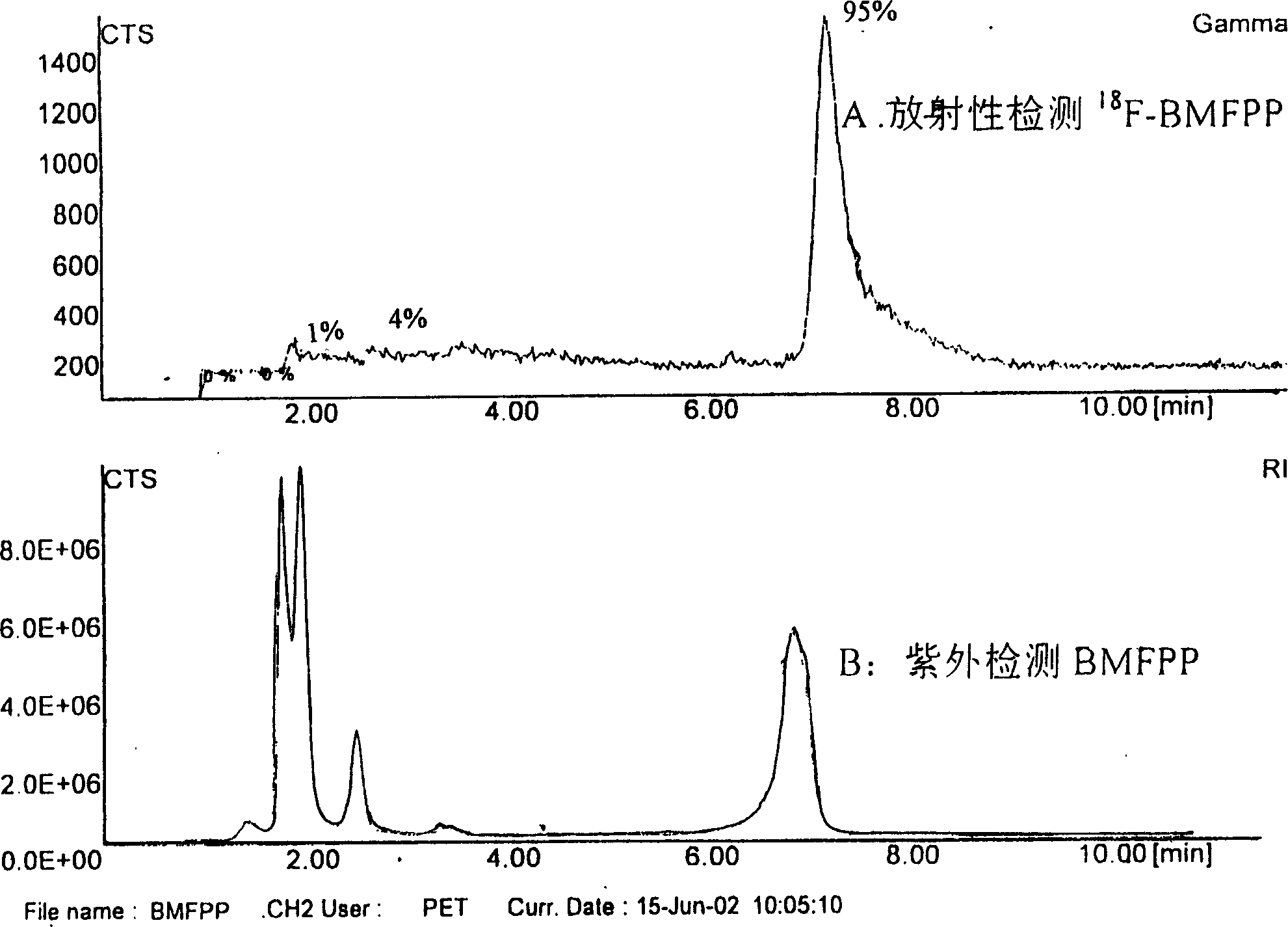
Figure 1 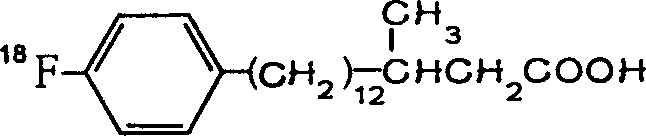
Figure 2 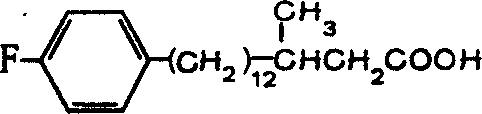
Figure 3
Abstract
Description
technical field
[0001] A fatty acid metabolism imaging agent β-methyl-15-p-fluoro[ 18 F] phenyl-pentadecanoic acid and its synthesis method relate to a fluorine-labeled fatty acid myocardial metabolism imaging agent. Background technique
[0002] In the past ten years, positron emission tomography (PET) imaging has been widely used clinically in the clinical and basic research of tumors, neuropsychiatric diseases and cardiovascular diseases, and has gradually become a new scientific research method for gene function and new drug development research. . The application and development of PET are inseparable from PET positron radiopharmaceuticals. Positron radiopharmaceuticals commonly used in clinical practice cannot be imported from abroad due to their short half-life, but must be developed by themselves. Among medical short half-life nuclides, 18 F has a relatively long half-life (110min), and can be used at close range outside PET centers. 18 The research of various po...
Examples
Embodiment Construction
[0019] 1. Using ω-bromoundecanoic acid as the starting material, BMPPA was synthesized through multi-step reactions
[0020] Synthesis of ω-bromoundecanoylbenzene (1)
[0021] Add 54g of dry ω-bromoundecanoic acid, 20ml of thionyl chloride, and 0.5ml of DMF into a 500ml three-necked flask. Stir and heat to reflux for 1 hour, cool to about 10°C, add 250ml of dry benzene without thiophene, and 32g of anhydrous aluminum chloride. Continue heating to reflux for 2h, cool, pour it into 300ml of water, separate the benzene layer, extract the water layer once with benzene, combine the benzene layers, evaporate to dryness, and distill the residue under reduced pressure to obtain a colorless product (1), with a yield of about 60%. Its bp: 220°C / 2kPa, mp: 49-51°C. Elemental analysis: theoretical value (measured value) is C%: 62.77 (62.69), H%: 7.69 (7.87). IR (cm -1 ): 3030 (-CH 2 ), 1680(-CO-), 1500, 770, 690(-ph).
[0022] Synthesis of 12-oxobenzenedodecanonitrile (2)
[0023] ...