
Cargo lashing fitting
a technology for lashing fittings and cargo, applied in the direction of transportation items, load transportation vehicles, vehicles, etc., can solve the problems of affecting the safety of the entire socket, the socket is also subject to these high loads and environmental conditions, and the entire socket is not unusually worn and/or damaged, so as to reduce/eliminate the risk
Patent Information
- Authority / Receiving Office
- US · United States
- Patent Type
- Patents(United States)
- Current Assignee / Owner
- Publication Date
- 2021-07-06
Smart Images
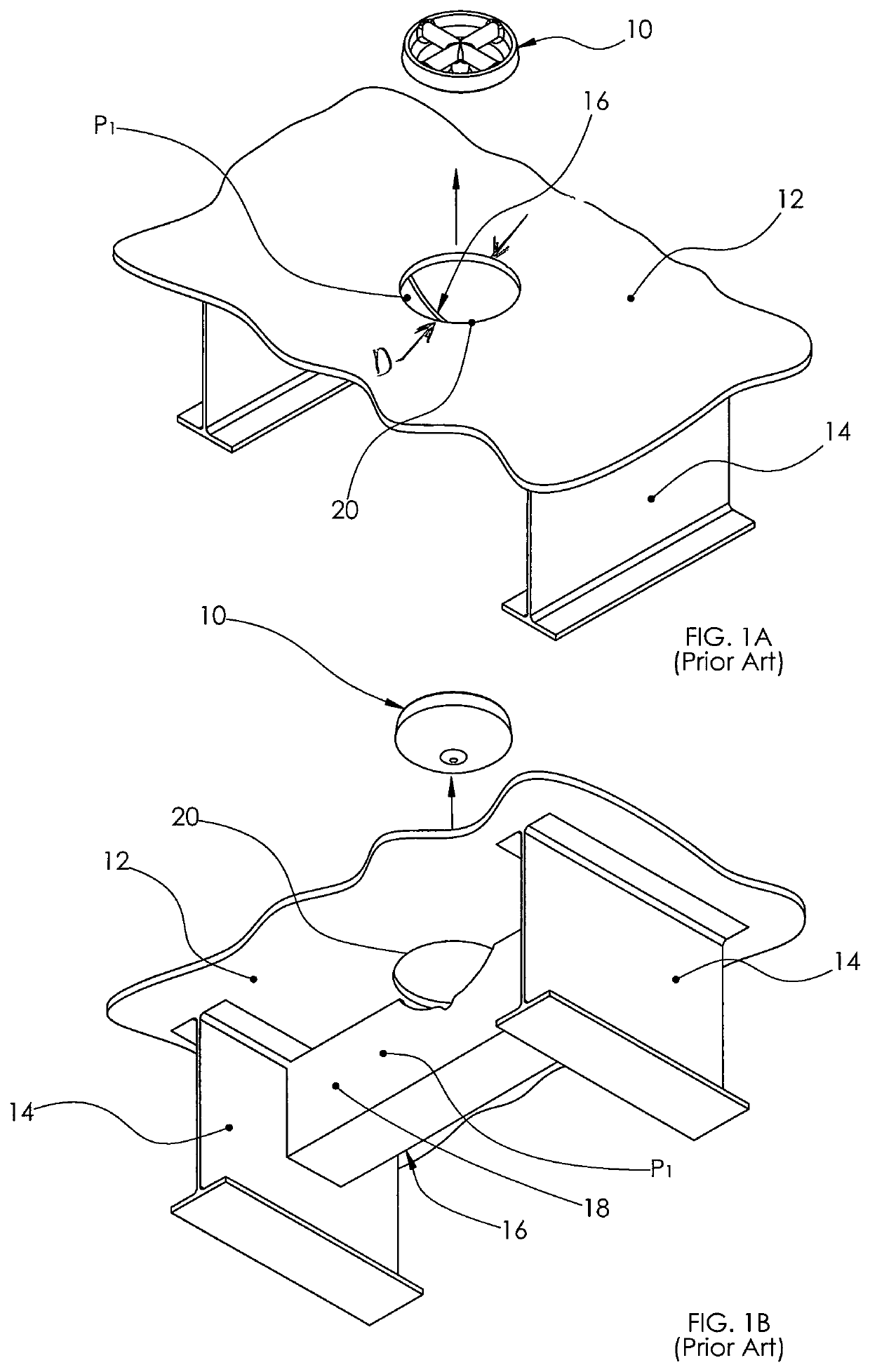
Figure 1 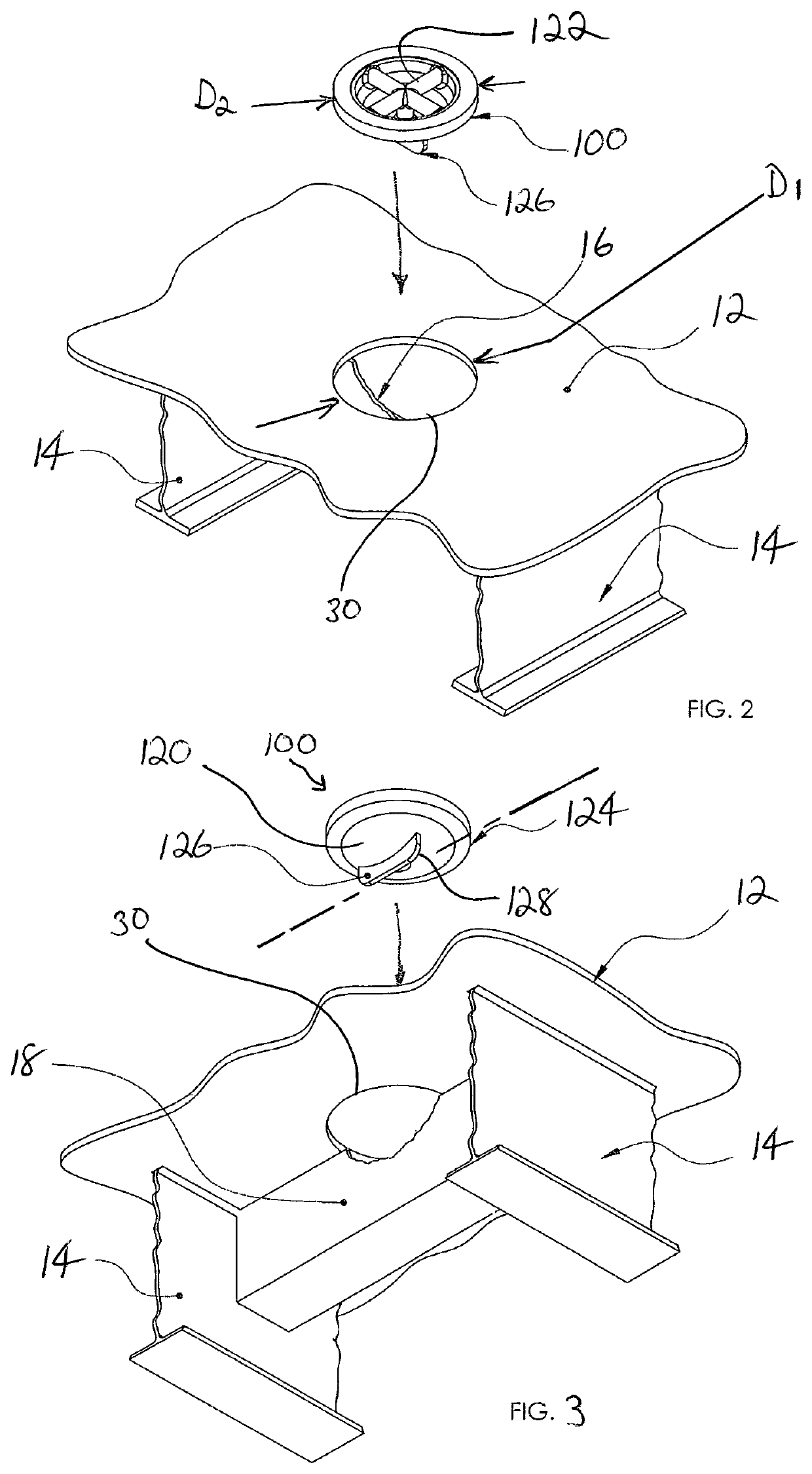
Figure 2 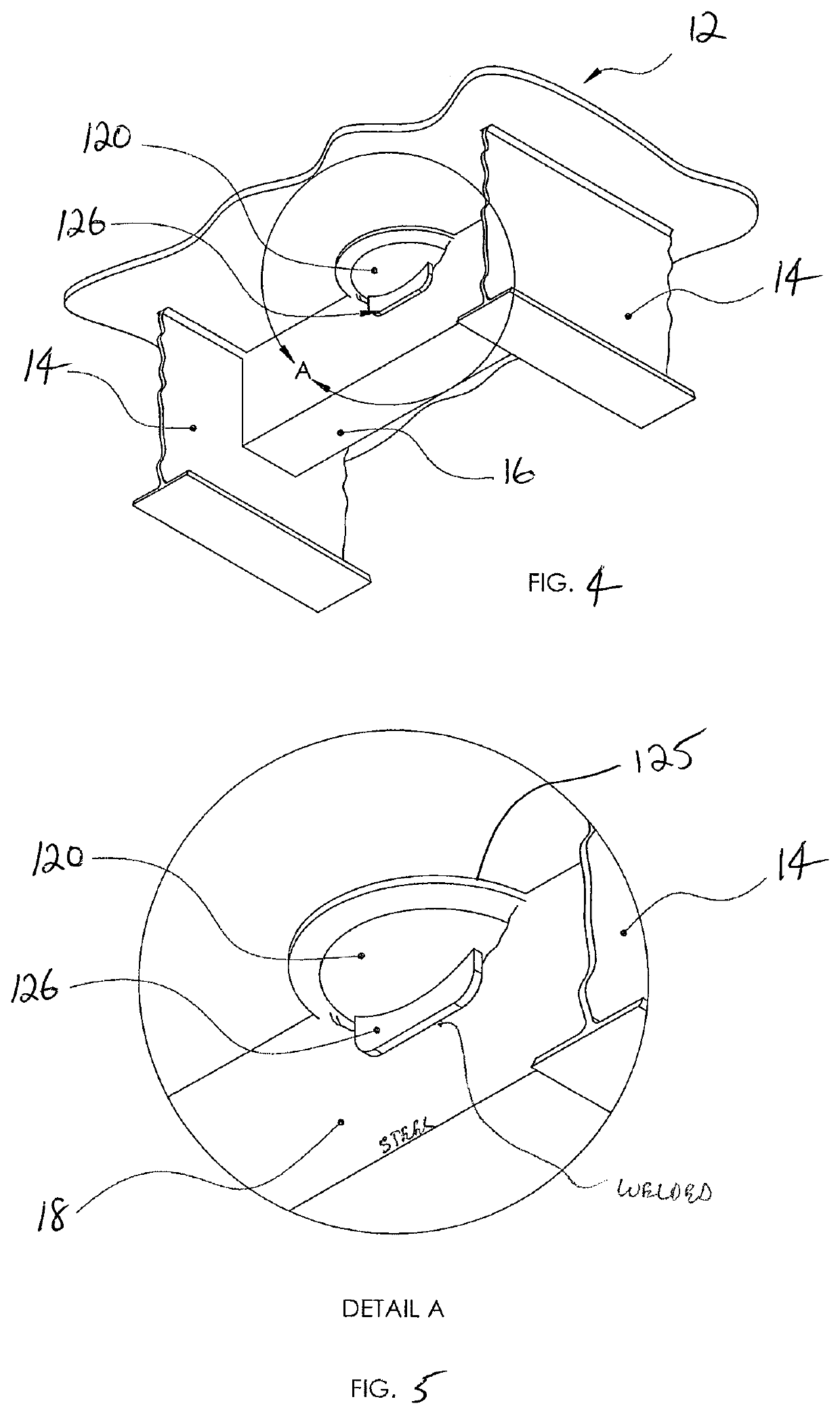
Figure 3
Abstract
Description
BACKGROUND OF THE INVENTION
[0001] The present invention relates to maritime transportation of cargo and, more particularly, to a cargo lashing fitting adapted for retrofit installation within the deck of a transportation vehicle.
[0002] Transportation of cargo requires securing systems which include devices that ensure that such cargo remains safely stowed and stationary during transit. In this regard, the deck(s) of the transportation vehicles, e.g., ship, railcar, etc., typically include a plurality of cargo lashing fittings, often referred to as sockets.
[0003] The maritime transportation of cargo requires securing systems which include devices that can support and transfer the high loads experienced as a result of the ship's dynamics and environmental conditions. The mentioned sockets are also subjected to these high loads and environmental conditions. As a result, it is not unusual for deck sockets to experience wear and / or damage.
[0004] Prior art sockets are typically installed as a...
Examples
Embodiment Construction
[0018]As discussed hereinabove, sockets are subject to wear and / or damage during use in the field. A worn / damaged socket must be removed from the deck of the vessel, typically via a flame-cutting procedure. Referring to FIGS. 1a to 1b, a prior art worn / damaged socket 10 is shown removed from a deck 12 of a transportation vehicle, e.g., a commercial ship, a military ship, etc. In many of such vehicles, deck 12 is supported by a plurality of beams 14 and stiffeners 16. Stiffener 16 includes a sidewall 18 defining a plane P1. After the worn / damaged socket is removed from the deck 12, the original deck opening 20 having a diameter D is exposed.
[0019]Referring now to FIGS. 2 to 6c, the present invention provides a cargo lashing fitting, i.e., socket assembly 100, for installation within deck 12 of the vehicle. As explained further hereinbelow, socket assembly 100 is particularly suited for retrofit installation within the deck of the vehicle.
[0020]In one preferred embodiment, socket asse...