
Method and apparatus for producing diffusion aluminide coatings
a technology of diffusion aluminide and coating, which is applied in the direction of solid-state diffusion coating, vacuum evaporation coating, coating, etc., can solve the problems of fatigue cracking, metal wastage and wall thickness loss, and part failur
Patent Information
- Authority / Receiving Office
- US · United States
- Patent Type
- Patents(United States)
- Current Assignee / Owner
- Publication Date
- 2017-09-26
Smart Images
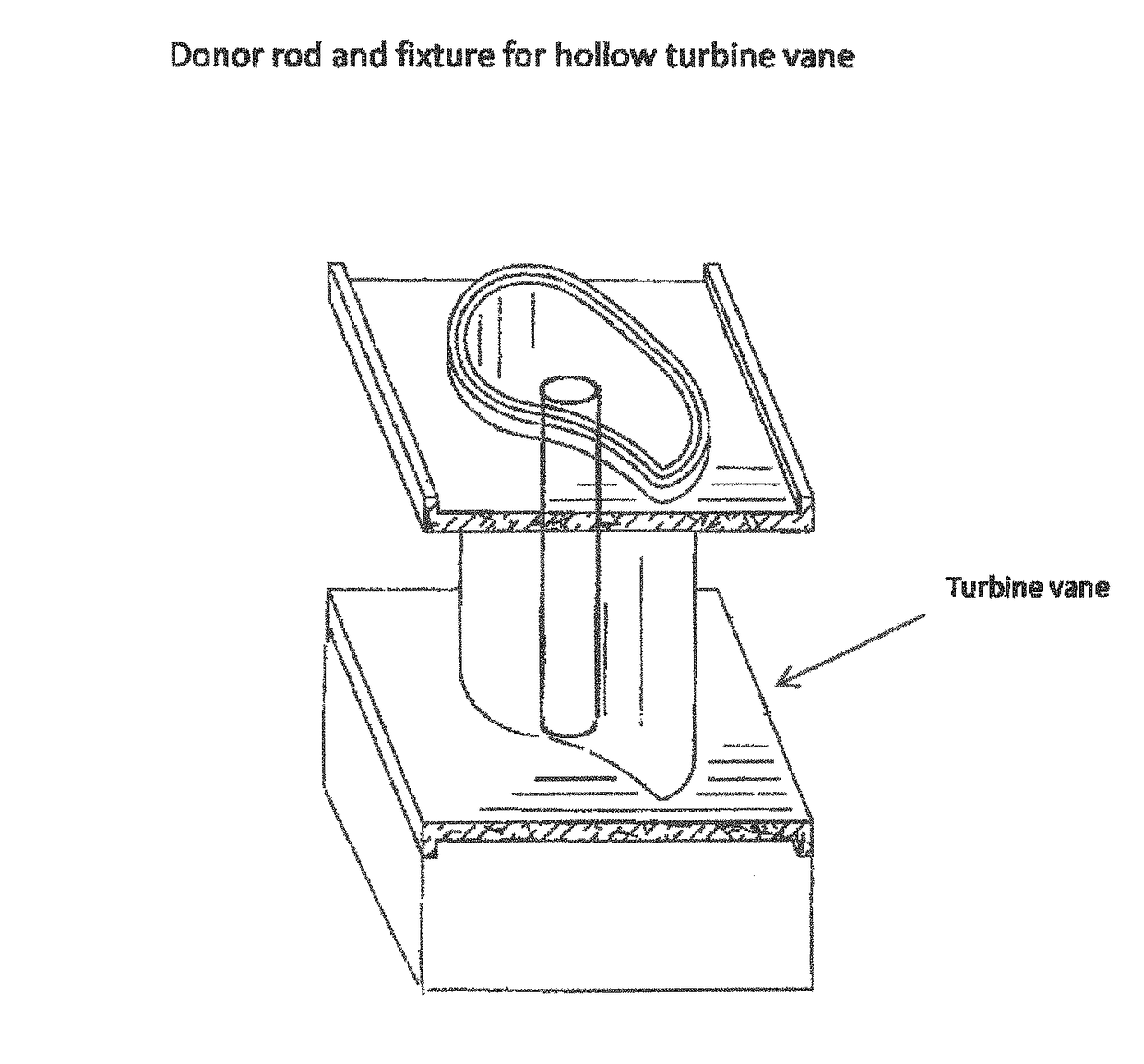
Figure 1 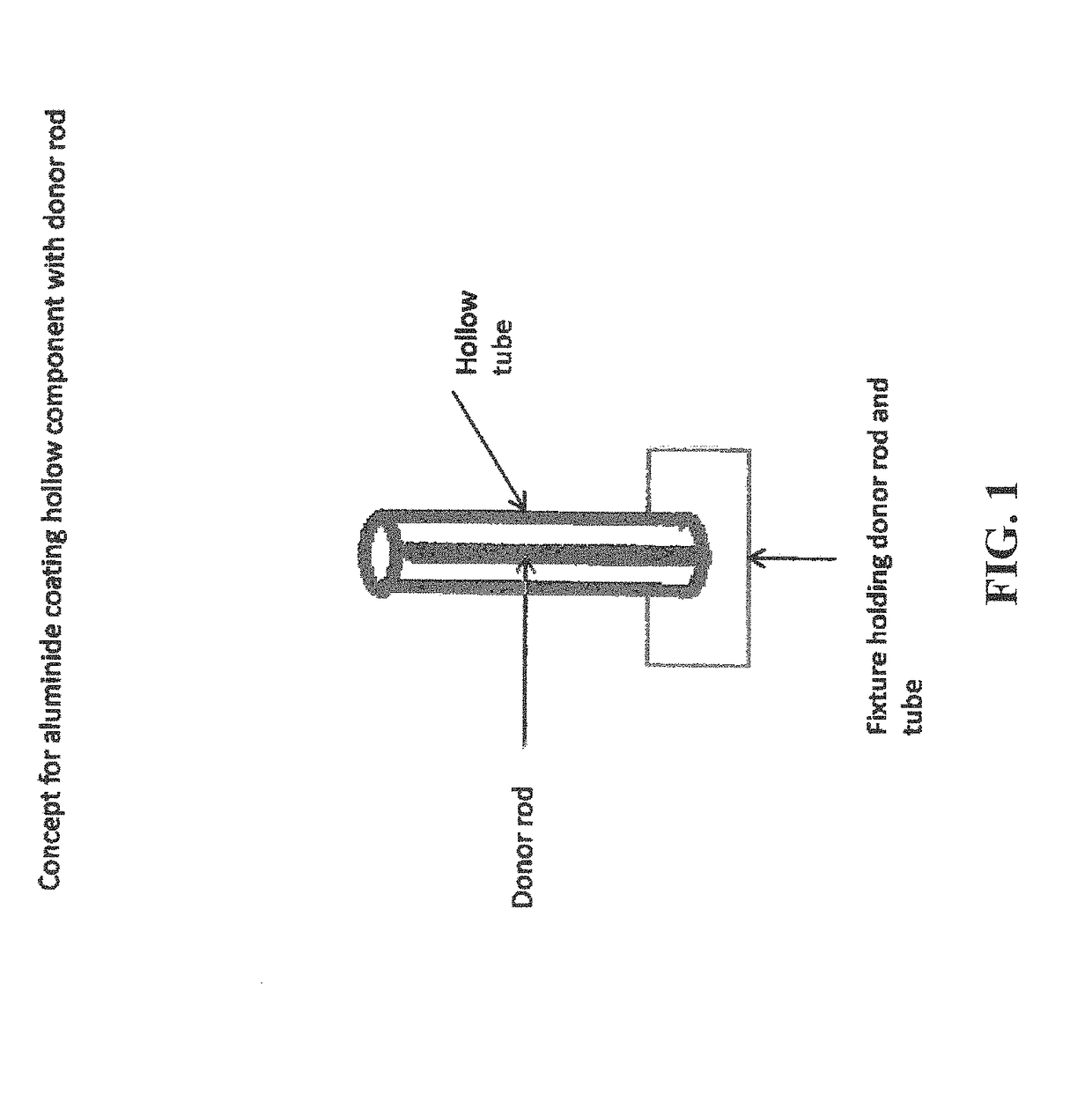
Figure 2 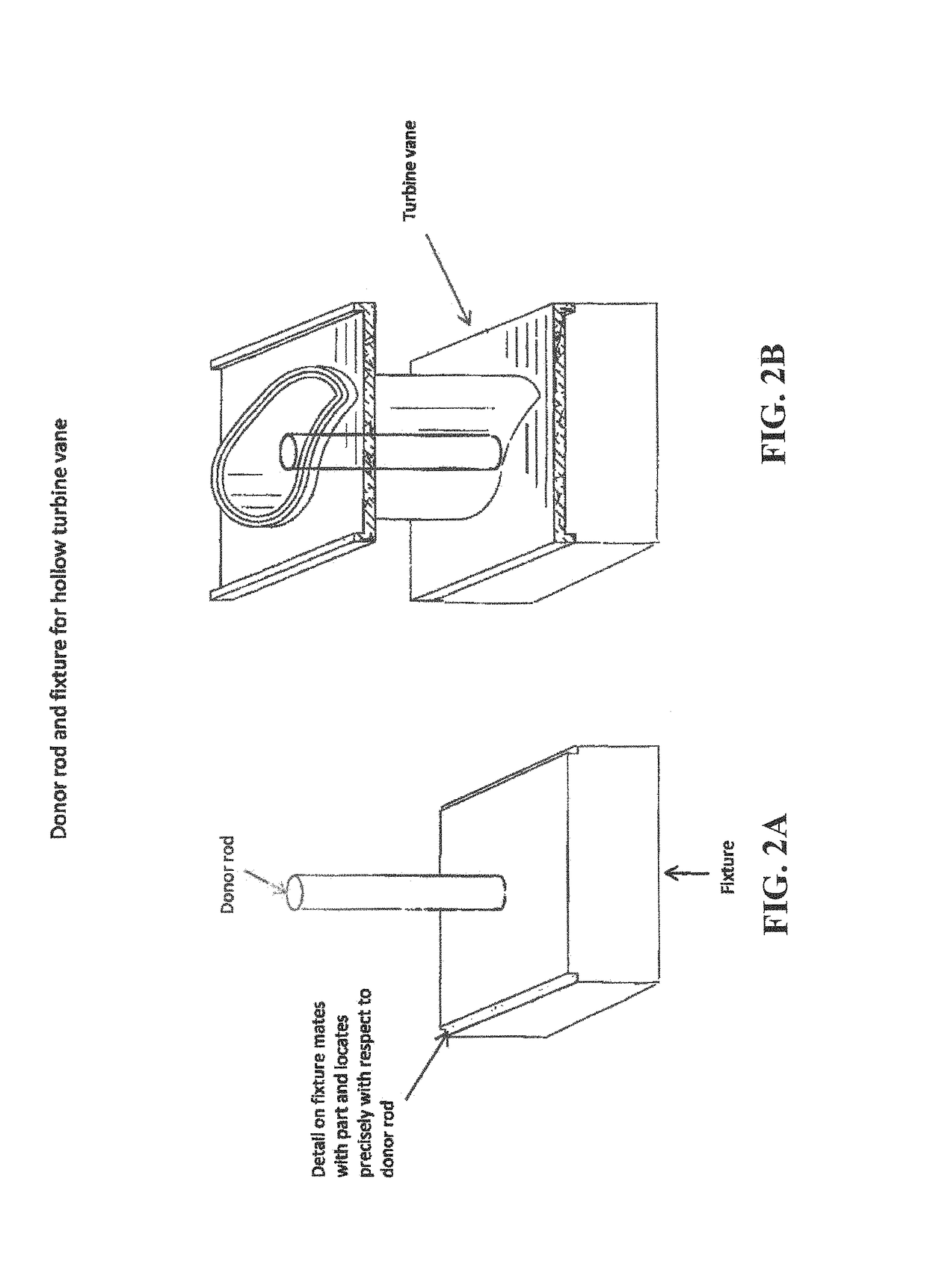
Figure 3
Abstract
Description
[0001] The present application claims priority from U.S. Provisional Application Ser. No. 61 / 901,573, filed Nov. 8, 2013, which is incorporated by reference herein in its entirety.FIELD OF THE INVENTION
[0002] The present invention relates to novel and improved methods and coating apparatuses for applying a controlled amount of diffusion coating material onto surfaces of an internal cavity, such as the internal sections of gas turbine components.BACKGROUND OF THE INVENTION
[0003] Aluminide coatings are diffused coatings widely used to protect metallic substrate surfaces, such as nickel, cobalt, iron and copper alloys. Aluminide coatings are based on intermetallic compounds formed when nickel and cobalt react with aluminum at the substrate's surface. An intermetallic compound is an intermediate phase in a binary metallic system, having a characteristic crystal structure enabled by a specific elemental (atomic) ratio between the binary constituents.
[0004] Aluminum-based intermetallic compou...
Examples
example 1 (
Indirect Slurry Rod Method for Coating Hollow Tubes)
[0048]Tests were performed to apply an aluminide coating onto the internal surfaces of a hollow cylindrical tube. The tube was identical to the one coated in Comparative Example 1. A representative schematic of the tube is shown in FIG. 1. The tube was formed from grade 304 stainless steel. The tube was 48 inches in length and had a diameter of 2 inches.
[0049]A cylindrical shaped elongated member of grade 304 stainless steel was coated with SermAlcote™ 2525 slurry aluminide. The member was dipped into the slurry to produce a film thickness of approximately 0.01 inches. The member was cured at 250° F. for 1 hour. The coated member was placed inside the hollow tube and positioned so as to not contact the walls of the tube. A heat-resistant metal fixture was configured at each end of the tube to maintain the tube in a fixed position during the coating cycle.
[0050]The coating assembly was then introduced into a bell retort furnace. The...
example 2 (
Indirect Slurry Rod Method for Coating Turbine Vane)
[0053]Two trials were performed to apply an aluminide coating onto the internal surfaces of a gas turbine vane having a geometry identical to that of Comparative Example 2. The coating material was SermAlcote™ 2525 aluminide.
[0054]A stainless steel wire was coated with SermAlcote™ 2525 slurry aluminide. The wire had a diameter of 0.125 inches. The wire was dipped into the slurry to produce a film thickness of approximately 0.01 inches. The wire was cured at 250° F. for 1 hour. Next, the turbine vane was placed over the rod. A heat-resistant graphite fixture was configured to maintain the tube in a fixed position during the coating cycle. The coated wire was positioned so as to not contact the walls of the vane.
[0055]The coating assembly was then introduced into a bell retort furnace. The coating and hollow tube were heat treated in the bell retort furnace for 1975° F. for 6 hours in an argon atmosphere. Aluminum vaporized from the ...