
Transition metal compound for olefin polymerization catalyst, olefin polymerization catalyst comprising same, and polyolefin polymerized using same
a technology of transition metal compound and olefin polymerization catalyst, which is applied in the direction of metallocene, chemistry apparatus and processes, organic chemistry, etc., to achieve excellent physical properties, high activity, and high copolymerization capability
Patent Information
- Authority / Receiving Office
- US · United States
- Patent Type
- Patents(United States)
- Current Assignee / Owner
- Publication Date
- 2022-02-01
Smart Images
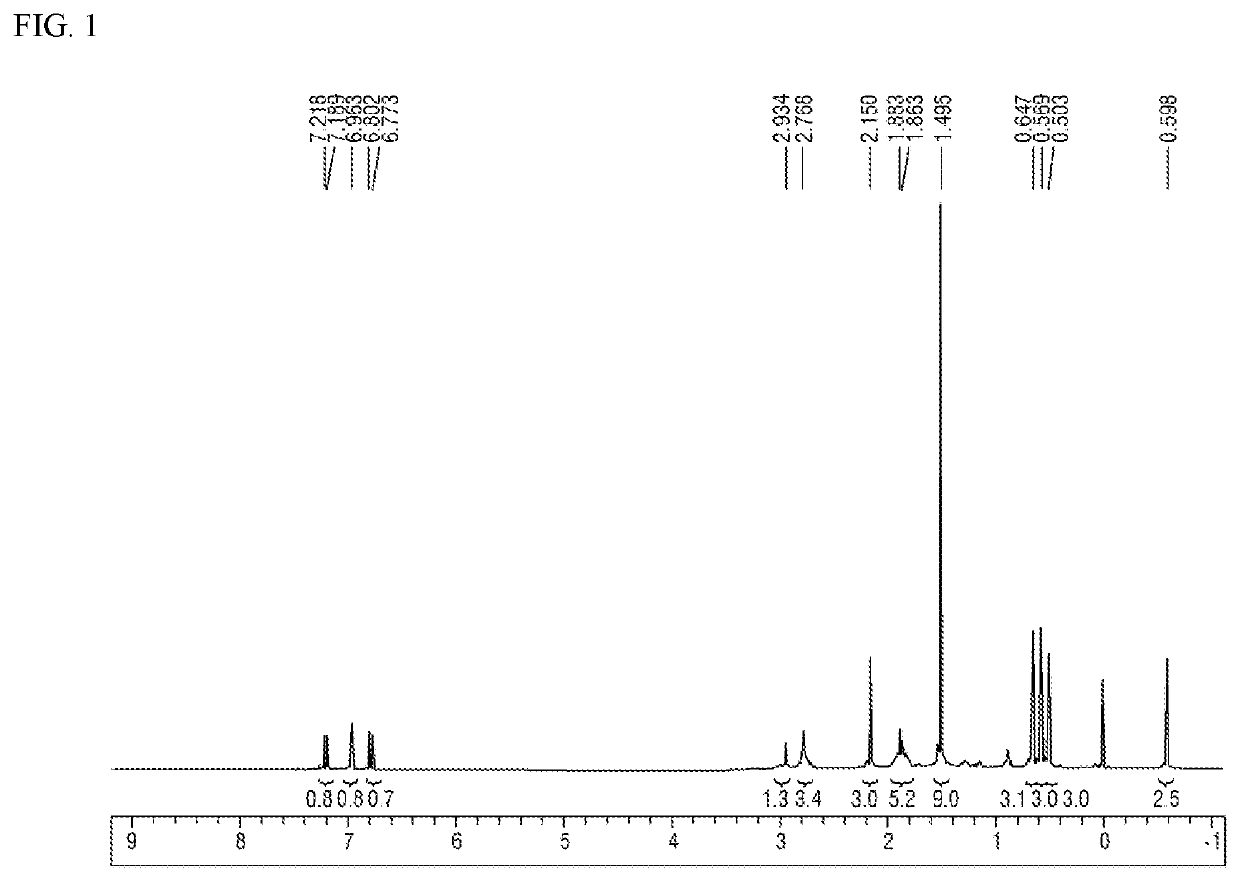
Figure 1 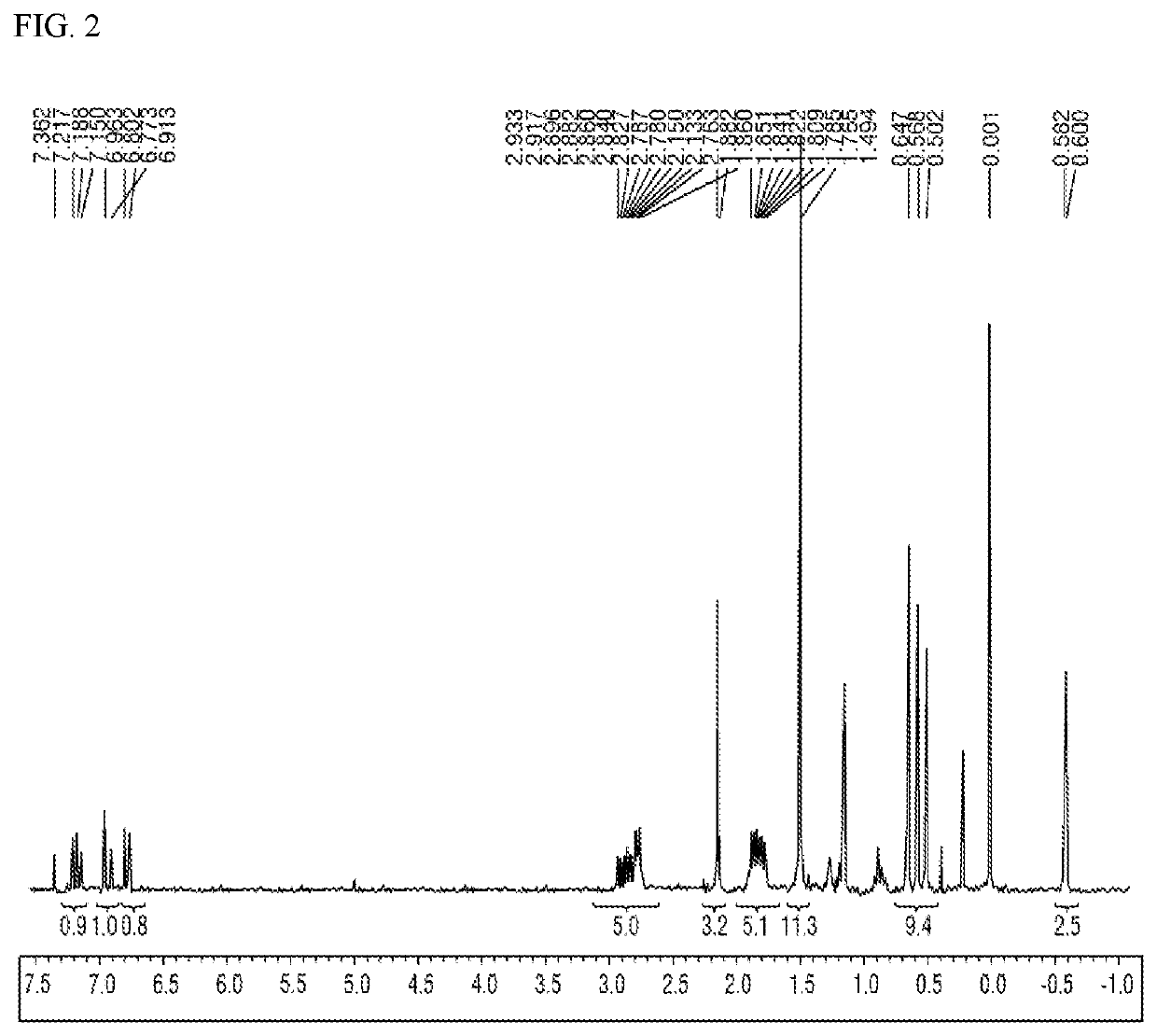
Figure 2 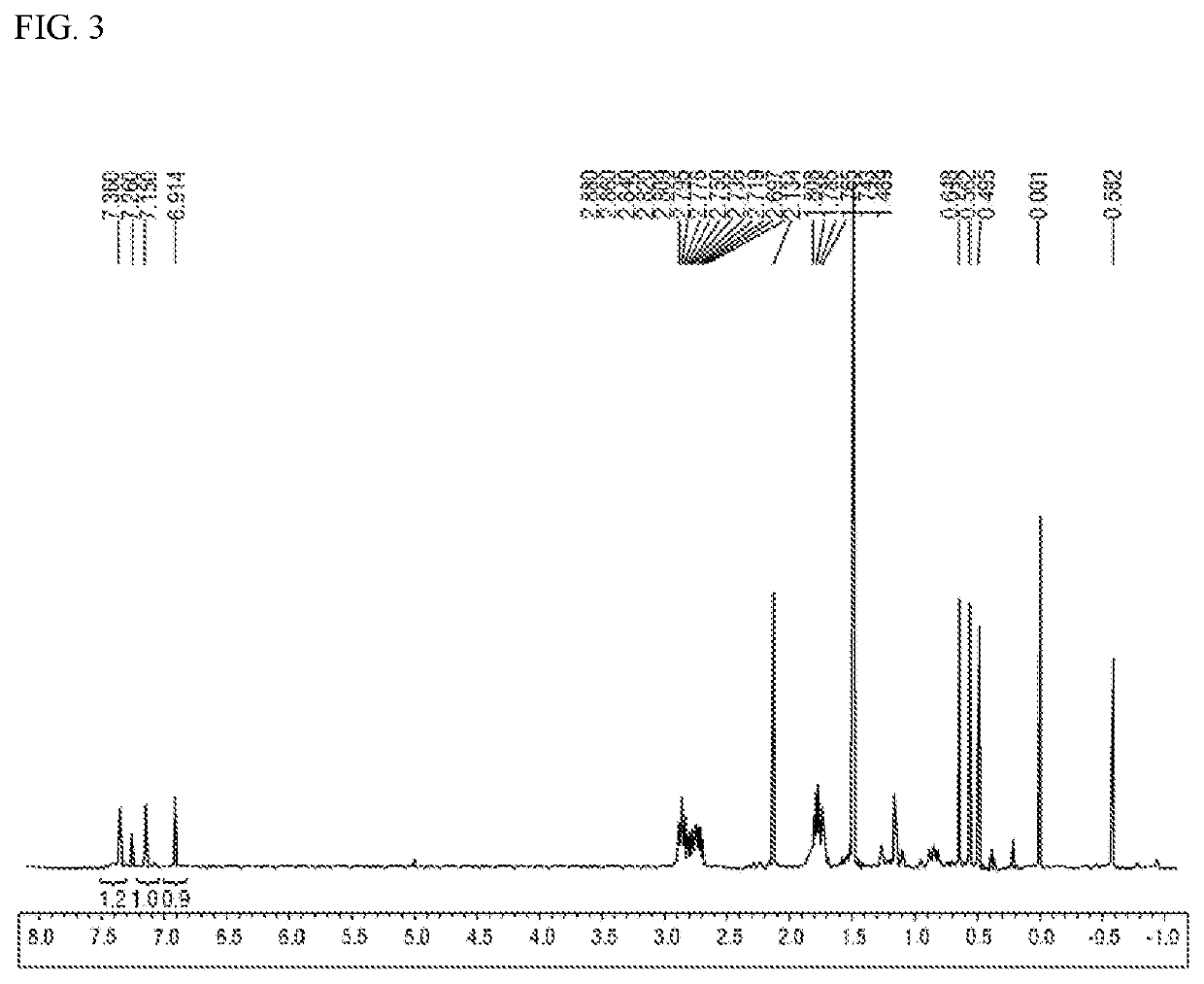
Figure 3
Abstract
Description
TECHNICAL FIELD
[0001] The present invention relates to a transition metal compound for an olefin polymerization catalyst, an olefin polymerization catalyst containing the transition metal compound, and a polyolefin prepared using the olefin polymerization catalyst for polymerization thereof.BACKGROUND ART
[0002] A metallocene catalyst, which is a type of catalyst used for polymerizing olefins, is based on a compound in which a ligand such as a cyclopentadienyl group, an indenyl group, a cycloheptadienyl group, or the like is linked to a transition metal compound or a transition metal halide compound through a coordinate covalent bond, and the basic form thereof is a sandwich structure.
[0003] The metallocene catalyst is a single-site catalyst containing the above-described metallocene compound and a co-catalyst such as methylaluminoxane or the like. The use of the metallocene catalyst for polymerization results in a polymer having a narrow molecular weight distribution and a uniform como...
Examples
preparation example 1-1
-2,3,6,7,8,9-hexahydro-1H-cyclopenta[a]naphthalen-1-one
[0103]2-Bromo-2-methylpropanoyl bromide (17.4 g, 76 mmol) and a solution prepared by diluting 1,2,3,4-tetrahydronaphthalene (10.0 g, 76 mmol) in dichloromethane (200 mL) were added, at 0° C., to a solution prepared by dispersing AlCl3 (25.2 g, 189 mmol) in dichloromethane (200 mL). After completion of the addition, the mixture was stirred at room temperature for 12 hours, and water was added at 0° C. to terminate the reaction. Afterward, the organic layer was extracted, the solvent was removed in vacuo, the resultant was subjected to column chromatography, and thereby 7.9 g (52%) of 2-methyl-2,3,6,7,8,9-hexahydro-1H-cyclopenta[a]naphthalen-1-one was obtained.
[0104]1H-NMR (CDCl3, 300 MHz): d 7.50 (d, 1H), 7.10 (d, 1H), 3.22 (dd, 1H), 2.86-2.83 (m, 2H), 2.69-2.66 (m, 3H), 2.50 (dd, 1H), 1.92-1.77 (m, 4H), 1.30 (d, 3H).
preparation example 1-2
-2,3,6,7,8,9-hexahydro-1H-cyclopenta[a]naphthalen-1-ol
[0105]Sodium borohydride (NaBH4) (1.3 g, 35 mmol) was added, at 0° C., to a solution prepared by diluting the 2-methyl-2,3,6,7,8,9-hexahydro-1H-cyclopenta[a]naphthalen-1-one (5.9 g, 29 mmol) obtained in Preparation Example 1-1 in methanol (80 mL). The temperature was gradually raised to room temperature, and thereafter the mixture was stirred for one hour. After completion of the reaction, methanol was removed in vacuo, water and dichloromethane were subsequently added, and then the organic layer was extracted. Afterward, moisture was removed with magnesium sulfate, the solvent was removed in vacuo, and thereby 5.9 g (99%, isomer mixture) of 2-methyl-2,3,6,7,8,9-hexahydro-1H-cyclopenta[a]naphthalen-1-ol was obtained.
[0106]1H-NMR (CDCl3, 300 MHz): d 7.19-7.13 (m, 1H), 7.01-6.96 (m, 1H), 4.96 and 4.71 (2 broad t, 1H), 2.4-3.1 (m, 6H), 2.30-2.24 (m, 1H), 1.82-1.75 (m, 4H), 1.68 and 1.37 (2d, 1H), 1.25 and 1.18 (2d, 3H).
preparation example 1-3
-6,7,8,9-tetrahydro-3H-cyclopenta[a]naphthalene
[0107]The 2-methyl-2,3,6,7,8,9-hexahydro-1H-cyclopenta[a]naphthalen-1-ol (5.9 g, 29 mmol) obtained in Preparation Example 1-2 and p-toluenesulfonic acid (0.5 mol %) were added to toluene (60 mL), and the mixture was stirred for one hour while refluxing at 110° C. After completion of the reaction, water was removed with magnesium sulfate, the solvent was removed in vacuo, and thereby 5.2 g (97%) of 2-methyl-6,7,8,9-tetrahydro-3H-cyclopenta[a]naphthalene was obtained.
[0108]1H-NMR (CDCl3, 300 MHz); d 7.00 (2d, 2H), 6.45 (s, 1H), 3.12 (s; 2H), 2.81 (t, 2H), 2.71 (t, 2H), 2.15 (s, 3H), 1.85-1.82 (m, 4H).