
Apparatus for dispensing hazardous chemicals
Patent Information
- Authority / Receiving Office
- US · United States
- Current Assignee / Owner
- Publication Date
- 2005-06-16
- Estimated Expiration
- Not applicable · inactive patent
Smart Images
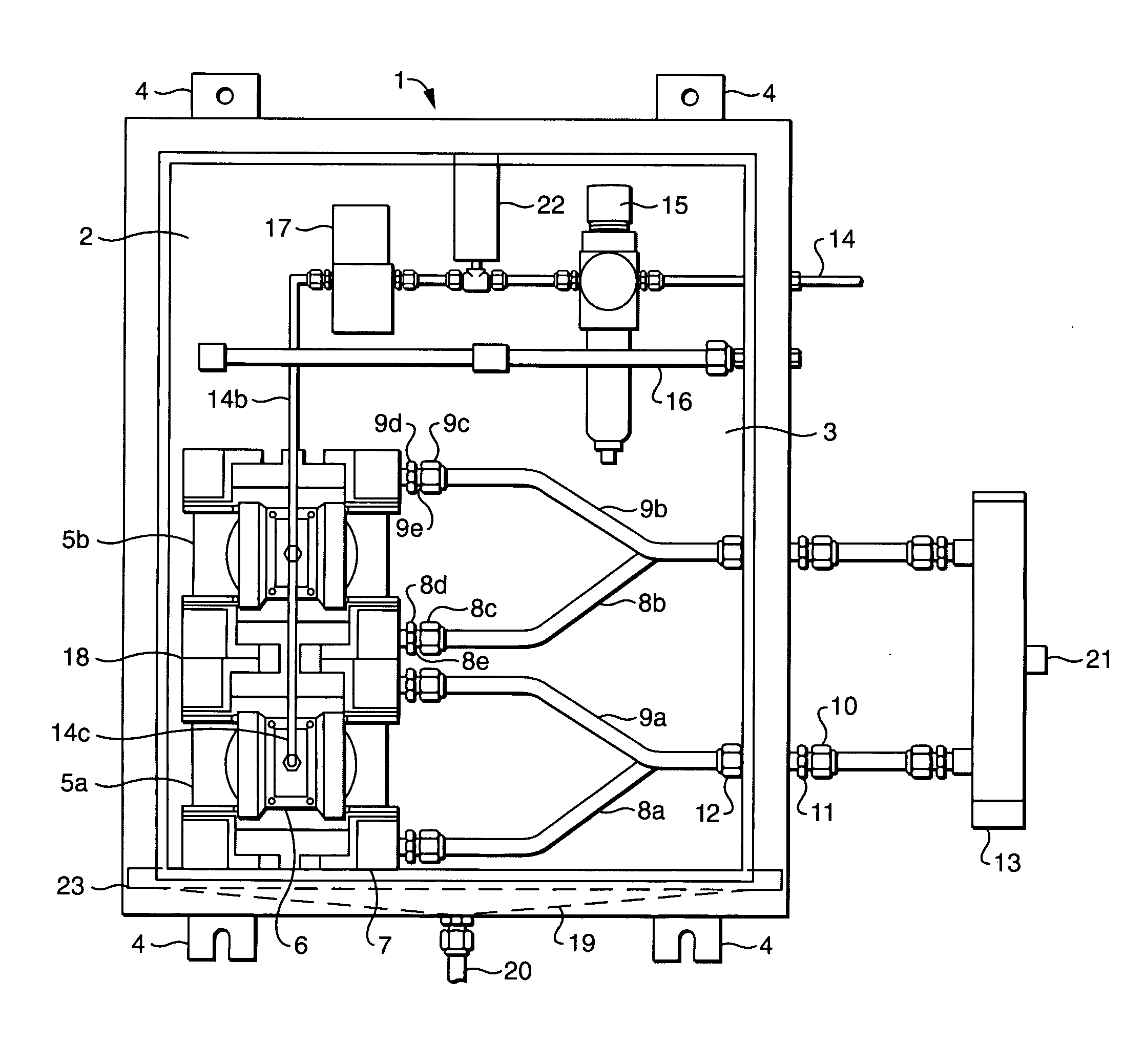
Figure 1 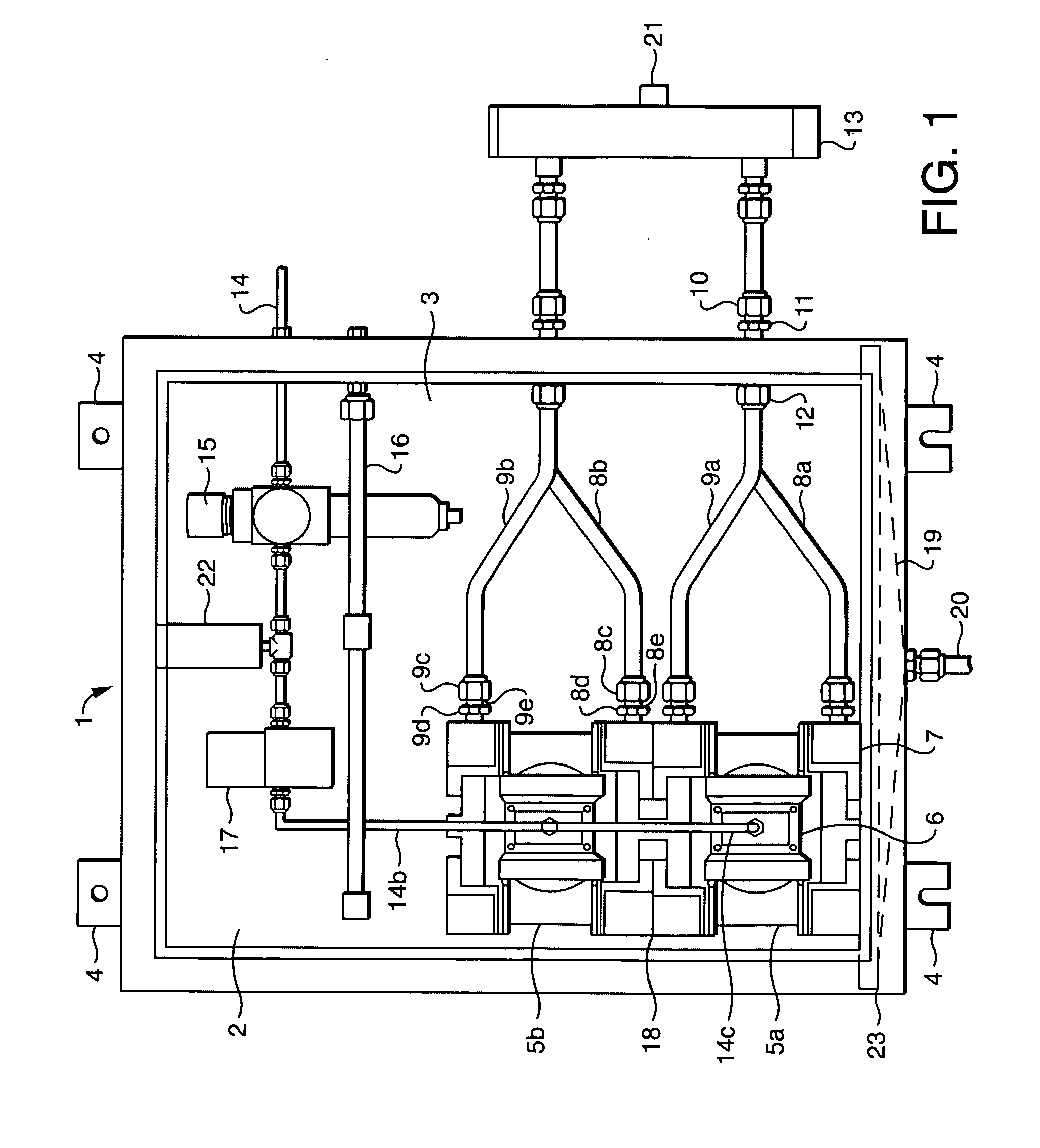
Figure 2 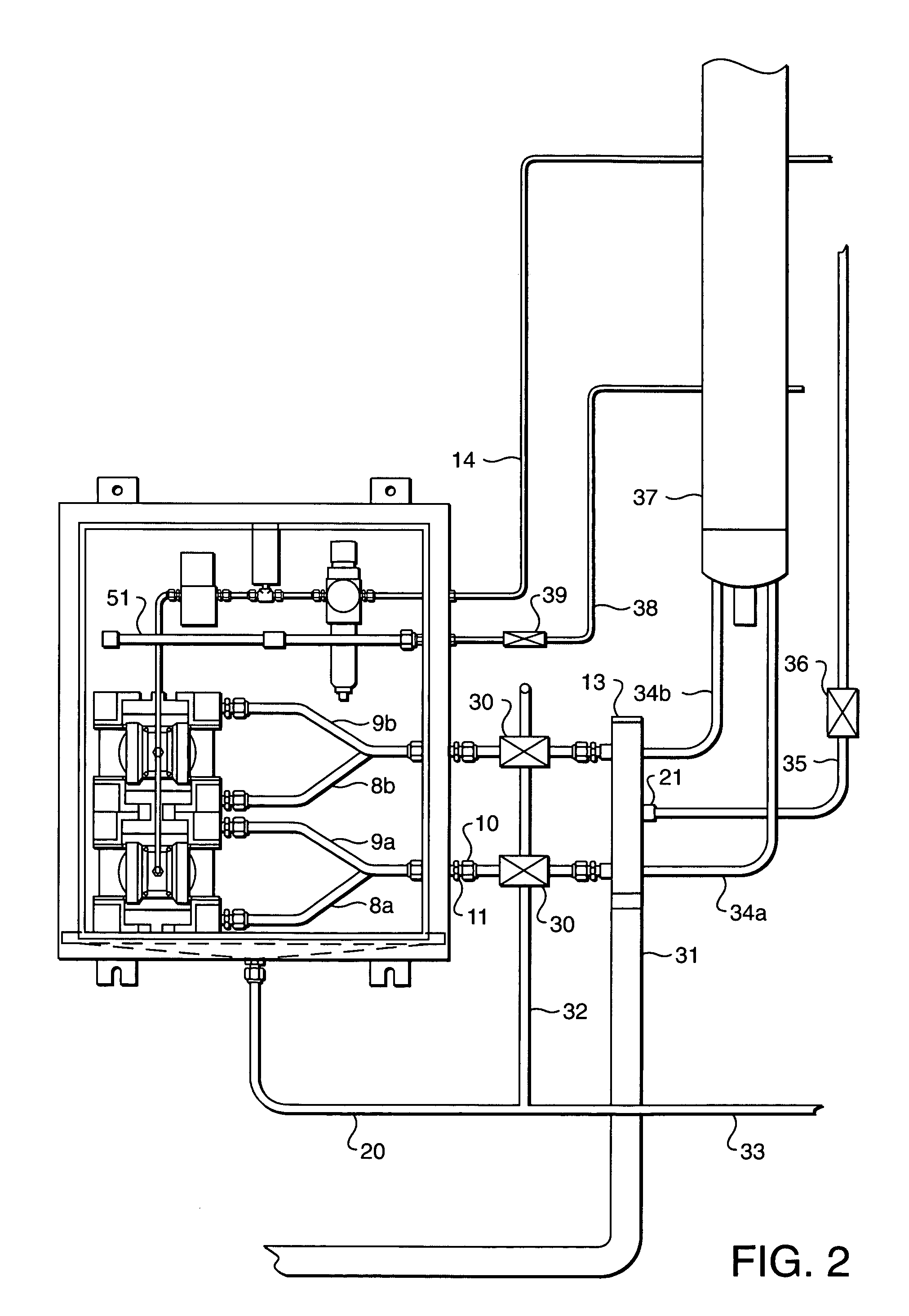
Figure 3
Abstract
Description
[0001] This Application claims priority to U.S. Provisional Patent Application Ser. No. 60 / 493,665, filed Aug. 8, 2003.BACKGROUND OF THE INVENTION
[0002] The transportation, storage, and use of hazardous chemicals presents a significant management challenge. Hazardous chemicals are designated HAZMAT by the U.S. Dept. of Transportation and are subject to strict regulation as to labeling and containment. For example, hydrogen peroxide in industrial concentrations of 35%, 50%, and 70% ship under UN2014 (oxidizer), caustic soda under UN1760 (corrosive), strong acids such as phosphoric under UN1805 (corrosive), and alcohol such as isopropyl under UN1219 (flammable). The safe use of these chemicals is of paramount importance, as a significant number of accidents occur as a result of misuse, spills, failed and improperly designed dispensing equipment.
[0003] Many of the advances in dispensing technology have taken place in the field of oil and gasoline. The rupture of underground gas stora...
Examples
Embodiment Construction
[0019] In conventional dispensing of hazardous chemicals, an apparatus typically includes a pump mounted on a frame or in an enclosure connected to a source of chemical, usually a drum or tote via flexible plastic tubes. Couplings are generally plastic involving attachment of a plastic hose of one type of material joined to a nipple of a second type of plastic and secured by a hose clamp. Alternatively, hard plumbed PVC piping may be employed with standard PVC unions, T fittings, and elbows. The most common type of pump for dispensing liquids ranging in volume from a few ounces to several gallons is a diaphragm or double diaphragm pump. Movement of the internal shuttle causes substantial vibration. Over a period of prolonged use pump vibrations weaken the seals between components causing plastic hoses to loosen and be displaced, and union and couplings to fracture and leak.
[0020] Because of the severe consequences to persons and the environment of a system failure involving hazardo...