
Method and apparatus for uniquely and authoritatively identifying tangible objects
a tangible object, uniquely and authoritative technology, applied in the direction of instruments, digital transmission, securing communication, etc., can solve the problem that the descriptive data itself is not intended to be protected from being read, and achieve the effect of preventing unauthorized copying or alteration, facilitating reading, and preventing reading
Patent Information
- Authority / Receiving Office
- US · United States
- Patent Type
- Applications(United States)
- Current Assignee / Owner
- Publication Date
- 2006-05-18
- Estimated Expiration
- Not applicable · inactive patent
Smart Images
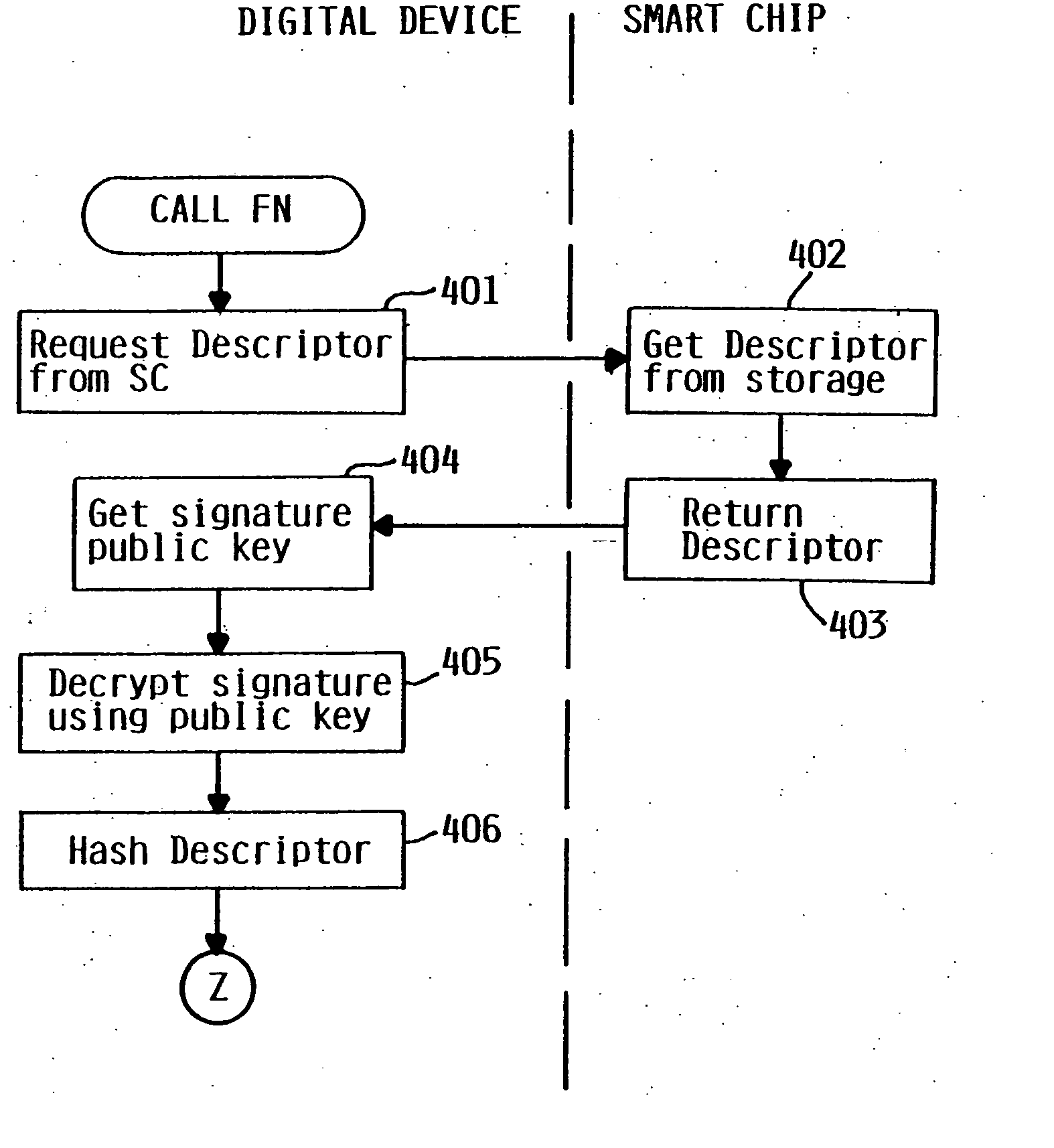
Figure 1 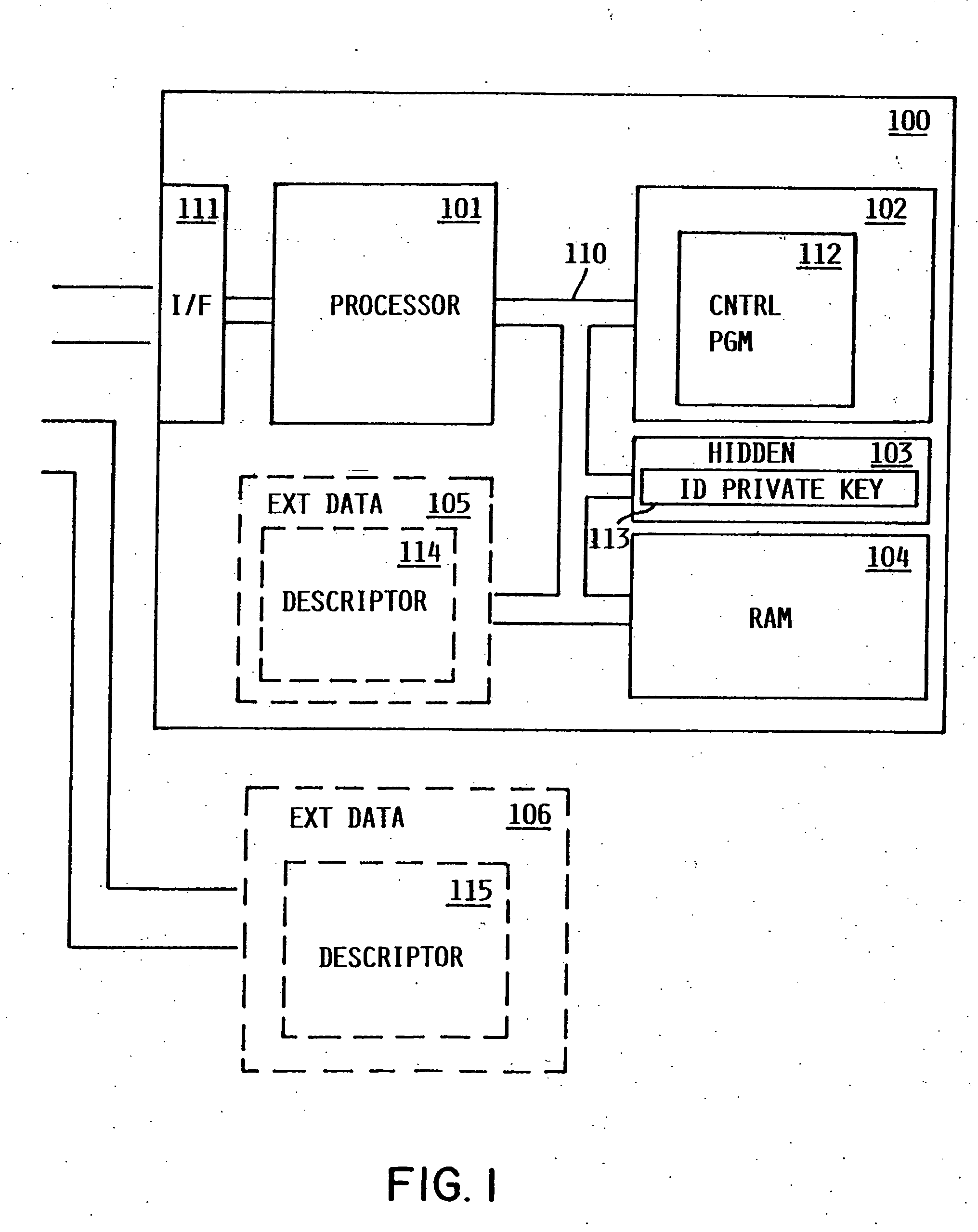
Figure 2 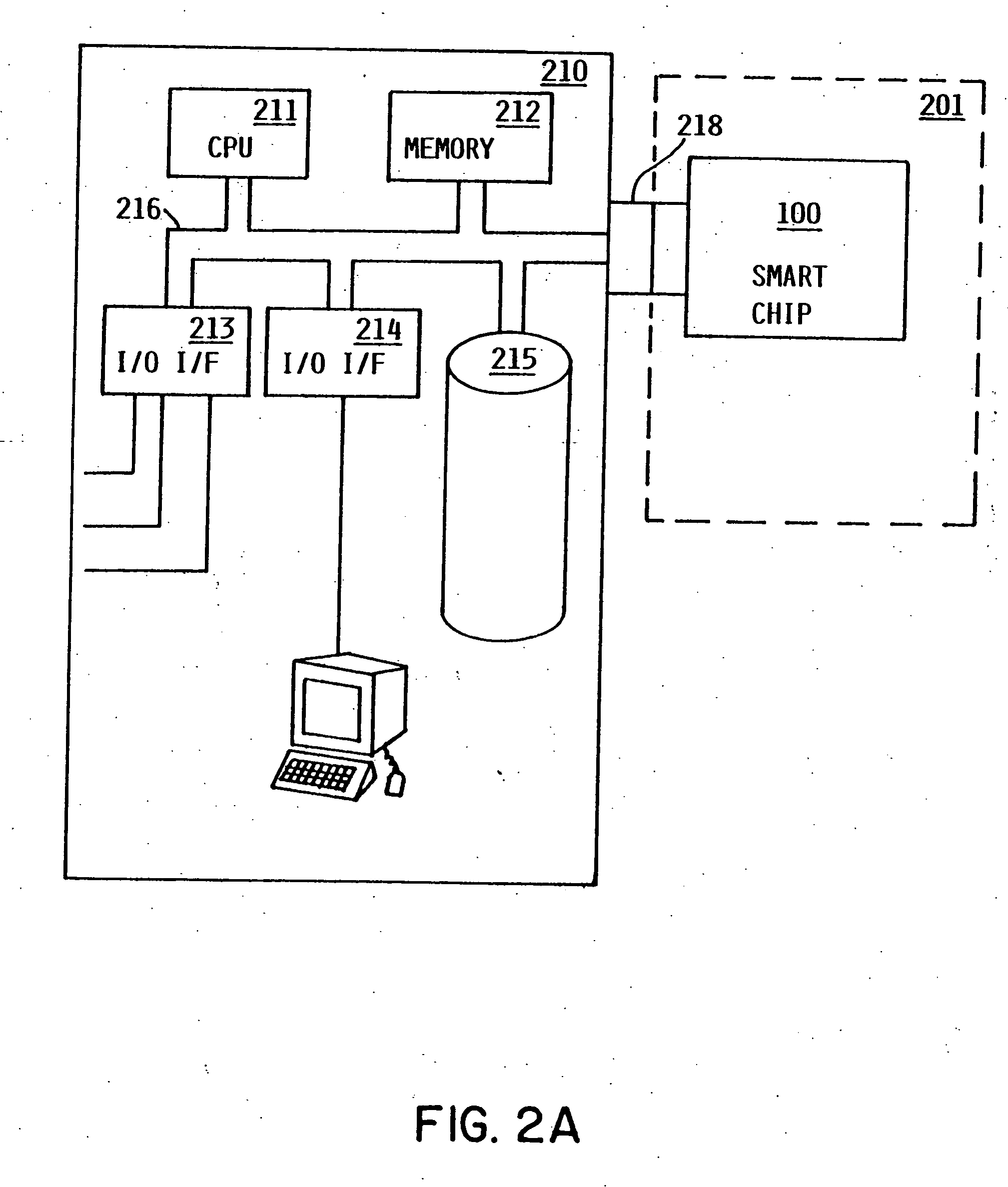
Figure 3
Abstract
Description
CROSS REFERENCE TO RELATED APPLICATIONS
[0001] This is a divisional application of U.S. patent application Ser. No. 09 / 884,636, filed Jun. 19, 2001, entitled “METHOD AND APPARATUS FOR UNIQUELY AND AUTHORITATIVELY IDENTIFYING TANGIBLE OBJECTS”, which is herein incorporated by reference.
[0002] This application is also related to the following commonly assigned co-pending applications, filed on the same date as the present application, all of which are herein incorporated by reference:
[0003] Ser. No. ______, filed ______, entitled “METHOD AND APPARATUS FOR PROVIDING CELLULAR TELEPHONE SERVICE USING AN AUTHENTICATING CELLULAR TELEPHONE DEVICE” (Assignee's docket ROC920000168US3);
[0004] Ser. No. ______, filed ______, entitled “CELLULAR TELEPHONE DEVICE HAVING AUTHENTICATING CAPABILITY” (Assignee's docket ROC920000168US4); and
[0005] Ser. No. ______, filed ______, entitled “METHOD AND APPARATUS FOR PROVIDING TELEVISION SERVICES USING AN AUTHENTICATING TELEVISION RECEIVER DEVICE” (Assig...
Examples
Embodiment Construction
Public / Private Key Encryption Overview
[0043] In accordance with the present invention, one or more public / private key encryption algorithms are used. Various such algorithms exist today and are known in the art. Any such algorithm or algorithms, now known or hereafter developed, could be used consistent with the present invention, the exact choice of algorithm depending on various design considerations.
[0044] These algorithms have the characteristic that they perform a one-way data transformation using a key. By “one-way” it is meant that it is not algorithmically feasible to perform a reverse data transformation to obtain the original data, having only the transformed data and the key used to construct it. However, it is possible to perform a reverse data transformation with a second key. The two keys therefore form a pair, with which it is possible to perform a complete transformation and reverse transformation of data.
[0045] The one-way nature of the data transformations nece...