
Triboelectric treatment of wing and blade surfaces to reduce wake and BVI/HSS noise
Patent Information
- Authority / Receiving Office
- US · United States
- Current Assignee / Owner
- Publication Date
- 2007-10-25
- Estimated Expiration
- Not applicable · inactive patent
Smart Images
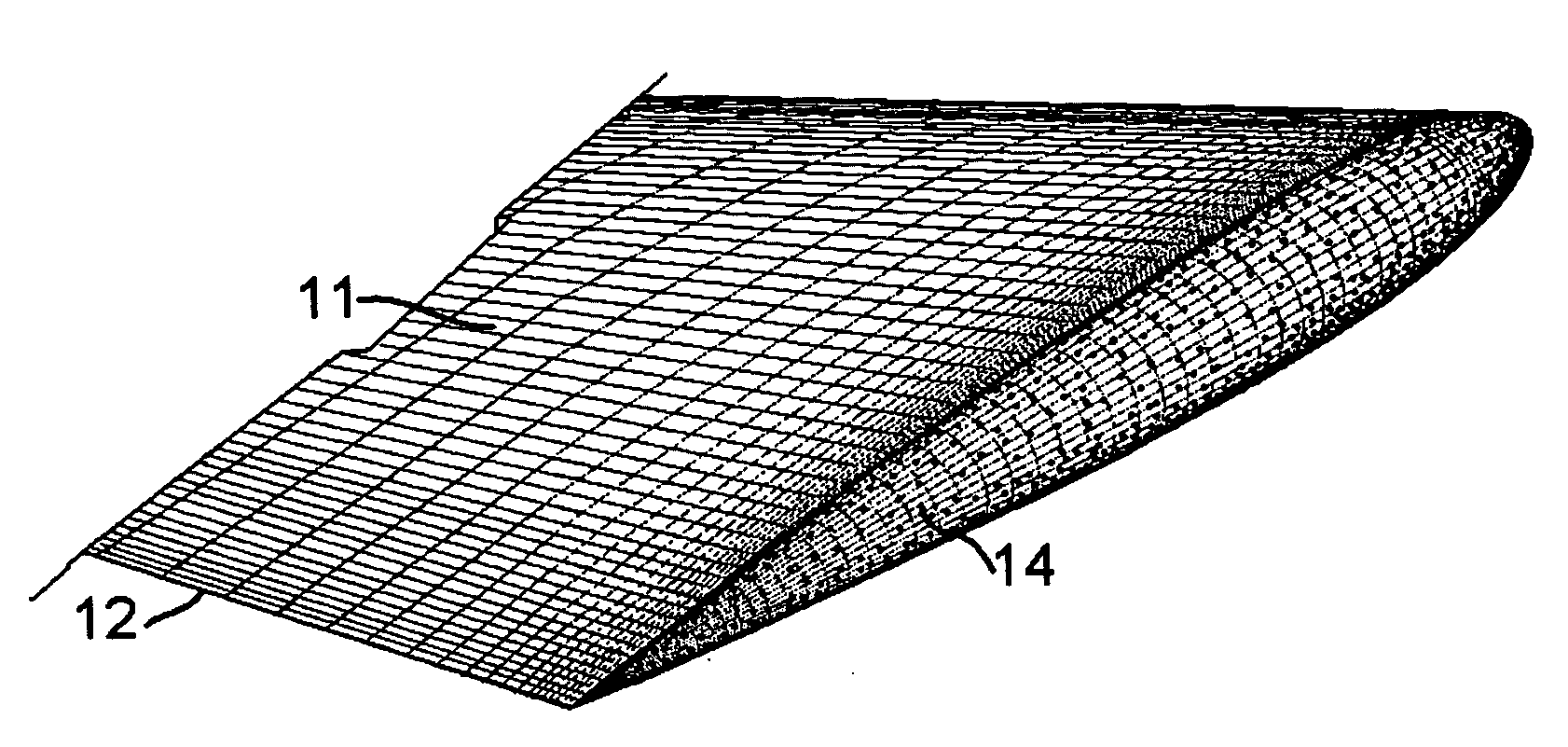
Figure 1 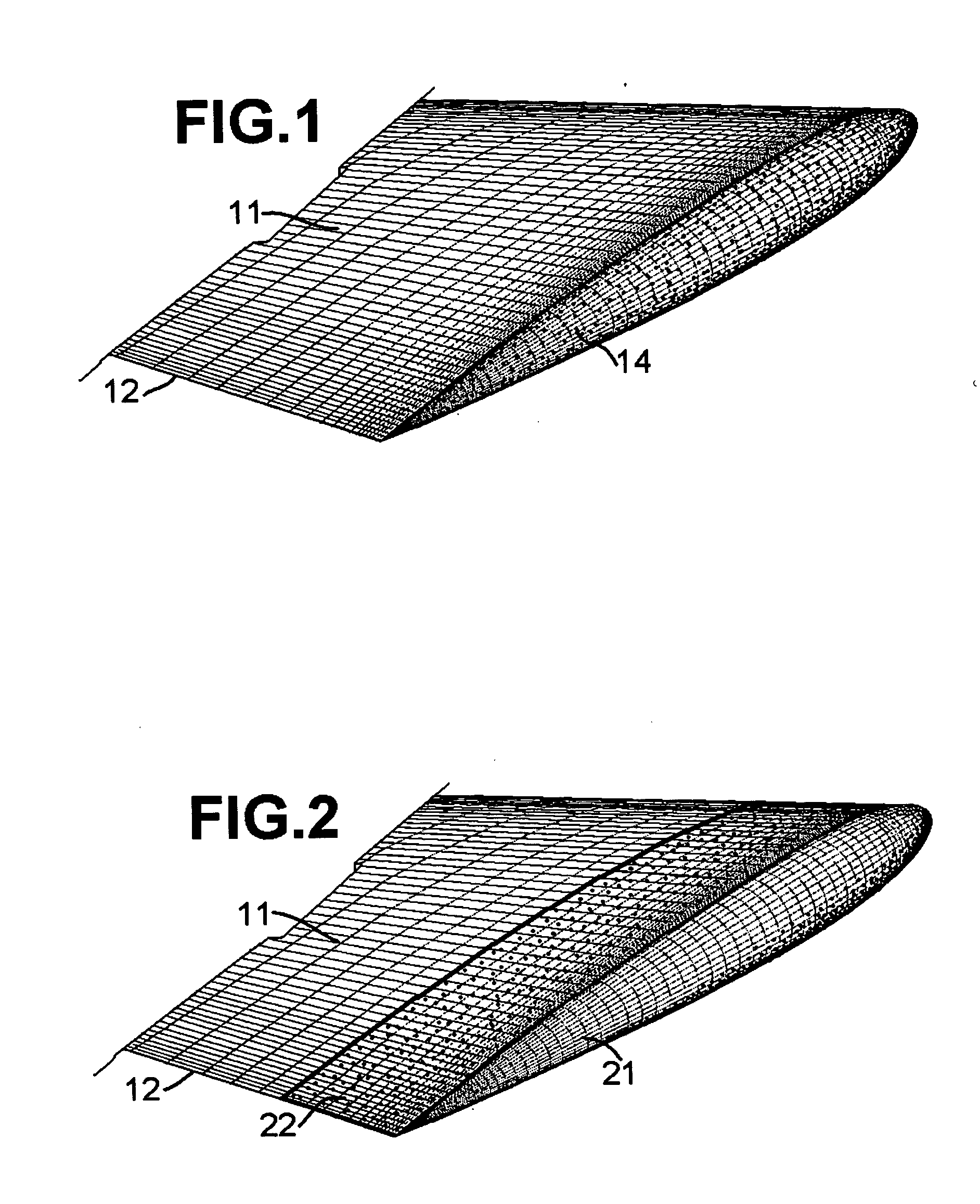
Figure 2 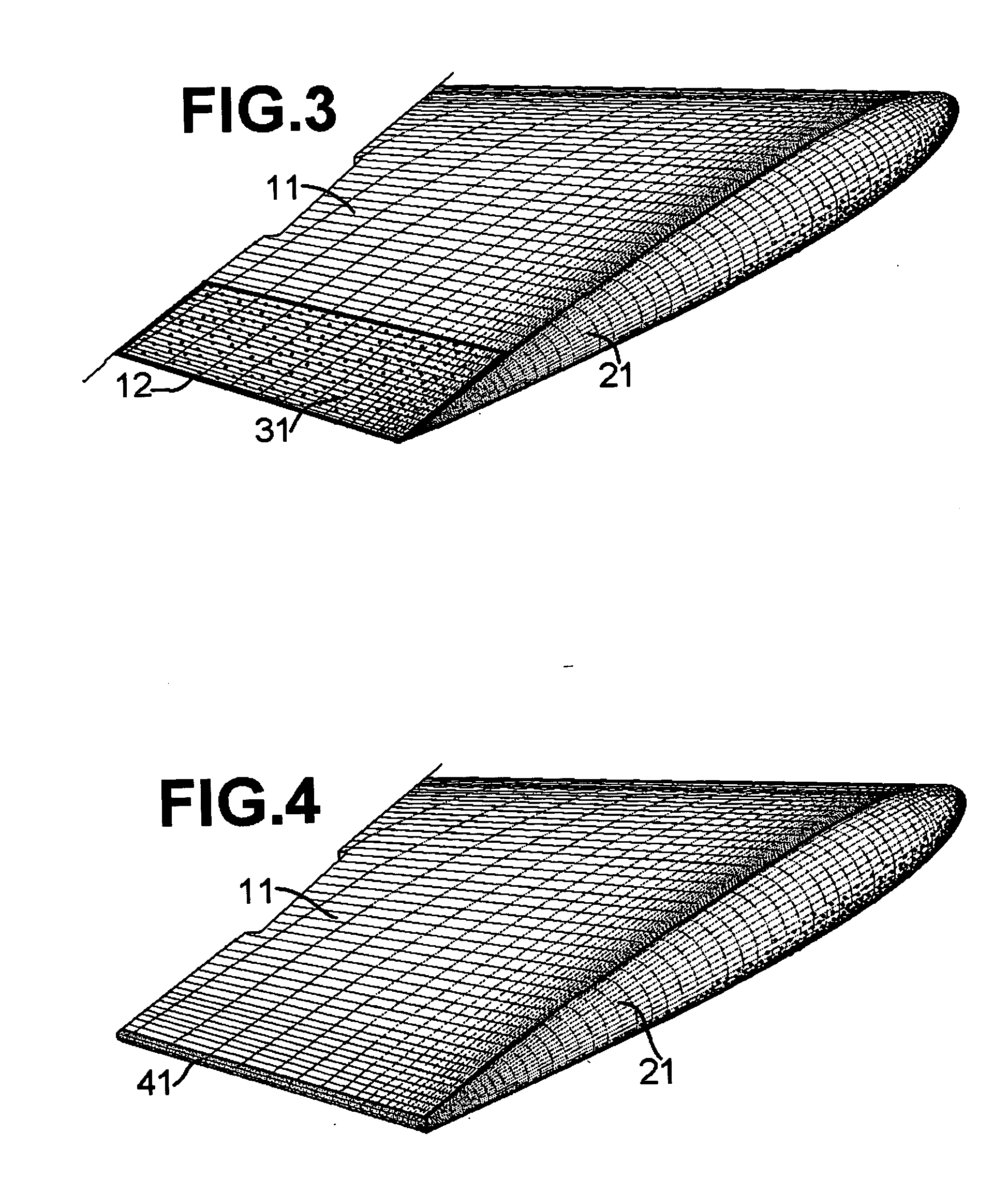
Figure 3
Abstract
Description
CROSS-REFERENCE TO RELATED APPLICATIONS
[0001] Foreign application priority claimed from Indian Patent Application No. 1016 / DEL / 2006 of Apr. 19, 2006, entitled, ‘Triboelectric treatment of wing and blade surfaces to reduce wake and BVI / HSS noise.’STATEMENT REGARDING FEDERALLY SPONSORED RESEARCH OR DEVELOPMENT
[0002] Not ApplicableREFERENCE TO A MICROFICHE APPENDIX
[0003] Not ApplicableBACKGROUND OF THE INVENTION
[0004] This invention relates to reduction of aircraft wing wake and rotorcraft blade-vortex-interference and high-speed separation noise.
[0005] Since the 1970s, a lot or technological research has gone into the study and regulation of aircraft wing tip rollup and vortices. To achieve this, mainly wing tip shape is modified with the addition of turbines and air jet devices. Although, the effectiveness of many devices has made the aviation industry adopt the inventions for reducing aircraft wake and rotorcraft BVI noise. However, these devices mean major modifications to the tip shape...
Examples
Embodiment Construction
[0028]Triboelectric charging of airflow around aircraft wings and rotorcraft blades has the major advantage of being safe compared to electrical HV sources. Other HV sources cannot be implemented on open surfaces without ruling out electrical flashes which may lead to hazardous situations. Experiments were conducted using a three-rotor configuration with a total sweep of 1.5 meters and a maximum tip speed of approximately 0.1 Mach. The straight rotor blades had a chord length of 54 mm and they were of uniform cross section. The airfoil section somewhat resembled NACA 0016. The airfoil sections were constructed by uniformly rolling a 2 mm thick aluminum sheet to a diameter of 3.8 meters. Thereafter, straight strips were cut and two symmetrical halves for each rotor blade airfoil were profiled with the use of hand press and hand tools; each pair of symmetrical halves for each rotor blade was joined by argon welding to get a completed rotor. Hand filing was employed to finish the airfo...