
Method and system for a high power low-coherence pulsed light source
a low-coherence, pulsed technology, applied in the field of tunable light sources, can solve the problems of narrow spectral linewidths, affecting the performance of lasers, and difficult to achieve a range of variable pulse characteristics, so as to maximize the energy extraction efficiency of the laser system, optimize the pulse profile, and maintain pulse-to-pulse stability.
Patent Information
- Authority / Receiving Office
- US · United States
- Patent Type
- Applications(United States)
- Current Assignee / Owner
- Publication Date
- 2007-10-25
Smart Images
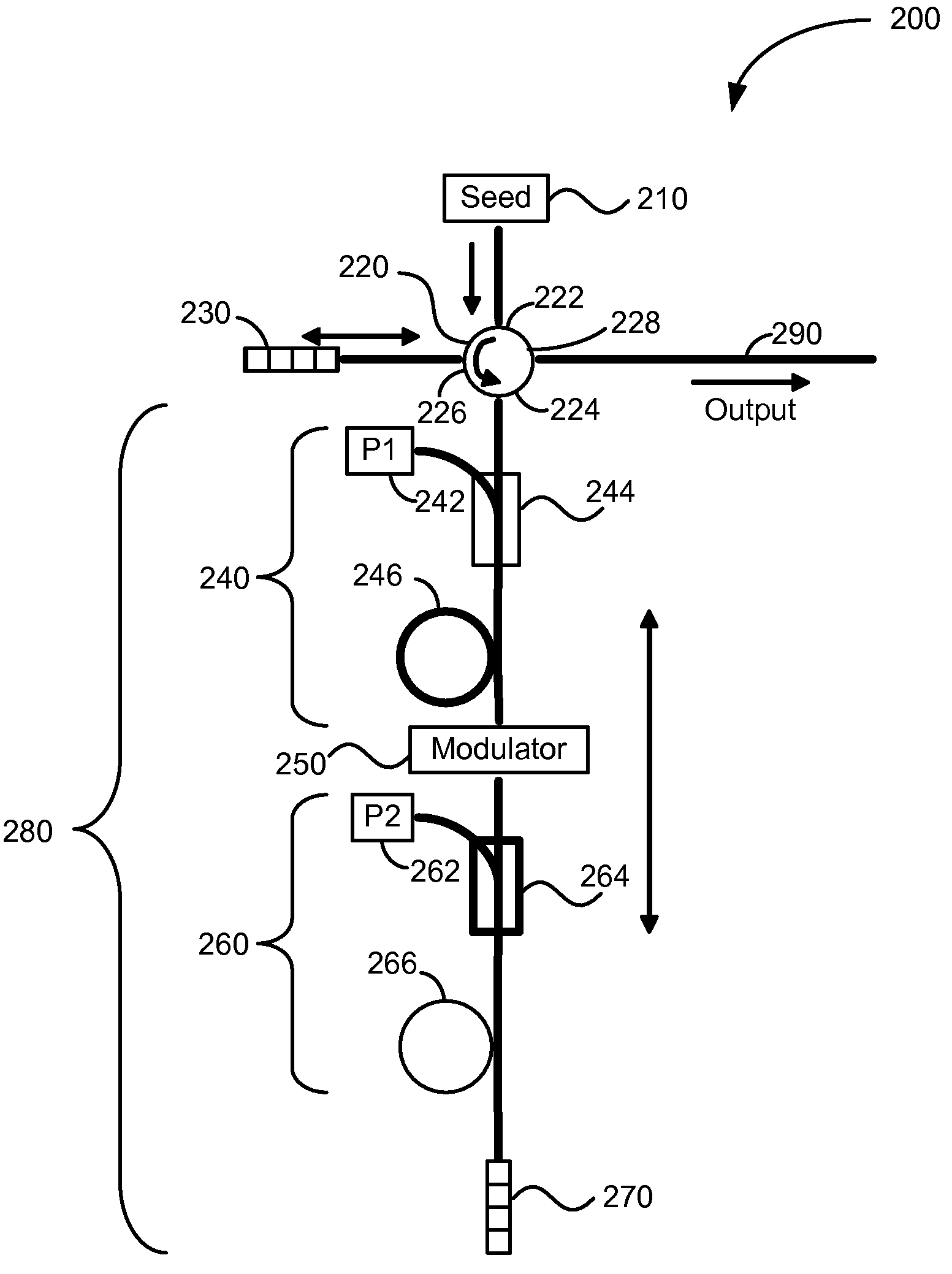
Figure 1 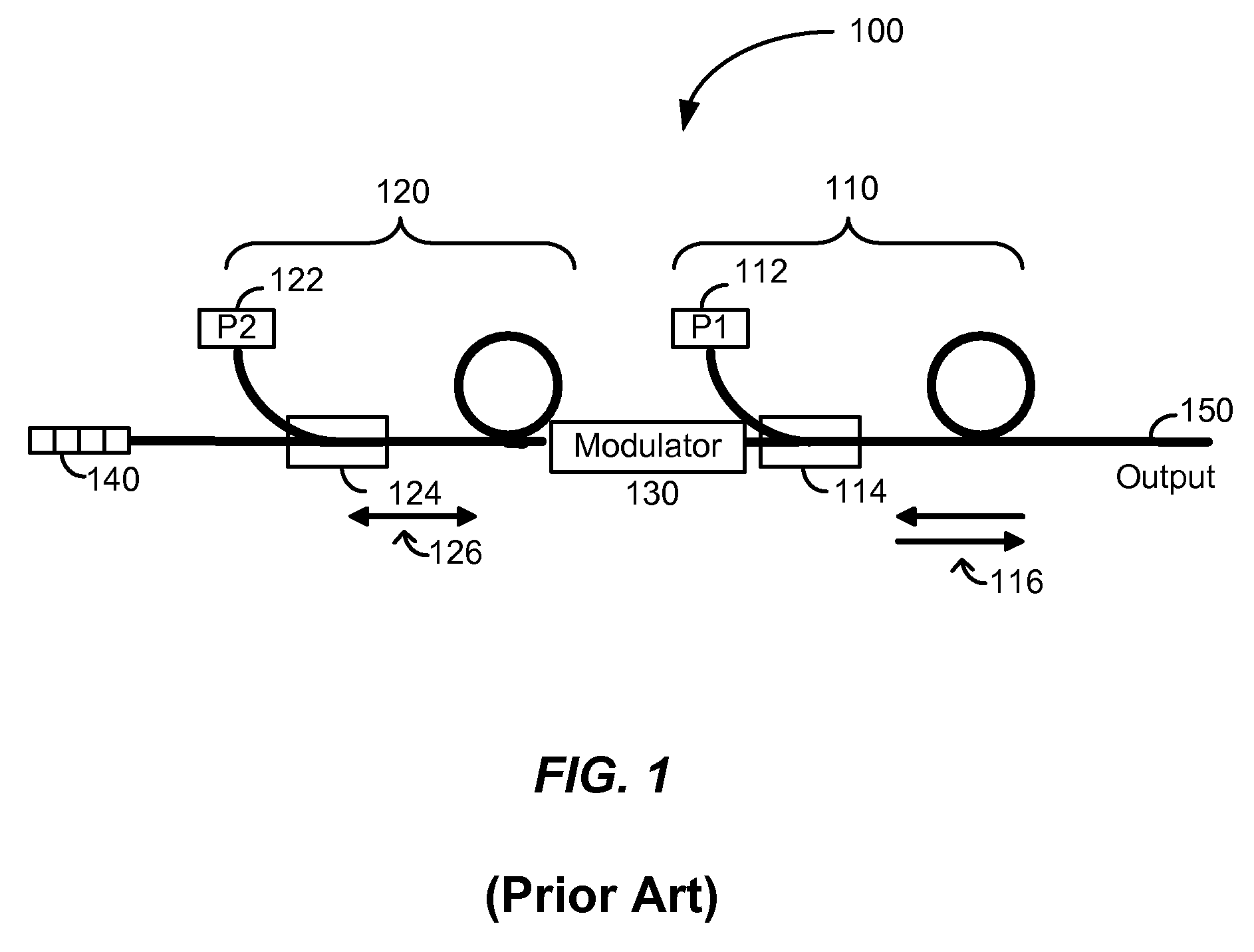
Figure 2 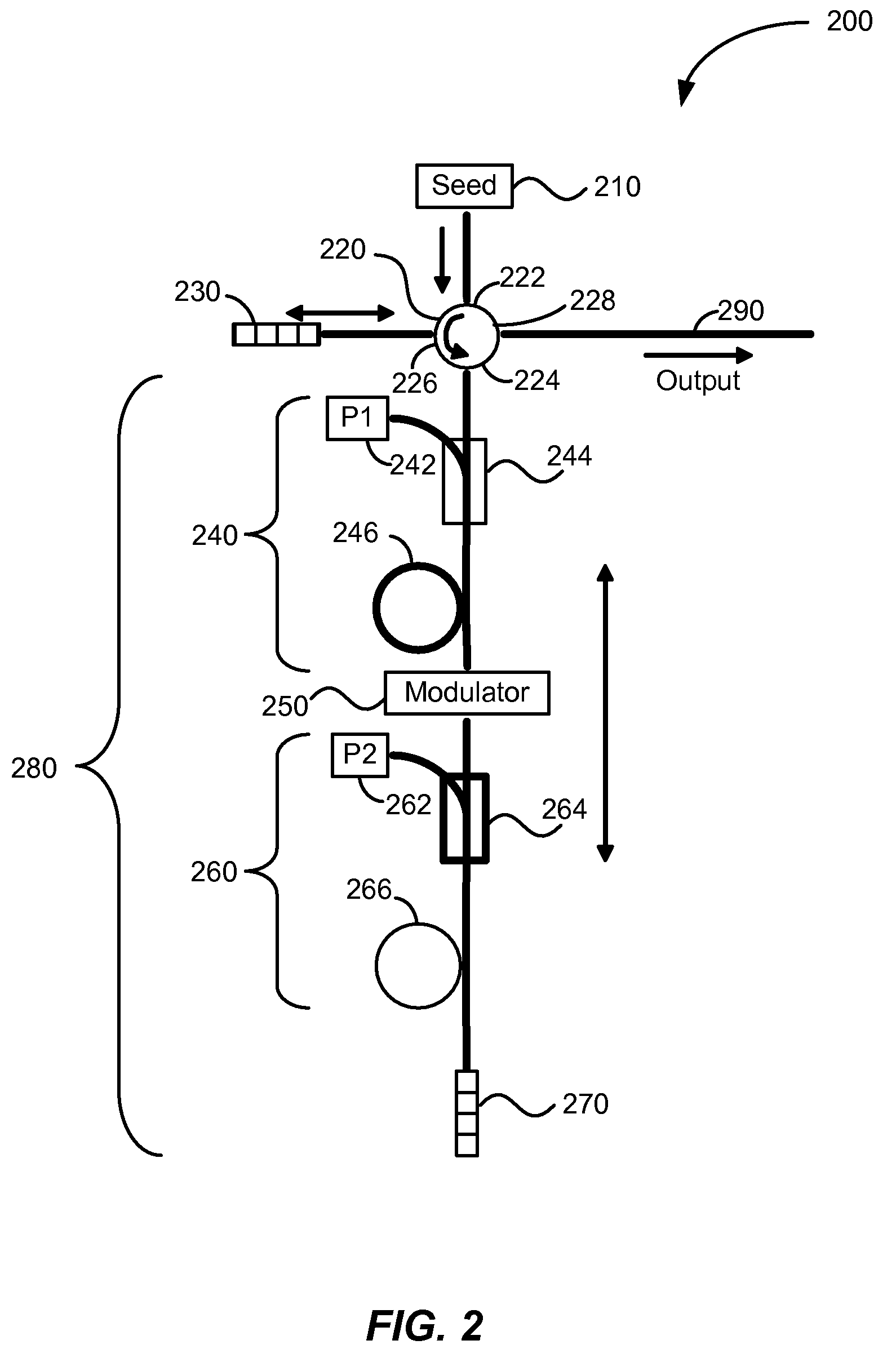
Figure 3
Abstract
Description
CROSS-REFERENCES TO RELATED APPLICATIONS
[0001] The present application claims benefit under 35 U.S.C. § 119(e) of U.S. Provisional Patent Application No. 60 / 793,494, filed Apr. 19, 2006, which is incorporated herein by reference in its entirety.BACKGROUND OF THE INVENTION
[0002] The present invention relates generally to the field of tunable light sources. More particularly, the present invention relates to a method and apparatus for providing high power pulsed optical sources useful for industrial applications such as trimming, marking, cutting, and welding. Merely by way of example, the invention has been applied to a light source with real-time tunable characteristics including pulse width, peak power, repetition rate, and pulse shape. However, the present invention has broader applicability and can be applied to other optical sources.
[0003] Pulsed laser sources, such as Nd:YAG lasers have been used to perform laser-based material processing for applications such as marking, engravin...
Examples
Embodiment Construction
[0015]According to the present invention, techniques generally related to the field of tunable light sources are provided. More particularly, the present invention relates to a method and apparatus for providing high power pulsed optical sources useful for industrial applications such as trimming, marking, cutting, and welding. Merely by way of example, the invention has been applied to a light source with real-time tunable characteristics including pulse width, peak power, repetition rate, and pulse shape. However, the present invention has broader applicability and can be applied to other optical sources.
[0016]FIG. 1 is a simplified schematic illustration of a conventional low-coherence optical source. Optical source 100 includes a first optical amplifier 110, an amplitude modulator 130, a second optical amplifier 120, and a grating reflector 140. The first optical amplifier produces a continuous stream of amplified spontaneous emission (ASE), which emerges from both ends of the a...