
Method of treating well with foamed composition
a composition and well treatment technology, applied in the direction of fluid removal, wellbore/well accessories, chemistry apparatus and processes, etc., can solve the problems of reducing well productivity, forming, and reducing the permeability of the subterranean formation, so as to achieve the effect of lowering the hydrostatic load
Patent Information
- Authority / Receiving Office
- US · United States
- Patent Type
- Applications(United States)
- Current Assignee / Owner
- Publication Date
- 2008-09-11
Smart Images
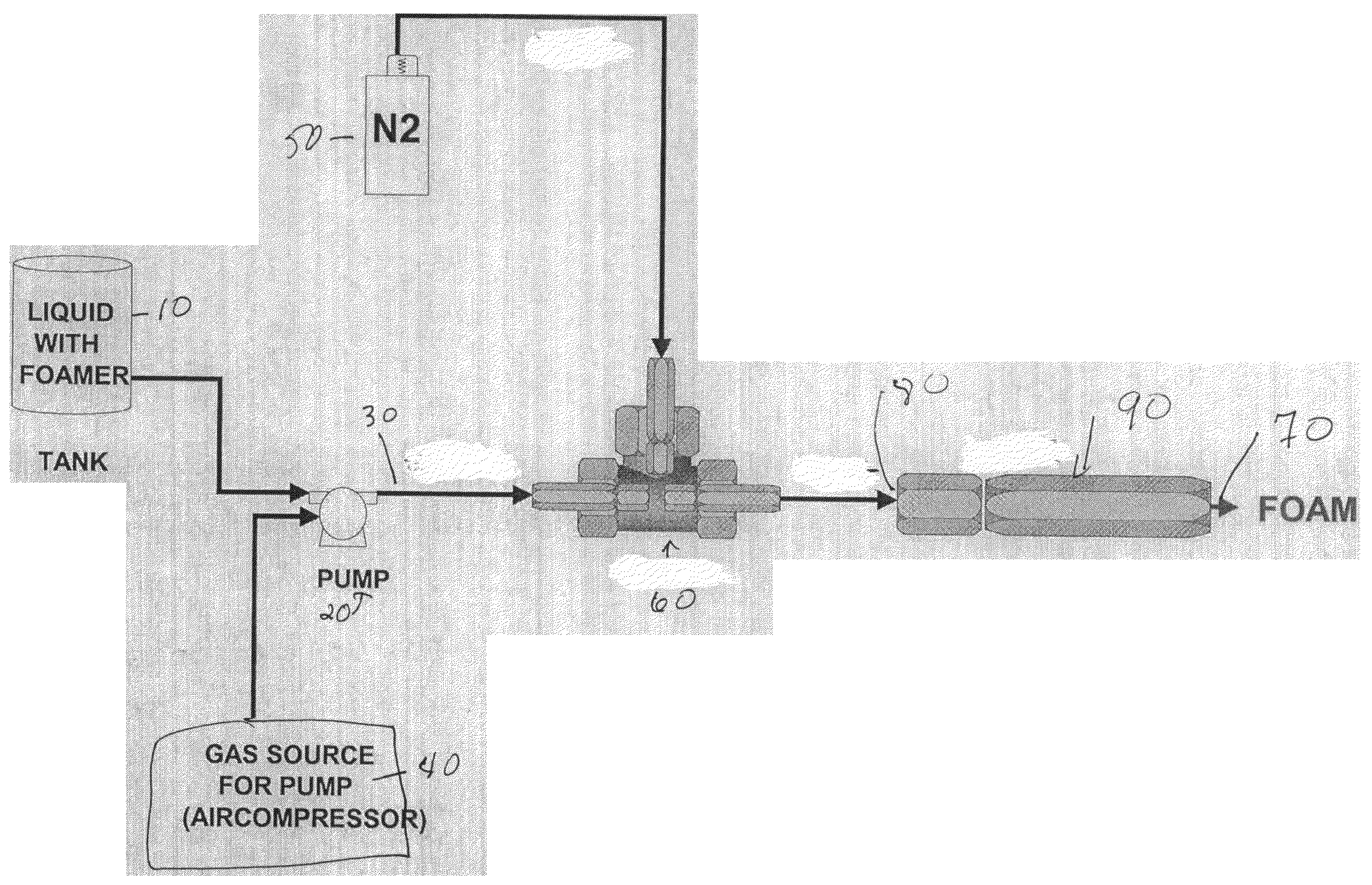
Figure 1 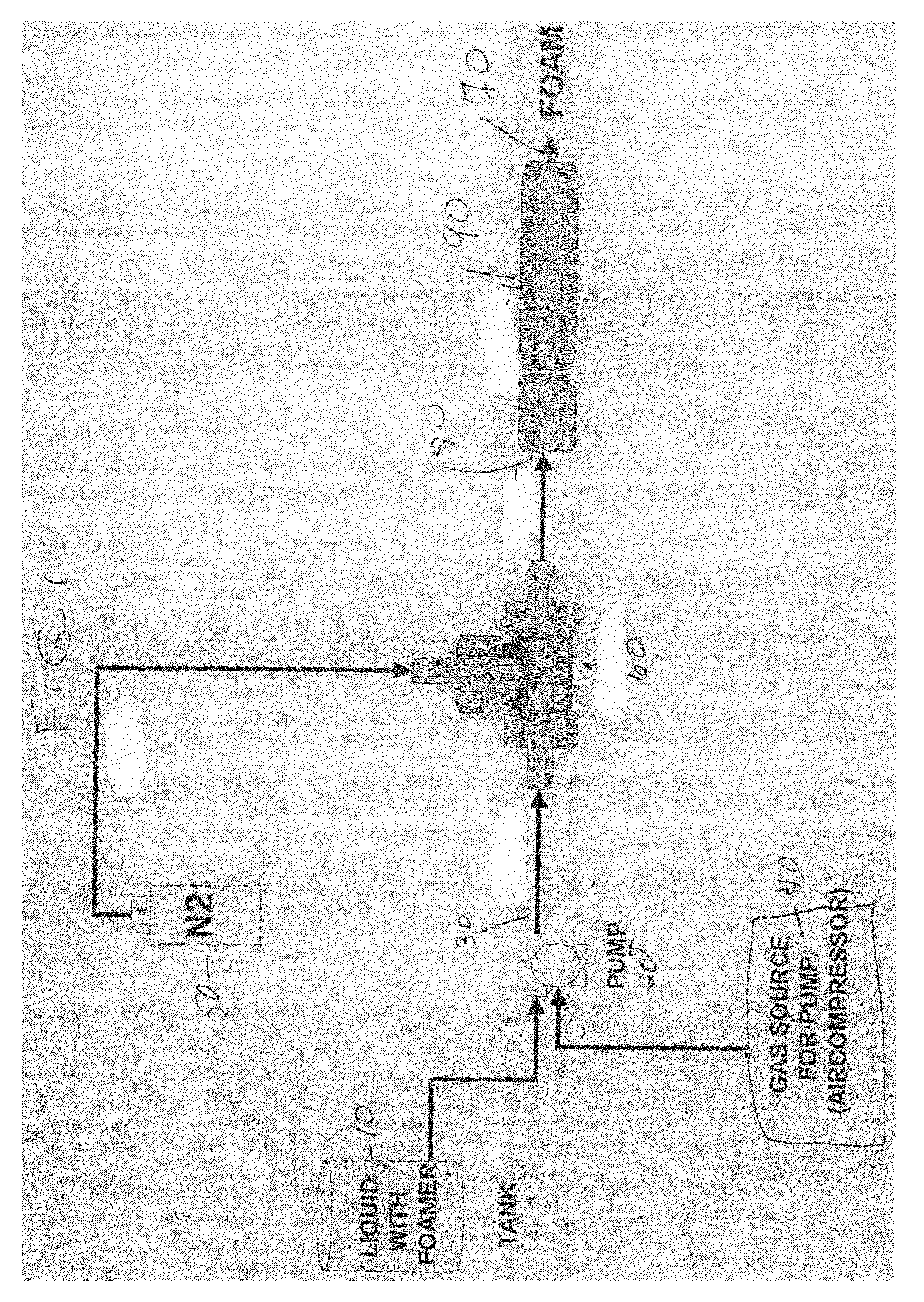
Figure 2
Abstract
Description
FIELD OF THE INVENTION
[0001] Unwanted contaminants may be inhibited and / or destroyed and / or removed by introducing into a gas or oil well a foamed composition containing a well treatment agent.BACKGROUND OF THE INVENTION
[0002] Oilfield fluids (e.g., oil, gas, and water) are generally complex mixtures of aliphatic hydrocarbons, aromatics, hetero-atomic molecules, anionic and cationic salts, acids, sands, silts, clays and a vast array of other components. The nature of these fluids, combined with the severe conditions of heat, pressure, and turbulence to which they are often subjected, are contributory factors to the formation and deposition of unwanted contaminants, such as scales, salts, paraffins, corrosion, bacteria and asphaltenes in oil and / or gas production wells.
[0003] A common site for the formation and deposition of such contaminants is the annular space between the production tubing and casing of oil or gas wells. The annulus may be a static area or may produce gas or liquid. ...
Examples
examples 1-4
[0034]To a foaming agent composed of 60% C14-C15 alkyl olefin sulfate, 18% ammonium alkyl ether sulfate, 10% monoalkyl ester and 12% isopropyl alcohol was added a well treatment agent (WTA), water and nitrogen. The admixture was then foamed using the foaming apparatus set forth in FIG. 1. The foam quality of the foamed product was then determined. The results are set forth in Table I:
TABLE IFoamingN2Agent,WTA,Pressure,FoamEx. No.AmountType, WTAWTAAmountWaterpsiQuality, %1120 mlsScale RemoverHCl,140 mls12,000 mls409528%2120 mlsScale RemoverHCl,1 qt5 gallons609728%32%Scale InhibitorHEDP 6%Yes609542%Scale InhibitorHEDP12%Yes6097HEDP = (hydroxethylidenediphosphonic acid)
examples 5-9
[0035]The foamed well treatment composition of Example 4 was introduced into an annulus at defined pressure. The residual concentration of well treatment agent was measured in produced water. The results are set forth in Table II:
TABLE IICasingTubingInjectionTime toResidualEx.Pressure,Pressure,Pressure,Pump,Liquid Volume,AfterNo.psipsiNitrogen, psipsihrs:mingallonsOne Month518680181:1536NA6294080291:202931.82 ppm714075142:2042145.29 ppm 85080202:1538116.7 ppm920075254:004326.25 ppm
example 10
[0036]A corrosion inhibitor was prepared by mixing 65.70 ml of deionized water, 25 ml of coco-dimethyl benzyl quat, 8 ml of complex organic phosphate ester, free acid, 0.2 ml of thioglycolic acid and 1.10% of monoethanolamine. Approximately 1 gallon of the corrosion inhibitor was mixed with 1 gallon of water and was then mixed with 1.5% of amphoteric cocoamidopropyl betaine as foaming agent to render 60 gallons of foam.