
Single-ended sense amplifier using dynamic reference voltage and operation method thereof
a single-ended sense amplifier and dynamic reference voltage technology, applied in pulse manipulation, pulse technique, instruments, etc., can solve the problems of poor speed performance, low operation efficiency, and difficult to reduce the process voltage-temperature dependence, etc., and achieve high operation efficiency.
Patent Information
- Authority / Receiving Office
- US · United States
- Patent Type
- Applications(United States)
- Current Assignee / Owner
- Publication Date
- 2010-02-18
Smart Images
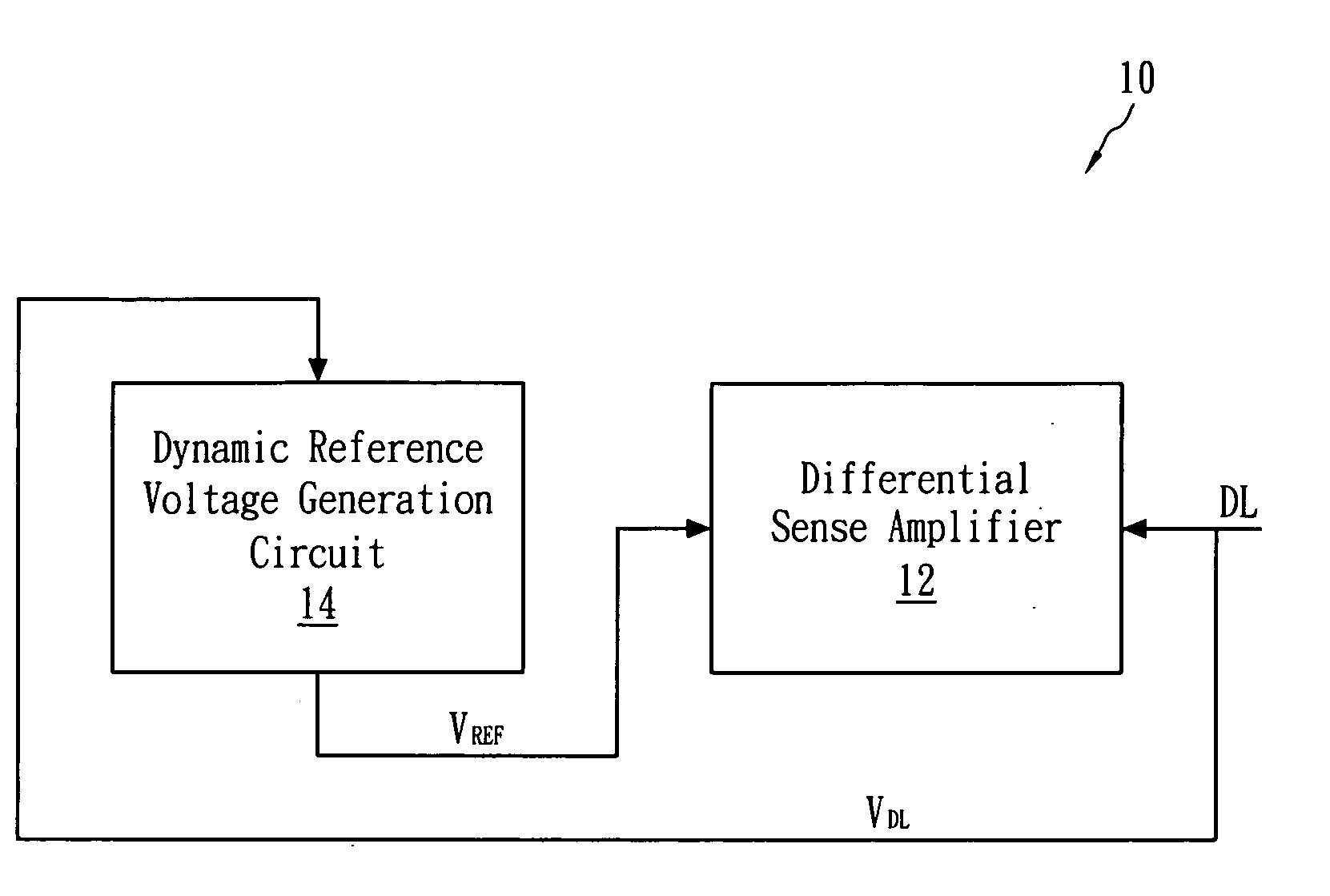
Figure 1 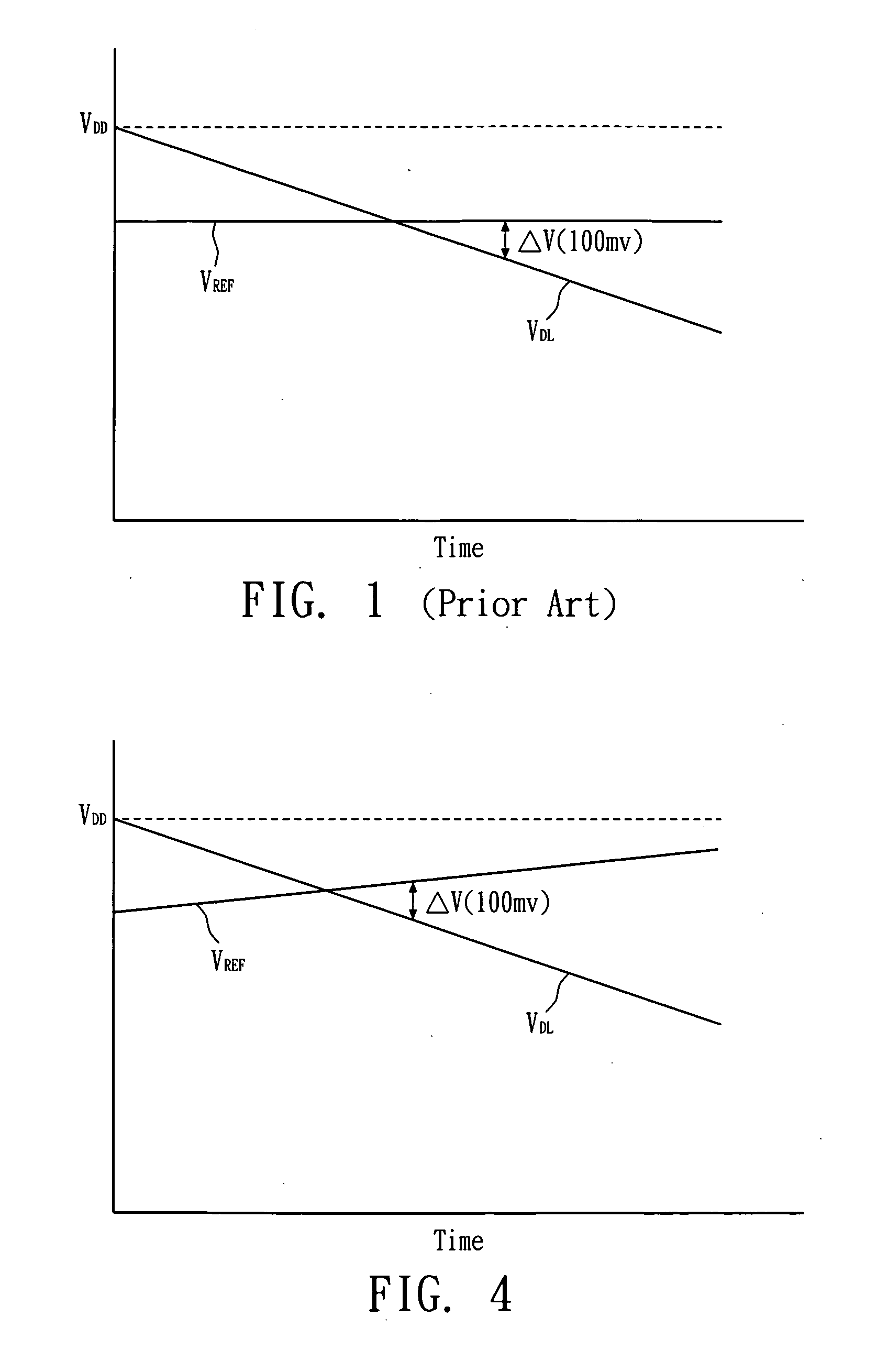
Figure 2 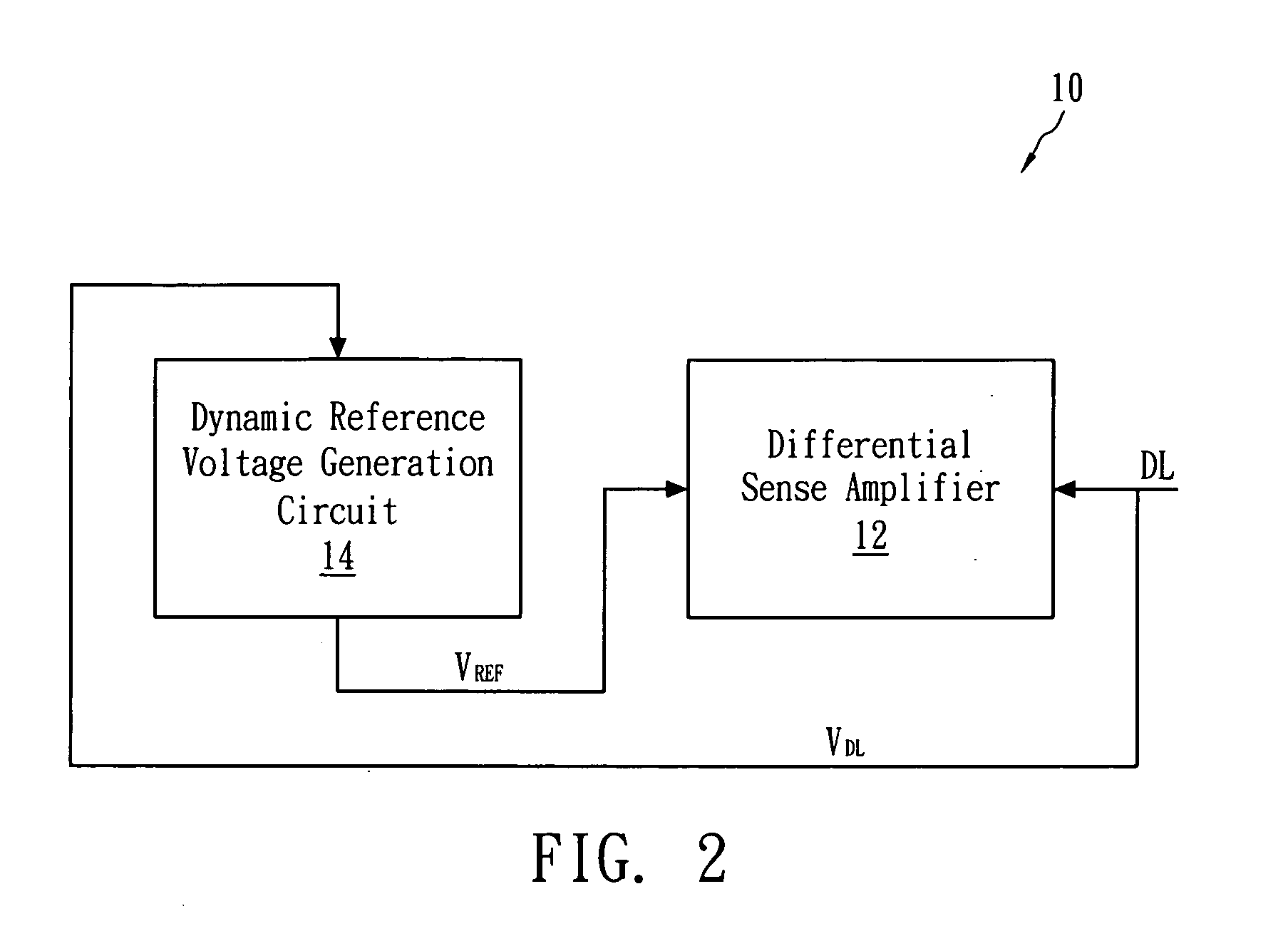
Figure 3
Abstract
Description
BACKGROUND OF THE INVENTION
[0001] (A) Field of the Invention
[0002] The present invention relates to a single-ended sense amplifier, and more particularly, to a single-ended sense amplifier using a dynamic reference voltage and the operation method thereof.
[0003] (B) Description of the Related Art
[0004] In a conventional sense amplifier scheme, memory read operation is achieved by comparing input data with a reference voltage to determine the logic state of the input data. Hence, various types of sense amplifiers have been developed accordingly. The single-ended sense amplifier that is coupled to a single bit line is widely used in single-ended type memory designs, and can be attributed to two design styles. Many single-ended type memory designs employ an inverter as a sense amplifier. Such designs mainly use an inverter trip point as a reference voltage level. Consequently, the inverter trip point has to be carefully selected to decrease process-voltage-temperature (PVT) dependence. Red...
Examples
Embodiment Construction
[0017]FIG. 2 illustrates a block diagram of a single-ended sense amplifier in accordance with the present invention. A single-ended sense amplifier 10 comprises a differential sense amplifier circuit 12 and a dynamic reference voltage generation circuit 14. The differential sense amplifier circuit 12 has two input ends, of which one end is coupled to a data line (bit line) so as to receive input data with a voltage VDL from the data line, and VDL also feeds back to the dynamic reference voltage generation circuit 14. The dynamic reference voltage generation circuit 14 generates a dynamic reference voltage VREF based on VDL, and VREF is transmitted to the other end of the differential sense amplifier circuit 12.
[0018]In an embodiment, as shown in FIG. 3, the single-ended sense amplifier 10 includes a differential sense amplifier circuit 12 and a feedback type dynamic reference voltage generation circuit 14. The dynamic reference voltage generation circuit 14 includes a PMOS transisto...