
Solar cell module
Patent Information
- Authority / Receiving Office
- US · United States
- Current Assignee / Owner
- Publication Date
- 2010-05-13
- Estimated Expiration
- Not applicable · inactive patent
Smart Images
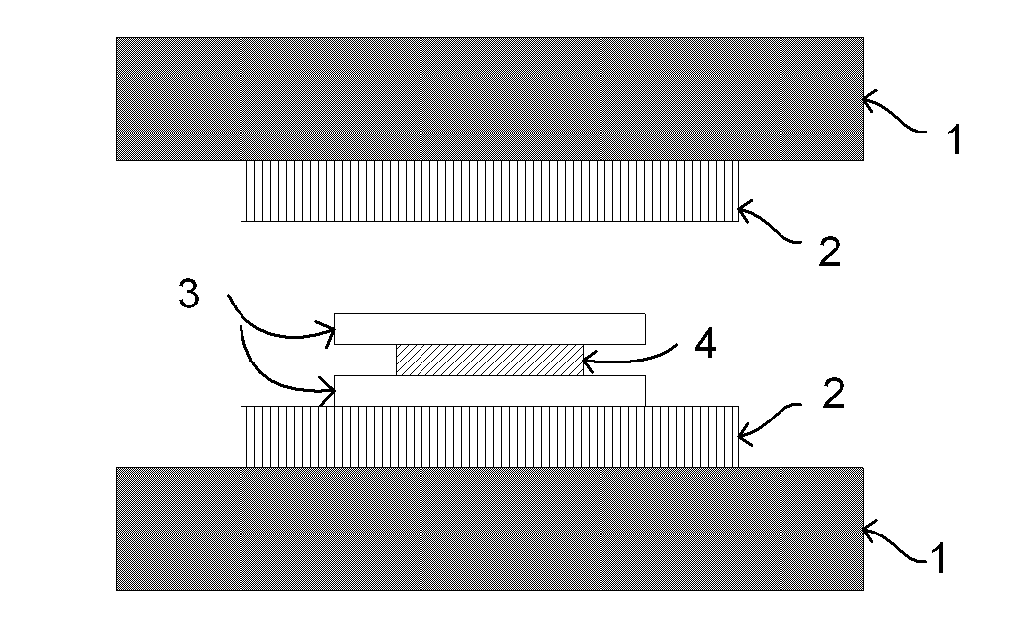
Figure 1 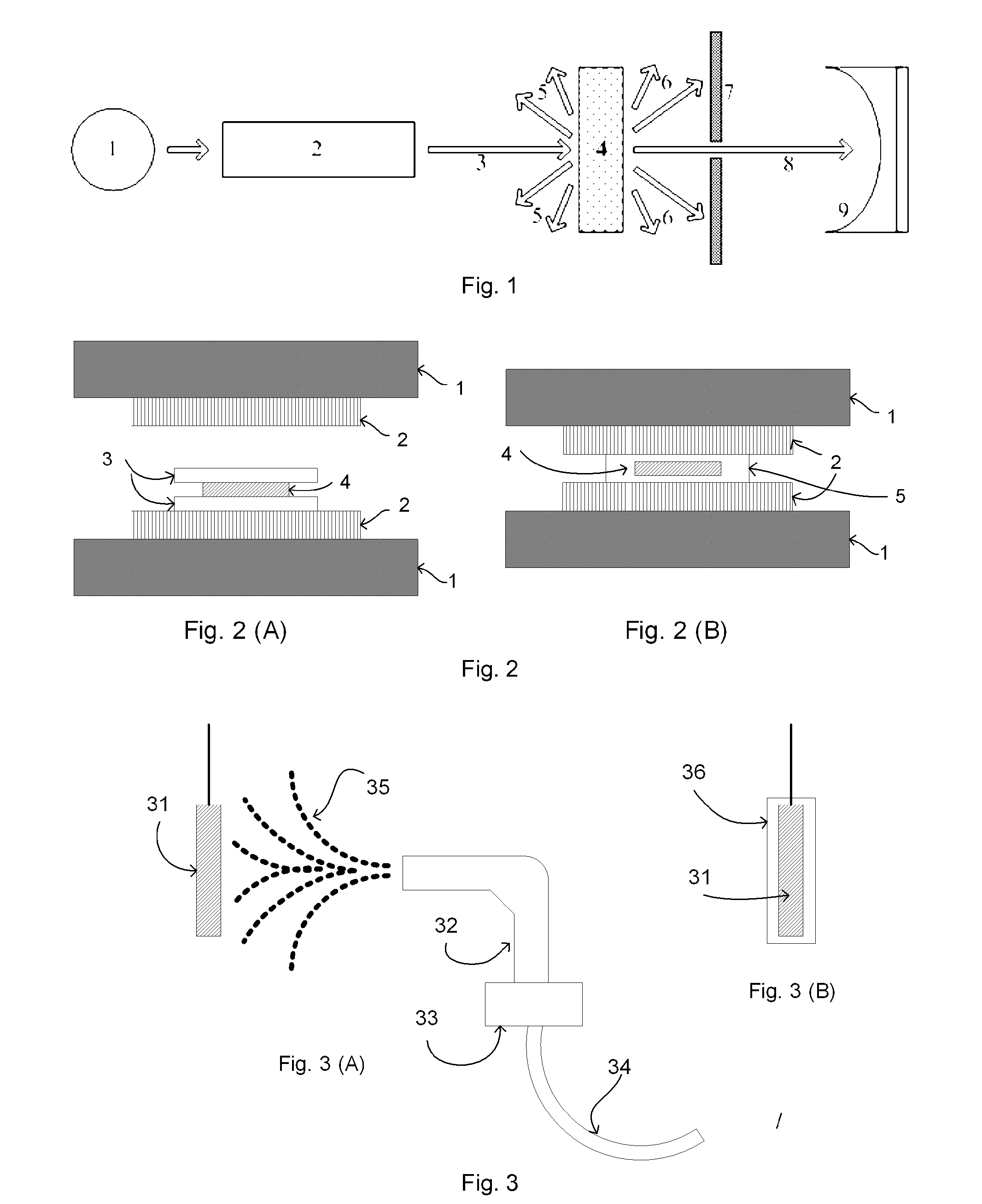
Figure 2 
Figure 3
Abstract
Description
TECHNICAL FIELD
[0001] The invention pertains to a solar cell module comprising a fluoropolymer outer layer, to a process for the manufacture of said solar cell module, and to the use of the same.BACKGROUND ART
[0002] In recent years, heating of the earth because of the so-called greenhouse effect due to an increase of atmospheric CO2 has been predicted. In view of this, there is an increased demand for means of power generation capable of providing clean energy without causing CO2 buildup. In this regard, nuclear power generation has been considered to be advantageous in view of not causing CO2 buildup. However, there are problems for nuclear power generation in that it unavoidably produces radioactive wastes which are harmful for living things and there is a probability that leakage of injurious radioactive materials from the nuclear power generation system will happen when the system is damaged. Therefore, there is an increased societal demand for early realization of a power generat...
Examples
example 2
Film Manufacturing (Extrusion)
[0162]The extrusion of the polymer obtained as detailed in example 1 was carried out in a conventional film extrusion line. The pellets of the polymer were charged into the hopper of an extruder having a diameter of 45 mm and a screw length of 24 diameters. The barrel of the extruder was heated with four thermal heaters set, starting from the hopper, at 240, 255, 260, 265° C. respectively. The connecting parts between the barrel and the die were hated at 270-275° C., while the die temperature was set at 290-300° C. The die had a width of 950 mm with the lips opening of 0.55 mm. The polymer was extruded at 12 rpm and the line speed was about 1.3 m / min. The temperatures of the calender rolls were set at 130° C.
[0163]The polymer was processed yielding a transparent, smooth film with no pinholes or defects, having a thickness of 50 μm.
[0164]Said film was found to have a transmittance of U.V. light at a wavelength of 254 nm of 87.5%.
[0165]Similarly as descri...
example 3
Thermal Encapsulation
[0168]In a heating press, between two steel plates (1), a silicon-based photovoltaic element (4) was assembled with two portions (3) of the film obtained as described in example 2 and sandwiched between two sheets of PTFE (2), as depicted in FIG. 2(A). The photovoltaic element was previously pre-treated at 200° C. for at least 30 minutes in order to eliminate moisture and other contaminants from the silicon surface.
[0169]The so-obtained assembly, as depicted in FIG. 2(B), was submitted to the following thermal treatment
[0170]1) pre heating of the heating press at 250° C.;
[0171]2) introduction of the assembly in the heating press;
[0172]3) heating of the assembly from r.t. to 250° C. in around 2 minutes;
[0173]4) continuous heating at 250° C. of the assembly with no applied pressure;
[0174]5) during 190 sec, heating was pursued by alternatively applying a pressure of 2 bars for 5 seconds and releasing said pressure;
[0175]6) heating of the assembly under a pressure o...
example 4
[0178]The dry powder of the polymer prepared according to the example 1 was loaded in the reservoir (33) of an electrostatic gun (32), equipped with a compressed air supply (34). A photovoltaic element (31) was heated at 250° C., earthed and the fine powder of polymer of example 1 (35) was sprinkled on the surface of the heated thereon, as depicted in FIG. 3(A) so as to obtain a solar cell module (36) having a photovoltaic element encapsulated between a front layer on its light receiving surface side and a back layer, both made from polymer of example 1 here above.
[0179]The solar cell module was found to assure suitable protection to the photovoltaic element and consistent encapsulation of said element with no delamination phenomena.