
Electrochemical system and method for the treatment of water and wastewater
a technology of electrochemical treatment and wastewater treatment, applied in the direction of electric circuits, manufacturing tools, electric circuits, etc., can solve the problems of prior art efforts to improve systems and electrochemical treatment methods for wastewater treatment, widespread use of chlorine, and elimination of disinfection
Patent Information
- Authority / Receiving Office
- US · United States
- Patent Type
- Applications(United States)
- Current Assignee / Owner
- Publication Date
- 2013-08-29
Smart Images
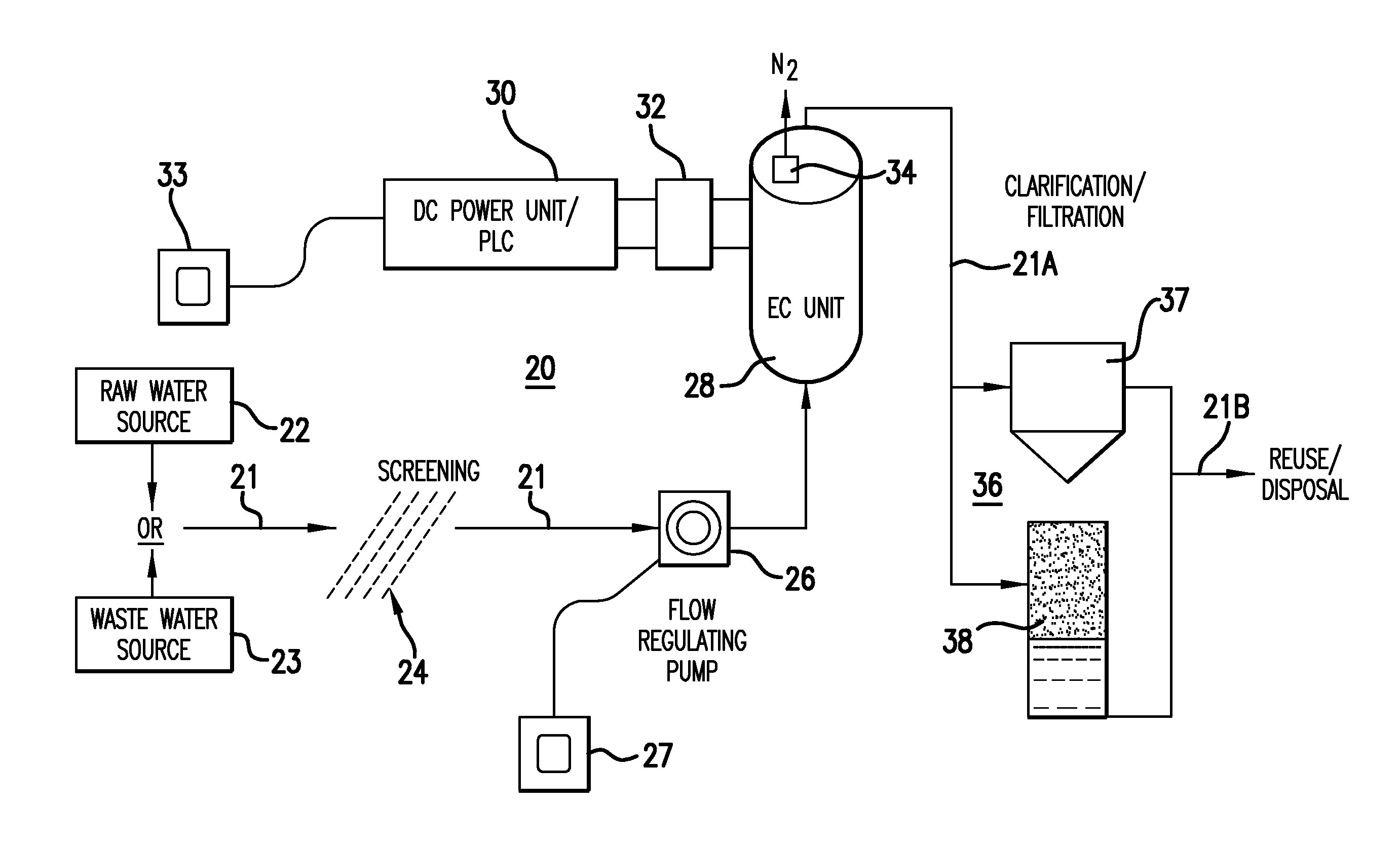
Figure 1 
Figure 2 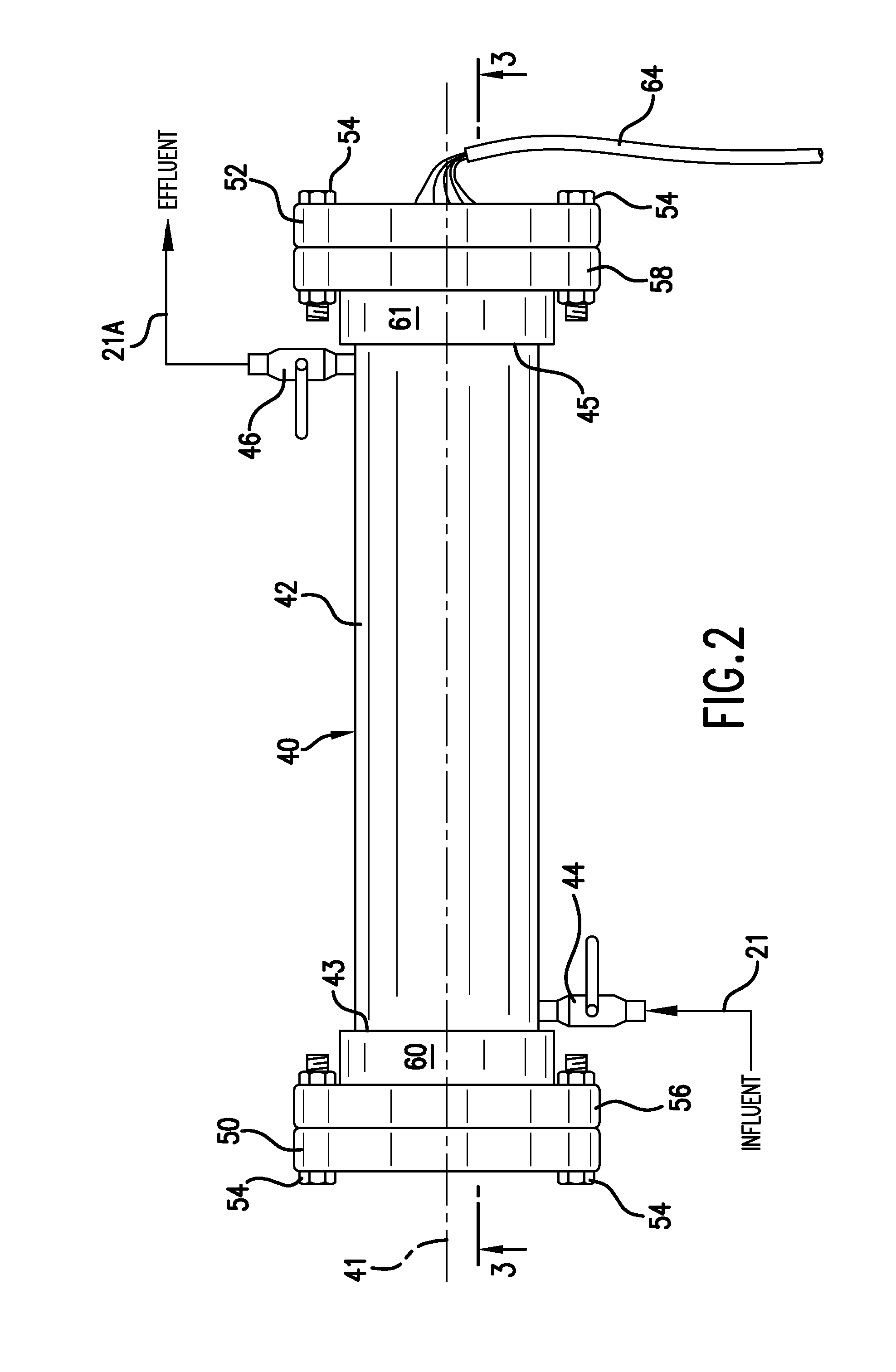
Figure 3
Abstract
Description
RELATED APPLICATIONS
[0001] This application is a continuation-in-part of U.S. patent application Ser. No. 12 / 492,367, filed on Jun. 26, 2009, and claims the benefit of priority to Provisional Application No. 61 / 725,861, filed on Nov. 13, 2012, and Provisional Application No. 61 / 610,053, filed on Mar. 13, 2012. Each of above applications is incorporated herein by reference in its entirety.FIELD OF THE INVENTION
[0002] This invention relates to water and wastewater treatment, and more particularly, but not limited to, treatment of surface water, groundwater, domestic sewage, industrial feed water, industrial process wastewater, hazardous and toxic wastes, liquid waste byproducts, the byproducts including, but not limited to, waste biosolids and membrane reject water, as well as but not limited to bilge water and waste water from ships.BACKGROUND OF THE INVENTION
[0003] A variety of methods have been used to treat and remove contaminants from water and wastewater. The procedures and techniq...
Examples
examples
[0145]a) When using the module 100 within the dielectric container structure 130 of FIGS. 13-16, a maximum power level of about 15 Kw per module is sufficient for various applications. The actual power level applied depends on the chemical make-up of the water being treated. Preferably, the 15 Kw power supply is capable of producing direct current at 500 amps and 30 volts, or any other combination of amperage or voltage within the 15 Kw envelope.
[0146]b) In a specific example, laundry water was treated at a DC power level of 400 amps and 9 volts with satisfactory results, however a higher amperage is thought to achieve better results. The satisfactory results were achieved at a pump speed of 16.5 U.S. gallons per minute (62.46 liters per minute) with a hydraulic retention time of about 2 minutes. Specifically, removal of contaminants was observed at 95 watts / gallon [9 volts×400 amps / 38 gallons (94.74 liters)].
[0147]c) Experiments on synthetic soapy samples using the module of FIGS. ...