
Methods for treating inflammation and hypertension with gamma-ketoaldehyde skavengers
a gamma-ketoaldehyde and hypertension technology, applied in the field of preventing inflammation, can solve the problems of gastric ulcers, serious drawbacks of the use of cox-2 inhibitors, and inflammation, and achieve the effect of preventing cell death
Patent Information
- Authority / Receiving Office
- US · United States
- Patent Type
- Applications(United States)
- Current Assignee / Owner
- Publication Date
- 2014-09-11
Smart Images
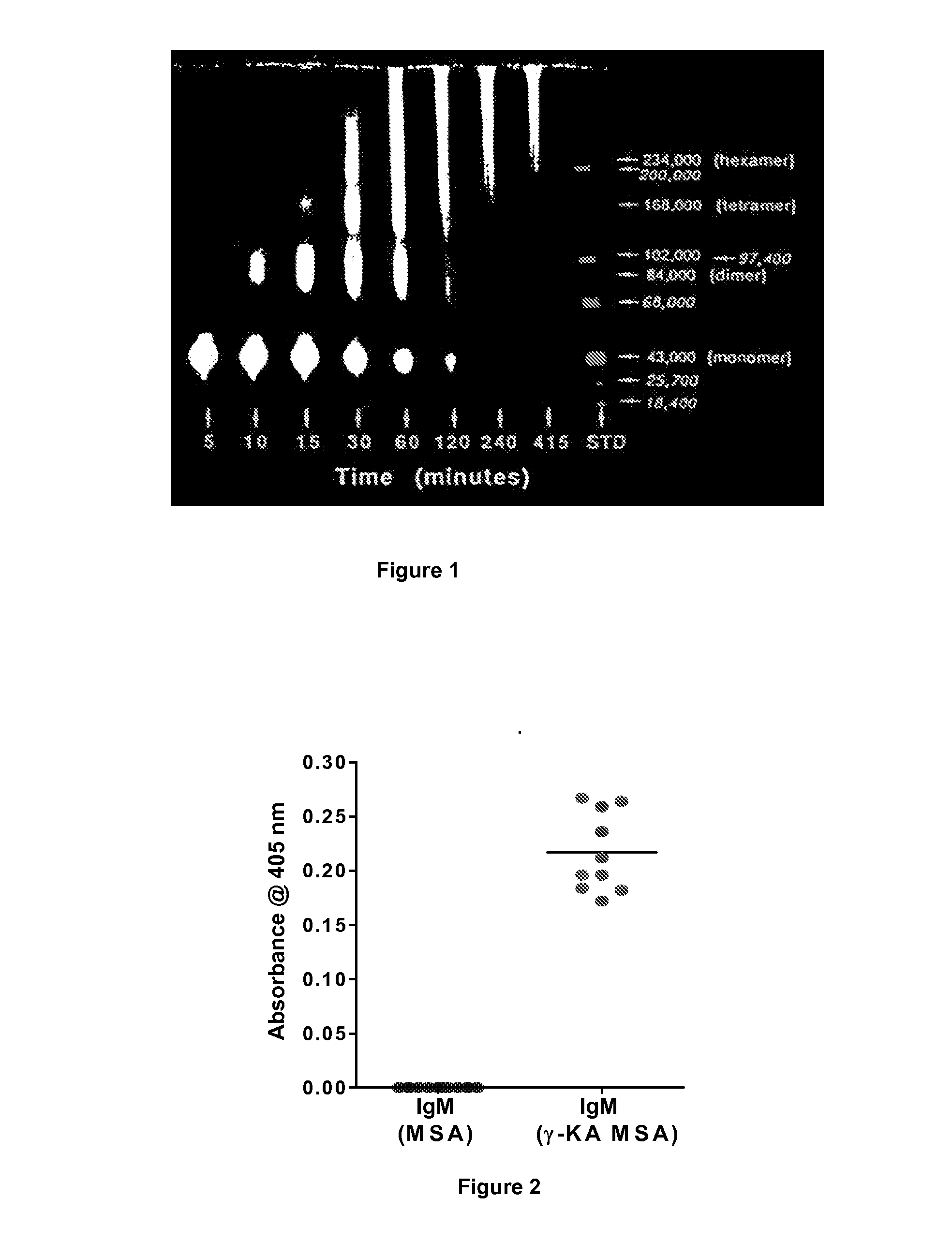
Figure 1 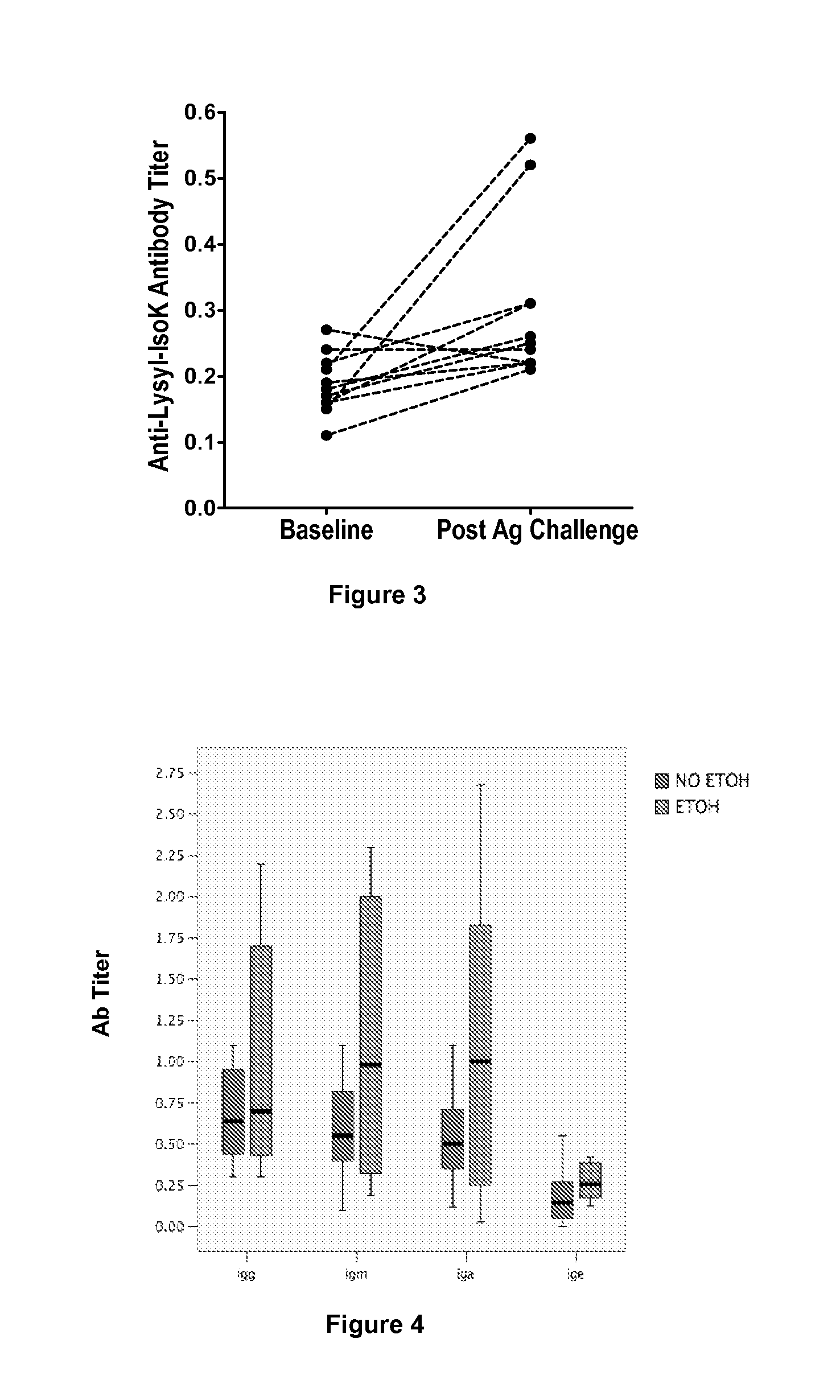
Figure 2 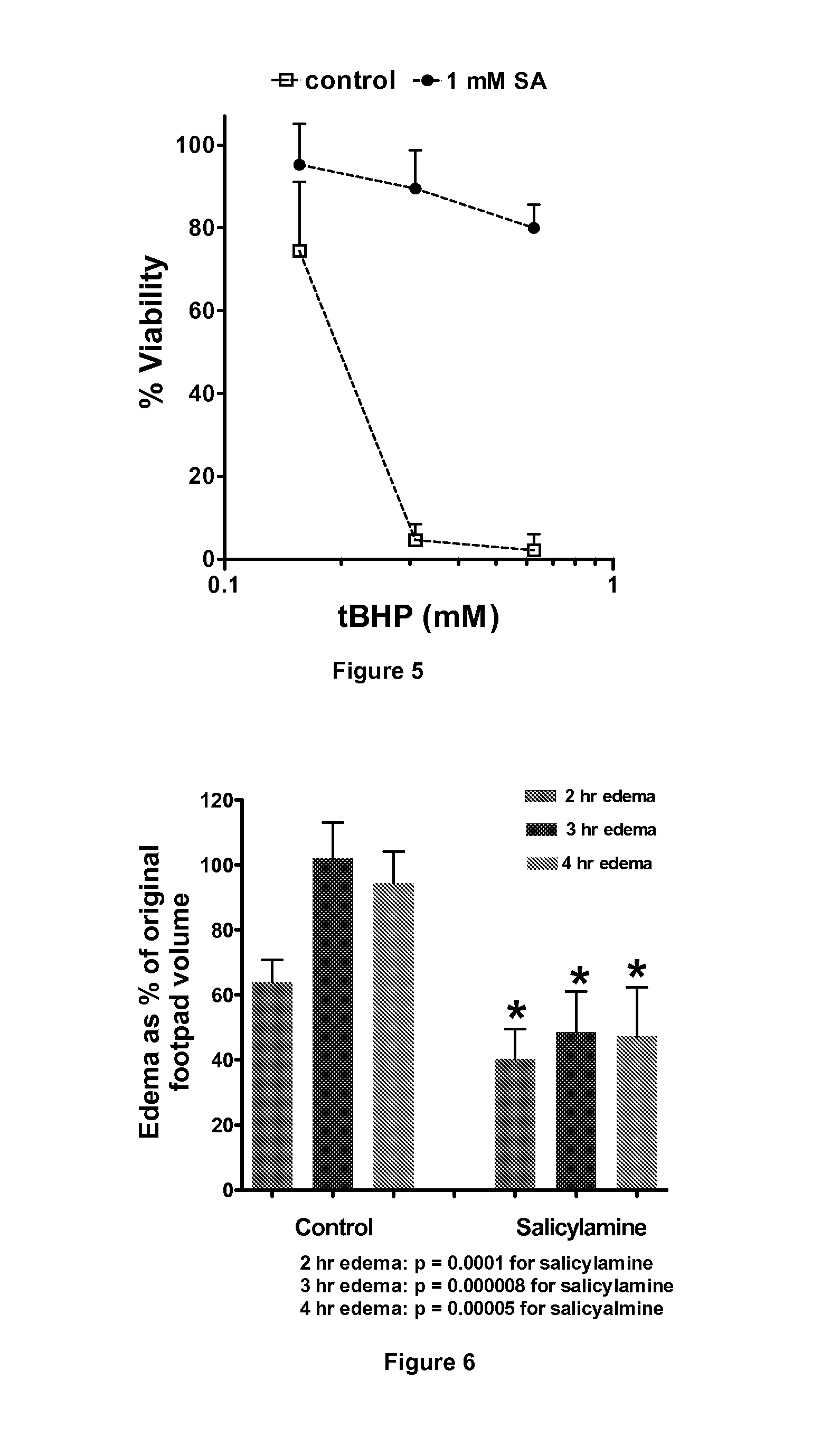
Figure 3
Abstract
Description
FIELD OF THE INVENTION
[0001] The present invention relates generally to the field of treating and preventing inflammation, and more specifically to the field of controlling isoketals and neuroketals.
[0002] The present invention also relates to the field of treating and preventing hypertension, and more specifically treating and preventing hypertension by controlling isoketals and neuroketals.
[0003] The present invention also relates to the field of treating and preventing psoriasis, and more specifically treating and preventing psoriasis by controlling isoketals and neuroketals.BACKGROUND OF THE INVENTION
[0004] A major problem that underpins a variety of diseases is inflammation. While many pharmacological approaches have been used to suppress inflammation and many new approaches are being developed, such as inhibitors of inflammatory cytokines, etc., a mainstay in the treatment inflammation for decades has focused on preventing the formation of prostaglandins by inhibiting cyclooxygena...
Examples
example 1
[0140]As indicated above, one embodiment of the present invention is the use of salicylamine to treat inflammation. To demonstrate this example, a salicyamine compound of the present invention was used to inhibit carrageenin-induced paw edema. The carrageenin-induced paw edema rat model has been probably the most utilized animal model to screen for potency of NSAIDs and other antiinflammatory compounds to inhibit inflammation for decades. For example, see Proc Soc Exp Biol Med 111:544 in 1962 by Winter C A et. al., entitled: “Carrageenin-induced edema of the hind paw of the rat as an assay for antiinflammatory drugs”. Importantly, it has been shown that this model is one of the most robust predictors of clinical potency of NSAIDs54.
[0141]Our initial experiments tested the ability of a single dose of salicylamine (200 mg / kg), administered intraperitoneally, to reduce paw edema at various time points. Carrageenan (100 μl of a 1% solution in saline) was injected into the hind right foo...
example 2
[0143]The efficacy an analog of salicylamine, 5-methyl-salicylamine, to inhibit carrageenin-induced paw edema was accessed at 3 hrs after injection of carrageenin at two doses, 200 and 100 mg / kg ip (FIG. 7).
[0144]Notably, the effect of 5-methyl-salicylamine to reduce paw edema was dose-dependent with mean reduction in edema of 29% at the dose of 100 mg / kg and 60% at the dose of 200 mg / kg.
[0145]The effect of γ-KAs and salicylamine on induction of NF-κB was explored using a novel luciferase reporter assay to quantitatively monitor the induction of expression of NF-κB both in vitro in cells and in vivo55; 56. NF-κB is required for maximal induction of many cytokines which are thought to be important in the generation of the acute inflammatory responses57. Accordingly, the downstream effects of an agent that suppresses the induction of NF-κB would be a reduction in the level of inflammation. The first question we asked was does exposure of cells to γ-KAs induce the expression of NF-κB u...
example 3
[0146]Another embodiment of the present invention is treatment with varying concentrations of salicylamine (SA) would suppress lipopolysaccharide (LPS) induced expression of NF-κB in NF-κB reporter macrophages. As shown in (FIG. 9), there was a concentration dependent stepwise reduction in the expression of NF-κB, which was highly significant (p<0001).
An in vivo experiment was performed to explore whether treatment with salicylamine would down regulate the activity of NF-kB in animals injected with LPS. The animals we used were mice with a luciferase NF-kB reporter gene developed by Dr. Timothy Blackwell mentioned previously. LPS was injected into mice and salicylamine was injected intraperitoneally at 1 hr, 3 hrs, and 5 hrs after the LPS injection. Lung NF-kB luciferase assay and neutrophil cell counts in lung bronchoalveolar lavage fluid (BAL) were then determined 8 hrs after the LPS injection. There was a reduction in both (a) activity of NF-kB (FIG. 10) (b) and neutrophil cell c...