
Methods of reducing salmonella in poultry
a technology of salmonella and poultry, applied in the field of methods of reducing salmonella, can solve the problems of increasing problems in the practice of supplementing poultry diet with antibiotics, difficult to isolate infected birds, and present problems both for animals and humans, and achieve the effect of reducing salmonella
Patent Information
- Authority / Receiving Office
- US · United States
- Patent Type
- Applications(United States)
- Current Assignee / Owner
- Publication Date
- 2015-02-05
- Estimated Expiration
- Not applicable · inactive patent
Smart Images
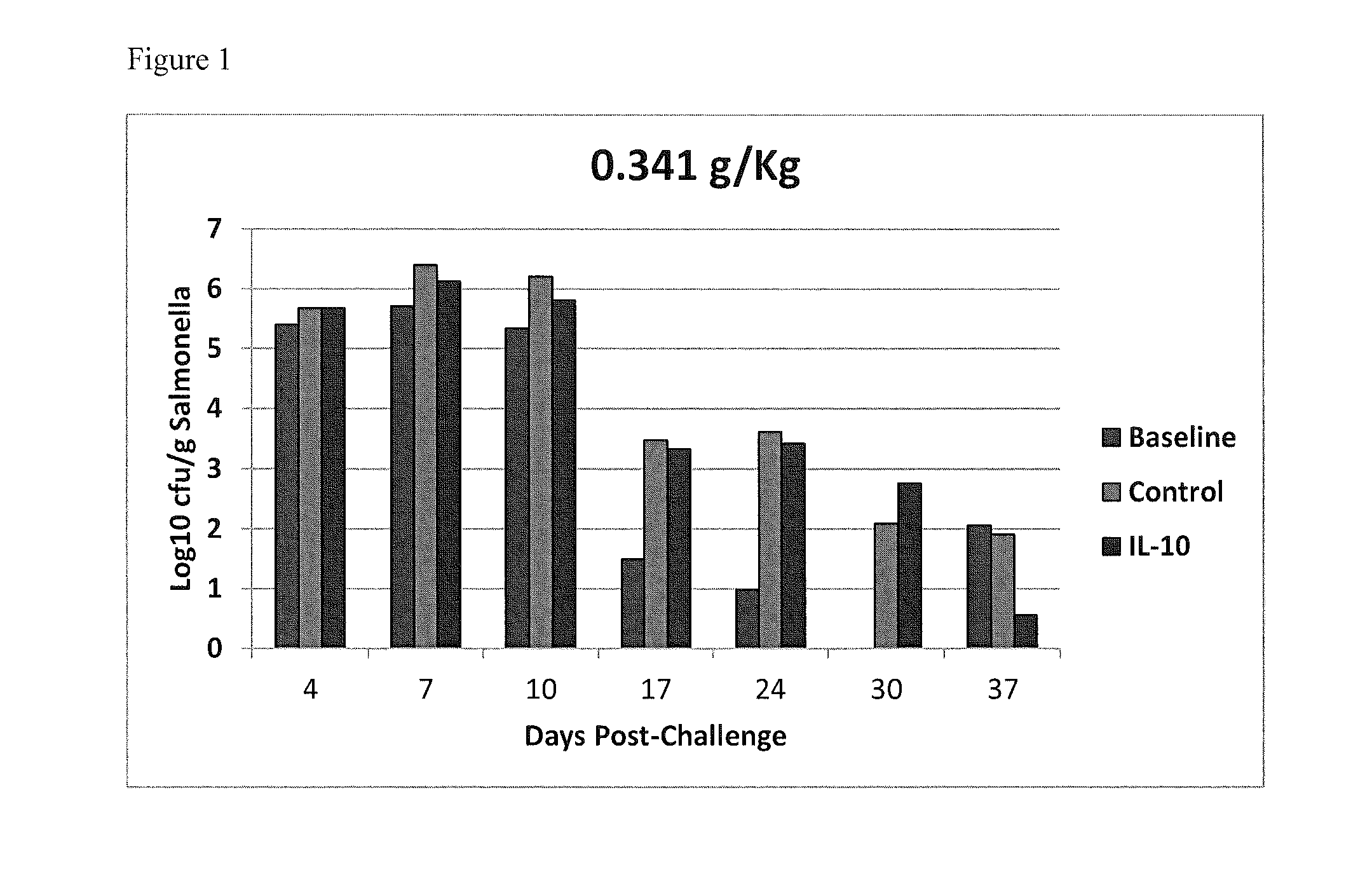
Figure 1 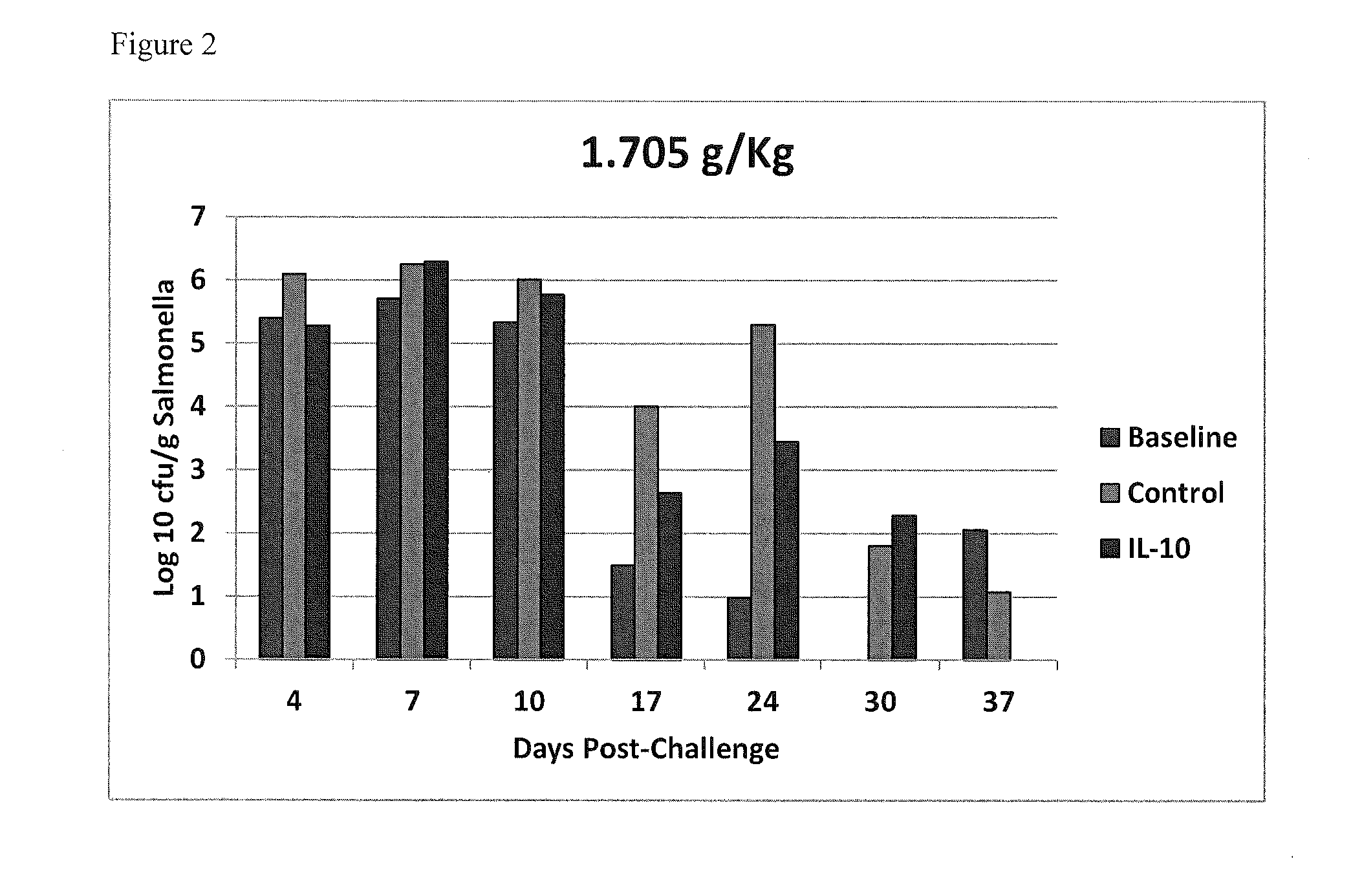
Figure 2 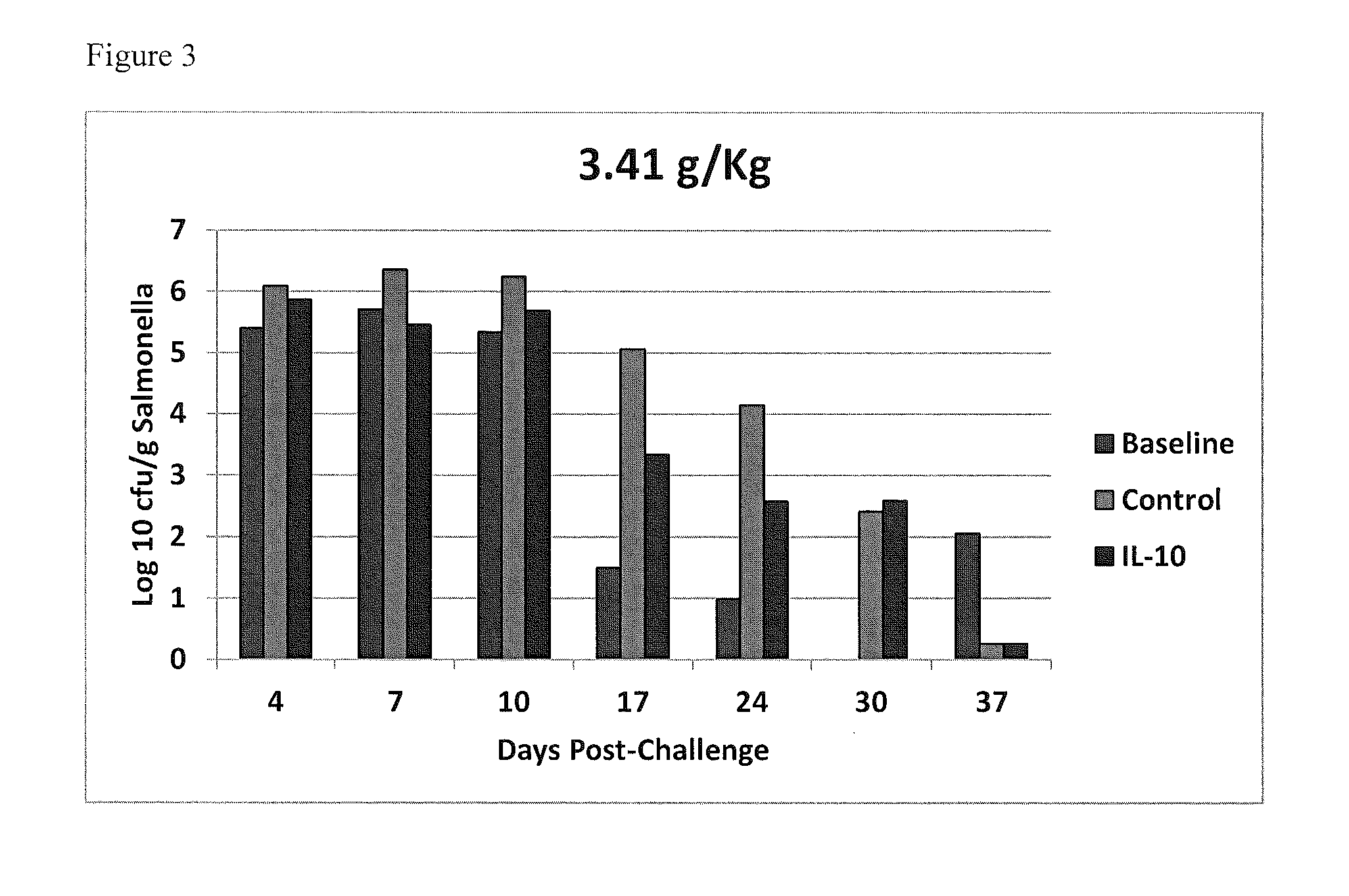
Figure 3
Abstract
Description
FIELD OF THE DISCLOSURE
[0001] The present disclosure is related to methods of reducing Salmonella in the intestines of animals, including poultry.BACKGROUND
[0002] Livestock such as poultry that are infected with pathogens, or serve as incubatory or convalescent carriers of pathogens, present problems both for the animals as well as humans who consume meat from the animals. Antibiotics are generally added to the nursery and grower feeds of poultry to promote growth and / or reduce disease occurrence during all phases of food production. The addition of antibiotics reduces the passage of pathogens such as S. Enteritidis to humans and has advantages for the health and weight of the poultry. Antibiotics promote growth through the reduction of biological stress, the decrease of bacteria, and by promoting the health of the poultry. Poultry that are healthy and disease free eat more food, and more effectively convert the food into muscle or meat. Thus, the antibiotic supplementation of poultry...
Examples
example 1
Detection of Antibody Production
[0058]In this Example, the concentration of anti-IL-10 antibody production contained within the egg yolk of IL-10 peptide-administered producer hens was determined by using Enzyme-linked immunosorbent assay (ELISA) techniques.
[0059]Specifically, each of four IL-10 peptides selected from the group consisting of IL-10 Peptide #1 (SEQ ID NO: 1), IL-10 Peptide #2 (SEQ ID NO: 2), IL-10 Peptide #3 (SEQ ID NO: 4), and IL-10 Peptide #4 (SEQ ID NO: 5) was conjugated to hen ovalbumin (OVA, Sigma, St. Louis, Mo.) for ELISA using glutaraldehyde procedure. A 96-well Nunc™ immunosorbent F-series microplate (Sigma, St. Louis, Mo.) was coated with 100 μg / plate of peptide-specific OVA conjugate in sodium carbonate coating buffer having a pH of 9.6. The plate was allowed to coat overnight (100 μl / well) at 4° C. Dry egg yolk samples containing antibody to IL-10 Peptide #1, #2, #3, or #4 were diluted 1:10 in acidic PBS having a pH of 4 and allowed to incubate overnight a...
example 2
Anti-IL-10 Antibody Feed Study in Chickens
[0060]This study was performed to determine whether an anti-IL-10 antibody can decrease Salmonella carrier status in poultry, specifically chickens. Chicks were challenged with Salmonella enteritidis (106 per chick on day 4 or 5 post-hatch) or not challenged. This experimental protocol allows chick to become recovered carriers and thus incubatory or convalescent carriers of pathogens for humans. The antibody used was an egg yolk antibody to peptide SEQ ID NO: 2. Control antibodies were made by injecting chickens with adjuvant only (FCA antibody or isotype adjuvant control antibody). Fourteen treatments were performed:
[0061]1. normal diet, no challenge (60 chicks / pen)
[0062]2. normal diet, SE challenge (60 chicks / pen)
[0063]3. Control ab diet (0.341 g / Kg), no challenge (50 chicks / pen)
[0064]4. Control ab diet (1.705 g / Kg), no challenge (50 chicks / pen)
[0065]5. Control ab diet (3.41 g / Kg), no challenge (50 chicks / pen)
[0066]6. Control ab diet (0.34...
example 3
Anti-IL-10 Antibody Feed Study in Turkeys
[0077]The USDA Food Safety and Inspection Service has decreased the tolerance for naturally abundant Salmonella species on turkey products. A study will be conducted to determine if the number of positive tests following USDA guidelines can be decreased by the use of anti-IL-10 antibody in the withdraw diet of turkeys. Turkey Toms 14-18 weeks of age are placed either on a withdraw diet with no added anti-IL-10 antibody, or a withdraw diet supplemented with 3.1 Kg IL-10 antibody in a dried egg yolk carrier per ton of feed. Turkeys are fed the two diets for two weeks, turkeys are slaughtered, and whole turkeys and their products are tested using the USDA guidelines for the present of Salmonella species. The incidence of Salmonella on turkey carcasses can be 2% in those turkeys fed a control diet, and should be lower in those turkeys fed a diet containing anti-IL-10 antibody. Ground turkey meat will also be analyzed. Control fed turkeys can have...